 how-to
Why You Should Consider a Curved Stairlift
Table of Contents
- What a Curved Stairlift Does for Your Home
- Curved vs. Straight Stairlift: Which Fits Your Stairs
- How Curved Stairlift Installation Works
- Stairlift Safety Features That Matter
- Understanding Curved Stairlift Cost and Your Options
- Aging in Place Without Moving: The Real Benefit
- Frequently Asked Questions
Last Updated: October 12, 2026
What a Curved Stairlift Does for Your Home
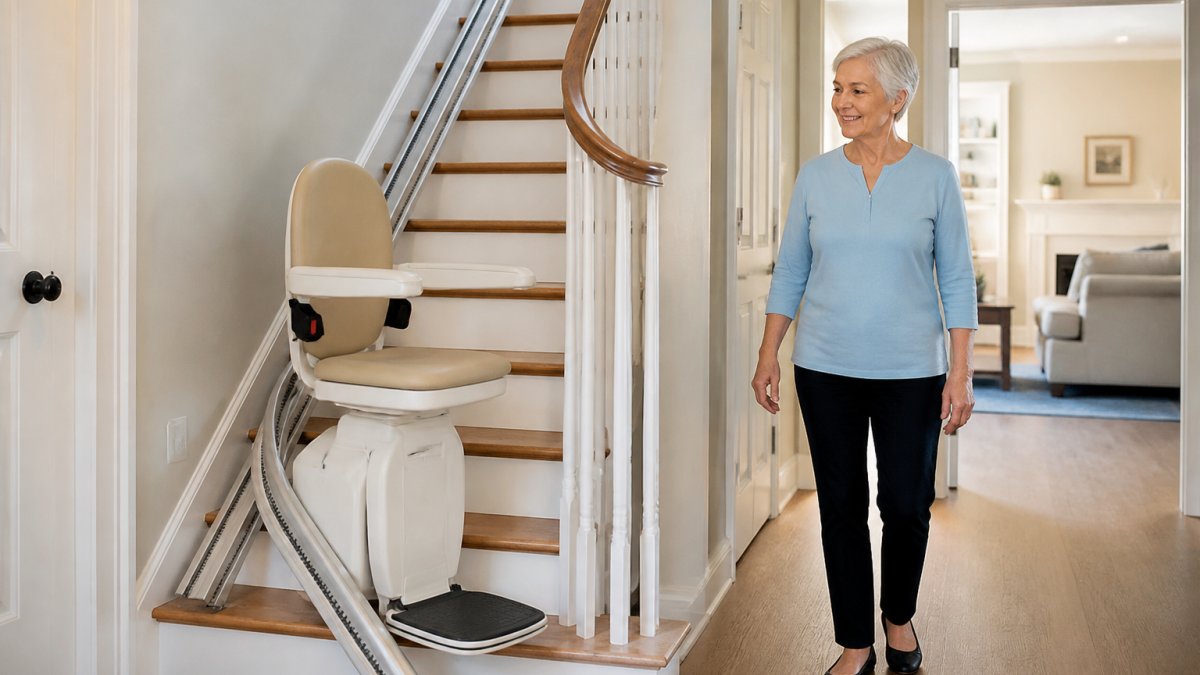
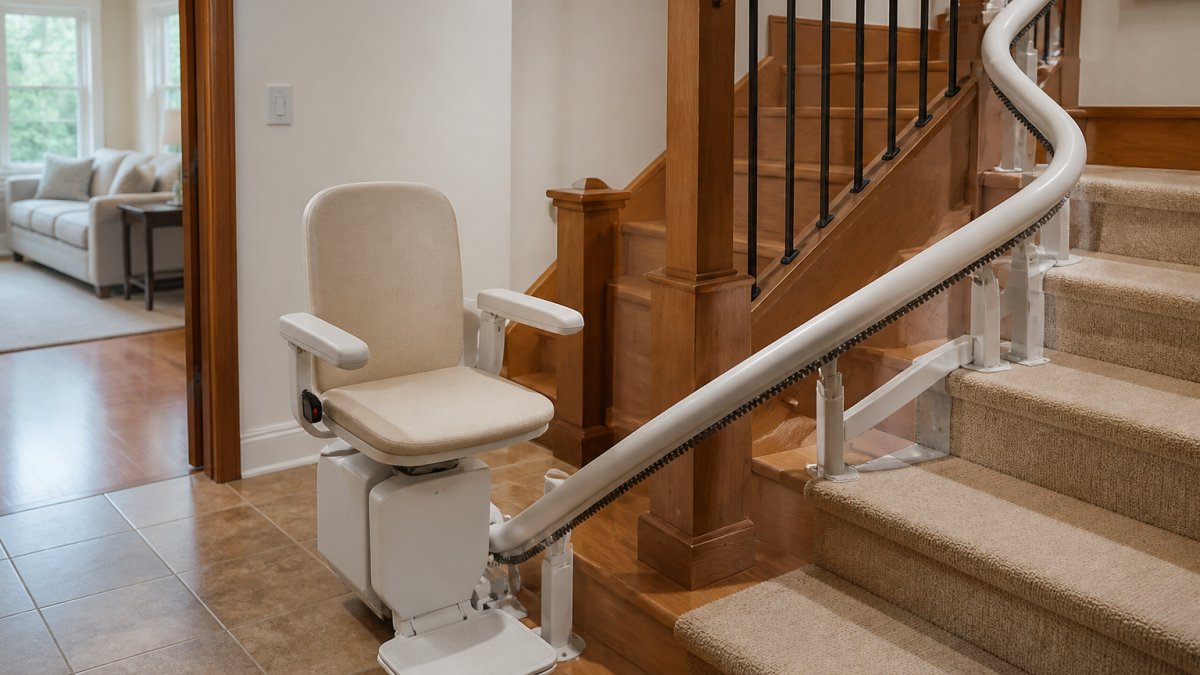
A curved stairlift is a motorized chair that travels along a custom-fitted rail system, enabling safe access to upper floors of homes with stairs that bend, turn, or have intermediate landings. Unlike straight stairlifts that work only on linear staircases, a curved stairlift navigates the angles and transitions your home actually has, whether that's a U-turn at a landing, an L-shaped staircase, or multiple flights with direction changes.
The core benefit is independence. When stairs become unsafe due to age, injury, or chronic conditions, a curved stairlift removes the barrier between you and the parts of your home you want to access. You stay in your home. You don't relocate. You don't lose access to bedrooms, bathrooms, or storage on upper floors.
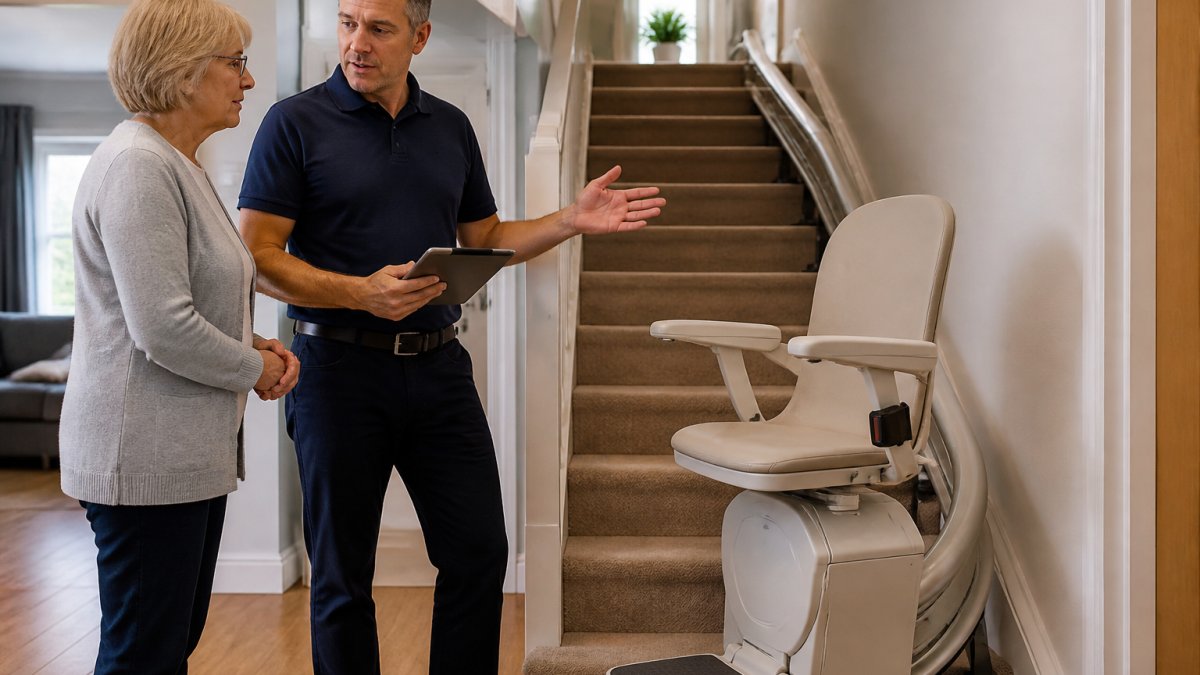
The chair itself is compact and folds away when not in use, so it doesn't dominate the staircase. Most models include a secure seat belt, swivel seat for safe entry and exit, and a footrest that extends automatically. The rail system is custom-fabricated to match your staircase's exact dimensions and angles, which is why installation requires a professional home assessment before any work begins.
Curved vs. Straight Stairlift: Which Fits Your Stairs
The choice between a curved stairlift and a straight stairlift comes down to your staircase layout. If your stairs go straight up with no bends, turns, or intermediate landings, a straight stairlift is simpler and typically more affordable. But if your staircase twists, turns, or has a landing where the direction changes, you need a curved stairlift.
Here's where most people get this wrong: they assume their stairs are "straight" because the main flight is linear. Then they discover there's a landing halfway up, or the stairs turn sharply at the top. A professional home assessment catches these details. During an assessment, a technician measures the staircase layout, identifies all direction changes, and determines whether a straight or curved model will work.
| Feature | Straight Stairlift | Curved Stairlift |
|---|---|---|
| Staircase Type | Linear, no turns | Bends, turns, multiple flights |
| Rail System | Pre-fabricated, standard | Custom-fabricated to fit |
| Installation | Faster, fewer adjustments | Longer, requires precise measurements |
| Continuous Travel | Single flight only | Across multiple flights and landings |
| Space When Folded | Compact | Compact |
A curved stairlift is necessary when your staircase has:
- A 90-degree turn or landing
- Multiple flights with direction changes
- An L-shaped or U-shaped layout
- Stairs that wind or spiral
- Intermediate landings that split the staircase into sections
The technical difference is the rail. A straight stairlift uses a pre-made rail that's bolted to the wall or staircase. A curved stairlift requires custom rail fabrication, the rail is built to your staircase's exact geometry, including all bends and angles. This custom work is why curved stairlifts cost more and take longer to install, but it's also why they work in homes where straight models simply won't fit.
How Curved Stairlift Installation Works
Installation of a curved stairlift is a multi-step process that begins with a detailed home assessment and ends with testing and training.
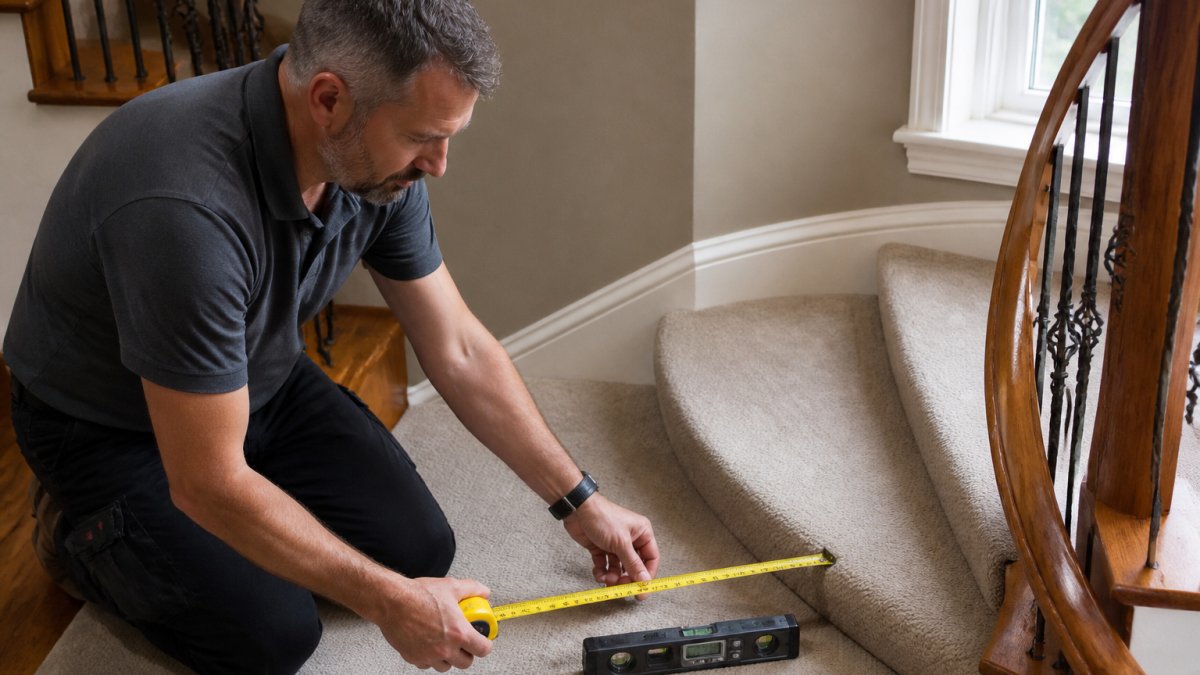
Assessment Phase (1-2 weeks): A technician visits your home to measure the staircase, photograph the layout, and identify all curves, turns, and landings. They check the staircase width to ensure the rail and chair will fit without obstructing passage. They also assess the condition of walls and stairs to determine the best mounting points for the rail brackets. This assessment generates a custom specification that guides the rail fabrication.
Rail Fabrication (2-3 weeks): Once specifications are finalized, the custom rail is built to match your staircase's exact dimensions. This is the part that takes time, the rail cannot be generic. Every bend, every angle, every transition point is engineered for your home. The chair and mechanical components are also prepared and tested.
Installation Day (4-8 hours): The technician arrives with the custom rail and chair. The rail is mounted securely to the staircase using brackets and fasteners. The chair is attached to the rail and tested through its full range of motion. All safety features, the seat belt, footrest, obstruction sensors, are verified to function correctly. This is also when you receive training on how to operate the stairlift, use the remote control, and understand the battery backup system.
Testing and Activation (1-2 days): After installation, the system runs through a final diagnostic check. You take test rides to confirm comfort and safety. Once you're confident with the operation, the stairlift is fully activated and ready for daily use.
The key variable in timeline is the custom rail fabrication. If your staircase has complex geometry or multiple turns, fabrication may take longer.
Stairlift Safety Features That Matter
Safety is the primary reason people choose a curved stairlift over alternatives like moving or reorganizing their home around limited mobility. Modern stairlifts include multiple redundant safety systems designed to prevent injury during normal operation and in emergency situations.
Secure Seating: The seat includes a safety belt that keeps you positioned correctly throughout the ride. The seat itself is contoured for comfort and support, and it swivels at the top or bottom of the staircase so you can exit safely without twisting your body. A footrest extends automatically as the chair moves, supporting your legs and preventing your feet from catching on stairs.
Obstruction Sensors: The chair includes sensors that detect obstacles on the staircase, a pet, a toy, or even a person standing in the way. If an obstruction is detected, the stairlift stops automatically. This prevents collisions and injuries.
Battery Backup and Power Outage Operation: This is the feature that addresses a common fear: "What if the power goes out while I'm halfway up?" Curved stairlifts have rechargeable batteries that power the chair even during a power outage. The battery charges whenever the stairlift is plugged in and idle. If power fails, you can still operate the stairlift to reach the top or bottom of the stairs using the battery. Most batteries provide enough charge for multiple trips, but even one trip to safety is the point.
Diagnostic Display and Alerts: The stairlift includes a control panel that displays the battery charge level and shows error codes if something isn't functioning correctly.
Remote Control and Manual Operation: Most curved stairlifts include a remote control so you can call the chair to you, useful if someone else in the household uses the stairlift and you need it on your floor. If the remote fails, you can still operate the chair manually using buttons on the armrest.
Understanding Curved Stairlift Cost and Your Options
Curved stairlift pricing depends on the complexity of your staircase, the features you choose, and the custom fabrication required. Because every curved stairlift is custom-built, no two installations cost exactly the same. The best approach is to request a quote from CT Stairlifts based on your specific home and staircase layout.
Several factors influence the cost:
Staircase Complexity: A staircase with one simple turn costs less than one with multiple turns, multiple flights, or unusual angles. The more complex the geometry, the more time and precision the custom rail fabrication requires.
Chair Features: Basic models include essential safety features. Premium models may include additional comfort features, faster operation, or advanced control options. You can choose the features that matter most to your situation.
Installation Logistics: If your home is difficult to access or the staircase is in a challenging location, installation may take longer and cost more. Most installations are straightforward, but site-specific factors matter.
Ongoing Maintenance: Beyond the initial purchase, curved stairlifts require periodic maintenance to keep the rail clean, the mechanical components lubricated, and the safety systems functioning. Maintenance contracts are available and typically cost less than emergency repairs.
Rather than guessing at cost, the practical approach is to contact CT Stairlifts for a home assessment and quote. You'll get a transparent estimate based on your actual staircase, not a generic range.
Many people worry about cost because they've heard stairlifts "can run anywhere from a few thousand to over ten grand." That's true, the range is wide because curved stairlifts are custom solutions. The only way to know your specific cost is to have your home assessed.
Aging in Place Without Moving: The Real Benefit
This is the benefit that matters most to homeowners, and it's often overlooked in conversations about stairlift features and cost. A curved stairlift lets you stay in your home as your mobility changes. You don't have to move to a one-story house. You don't have to relocate to a new community. You don't have to leave the home where you've built your life.
Aging in place means maintaining independence, staying in familiar surroundings, and keeping your support network, neighbors, friends, family members who know where you are and how to help. It means your bedroom stays your bedroom. Your bathroom stays your bathroom. You don't reorganize your entire life around a single flight of stairs.
The alternative, moving to a one-story home or a facility, is disruptive. It's expensive. It requires selling your current home, finding a new one, packing, relocating, and adjusting to a new environment. For many people, especially those with deep roots in their community, that's not a realistic option. A curved stairlift removes that pressure. It lets you adapt your home to your changing needs instead of abandoning your home.
From a practical standpoint, aging in place also means you can stay longer in a home you own, rather than renting or moving into assisted living. That has financial implications. It has emotional implications. It has implications for your daily routine, your sense of autonomy, and your connection to the place where you live.
A curved stairlift is the tool that makes aging in place possible when your staircase isn't a simple straight line.
A curved stairlift restores access to every floor of your home when stairs with turns, landings, or multiple flights become unsafe to navigate. The custom rail system is engineered to your staircase's exact geometry, and multiple safety features, battery backup, obstruction sensors, secure seating, protect you during daily use. If your home has a curved or complex staircase layout, a straight stairlift won't work; a curved model is the solution that lets you stay in your home safely. CT Stairlifts specializes in custom curved stairlift installations designed to restore mobility and independence.
Frequently Asked Questions
What is the main difference between a curved stairlift and a straight stairlift?
A straight stairlift runs along a single flight of stairs with no turns, while a curved stairlift features a custom rail that follows the exact contours of your staircase, including bends, landings, and multiple flights. Curved models are built to your specific staircase measurements, allowing continuous travel around corners and turns that a straight lift cannot navigate.
Can a curved stairlift travel between multiple floors?
Yes, a curved stairlift can travel continuously across multiple flights if your staircase includes intermediate landings. The custom rail system is fabricated to follow the entire path of your stairs, enabling uninterrupted movement from one floor to another without requiring manual transfer at landings.
How long does curved stairlift installation typically take?
Installation timelines vary based on staircase complexity and custom rail fabrication. A home assessment determines your specific needs, and the custom rail is built to match your exact measurements.
What safety features should I look for in a curved stairlift?
Key safety features include a secure seat belt, swivel seat for safe entry and exit, obstruction sensors that stop the lift if something blocks the rail, battery backup for operation during power outages, and a diagnostic display showing system status. A footrest and armrests also provide stability throughout your journey up and down the stairs.