 ultimate-guide
How to Age in Place Safely: A Complete Guide
Table of Contents
- Assess Your Home for Safety Risks
- How to Prevent Falls at Home
- Home Modifications for Seniors
- Stairlift Benefits for Seniors
- Implement Mobility Aids and Smart Home Technology
- Plan for Emergency Response and Long-Term Care
- Creating Your Age in Place Safety Action Plan
- Frequently Asked Questions
Last Updated: August 31, 2026
Assess Your Home for Safety Risks
Aging in place safely starts with an honest evaluation of your living space. Most homes weren't designed with mobility challenges in mind, and small hazards compound over time. A systematic home safety assessment identifies the specific risks that matter most for your situation.
Walk through each room with a critical eye. Look for tripping hazards like throw rugs, electrical cords, or cluttered pathways. Check lighting levels in hallways, bathrooms, and stairwells. Note areas where you've felt unsteady or gripped walls for support, these patterns reveal where your home needs attention.
According to CDC guidance on fall prevention in older adults, environmental hazards account for a significant portion of preventable falls. Document everything in a written checklist that becomes your action plan.
Pay particular attention to bathrooms and staircases, which present the highest fall risk. Bathrooms combine slippery surfaces with unstable footing, while stairs demand balance and strength simultaneously. Consider hiring a professional home safety assessor if mobility concerns are significant.
How to Prevent Falls at Home
Falls remain the leading cause of injury for older adults, but most are preventable through deliberate environmental changes. The goal is to remove unnecessary hazards.
Start with flooring. Remove throw rugs entirely or secure them with non-slip underlays. Clear pathways of clutter, cables, and furniture. Even a quarter-inch lip between rooms can catch a toe. Sand down rough spots on hardwood floors or use non-slip tape on slippery surfaces.
Lighting transforms how safely you move through your home. Install bright, even lighting in hallways, bathrooms, and stairwells. Motion-activated lights in hallways and bathrooms reduce fumbling for switches in the dark. Nightlights along pathways to the bathroom prevent disorientation during nighttime trips.
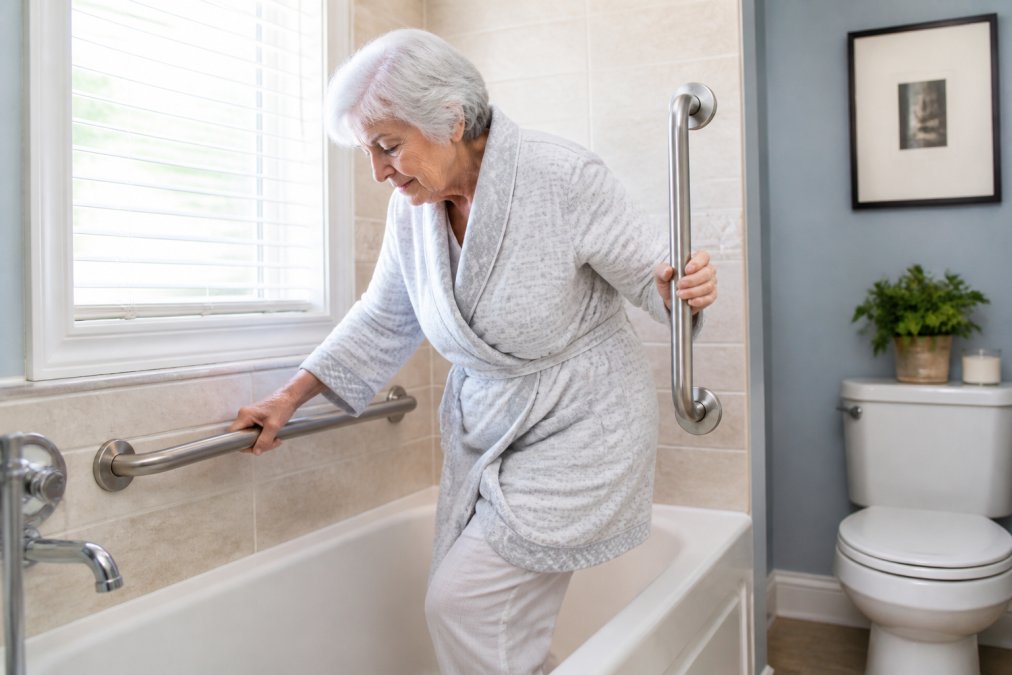
Handrails and grab bars provide critical stability. Staircases need sturdy handrails on both sides, installed at a comfortable height (typically 34 to 38 inches). Bathrooms need grab bars near toilets, in showers, and along tub edges. Ensure bars are securely mounted to wall studs, not just drywall.
Footwear affects stability significantly. Wear supportive shoes with non-slip soles indoors. Avoid socks alone on hard floors, which reduce traction. Keep shoes near your bed for nighttime trips.
Home Modifications for Seniors
Strategic modifications transform your home into a safe, accessible environment while maintaining independence.
Bathroom Safety and Accessibility
Bathrooms present the perfect storm of hazards: wet surfaces, hard fixtures, and the need to balance while undressed. Walk-in showers eliminate the step over a tub edge and reduce slipping risk. If a full renovation isn't feasible, a shower chair and handheld showerhead make bathing safer. Non-slip mats on tub and shower floors are essential. Raised toilet seats reduce the distance you need to lower yourself, easing strain on knees and hips.
Lever-handle faucets replace knobs, which require gripping strength. Consider thermostatic mixing valves that prevent scalding if you lose grip or balance. Adequate ventilation prevents moisture buildup that makes surfaces slippery.
Lighting and Visibility Improvements
Darkness is a fall risk multiplier. Seniors often have reduced night vision and take longer to adjust when moving between light and dark areas. Install bright LED bulbs (60-100 watts equivalent) in main living areas. Bathrooms and hallways need even brighter lighting, often 75-100 watts equivalent.
Motion-activated lights in hallways and bathrooms eliminate fumbling for switches in the dark. Nightlights in hallways and bedrooms provide low-level illumination without disruption. Consider cooler white bulbs (4000-5000K) in bathrooms and hallways for improved visibility.
Staircase and Multi-Floor Access
Stairs become increasingly risky as mobility declines. Handrails on both sides of stairs provide stability going up and down. Ensure they're continuous and securely mounted. Stair treads should be uniform in height and depth. Non-slip tape on stair edges improves traction.
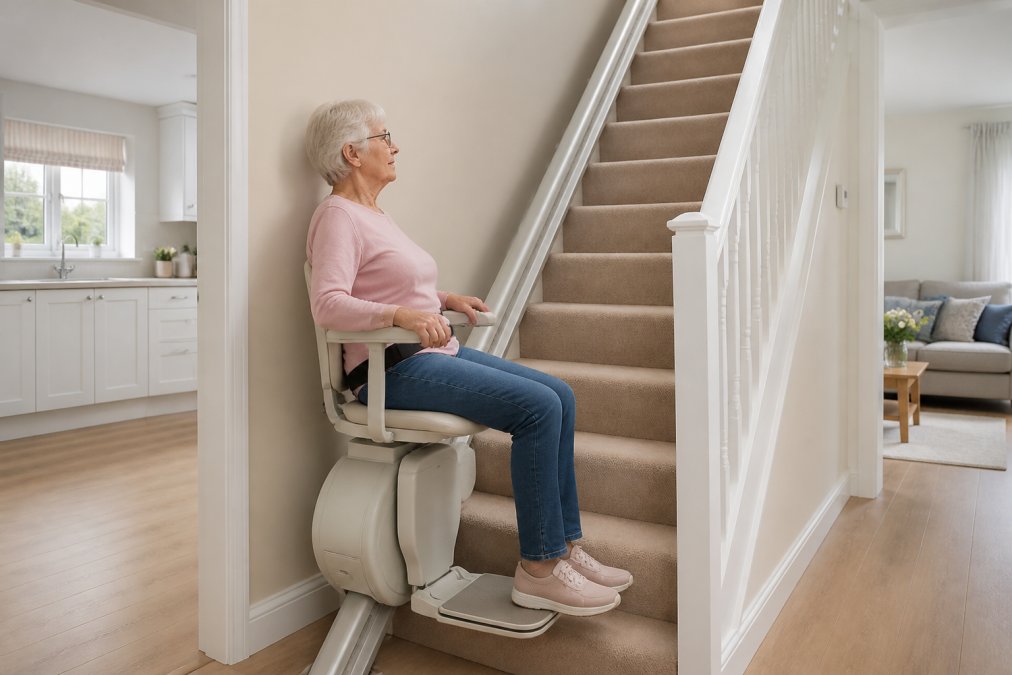
For homes where climbing stairs becomes unsafe, stairlifts offer a practical solution. A stairlift allows you to age in place safely by regaining access to every floor of your home without the physical demands of climbing. CT Stairlifts specializes in installations tailored to your home's layout and your specific mobility needs, ensuring you maintain independence across all levels.
Consider moving essential items like bedrooms to the main floor, eliminating stair climbing during vulnerable nighttime hours.
Stairlift Benefits for Seniors
For people with mobility challenges, stairs become a barrier to independence. A stairlift removes this barrier, allowing you to age in place safely by maintaining access to all floors of your home.
A stairlift is a motorized chair that travels along a rail installed on your staircase. You sit in the chair, secure the safety belt, and the lift carries you up or down at a controlled pace. Installation takes a few hours and requires no structural modifications to your home.
The primary benefit is regaining access to upper floors. Bedrooms, bathrooms, or storage upstairs become accessible again without the physical demands and fall risk of climbing stairs. This maintains normal living patterns and supports emotional well-being.
Safety features are built in. Most lifts have multiple braking systems, so a power failure won't leave you stuck mid-staircase. The chair includes a safety belt, armrests, and footrest to keep you secure. Speed is controlled and adjustable.
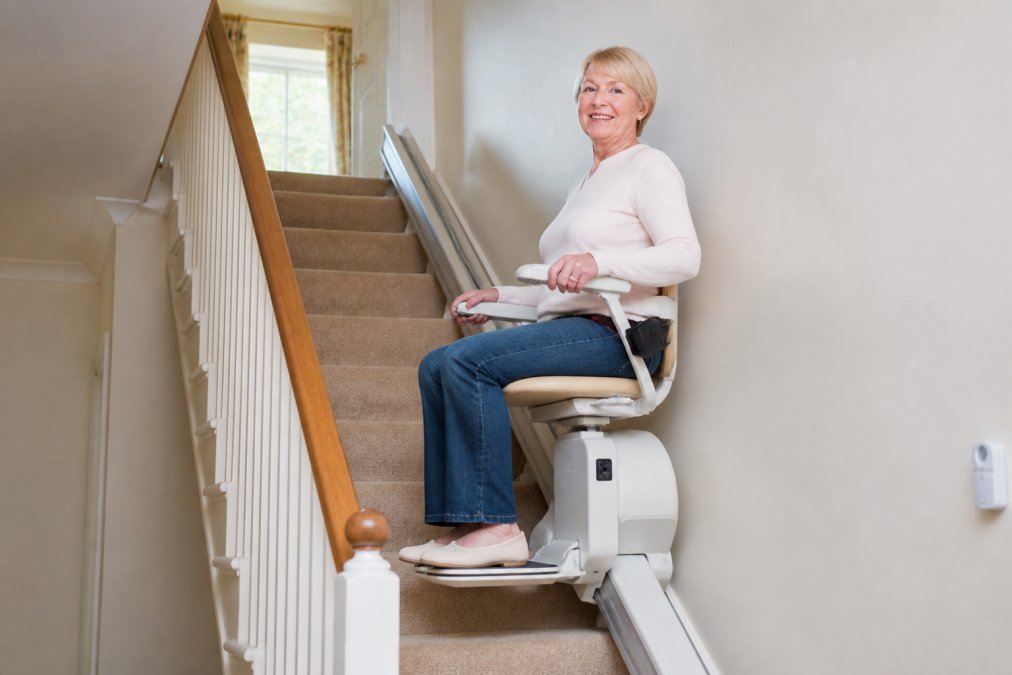
Installation requires professional assessment. Stairs vary in width, angle, and configuration. CT Stairlifts evaluates your home's layout and installs a lift configured for your stairs, ensuring safe, reliable operation.
Implement Mobility Aids and Smart Home Technology
Beyond home modifications, mobility aids and smart home devices create multiple layers of safety and convenience.
Mobility aids range from simple canes to walkers and rollators. A cane distributes weight and improves balance on level ground. A walker provides more support for significant balance concerns. A rollator adds wheels and a seat, allowing rest during longer distances.
Smart home technology adds safety monitoring without requiring constant caregiver presence. Medical alert systems let you call for help with a button press. Fall detection systems can automatically alert emergency contacts if a fall is detected. Motion sensors can trigger lights automatically, preventing trips in dark hallways. Voice-activated assistants can control lights, locks, and other devices without physical manipulation.
According to research on smart home technology for aging in place, these systems increase confidence and reduce anxiety about living independently.
Plan for Emergency Response and Long-Term Care
Aging in place safely requires planning beyond the physical home. You need systems for emergency response and a realistic assessment of future care needs.
An emergency response plan identifies how you'll get help if something happens. This includes emergency contact numbers, medical information, and a way to alert responders to your location. Medical alert systems provide an immediate way to call for help. Inform neighbors, friends, or family members of your emergency plan so they can check on you regularly.
Document your medical history, medications, allergies, and healthcare providers. Keep this information accessible to emergency responders. A medical information sheet posted on your refrigerator can be lifesaving.
Consider long-term care planning. Aging in place works well until care needs exceed what you can manage at home. Discuss with family members what happens if you need help with daily activities. Explore options for in-home care services, adult day programs, or eventual transition to assisted living.
Financial planning for long-term care is critical. Modifications, equipment, and potential care services have real costs. Understand what Medicare and insurance cover, and plan for out-of-pocket expenses. According to AARP guidance on aging in place planning, proactive planning prevents crisis decisions made under stress.
Creating Your Age in Place Safety Action Plan
Translating assessment and planning into action requires a structured approach. A written plan keeps you accountable and helps family members understand priorities.
Start by listing the hazards identified in your home assessment, ranked by risk. Falls in bathrooms and on stairs cause the most severe injuries, so these areas deserve first attention.
Next, identify which modifications address your highest-risk situations. If balance is your main concern, grab bars and improved lighting are essential. If strength is declining, lever handles and raised toilet seats matter more.
Set a realistic timeline. A phased approach, bathroom modifications first, then lighting, then staircase access•spreads costs and allows time to adjust to each change.
Assign responsibility. For complex installations like stairlifts, professional installation is essential. For simpler changes like grab bar installation, you might manage these yourself if comfortable.
Create a budget. Grab bars, non-slip mats, and lighting upgrades are relatively inexpensive. Bathroom renovations and stairlifts represent larger investments. Review and adjust annually as your needs change.
| Action | Timeline | Priority | Estimated Cost |
|---|---|---|---|
| Home safety assessment | Month 1 | High | Varies |
| Bathroom grab bars | Month 1-2 | High | Low |
| Lighting upgrades | Month 2-3 | High | Low-Medium |
| Non-slip flooring | Month 2-3 | High | Low-Medium |
| Stairlift installation | Month 3-4 | Medium | High |
| Mobility aids | Ongoing | Medium | Low-Medium |
| Smart home setup | Month 4-5 | Medium | Medium |
| Emergency planning | Month 1 | High | None |
Aging in place safely is achievable with intentional planning and the right modifications. Your home can support independence at any age when you address hazards systematically and implement solutions tailored to your specific needs. CT Stairlifts helps you regain access to every floor of your home through professional stairlift installation, ensuring mobility and independence remain within reach. Start your assessment today, prioritize your highest-risk areas, and take action one step at a time.
Frequently Asked Questions
Q: What are the most important steps to age in place safely?
A: Start with a thorough home safety assessment to identify fall risks and accessibility barriers. Prioritize bathroom modifications including grab bars and non-slip flooring, improve lighting throughout your home, and address staircase access through modifications or mobility aids like stairlifts. Establish emergency response systems, organize medications, and create a written action plan. Consider consulting with a professional home modification specialist to ensure all changes meet your specific needs and mobility requirements.
Q: How can I prevent falls at home as I age?
A: Remove tripping hazards like loose rugs and clutter from walkways. Install grab bars in bathrooms and hallways, use non-slip flooring or adhesive strips on stairs, and ensure adequate lighting in every room. Wear supportive footwear indoors, use mobility aids if needed, and keep frequently used items at waist height to avoid bending or stretching. Regular exercise to maintain balance and strength is also essential. Have your vision and hearing checked annually, as these affect fall risk significantly.
Q: What home modifications for seniors provide the most benefit?
A: Grab bars in bathrooms and hallways, walk-in showers or tubs with seating, non-slip flooring, improved lighting, and ramp or stairlift installation for multi-floor access deliver the highest safety impact. Lever-style door handles and faucets reduce hand strength requirements. Widened doorways and cleared pathways improve mobility. Raised toilet seats and bedside commodes support daily living activities. The most beneficial modifications depend on your specific mobility challenges, so a professional assessment helps prioritize which changes will have the greatest effect on your independence.
Q: Are stairlifts a good solution for aging in place safely?
A: Stairlifts provide significant benefits for seniors who need to access multiple floors safely. They eliminate the physical strain and fall risk of climbing stairs, allowing you to maintain independence and remain in your home longer. Stairlifts are particularly valuable for those with mobility limitations, arthritis, balance issues, or recovery from surgery or injury. Modern stairlifts include safety features like seat belts, backup power, and emergency descent capabilities. A professional assessment of your staircase and mobility needs helps determine if a stairlift is the right solution for your situation.
This article was written using GrandRanker