 ultimate-guide
Perch Stairlift Guide: What It Is and Who Needs It
Table of Contents
- What Is a Perch Stairlift?
- Who Needs a Perch Stairlift?
- Perch Stairlift for Knee Problems
- Perch Stairlift vs Seated Stairlift
- Stairlift for Narrow Stairs
- Stairlift Safety Features
- Who Should Avoid a Perch Stairlift
- Assessment and Decision-Making Checklist
- Frequently Asked Questions
Last Updated: October 12, 2026
What Is a Perch Stairlift?
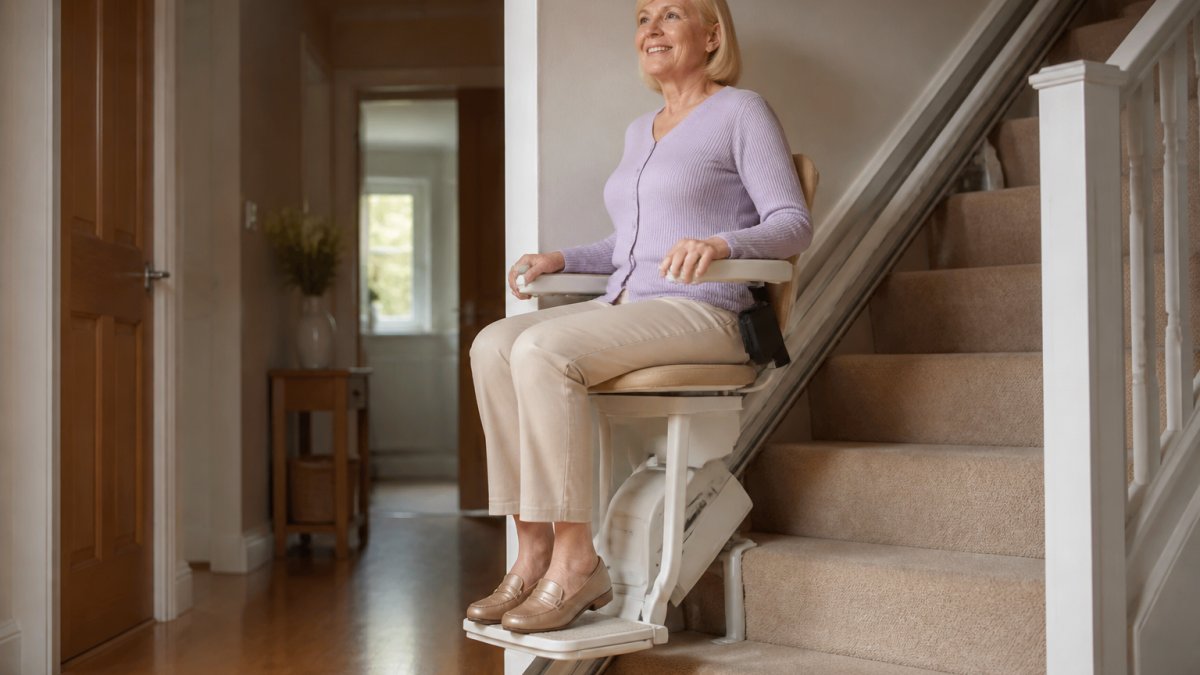
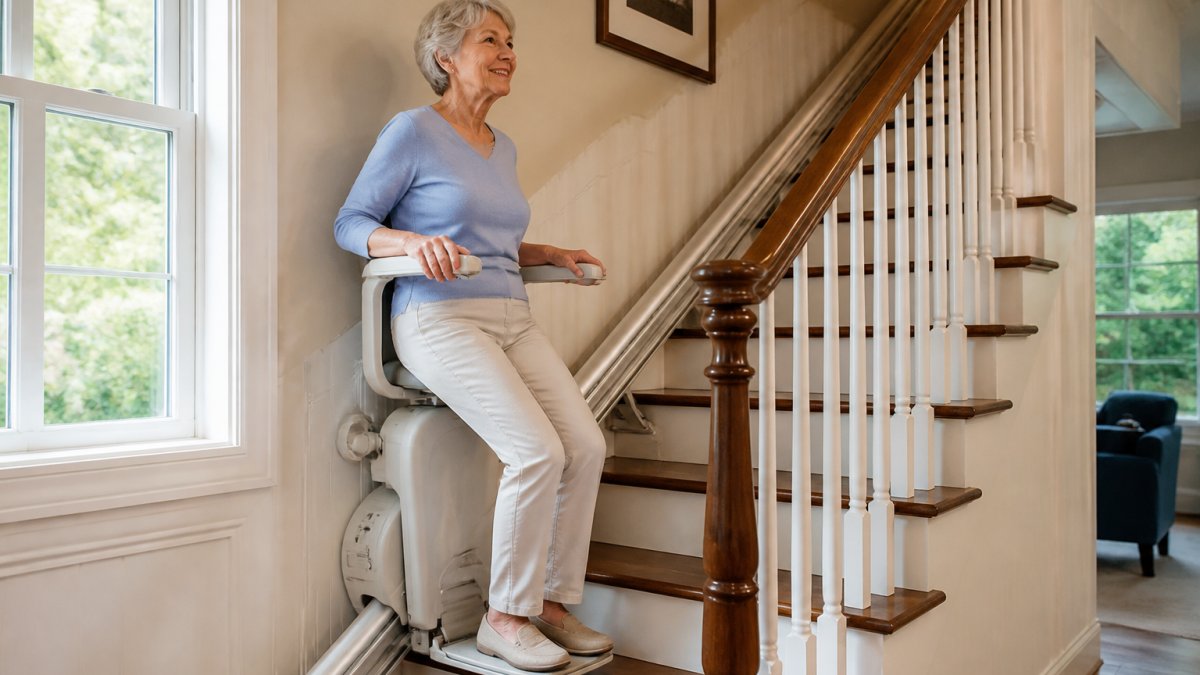
A perch stairlift is a motorized chair that allows users to ascend and descend stairs while in a semi-standing or standing position rather than sitting fully.
A perch stairlift bridges the gap between full mobility and complete stair inaccessibility for people who cannot comfortably sit down. It travels along a rail installed on your staircase, powered by a rechargeable battery, and stops smoothly at the top or bottom landing.
How a Perch Seat Works
Instead of a full chair with a backrest and footrest, the perch is a small, padded platform that supports roughly half your body weight. You back onto the seat gently, resting your thighs on the padded support while your feet remain on the stair treads.
As the stairlift moves, your body remains semi-standing with your legs relatively straight, the key advantage for people with limited hip or knee flexion.
Standing and Semi-Standing Riding Position
The semi-standing position makes a perch stairlift fundamentally different from seated alternatives: supported from behind at thigh level, your torso stays upright and your legs stay extended or only slightly bent.
This position requires minimal hip and knee flexion, making it ideal for people recovering from hip or knee surgery or with arthritis restricting those joints.
However, the semi-standing position requires adequate balance and upper-body strength to transition onto the seat and stay stable throughout the ride.
Who Needs a Perch Stairlift?
A perch stairlift suits a specific group: people whose mobility challenges center on hip and knee movement. Understanding whether you fit this profile is essential before investing.
Limited Hip or Knee Movement
People with limited hip or knee movement are the primary candidates, including those with advanced arthritis in these joints, hip or knee replacements, or conditions that restrict flexion.
If you can walk on level ground but struggle when stairs require significant knee bending, a perch stairlift may solve your problem. It supports your thighs so your legs stay more extended, avoiding the deep hip and knee flexion seated alternatives demand.
Difficulty Bending the Legs or Sitting Down
Some people find it painful or impossible to bend their legs fully or lower themselves into a seated position, whether from hip surgery recovery, severe arthritis, ankylosing spondylitis, or other conditions affecting spinal or joint mobility.
A perch stairlift eliminates that requirement: you rest your thighs on a support while remaining mostly upright. This can be the difference between maintaining access to your upper floors and being confined to one level.
Recovery From Surgery or Injury
People recovering from hip, knee, or back surgery often face temporary but severe restrictions on bending and sitting, and surgeons may recommend avoiding hip or knee flexion entirely. A perch stairlift lets you navigate stairs safely during this window without violating those restrictions.
Once recovery is complete, you may no longer need the stairlift or might transition to a seated model, making a perch stairlift a practical choice for post-surgical patients.
Perch Stairlift for Knee Problems
Knee problems are one of the most common reasons people seek a perch stairlift. Whether from arthritis, injury, or surgery, knee pain and restricted movement can make traditional stairs inaccessible.
People with knee osteoarthritis often find the repetitive bending of stairs, especially descending, causes significant pain and swelling; a perch stairlift removes that stress.
The trade-off: a perch stairlift requires more balance and upper-body stability than a seated one, so if your knee problems come with balance issues or significant weakness, you may need a different solution.
Perch Stairlift vs Seated Stairlift
Both devices solve stair accessibility, but they serve different mobility profiles.
Key Differences in Design and Comfort
A seated stairlift features a full chair with a backrest, seat cushion, and footrest.
A perch stairlift has a minimal seat, just a small platform supporting your thighs, with no backrest or footrest. You remain semi-standing, with your legs extended and your torso upright.
For normal hip and knee mobility, a seated stairlift is usually more comfortable; for restricted hip or knee movement, a seated stairlift becomes painful or impossible, making a perch stairlift the better option.
When to Choose Each Type
Choose a seated stairlift if:
- Your hips and knees bend normally or with only minor restrictions
- You value comfort and a fully supported ride
- You have balance issues or significant weakness
Choose a perch stairlift if:
- You have limited hip or knee flexion due to arthritis, surgery, or injury
- Sitting causes pain or is physically impossible
- You have adequate balance and upper-body strength
CT Stairlifts can help you evaluate which option suits your situation; a professional assessment of your mobility, strength, and comfort is the best way to determine the right fit.
Stairlift for Narrow Stairs
A perch stairlift's compact design suits narrow staircases where a full-sized seated stairlift might not fit.
A seated stairlift needs more horizontal space because the chair extends outward from the rail.
A perch stairlift takes up less space: the smaller seat and reduced footprint often fit narrower stairs while leaving room for someone else to pass, valuable in multi-story homes where stairs are the main traffic route.
Narrow stairs also require careful installation: the rail must be positioned precisely so the device doesn't interfere with the stair structure or create a tripping hazard.
Stairlift Safety Features
Modern stairlifts include multiple protective features to prevent accidents and injuries.
Safety Risks and How to Mitigate Them
The primary safety risk with a perch stairlift is falling during the ride.
Mitigation strategies include:
- Armrests: Modern perch stairlifts have sturdy armrests you grip during the ride, helping you maintain balance and stability.
- Safety belt: Many models include a lap belt or harness to keep you secure on the seat.
- Obstruction sensors: The device stops automatically if it detects an obstacle on the stairs, preventing collisions that could destabilize you.
A secondary risk is improper use: incorrect positioning on the seat, or using the device while unwell or drowsy, can cause accidents. Proper installer training is essential, and users should review safety procedures periodically.
Maintenance matters too: an unserviced stairlift may develop mechanical issues that compromise safety, so regular professional inspections catch problems before they become hazardous.
Who Should Avoid a Perch Stairlift
Recognizing when a perch stairlift is not appropriate is as important as knowing when it is.
Avoid a perch stairlift if:
- You have significant balance problems or vertigo that makes standing risky
- You lack upper-body strength to grip armrests or catch yourself
- You cannot safely transfer onto the device without assistance
For people in these categories, a seated stairlift, platform lift, residential elevator, or single-story home may be better options. The goal is safe, comfortable stair access, for some, best achieved without a perch stairlift.
Assessment and Decision-Making Checklist
Before deciding on a perch stairlift, work through this checklist to clarify your needs and constraints.
| Assessment Factor | Questions to Consider | What It Means |
|---|---|---|
| Hip/Knee Movement | Can you bend your hips and knees to 90 degrees without pain? | Limited movement favors perch; normal movement favors seated |
| Balance and Strength | Can you stand on one leg briefly? Do you have grip strength? | Weak balance or grip favors seated; adequate strength favors perch |
| Staircase Width | Is your staircase narrow (under 36 inches)? | Narrow stairs may require perch; wider stairs accommodate either |
| Recovery Timeline | Is your mobility restriction temporary or permanent? | Temporary restriction may justify rental; permanent suggests purchase |
| Living Situation | Do you live alone or with others who need stair access? | Shared access favors perch (smaller footprint); solo use allows seated |
| Pain or Discomfort | Does sitting cause pain? Can you sit comfortably at all? | Pain with sitting strongly favors perch |
| Home Modifications | Are you willing to have a rail installed permanently? | Permanent installation required for any stairlift |
Use this checklist with a professional assessment. CT Stairlifts can evaluate your home, discuss your mobility challenges, and recommend the best solution, a perch stairlift, a seated stairlift, another device, or a home modification.
The key is an informed decision based on your actual needs, not assumptions about how stairlifts work. A consultation with a mobility specialist ensures you invest in the right solution.
Navigating stairs becomes impossible when mobility restrictions take hold, but you don't have to give up access to your home's upper floors. CT Stairlifts specializes in assessing your unique situation and installing the right stairlift, whether a perch model, a seated alternative, or another mobility solution, to restore your access and confidence. Learn more about aging in place safely from the National Institute on Aging to understand how home modifications support independence.
Frequently Asked Questions
What is a perch stairlift?
A perch stairlift is a mobility device that allows users to ascend and descend stairs while in a semi-standing or standing position. Unlike traditional seated stairlifts where you sit fully, a perch stairlift features a small, compact seat that supports your thighs and buttocks while your legs remain partially extended. This design is particularly beneficial for people with limited hip or knee flexion, arthritis, or difficulty bending their legs. The perch seat is shortened and positioned to keep users upright throughout the ride.
Who is a perch stairlift suitable for?
A perch stairlift is suitable for individuals with restricted hip or knee movement, those who experience pain when bending their legs fully, and people recovering from hip or knee surgery. It also works well for users who struggle to sit down completely or have difficulty standing back up from a fully seated position. Anyone with chronic conditions affecting joint flexibility, such as arthritis or osteoporosis, may find a perch stairlift more comfortable than a traditional seated stairlift. A professional assessment can determine if a perch stairlift matches your specific mobility needs.
How does a perch stairlift compare to a seated stairlift?
A perch stairlift keeps you in a semi-standing position with legs partially extended, while a seated stairlift requires you to sit fully with legs bent at the knees and hips. Perch stairlifts are ideal for people with limited knee or hip flexion, whereas seated stairlifts suit those who can bend comfortably and prefer full support. Perch stairlifts also work better on narrow staircases because they take up less horizontal space. The choice depends on your range of motion, comfort level, and staircase dimensions. Both offer safe, independent access to multiple floors of your home.
Can a perch stairlift be installed on a narrow staircase?
Yes, perch stairlifts are often the better choice for narrow staircases because their compact design requires less space than a full seated stairlift. The smaller seat and semi-standing position mean the device projects less into the stairway, leaving more room for other household members to pass. However, the width of your staircase still matters, and installation depends on the specific dimensions and configuration of your stairs. A professional assessment is necessary to confirm that a perch stairlift will fit safely and function properly in your home.
What safety features should I look for in a stairlift?
Key safety features include a secure harness or seatbelt to keep you stable during the ride, footrests that support your feet, handrails for balance and support, and an emergency stop button within easy reach. Modern stairlifts include backup power systems so the device can complete a cycle if the power fails, preventing you from being stranded mid-staircase. Look for models with smooth acceleration and deceleration, obstacle detection sensors, and a sturdy frame designed to support your weight safely. Always ensure the stairlift is installed by qualified professionals and regularly maintained.
What are the disadvantages of a perch stairlift?
Perch stairlifts may feel less stable for some users compared to fully seated options because you remain partially upright. They require good balance and leg strength to transfer safely on and off the device, which may not suit everyone. The semi-standing position can be uncomfortable during longer rides or if you have lower back pain. Installation costs depend on your specific home layout. A consultation with a mobility specialist can help you weigh these disadvantages against the benefits for your situation.
How much does a perch stairlift cost?
Perch stairlift pricing depends on several factors, including your staircase configuration, whether it is straight or curved, installation complexity, and any customization needed for your home. Costs vary significantly based on these variables and your location. For current pricing and a personalized quote tailored to your home, contact CT Stairlifts directly. They can assess your staircase and provide an accurate estimate based on your specific mobility needs and home layout.
Can you install a perch stairlift on a curved staircase?
A professional assessment of your curved staircase is necessary to determine what options are available.