 ultimate-guide
Preventing Falls on Stairs for Seniors: 2026 Guide
Table of Contents
- Why Stair Falls Happen and What They Cost You
- Stair Safety Modifications for Elderly Adults That Work
- Balance, Mobility, and Assistive Technology
- Stair Lift Installation Cost: What to Expect
- Home Safety Checklist for Seniors
- Emergency Planning and Outdoor Stair Safety
- Frequently Asked Questions
Last Updated: September 15, 2026
Why Stair Falls Happen and What They Cost You
Preventing falls on stairs for seniors starts with understanding why stairs are so unforgiving. A staircase concentrates several risks into a few square feet: a change in elevation, a narrow walking surface, and a moment when your full body weight shifts onto one leg. Age adds balance decline, slower reaction time, and reduced lower-body strength to that equation.
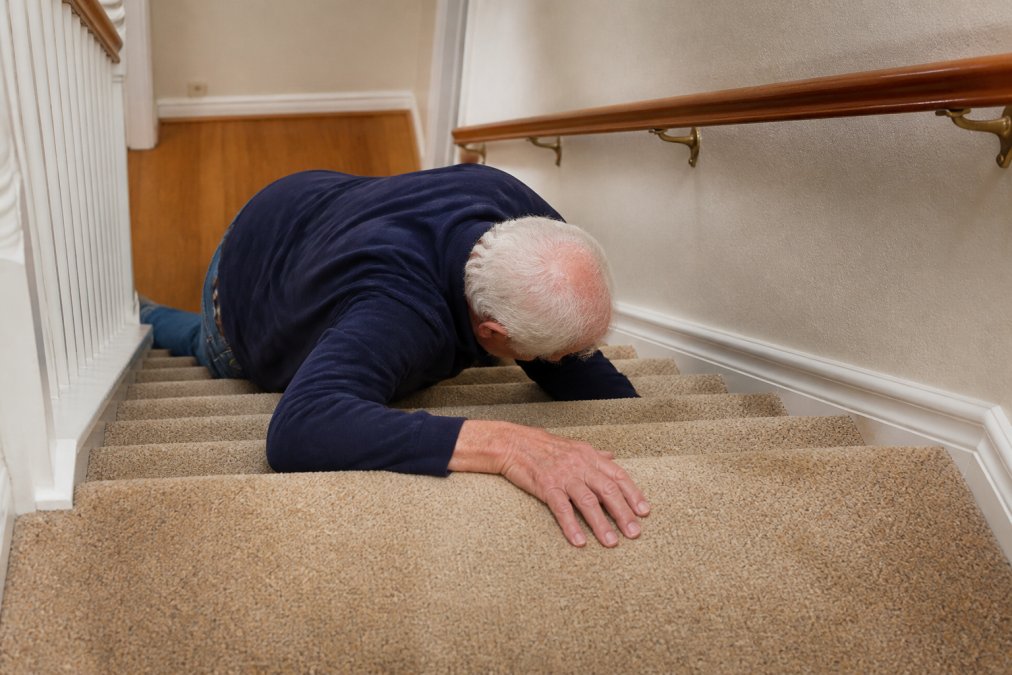
The consequences are serious. A fall on a staircase is more likely to cause a fracture or head injury than a fall on a flat floor, because you land lower than you started with nothing to catch yourself on. Many older adults who break a hip never return to independent living, which is exactly why prevention matters more than reaction (the CDC).
The good news: nearly every stair fall traces back to a fixable cause. Worn treads, missing handrails, poor lighting, loose rugs, and weak balance are all addressable. Below, we'll walk through the modifications, exercises, and planning steps that actually reduce risk, plus what stair lift installation typically involves for homeowners.
Stair Safety Modifications for Elderly Adults That Work
Stair safety modifications for elderly adults fall into two groups: changes to the stairs themselves and changes to how you use them. Start with the physical environment, because it protects everyone in the home regardless of strength or balance.
Handrails, Lighting, and Non-Slip Treads
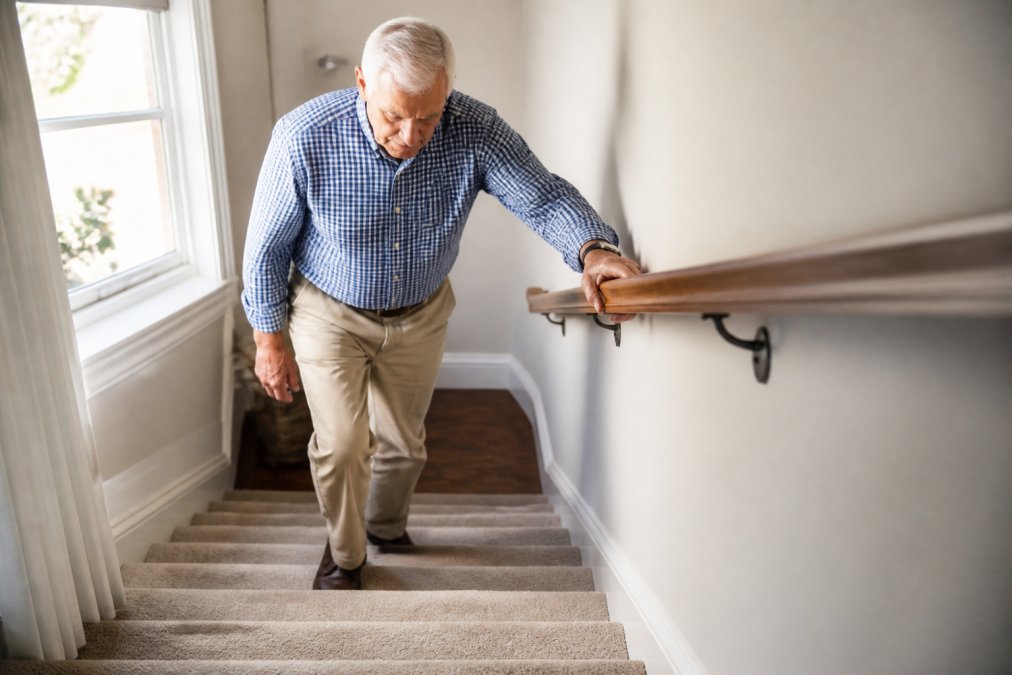
Handrails are the single highest-value fix. Install one on each side of the staircase, mounted at elbow height so you can grip without reaching or stooping. The rail should be continuous from the top landing to the bottom, with no gaps at turns.
Lighting comes second. Steps need even illumination with no shadows falling across the tread edges, and light switches should sit at both the top and bottom of the stairs so nobody walks a dark staircase to find a switch. Motion-sensor lighting removes that problem entirely.
Non-slip treads and coverings address the surface itself. Low-pile carpet with a secure underlay works well, as does a matte finish on bare wood. Avoid polished hardwood, loose rugs, and any runner that isn't fastened down.
Removing Tripping Hazards and Repairing Worn Steps
Walk your staircase and look for anything that interrupts a clean step. Common culprits include:
- Clutter stored on landings or the bottom steps
- Loose or curled carpet edges
- Cracked, cupped, or uneven treads
- Protruding nails or screws
- Poor visual contrast between tread and nosing
Repair worn steps before adding coverings, since a covering over a broken tread hides the problem without fixing it. Mark step edges with contrasting color or a strip of tape so depth perception stays accurate. For anyone with low vision, that contrast is often the difference between a confident step and a missed one.
Balance, Mobility, and Assistive Technology
Strength and balance work is the half of fall prevention that equipment can't replace. A physical therapist can assess your gait, recommend specific exercises, and identify which movements put you at risk. Many therapists make home visits and will evaluate your actual staircase rather than a clinic mock-up. Ask your physician for a referral to a physical therapist who does home safety evaluations, and check whether your Medicare plan covers the visit, medically necessary in-home physical therapy is commonly covered when a doctor orders it (Physical Therapy Coverage).
Exercises That Build Stair-Specific Strength
Stair climbing demands ankle dorsiflexion (lifting the toes), knee extension, hip extension, and the ability to shift weight onto one leg while the other clears a step. Exercises that target those specific demands help most:
- Heel-to-toe walking along a counter or wall for 10-20 steps, done daily, trains the narrow-base balance you need on a tread.
- Single-leg stands while holding a counter, working up to 30 seconds per side, mimic the moment your full weight rests on one leg.
- Sit-to-stand repetitions from a firm, armless chair, 8 to 12 reps, two or three times a day, build the quadriceps and glute strength that powers the push-off.
- Step-ups onto a low, stable platform (a bottom stair or a 4-inch step) with a handrail in reach train the exact motion of ascending.
- Ankle pumps and calf raises improve the push-off and reduce the toe-catch risk that causes so many forward falls.
Consistency matters more than intensity: a few minutes daily beats one long session a week. Stop any exercise that causes pain, dizziness, or loss of balance, and get clearance from a physician before starting if you have heart, joint, or neurological conditions.
Matching the Device to the Staircase
Assistive devices fall into two categories: those that help you move yourself, and those that move you. Choosing wrong is worse than choosing nothing, because a device used on the wrong surface can itself cause a fall.
Canes and walkers. A standard cane or rollator is designed for flat, level ground (Mobility Aids: MedlinePlus). On stairs, a rollator's wheels can roll off a tread edge, and a cane offers only one point of contact on a surface where you need two. Neither should be used to climb or descend stairs. If you use a cane on flat ground, use the handrail, not the cane, on stairs, and carry the cane in your free hand.
Stair-climbing aids. A second handrail is the cheapest upgrade and often the most effective. Beyond that:
- Grab bars at the top and bottom landings stabilize the transition on and off the stairs, where most stumbles happen. They must be anchored into studs or blocking, not drywall.
- Transfer poles (floor-to-ceiling tension poles) give a vertical grip point near a landing or bedside but are not a substitute for a handrail along the run.
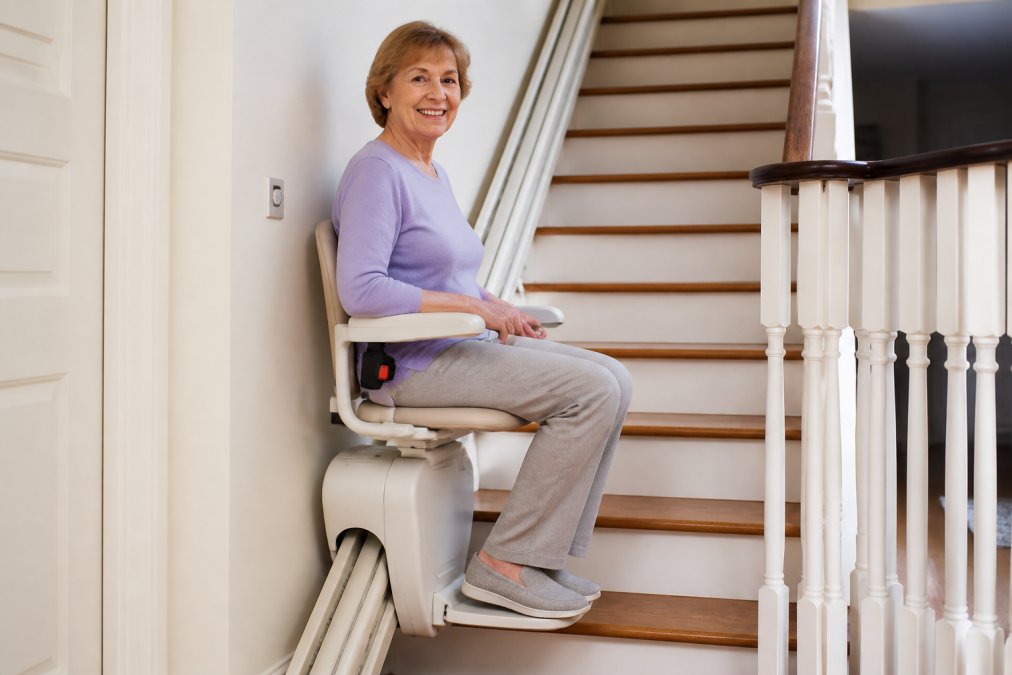
- Stair lifts carry you seated along a rail mounted to the treads or wall. They suit people who cannot safely climb at all, and they require a clear path and a power source at one end.
- Stair-climbing wheelchairs let a caregiver tilt and roll a seated user up or down; they demand a strong, trained operator and are not a solo solution.
Smart-home sensors. Motion-sensor lighting on the stairs removes the need to find a switch in the dark.
Before buying any device, test it on your actual staircase with a physical therapist or occupational therapist present. A device that fits a showroom floor may not fit a narrow, curved, or carpeted stair.
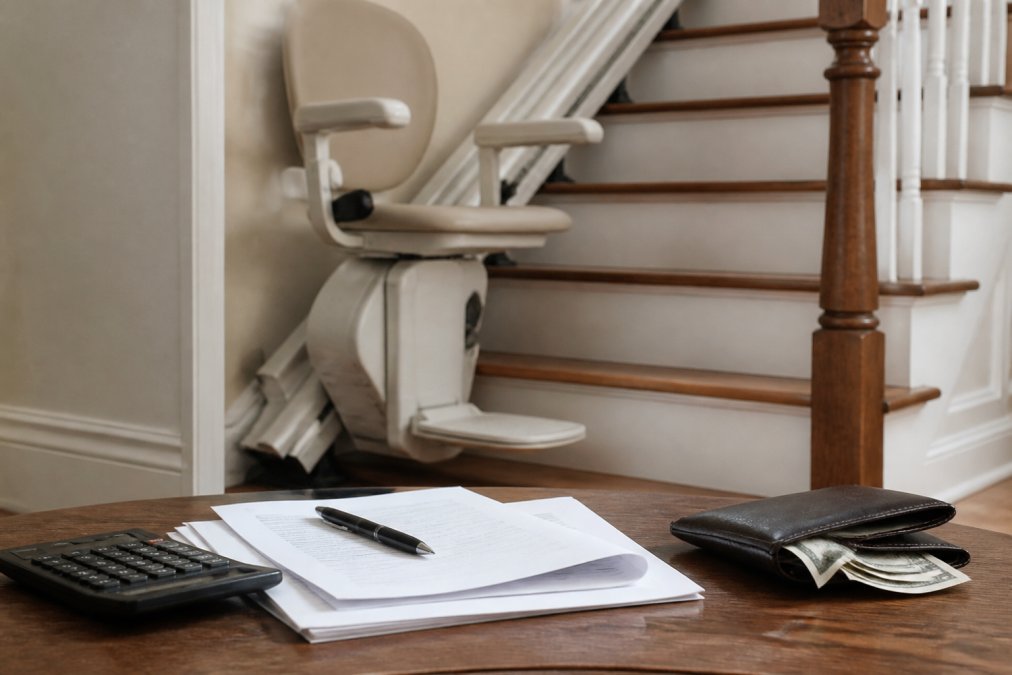
Stair Lift Installation Cost: What to Expect
Home Safety Checklist for Seniors
Emergency Planning and Outdoor Stair Safety
Carrying Help With You
What to Do If You Fall on the Stairs
Building a Check-In System
Outdoor Stairs
Frequently Asked Questions
What are the most effective ways to prevent falls on stairs for seniors?
The most effective steps combine environmental fixes with personal habits. Install secure handrails on both sides at elbow height, add adequate lighting with switches at the top and bottom, and apply non-slip treads or low-pile carpet. Remove tripping hazards like loose rugs and clutter. Wear supportive footwear indoors. For those with balance or mobility decline, a stairlift or physical therapy program can reduce risk further. A home assessment by an occupational therapist can identify specific hazards in your stairway.
What are the common causes of stair-related falls in older adults?
Age-related changes in vision, depth perception, and balance make stairs riskier. Common causes include missing or loose handrails, poor lighting, worn or uneven step edges, slippery surfaces, and tripping hazards like shoes or cords left on steps. Medication side effects and chronic conditions affecting mobility also contribute. Many falls happen on the bottom or top step where people misjudge the transition.
What safety modifications are needed for senior-friendly stairs?
Key modifications include installing handrails on both sides secured into studs, improving lighting with motion-sensor or illuminated switches, and applying non-slip stair treads or coverings. Repair loose steps and railings. Add visual contrast to step edges with contrasting tape or paint. For significant mobility decline, a stairlift may be appropriate. A home safety checklist for seniors can help you prioritize changes room by room.
How do I know if a stair lift is the right solution for my home?
A stairlift makes sense when climbing stairs causes pain, fatigue, or fear of falling, and you want to remain in your multi-level home. It is also useful during recovery from surgery or injury. Stairlifts fit most straight and curved staircases, though narrow or oddly shaped stairs may require a custom solution. An in-home assessment is the best way to determine fit. If you are unsure about long-term need, ask about rental options.
Why are stair lifts not covered by Medicare?
Medicare generally classifies stairlifts as home modification equipment rather than durable medical equipment, so they are not covered under standard Part B benefits. Some Medicare Advantage plans may offer limited coverage, and Medicaid waivers in certain states can help. Veterans may qualify for assistance through VA benefits. Check with your plan and state Medicaid office to understand what might apply to your situation.
What can seniors do instead of a stair lift?
Alternatives include rearranging your home to live on one floor, installing a home elevator or vertical platform lift, or using physical therapy to improve strength and balance so you can manage stairs safely. Some people add a second handrail, improve lighting, and use non-slip treads. If stairs remain difficult, a stairlift is often less expensive and less disruptive than moving or installing an elevator. Talk with a healthcare provider about which option matches your mobility needs.