 ultimate-guide
Stairlift Safety Features for Elderly Users
Last Updated: November 4, 2026
Quick Summary
Stairlift safety depends on a core package of obstruction sensors, safety edges, a retractable seatbelt, a swivel seat, and an emergency stop, backed by battery backup and routine maintenance. These features stop the chair at obstacles, secure you during travel, and support controlled transfers at the top and bottom. Monthly checks and an annual professional inspection keep that protection working.
- Obstruction sensors, safety edges, and a footrest sensor halt the chair rather than letting it push through an object.
- A swivel seat locks in the riding position and rotates at the landing so you step off onto the floor.
- Exceeding the rated weight limit strains the motor, rail fixings, and brakes, so confirm capacity for your model.
- Run a monthly walk-through covering sensors, seatbelt, swivel lock, battery display, rail, and emergency stop.
- Book a technician once a year for brake performance, battery health, rail integrity, and a fault log review.
Table of Contents
- How Stairlifts Work and Why Safety Features Matter
- Essential Stairlift Safety Features for Elderly Users
- Stairlift Weight Capacity Standards and User Weight Limits
- Stairlift Battery Backup Systems and Power Outage Protection
- Your Stairlift Maintenance Checklist for Long-Term Safety
- Troubleshooting a Stalled Stairlift: A Caregiver's Emergency Guide
- Common Myths About Stairlift Safety
- Choosing the Right Stairlift for Your Home and Needs
- Frequently Asked Questions
How Stairlifts Work and Why Safety Features Matter
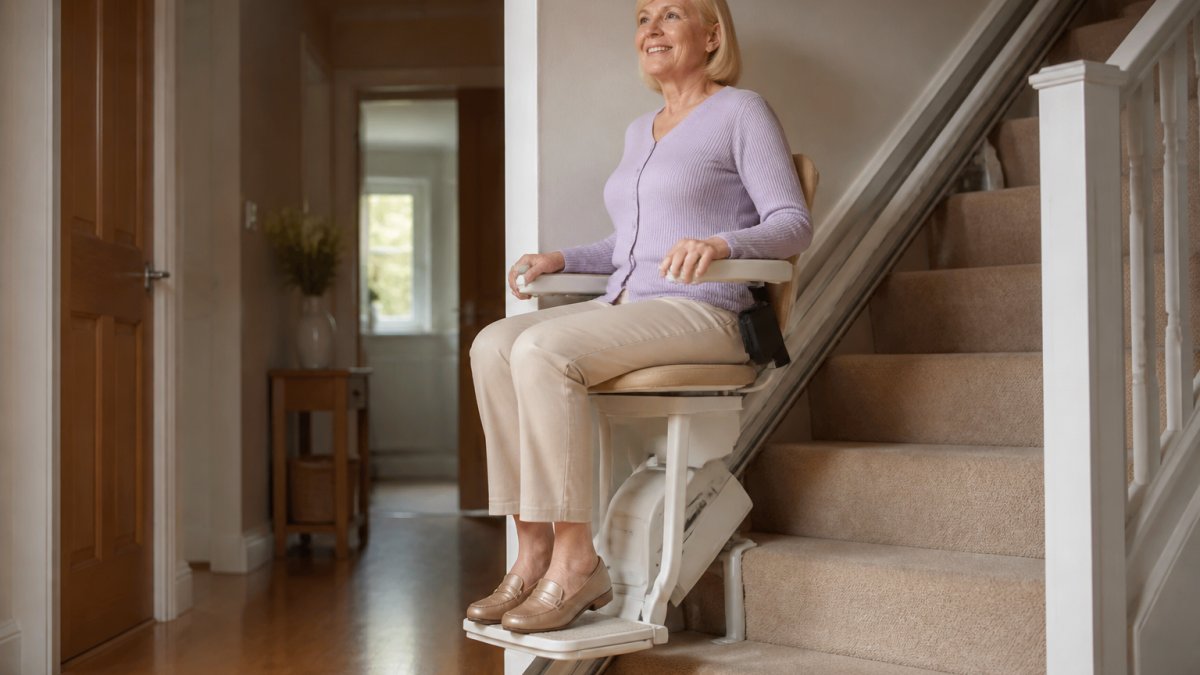
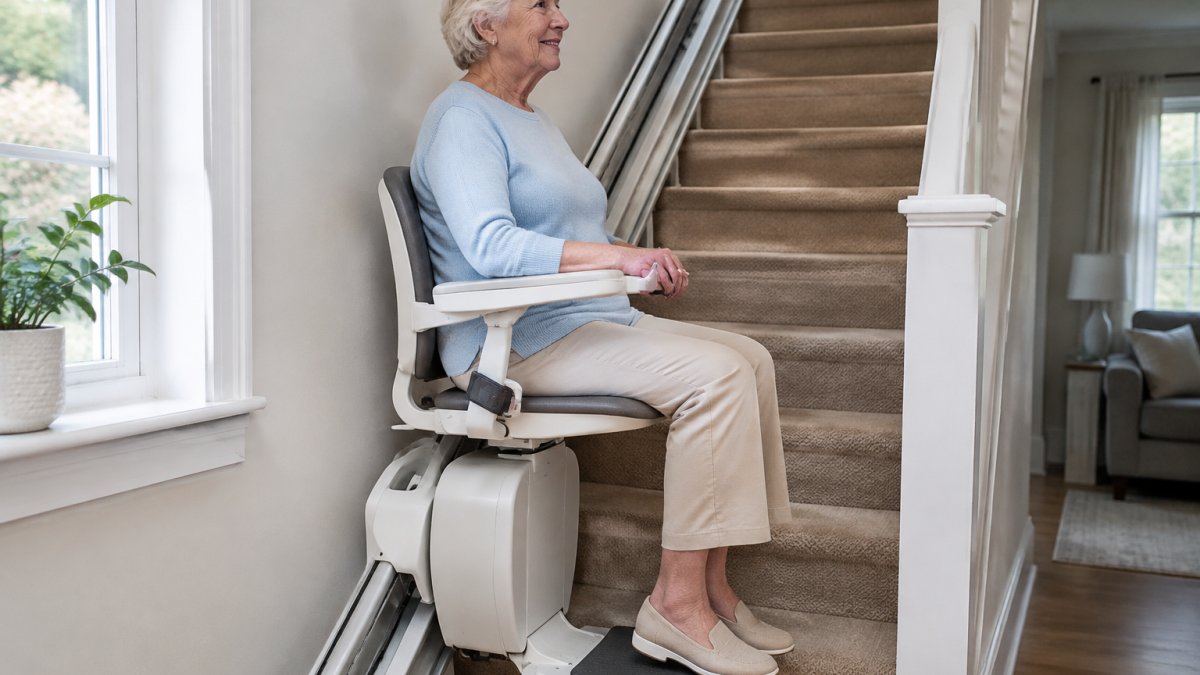
A stairlift is a motorized chair that travels along a rail mounted to your staircase, carrying one person up and down without requiring them to climb steps.
The mechanics are straightforward. A carriage rides on a rail fixed to the treads or the wall, driven by a motor with a gear or friction system. The chair has a seat, armrests, a footrest, and controls on the arm.
Why does the safety engineering matter so much? Federal guidance from the Centers for Disease Control and Prevention on falls among older adults makes clear why this matters: falls are a leading cause of injury for seniors, and stairs are a common location.
Essential Stairlift Safety Features for Elderly Users
The core safety package on a quality stairlift typically includes obstruction sensors, safety edges, a retractable seatbelt, a swivel seat, and an emergency stop.
Obstruction Sensors, Safety Edges, and Footrest Sensors
Obstruction sensors stop the chair when something blocks its path. Safety edges along the carriage and rail cut power the moment they contact an object. A footrest sensor does the same if the footrest meets an obstacle. These three work together so the chair halts rather than pushes through a toy, a pet, or a misplaced cane, protection that is not optional in a household with grandchildren or visitors.
Retractable Seatbelts, Swivel Seats, and Transfer Safety
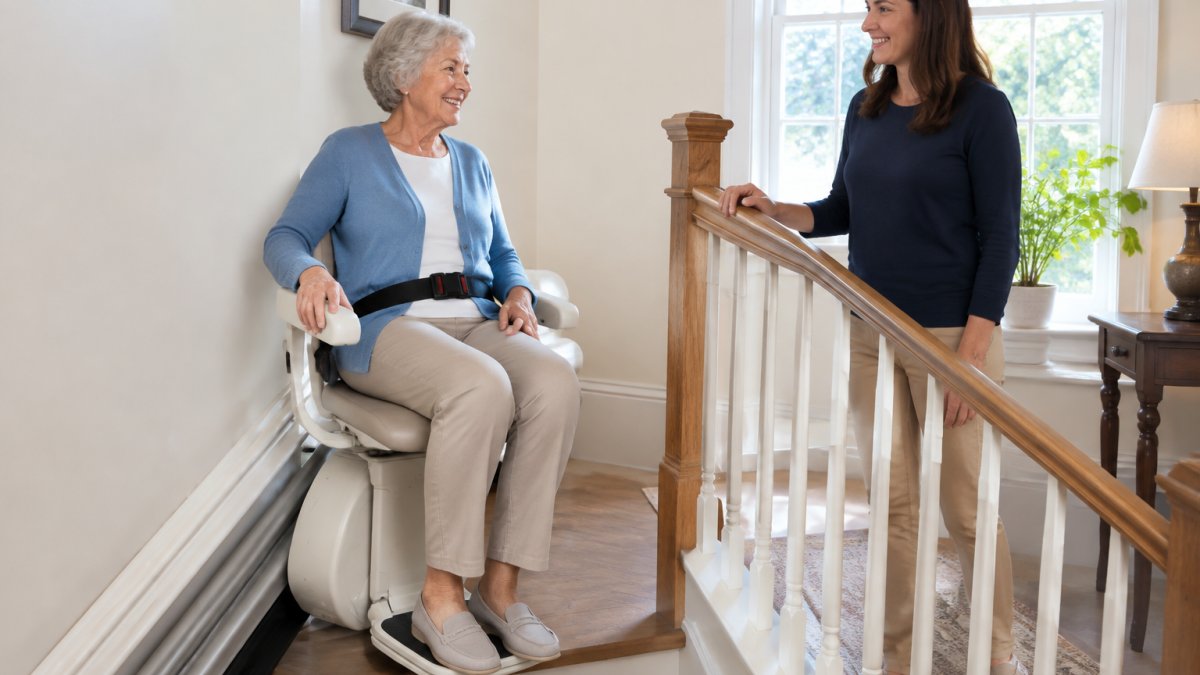
A retractable seatbelt keeps the rider secured during travel and retracts out of the way for boarding. The swivel seat locks in the riding position and rotates at the top landing so the user steps off onto the floor rather than twisting toward the stairs. For a fuller rundown before choosing, read our guide to stairlift safety features every buyer should know.
Stairlift Weight Capacity Standards and User Weight Limits
Why it matters: exceeding the user weight limit strains the motor, the rail fixings, and the braking system, and it can shorten the life of the unit.
The capacity rating is not a single number floating in a brochure, it is the output of a chain of engineering decisions.
Capacity also interacts with the staircase.
Finally, capacity is not static over the life of the lift.
Stairlift Battery Backup Systems and Power Outage Protection
Battery backup can keep a stairlift running when the household power fails, helping to avoid leaving the rider stranded mid-flight. The chair charges its battery from the mains while parked; during an outage it draws on that stored charge to complete the trip.
Battery backup is a feature worth considering for most households. If you are weighing whether it is worth it for your situation, our article on whether battery backup is necessary for stairlifts explains how the system protects you during an outage and what to check.
Your Stairlift Maintenance Checklist for Long-Term Safety
A stairlift is a mechanical device, and like any device it needs routine care to stay safe. A simple maintenance schedule catches small problems before they become hazards.
Monthly walk-through (about ten minutes)
- Obstruction sensors and safety edges. Place a firm object, a rolled magazine or a small box, in the chair's path at the bottom of the run and send the chair toward it at normal speed. The chair should stop before contact and reverse or hold. Repeat at the top. Pass: the chair stops every time. Fail: it slows but keeps pressing, or stops only after contact.
- Footrest sensor. With the chair parked, press the front edge of the footrest against a wall or a sturdy box. The chair should cut power to the drive. Pass: no movement. Fail: the motor strains or the chair creeps.
- Seatbelt. Pull the belt out fully and let it retract. It should extend smoothly, latch with a clear click, and retract without slack or twisting. Pass: latches and retracts every time. Fail: the buckle needs a jiggle to catch, or the belt stays loose.
- Swivel seat lock. Rotate the seat to the boarding position and back to the riding position. It should lock firmly in both, with no wobble when you push against it. Pass: solid lock. Fail: the seat rocks or fails to latch at the top landing.
- Battery and fault display. With the chair parked on its charge point, confirm the charge indicator shows a full or charging state and the fault display shows no warning code. Pass: no codes, indicator normal. Fail: a code appears, or the indicator never reaches full.
- Rail and carriage. Run a hand along the visible rail and look for loose brackets, debris, pet hair, or grease buildup on the drive surface. Pass: rail clean and fixings tight. Fail: any bracket moves when pushed, or debris is packed into the rack.
Quarterly additions
- Battery load test. Unplug the charger and run one full up-and-down trip on battery power alone. Pass: the trip completes at normal speed. Fail: the chair slows noticeably or stalls, which points to a battery nearing the end of its service life.
- Remote and call controls. If the unit has a second control or a call button at the opposite landing, test it from both ends. Pass: the chair responds from both. Fail: one end is dead, which often means a loose connection rather than a failed board.
Annual professional inspection
Book a technician once a year for the checks a homeowner cannot do safely: brake performance under load, battery health measured rather than observed, rail integrity at every bracket, and a review of the fault log. Our guide to the benefits of annual stairlift safety inspections covers what a proper inspection involves and why it belongs on your calendar.
How to use the checklist
Keep a printed copy near the chair and date each pass.
Watch out: never test the obstruction sensor by putting a hand or foot in the chair's path. Use a firm object, and keep hands clear of the carriage and rail while the chair is moving.
Troubleshooting a Stalled Stairlift: A Caregiver's Emergency Guide
If a stairlift stops mid-flight, the rider should stay seated, keep the seatbelt fastened, and use the emergency stop or call for help rather than attempting to climb off.
For caregivers, the priority is calm and safety. Our step-by-step guide to safely operating a stairlift walks caregivers through correct operation, which prevents many stalls.
Watch out: never let a rider attempt to stand or step off a stalled chair on the stairs. That is the moment a manageable stall becomes a fall.
Common Myths About Stairlift Safety
Myth one: stairlifts are only for people who cannot walk at all. In practice, most users still walk short distances and use the lift to avoid the stairs, which is exactly the fall-prevention role it is designed for.
The honest limitation: a stairlift does not replace good lighting, clear stairs, or sensible footwear. It reduces risk on the staircase; it does not remove every hazard in the home.
Choosing the Right Stairlift for Your Home and Needs
Choosing well comes down to the staircase, the user, and the features that match their needs. A straight staircase takes a straight rail; a curved or unusually shaped staircase needs a custom curved rail measured to your geometry.
| Consideration | What to Check | Why It Matters |
|---|---|---|
| Staircase type | Straight vs. curved geometry | Determines rail type and fit |
| User weight | Rated capacity vs. actual weight | Keeps motor and brakes within limits |
| Transfer ability | Swivel seat, armrests, seatbelt | Safer boarding and exit |
| Power reliability | Battery backup | Protection during outages |
| Long-term care | Maintenance schedule, inspections | Sustained safety over years |
When you are ready to decide, our guide on how to choose the right stairlift for your home walks through the assessment step by step.
Frequently Asked Questions
What are the essential safety features to look for in a stairlift?
The core features are obstruction sensors on the footrest and carriage, safety edges that stop the lift on contact, a retractable seatbelt, a swivel seat for safe transfer at the top landing, and an emergency stop button. A key switch prevents unauthorized use, and battery backup keeps the lift running during a power outage. Together these features address the most common stairlift safety risks: collisions, falls during mounting and dismounting, and becoming stranded mid-flight.
How do stairlift sensors prevent accidents?
Obstruction sensors and safety edges detect objects or people in the path of the carriage and stop the lift before contact. Footrest sensors do the same at the base of the unit, where a pet or a misplaced cane is most likely to be. When the sensor trips, the lift halts and often sounds an alert. The rider or caregiver clears the obstruction, then restarts the lift. This is why keeping the staircase clear of clutter matters even on a lift with sensors.
Do stairlifts have backup power in case of a power outage?
Yes. Many residential stairlifts include battery backup systems that can keep the lift operational for a period after the household power fails. The batteries charge continuously while the lift is docked, so they are ready when needed. If an outage lasts long enough to drain them, the lift stops at its current position rather than free-falling, and the rider can use the emergency stop and call for help. Ask your installer how many trips the battery provides and how to check its charge.
What maintenance is required to keep a stairlift safe?
Follow a simple stairlift maintenance checklist: wipe the rail free of dust and debris monthly, check that the seatbelt retracts smoothly, test the obstruction sensors with a soft object, confirm the battery indicator shows a full charge, and listen for unusual noises or jerky movement. Schedule professional service annually. If the lift is used daily by someone with significant mobility issues, ask your provider whether twice-yearly servicing is warranted.
Are stairlifts safe for users with limited mobility?
Stairlifts are designed for exactly this group, but safety depends on matching the unit to the user. Weight capacity must exceed the rider's weight with margin, the seat should swivel so the user can plant both feet before standing, and a retractable seatbelt should be worn on every trip. Users who cannot transfer independently may need a caregiver present or a different mobility solution. A professional home assessment confirms what fits your staircase and your needs.
What are the downsides of having a stairlift?
The main drawbacks are cost, the space the folded unit takes at the bottom of the stairs, and the need for ongoing maintenance. Some users find the ride slower than climbing, and curved staircases require a custom rail that costs more and takes longer to install. Stairlifts also do not replace exercise or address balance issues elsewhere in the home. Weigh these against the fall risk of stairs: for many older adults, the lift removes the single most dangerous daily activity in the house.
The right stairlift is one matched to your staircase, your weight, and your daily needs, with safety features you understand and a maintenance plan you will keep. CT Stairlifts installs specialized stairlift systems designed to help you regain access to every floor of your home, with a focus on safe, convenient navigation and independence for homeowners. Get started with CT Stairlifts and keep every floor of your home within reach.