 blog
9 Stairlift Safety Features Every Buyer Should Know
Last Updated: October 24, 2026
Quick Summary
Stairlift safety comes down to nine built-in features: obstruction and footrest sensors, seat load and safety switches, the seat belt, swivel seat and armrests, emergency stop buttons, key locks, speed control, battery backup, and scheduled maintenance. Test each one during a demonstration and keep them serviced, because a safety feature only protects you if it still works.
- Test obstruction and footrest sensors during a demonstration by placing a small object on a lower step.
- When a lift stops mid-flight, stay seated and buckled, then check the track, footrest, seat position, and belt.
- Never override a sensor or force the carriage; a lift that stops repeatedly needs a technician.
- Most manufacturers recommend an annual service visit that tests sensors, belt, battery, and emergency stop.
- Confirm the rider's weight against the lift's stated weight limit before buying.
Table of Contents
- Why Stairlift Safety Features Decide Whether You Can Age in Place
- Stairlift Safety Sensors That Stop the Carriage Before Trouble Starts
- The Stairlift Seat Belt: Your First Line of Fall Prevention
- Swivel Seats, Armrests, and Safe Mounting and Dismounting
- Emergency Stop Buttons, Key Locks, and Speed Control
- Stairlift Battery Backup: What Happens When the Power Goes Out
- Stairlift Maintenance and Servicing: Keeping Safety Features Working
- Matching the Lift to the Rider: Weight Limits, Fit, and Mobility Needs
- Frequently Asked Questions
Why Stairlift Safety Features Decide Whether You Can Age in Place
Stairlift safety is the sum of the built-in systems that keep a rider secure on the stairs: the seat belt, obstruction sensors, swivel seat, emergency stop, key lock, and battery backup, each designed to prevent a fall or a stall between floors. For a broader look at whether a stairlift is safe for someone with mobility issues, read our guide to stairlift safety for mobility issues.
The lift itself is simple machinery; the safety comes from how the features work together and whether anyone checks them after installation.
Below, we break down the nine features that matter and where buyers get caught out.
U.S. Consumer Product Safety Commission guidance on stair safety for older adults
Stairlift Safety Sensors That Stop the Carriage Before Trouble Starts
Sensors are the lift's reflexes: they detect a problem on the track and halt the carriage before it becomes a fall, making them the most important safety category to verify on any model. Knowing what to do when a sensor trips matters just as much.
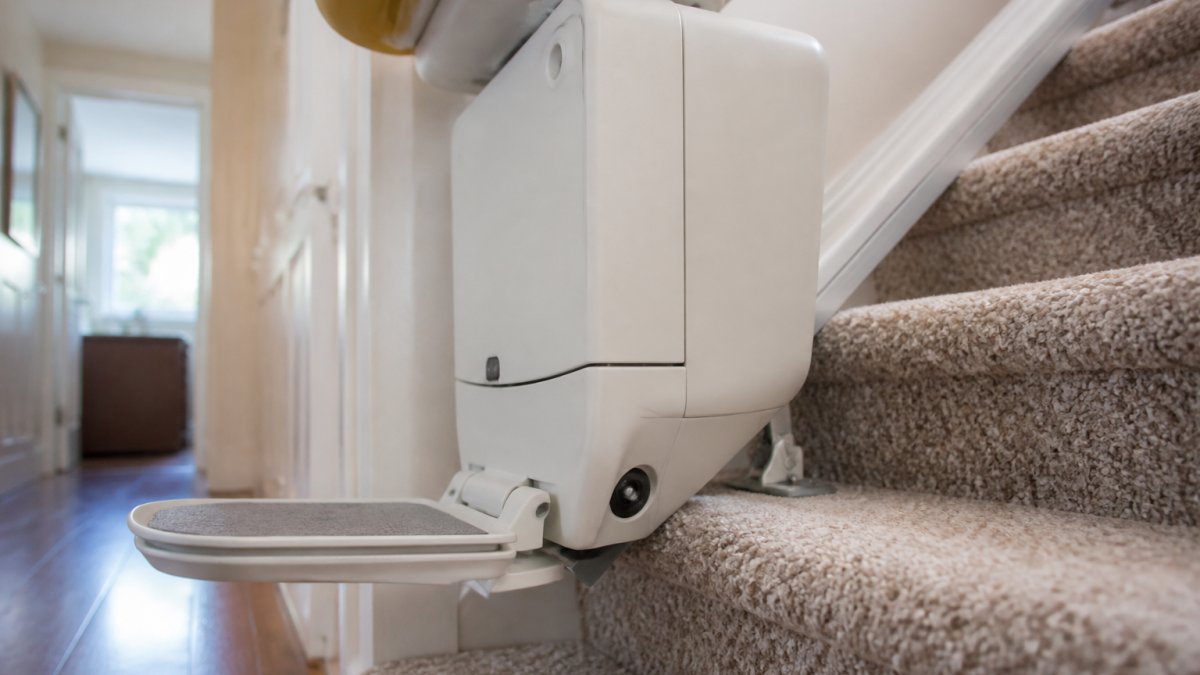
Obstruction and Footrest Sensors
An obstruction sensor stops the carriage when it meets an object on the stairs; a footrest sensor does the same at floor level, where a pet, bag, or toy is most likely to sit.
Test both sensors during a demonstration: place a small object on a lower step and confirm the lift stops. If the seller hesitates, that tells you something.
Seat Load and Safety Switches
A seat load sensor confirms someone is actually seated before the lift will move, and a safety switch under the seat works with it so the carriage won't travel with an empty seat or an unsettled rider. Together they prevent the most common accident pattern: a lift that moves while someone is still half-standing.
What to Do When a Sensor Trips or the Lift Stops Mid-Flight
When a stairlift stops between floors, the cause is usually an object on the track, a footrest that contacted something, a seat not fully in the travel position, an unbuckled belt on an interlocked model, or a battery below its reserve.
Work through it in this order:
- Stay seated and buckled. Do not stand up on the stairs to investigate.
- Look along the track and at the footrest. If you can see and safely reach the obstruction, clear it. If it is out of reach, do not lean or climb.
- Check the obvious interlocks. Confirm the seat is swiveled to the travel position and locked, the armrest is down, and the belt is fastened if your model requires it.
- Press the emergency stop once, then release it to reset the carriage control. Then travel to the nearest landing, not your original destination.
- Use the call station or a second control if one is within reach; many lifts let a household member send the carriage to a landing.
- Call for help. Keep the service number and a charged phone near the stairs. If the rider cannot be moved safely, call 911 rather than attempting a transfer on the steps.
When Not to Restart
Leave the lift alone and call a technician if:
- The carriage stopped without contacting anything visible.
- The lift restarts but stops again in the same spot on the track.
- You smell burning, hear grinding, or see a fault code on the diagnostic display.
A sensor that trips once on a toy is normal. A sensor that trips on an empty track is a service call.
Testing Sensors Before You Buy
Ask the seller to demonstrate each of these during the home assessment:
- Place a small object on a step and confirm the carriage stops before contact.
- Rest a hand lightly against the footrest edge and confirm the lift halts.
- Stand up slightly from the seat on an interlocked model and confirm travel is prevented.
If a seller cannot or will not run these checks, treat that as a safety answer in itself.
Best for: households with pets or young grandchildren who use the stairs, and any rider who lives alone and needs to know exactly what to do if the lift stops. Skip if: your staircase is fully enclosed with a door at each end, though the sensors and the stop procedure still add a layer of protection.
When a lift stops mid-flight, work through the likely causes in this order.
| Possible cause | What to check |
|---|---|
| Object on the track | Look along the track; clear it only if safely reachable |
| Footrest contacted something | Check the footrest at floor level |
| Seat not in travel position | Confirm seat is swiveled to travel position and locked |
| Unbuckled belt on interlocked model | Fasten the belt if your model requires it |
| Battery below reserve | Check the battery indicator |
The Stairlift Seat Belt: Your First Line of Fall Prevention
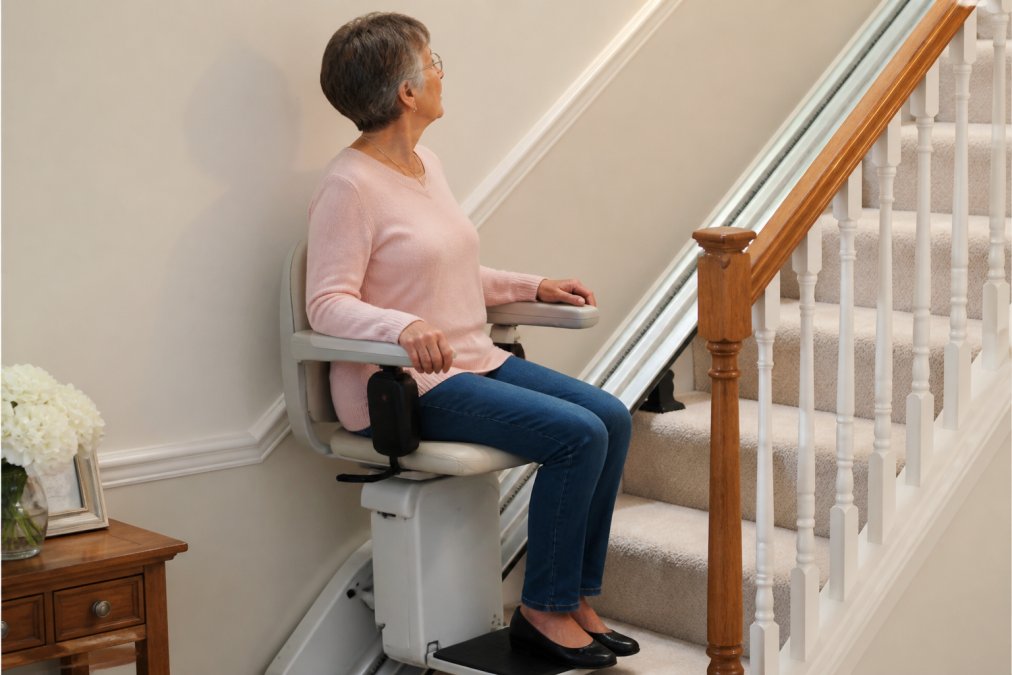
A stairlift seat belt is a restraint worn across the lap or chest that keeps the rider fully seated for the entire ride.
Most models use a retractable belt that locks during travel. Some add a seat belt sensor that prevents movement until the buckle is fastened, removing the temptation to ride unbuckled "just this once."
A common mistake is treating the belt as optional for short trips.
Swivel Seats, Armrests, and Safe Mounting and Dismounting
A swivel seat rotates the chair at the landing so you step off facing away from the stairs, not sideways into open air. Combined with sturdy armrests, it turns the riskiest moment of the ride, getting on and off, into a controlled movement.
The sequence we recommend to every buyer:
- Bring the lift to a full stop at the landing.
- Swivel the seat until it locks facing the room.
- Raise the armrest on the open side.
- Plant both feet flat, then stand using the armrest for support.
- Step clear of the footrest before walking away.
If you want a fuller walkthrough, our guide on how to safely use a stairlift covers each step in detail.
Emergency Stop Buttons, Key Locks, and Speed Control
An emergency stop button cuts power to the carriage instantly, letting the rider halt the lift at any point on the track. Every lift should have one within easy reach of the seated rider, plus a second at the call stations. A speed limiter keeps travel smooth and consistent, protecting balance, since jerky starts and stops are a hazard, especially for riders with limited grip or arthritis.
Preventing Unauthorized Use Around Children and Visitors
A key lock is a physical switch that disables the lift until the key is turned, preventing accidental operation by children, guests, or anyone unfamiliar with the controls.
- Keep the key out of reach when the lift isn't in use.
- Show visiting family how the lock works.
- Ask caregivers to lock the lift after helping a rider on.
Caregivers should also keep the staircase clear and know where the emergency stop is located.
Stairlift Battery Backup: What Happens When the Power Goes Out
Battery backup keeps a stairlift running for a limited number of trips during an outage, so a rider is never stranded mid-flight. Most models charge continuously and switch to battery automatically when power drops.
Battery condition is part of routine servicing. Older batteries hold less charge, so ask how often they should be replaced. For a deeper explanation, read our article on whether battery backup is necessary for stairlifts.
Stairlift Maintenance and Servicing: Keeping Safety Features Working
Stairlift maintenance is the scheduled inspection and adjustment of the lift's track, battery, sensors, belt, and controls. Safety features only protect you if they are tested, and most manufacturers recommend an annual service visit. But maintenance is only half the picture; the other half is whether the lift was built and installed to a recognized standard, and whether you can prove it from the paperwork.
What a Service Visit Should Include
A thorough annual service is not a quick visual check. Ask the technician to confirm each of these and note it on the service record:
- Testing the obstruction and footrest sensors with a physical object
- Checking the seat belt, its retractor, and its interlock
- Verifying battery charge and running a backup performance check
Skipping service to save money is the most common way safety features quietly fail; a sensor that no longer trips is invisible until the day it's needed. Our stairlift maintenance tips for owners list the monthly checks you can do yourself between professional visits.
Monthly Checks You Can Do Yourself
Between professional visits, a five-minute routine catches most developing problems:
- Run the lift once in each direction with no rider and listen for new noises.
- Test the obstruction sensor with a small object on a lower step.
- Confirm the belt retracts smoothly and the buckle latches securely.
Log the date and result of each check; a written record is useful to the technician and to the next owner if you sell the home.
Verifying Standards, Testing, and Documentation Before You Buy
Feature claims are easy to print on a brochure; documentation is harder to fake, and it is what you should ask for before signing. Stairlifts sold in the U.S. are commonly evaluated against recognized safety standards, and a reputable manufacturer should be able to point you to the specific standard and test report behind the model you are considering.
Use this checklist during the buying process:
- Ask which safety standard the model is tested to and request the name and edition of the standard, not just a logo.
- Request the test report or certificate of compliance for the exact model and track configuration you are buying. A certificate for a different model does not cover yours.
- Confirm the installer's credentials and whether the installation is inspected against the manufacturer's specification.
Warning Signs That Need a Service Call, Not a Wait
Call for service promptly, and stop using the lift in the meantime, if you notice any of these:
- The lift stops in the same spot on the track more than once.
- The carriage moves unevenly, jerks, or slows noticeably on one section of track.
- The battery indicator drops faster than usual or the lift will not complete a trip on backup.
A lift that is serviced on schedule and documented from day one is far more likely to keep its safety features working for the life of the installation. For a deeper look at how maintenance affects backup performance, read our article on whether battery backup is necessary for stairlifts.
Matching the Lift to the Rider: Weight Limits, Fit, and Mobility Needs
Every stairlift carries a stated user weight limit, and exceeding it strains the motor, the track, and the seat. Fit matters too: seat width, armrest height, and footrest position all affect how securely a rider sits.
Before you buy, confirm:
- The rider's weight against the lift's rated capacity
- Seat size and cushioning for comfort on longer flights
- Whether the staircase is straight or curved, since curves need custom track
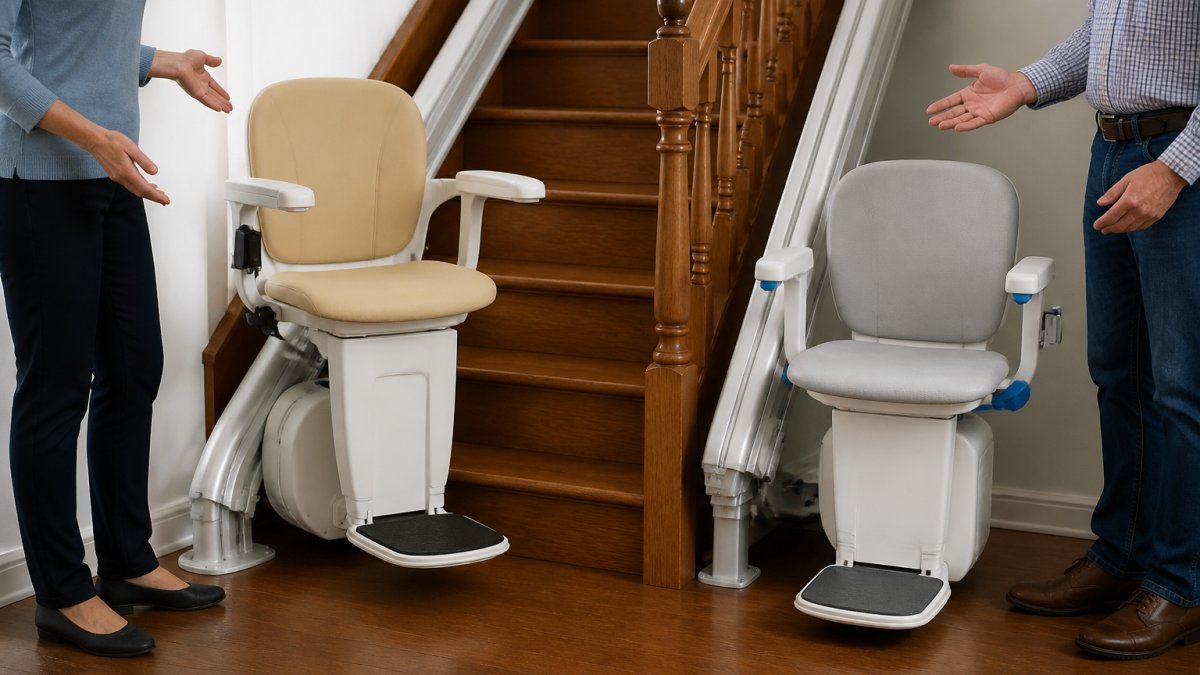
If you're unsure which model fits your stairs and your mobility needs, consider booking a home assessment. This can help measure the staircase, review the rider's needs, and recommend a lift that matches both.
Frequently Asked Questions
What happens if a stairlift loses power while someone is riding it?
Modern stairlifts run on battery power charged through the home's electrical supply, so a power outage does not strand the rider mid-flight. The carriage continues to the nearest landing at its normal speed, and the charged battery typically allows several more trips before it needs recharging. If the lift does stop on the stairs, the emergency stop button and manual override let you hold position safely until help arrives. Ask your installer to demonstrate the outage procedure during handover so you know exactly what to expect.
Do stairlift safety sensors really stop the lift for pets and small objects?
Yes. Obstruction sensors on the carriage and footrest detect pressure or proximity and stop the stairlift automatically, often reversing it a short distance. This matters most for cats and small dogs that wander onto the track, and for items left on the steps. Sensors are not a substitute for keeping the staircase clear, so check the track before each ride, especially in homes with pets or grandchildren. Test the sensors during your demo and again at each service visit.
How often should a stairlift be serviced to keep its safety features working?
Most manufacturers recommend professional servicing once a year, with a check of the seat belt, obstruction sensors, emergency stop, battery condition, and track fittings at each visit. Between services, wipe the track, keep the footrest clear, and confirm the key lock works. If the diagnostic display shows a fault code, the lift beeps unexpectedly, or the ride feels rougher than usual, book a service rather than waiting for the annual date. Regular servicing is the simplest way to catch wear before it becomes a safety issue.
Is a stairlift safe for someone with limited balance or a recent hip replacement?
A stairlift can be a practical option for riders with limited balance, provided the seat, belt, and swivel are set up for their body and mobility needs. A seat belt should be fastened before the lift moves, and the swivel seat should lock at the top landing before the rider stands. Weight limits and seat dimensions vary by model, so tell your installer about surgery, joint replacements, or transfers from a walker or wheelchair. A home assessment confirms the fit and lets you practice mounting and dismounting before you commit.
Choosing a stairlift is really a decision about trust: trust that the sensors will trip, the belt will hold, and the battery will carry you to the landing. CT Stairlifts installs Harmar straight and curved stairlifts with those safety systems built in, backs each installation with a free home assessment, and services what we install. We're licensed and insured, and we've completed over 500 installs since 2023. Get started with CT Stairlifts and regain safe access to every floor of your home.