 how-to
Is a Stairlift Safe for Someone With Mobility Issues?
Table of Contents
- Is a Stairlift Safe for Someone With Mobility Issues?
- Who Benefits From a Stairlift and How It Reduces Fall Risk
- Stairlift Safety Features That Protect You
- Stairlift Safety Features During Power Outages
- Who Should Not Use a Stairlift
- How to Use a Stairlift Safely
- Stairlift Weight Capacity and What It Means for Safety
- Pros, Cons, and Stairlift Alternatives to Consider
- Frequently Asked Questions
Last Updated: October 17, 2026
Is a Stairlift Safe for Someone With Mobility Issues?
Yes, a stairlift is safe for most people with mobility issues when matched to their abilities and installed correctly. Safety comes from three things: the right unit, safe habits, and regular upkeep. Whether it is safe for you depends on your balance, vision, strength, and how well you can get on and off the seat.
Who Benefits From a Stairlift and How It Reduces Fall Risk
Stairs are where many home injuries happen, and risk climbs with age and mobility loss. A stairlift removes the climb itself: you sit, buckle up, and ride. That matters most for people who can walk on flat ground but struggle with steps.
Mobility, Balance, and Vision Challenges That Make Stairs Risky
Stairs demand balance, knee strength, and clear vision at once. When any one fades, the staircase becomes the most dangerous spot in the house.
- Balance issues make a misstep hard to recover from
- Weak knees or hips turn each step into a strain
- Vision issues hide the edge of a step or a stray object
A mobility device like a stairlift replaces the climb with a seated ride. That lowers fall risk for many people.
Independence and Access to Every Level of the Home
Many homeowners stop using half their house, with an upstairs bedroom, laundry room, or bathroom off-limits. A stairlift restores safe access to every floor, letting people stay in the home they know.
Stairlift Safety Features That Protect You
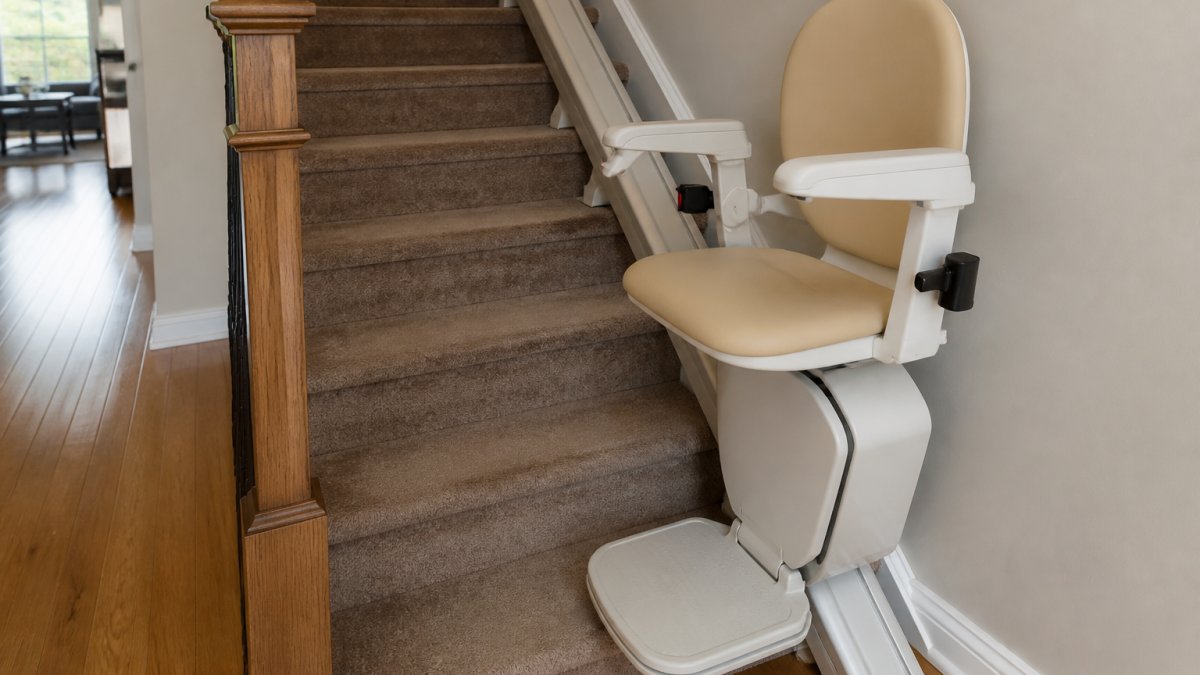
Modern stairlifts carry built-in safety features, each targeting a specific risk on the staircase.
- Seat belt or safety belt keeps you in the seat during the ride
- Swivel seat lets you turn to face the landing before you stand
- Armrests and footrest give you support and a stable place for your feet
The seat belt and swivel seat do the most to prevent falls during use. The sensors and obstruction detection protect the lift and anyone standing nearby.
Stairlift Safety Features During Power Outages
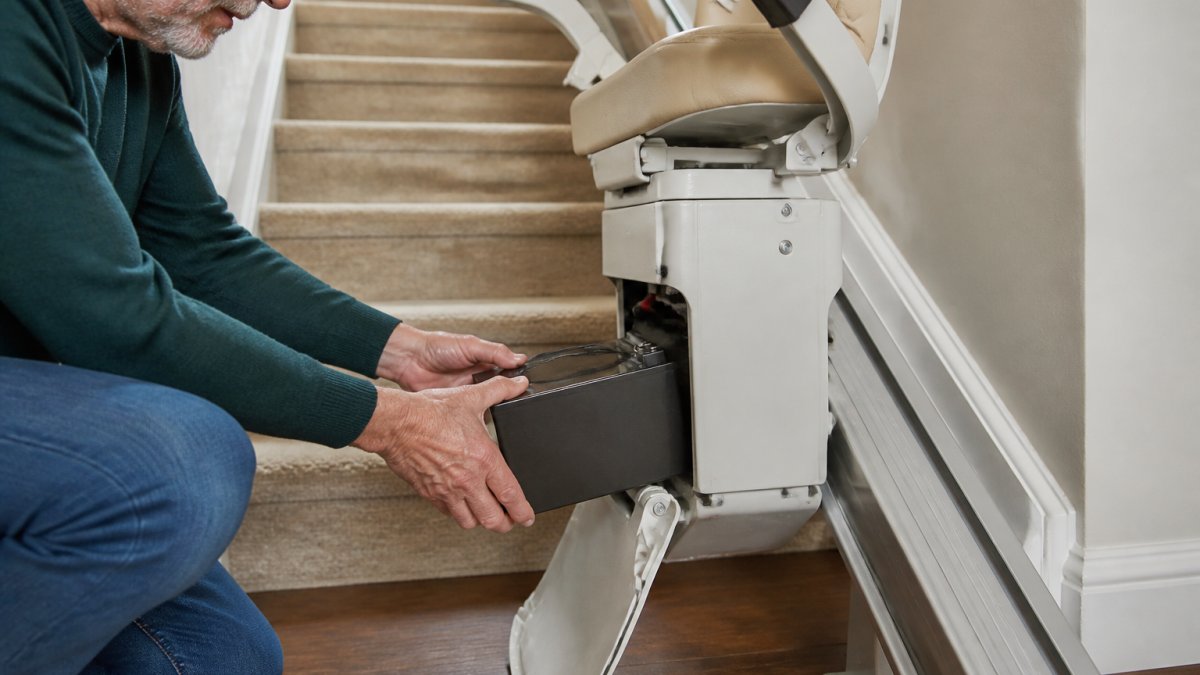
A stairlift stays safe during a power outage because most models run on battery backup, keeping the lift working for a limited number of trips. But "battery backup" is not a blank check, knowing how the system behaves is part of safe ownership:
- Battery backup keeps the lift running when the power drops
- Charging points at each end keep the battery topped up during normal use
- A manual override lets a trained person move the lift if the battery runs down
What Happens Mid-Ride During an Outage
On most residential units, the battery charges continuously while the lift sits at either end of the track. When utility power fails, the lift switches to battery power automatically, no reset, no lever, no call needed.
A fully charged battery usually provides reserve for several complete trips, though exact reserve varies by model, battery age, and track length and incline. Check the owner's manual for your unit's rated number of trips.
How to Exit Safely If the Lift Stops Between Floors
If the lift halts between landings and will not restart:
- Stay seated and keep the seat belt fastened. Do not attempt to stand on the stairs or climb over the armrest.
- Press the control again to confirm the lift is truly stopped and not just paused.
- Use the emergency stop and restart if your model has one, some units require a reset after a fault.
- Call for help using a phone kept on your person, not left on a table.
- Wait for a caregiver or the service provider. A trained technician can use the manual override to bring the carriage to a landing. Do not attempt to disassemble the track or force the carriage by hand.
If the rider cannot safely remain seated for an extended period, due to pain or a medical condition, call emergency services rather than wait.
When to Call a Service Provider Instead of Troubleshooting
Call the installer or service provider, rather than attempting a repair, if:
- The lift will not move after a known power restoration and a control reset
- The battery drains faster than usual, or the lift beeps or flashes a low-battery warning shortly after charging
- The carriage moves unevenly, jerks, or makes grinding or clicking sounds
Stairlift batteries are sealed lead-acid or lithium units that are not user-serviceable like a car battery. Replacing or jumping one yourself can damage the charging circuit and void the warranty. A qualified technician can test the battery, replace it if needed, and confirm the brake and sensors work.
Planning for an Extended Outage
A battery backup is a bridge, not a generator. If an outage is expected to last more than a day:
- Limit trips. Each ride draws down the reserve. Consolidate errands to one floor where possible.
- Keep the lift parked at a charging point when not in use, so it tops up the moment power returns.
- Identify a backup route. If the person cannot use the stairs at all without the lift, arrange a main-floor sleeping and bathroom setup for the duration, or plan to stay with a neighbor or family member.
If the household includes someone who cannot evacuate the upper floor without the lift, include that in the home's emergency plan and tell local emergency responders. Many fire departments keep a voluntary special-needs registry; ask your local department whether one exists.
Who Should Not Use a Stairlift
A stairlift is not right for everyone. Some situations call for a different solution or a clinical assessment first. The list below is a screening tool, not a diagnosis, but it reflects the factors clinicians and installers weigh.
Skip a stairlift, or get medical advice first, if the person:
- Cannot sit upright without support for the length of the ride
- Cannot follow simple operating instructions
- Has severe balance or cognitive issues that make sitting unsafe
For these cases, a through-floor lift, a ramp, or a main-floor living setup may be safer. A clinical assessment from a doctor or occupational therapist can confirm what fits.
The Five Factors a Clinician Actually Assesses
Most practitioners evaluate stairlift suitability against five functional domains, which flag problems before a unit is installed.
1. Sitting balance. Can the person stay upright and centered on a moving seat without gripping the armrests?
2. Transfer ability. Getting on and off the seat is the highest-risk moment of any ride.
**3.
4. Pain. Hip, knee, and back pain affect how long someone can sit and how smoothly they can rise.
**5.
How to Get an Assessment
Start with the person's primary care physician, who can screen for the factors above and refer onward. OTs assess activities of daily living, including stair mobility, and can recommend specific features, seat height, swivel direction, footrest type, and whether a standing lift is preferable. Medicare Part B generally covers outpatient occupational therapy when medically necessary and ordered by a physician; check the person's plan for coverage details (Occupational Therapy Insurance Coverage).
A stairlift installer can measure the staircase and confirm the mechanical fit, but an installer is not a clinician. The safest path is a clinical assessment first, then an installation matched to its findings.
Situations That Call for a Different Solution
Some scenarios are better served by other equipment:
- Full-time wheelchair use. A through-floor lift or a residential elevator lets the person stay in their wheelchair rather than transferring at every landing.
- One-sided weakness after a stroke. A stairlift can work if the person can transfer with one strong side and a caregiver nearby; otherwise, a platform lift is safer.
- Severe cognitive impairment. If the person cannot reliably follow the operating steps, a caregiver-operated lift or main-floor living arrangement removes the risk.
If you are unsure which category fits, describe the person's abilities honestly to both the clinician and the installer. The right answer matches the actual user, not the typical one.
How to Use a Stairlift Safely
Safe operation comes down to a few repeatable habits. Teach them once, then follow them every ride.
- Park the lift at the landing and fold down the seat and footrest
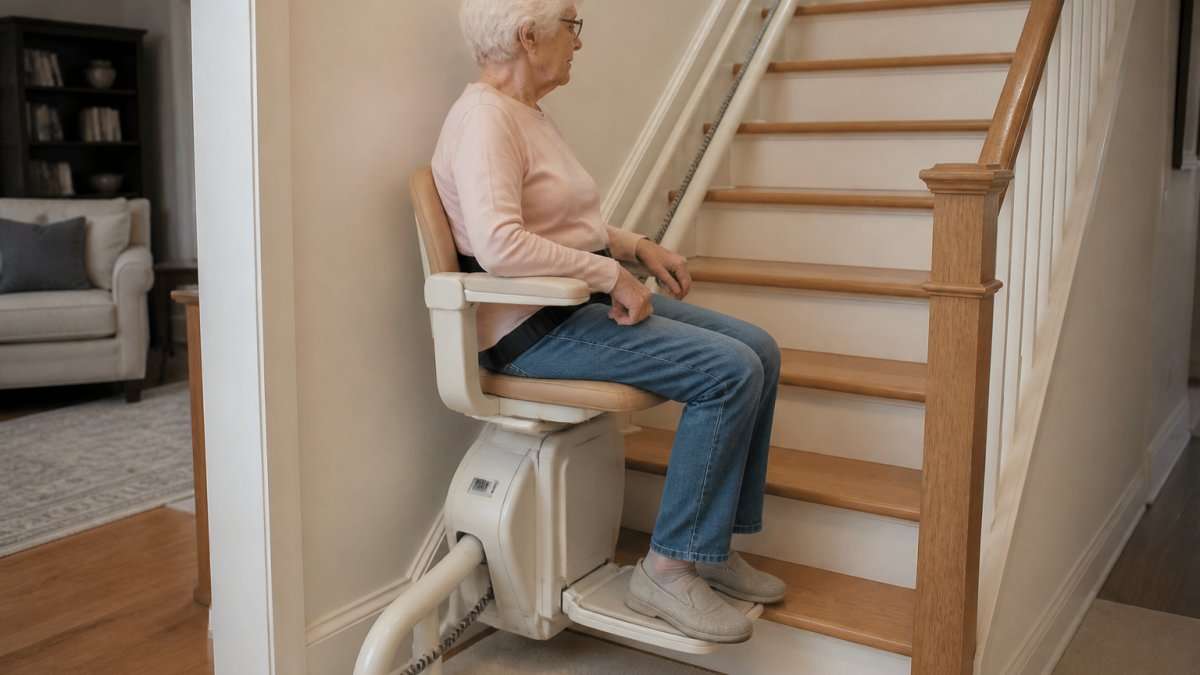
- Back onto the seat and sit fully against the backrest
- Fasten the seat belt snugly
- Place both feet flat on the footrest
- Hold the armrest and press the control to start
- Keep constant pressure on the control; release it to stop
- At the top, swivel the seat to face the landing and lock it
- Unbuckle, stand slowly, and step onto the landing
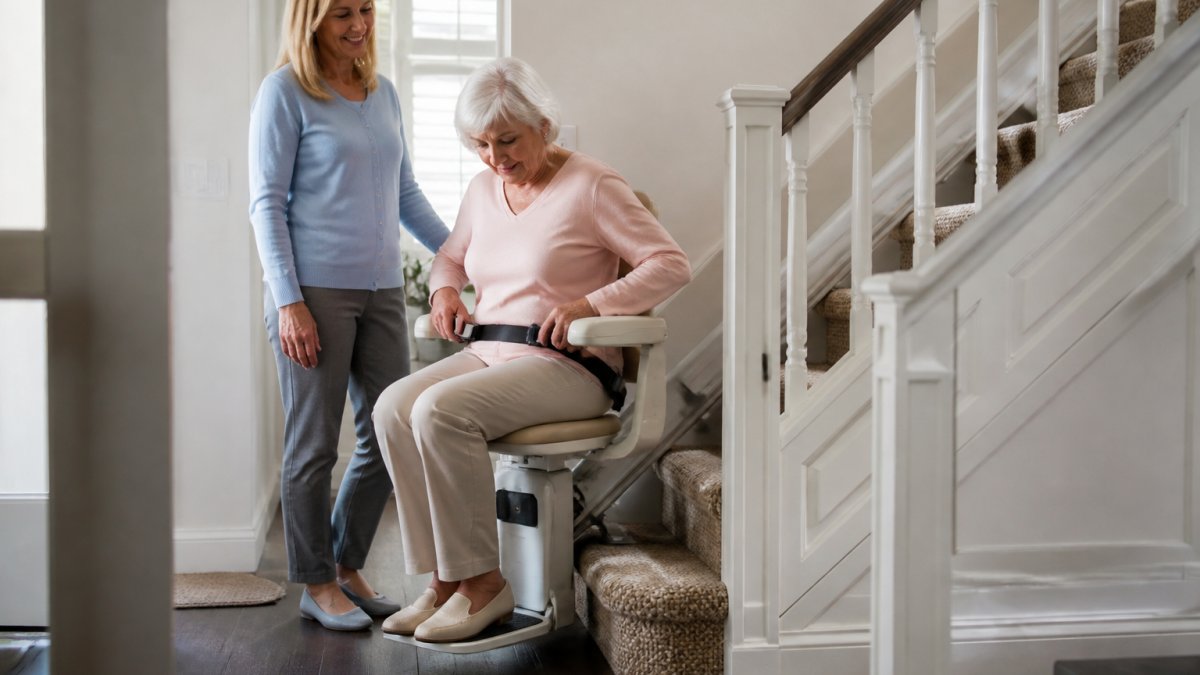
Safe Transfers at the Top and Bottom of the Stairs
Most stairlift falls happen during the transfer, not the ride. At the bottom, back up to the seat until you feel it behind you, then sit. At the top, swivel to face the landing and lock the seat before you stand, keeping one hand on the armrest as you rise. If balance is a concern, have a caregiver stand nearby.
Stairlift Weight Capacity and What It Means for Safety
Weight capacity is the maximum load a stairlift is built to carry safely. Most home models are rated for a standard adult weight, with heavy-duty units for higher needs. Exceeding the capacity strains the motor, track, and brakes, shortening the lift's life and making it unsafe. Check the rated capacity before buying, and include the weight of anything you carry on the ride.
Pros, Cons, and Stairlift Alternatives to Consider
A stairlift is one option among several. Weigh the trade-offs before you commit.
| Option | Best For | Watch Out For |
|---|---|---|
| Seated stairlift | Most people with balance or strength limits | Needs safe transfers on and off |
| Standing stairlift | Narrow stairs, some knee limits | Requires good balance and grip |
| Through-floor lift | Wheelchair users | Major installation work |
| Home ramp | Short, gentle steps | Takes up floor space |
| Main-floor living | Severe mobility limits | Big lifestyle change |
Pros of a stairlift: low fall risk on stairs, keeps you in your home, works on straight or curved staircases, and installs with minimal changes.
Cons: it needs safe transfers, regular maintenance, and a battery that holds charge. It also does not help with steps outside the home.
If you are weighing a stairlift against moving, CT Stairlifts can help you determine what fits.
Frequently Asked Questions
Are stairlifts safe for people with mobility issues?
For most people with limited mobility, a professionally installed stairlift is safer than climbing stairs unassisted. Modern units include seat belts, swivel seats, obstruction sensors, and battery backup. The key is matching the device to the user's abilities and the home's staircase. Someone who cannot sit down or stand up without help, or who cannot follow operating instructions, may need a different solution. A clinical assessment and an in-home evaluation help confirm whether a stairlift safe choice for your situation.
Can a caregiver ride on a stairlift with someone?
No. Stairlifts are designed for one person at a time, and the weight capacity applies to a single rider. Adding a second person overloads the motor and track and creates a tipping risk. Instead, caregivers should supervise transfers at the top and bottom of the stairs, confirm the seat belt is fastened, and make sure the path is clear before the rider starts. If someone needs hands-on support throughout the ride, a stairlift may not be suitable and other options should be discussed with a healthcare provider.
What happens to a stairlift during a power outage?
Most stairlifts run on battery power and keep working for several trips even when household electricity goes out. The battery is charged through the home's power supply, so a charged unit can usually complete a ride and return to its parking spot. If the battery is depleted, a manual override lets you move the carriage off the stairs. Ask your installer to show you the manual release and keep the phone number for service handy in case of a breakdown.
Is a stairlift safer than walking up and down stairs?
For someone with balance issues, vision issues, or limited leg strength, stairs are a leading source of fall injuries at home. A stairlift removes the climbing motion entirely: you sit, fasten the seat belt, and ride. That lowers fall risk on the staircase itself. The remaining risk is in the transfer on and off the seat, which is why proper technique and, if needed, caregiver supervision matter. For the right candidate, a stairlift is generally safer than repeated stair climbing.