 how-to
Safety Features for Steep Stair Lifts: What Matters Most
Last Updated: October 30, 2026
Quick Summary
Safety features for steep stair lifts center on obstruction sensors that stop the chair automatically, a seat belt that keeps the rider seated on a sharp grade, easily reached emergency stop controls, and lockable key switches. Battery backup and routine maintenance keep these systems working between service visits.
- Full-carriage sensor coverage is worth having on steep runs, not just footrest protection.
- Fasten the seat belt before the chair moves and swivel the seat only after it stops.
- Test the armrest and landing stop buttons monthly, with the chair empty and parked.
- Ask how many trips the lift can make on battery alone after a power cut.
- A stop that recurs in the same spot is a fault signal, not a normal reset.
Table of Contents
- Why Safety Features for Steep Stair Lifts Are Different
- How Stair Lift Safety Sensors Stop the Lift Before Trouble Starts
- The Stair Lift Seat Belt, Harness, and Safe Transfer Habits
- Emergency Stop Controls and Lockable Key Switches
- Stair Lift Battery Backup and Power Failure Planning
- Choosing a Stair Lift for Steep Stairs: What to Verify Before You Buy
- Maintenance, Inspection, and What to Do When the Lift Stops Unexpectedly
- Schedule a Home Safety Assessment Before You Decide
- Frequently Asked Questions
Why Safety Features for Steep Stair Lifts Are Different
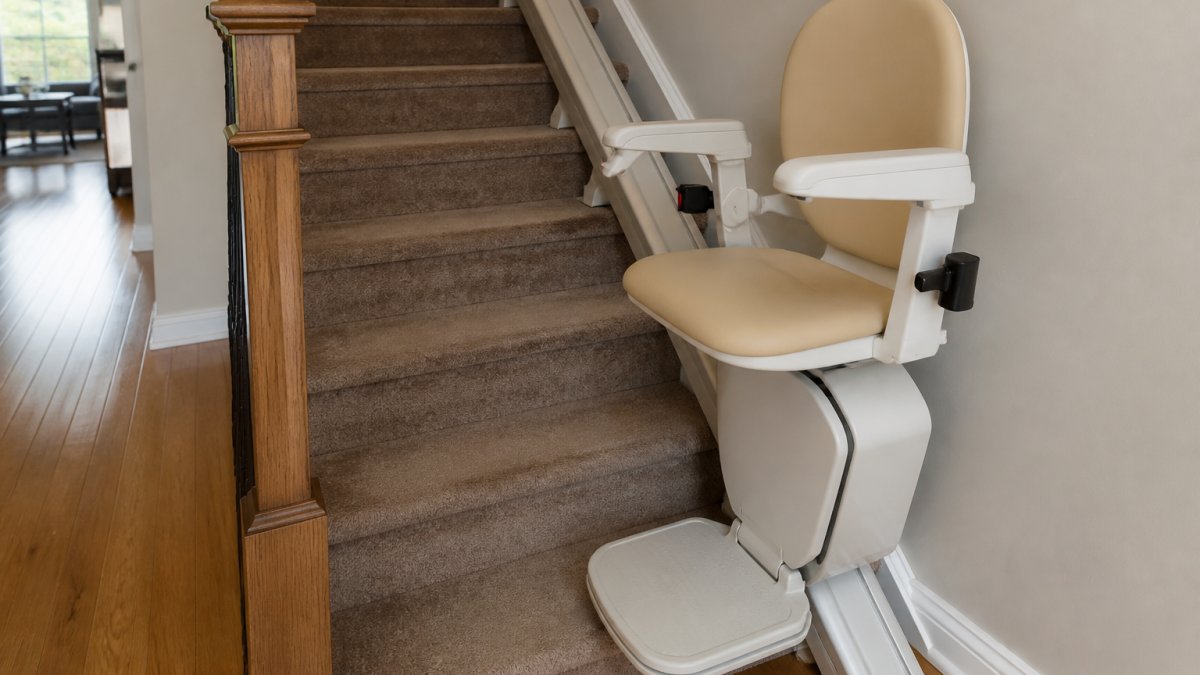
Safety features for steep stair lifts are the components and systems that keep a rider secure on a staircase with an unusually sharp pitch, where gravity works against the chair more aggressively than on a standard run.
That worry is fair.
The features fall into four groups: sensors that stop the lift, restraints and transfer habits that protect the rider, controls that lock out misuse, and backup power plus maintenance.
How Stair Lift Safety Sensors Stop the Lift Before Trouble Starts
Stair lift safety sensors halt the chair automatically when they sense an obstruction, a fault, or an unsafe condition on the rail. On a steep staircase they do more work than on a flat run, because a chair that keeps moving into a blockage on a sharp grade has less room to recover.
Obstruction Sensors and Automatic Stopping
An obstruction sensor sits at the front of the footrest and, on many models, along the carriage. When it contacts an object, the lift stops within a short distance and refuses to move until the path is clear.
Here is what to check when you evaluate a lift:
- Sensor coverage: Does the sensor protect the footrest only, or the full carriage? Full-carriage coverage is worth having on steep runs.
- Stop distance: Ask how far the chair travels after contact. Shorter is better on a tight staircase.
- Reset behavior: After a stop, can the rider reverse the chair with the control, or does it need a technician? A lift that traps the rider mid-flight is a design problem.
Do not assume a lift with obstruction sensors cannot be defeated by clutter. Keep the staircase clear of shoes, laundry baskets, and pet toys, because a sensor that stops the chair every third ride trains people to ignore it.
The Stair Lift Seat Belt, Harness, and Safe Transfer Habits
A stair lift seat belt keeps the rider seated if the chair jolts, stops abruptly, or takes a turn at an awkward angle.
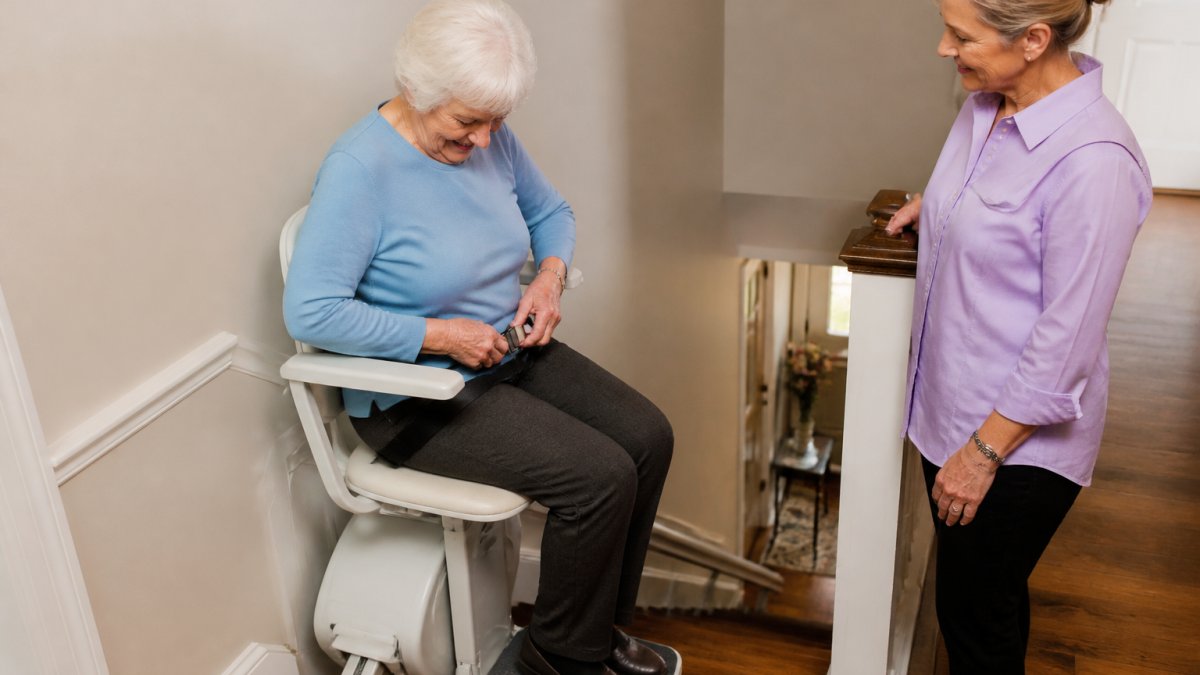
Residential lifts commonly use a lap belt with a safety buckle, and some models offer a harness. The right choice depends on the rider, so ask for an assessment.
Swivel Seats, Footrests, and the Boarding Routine
A swivel seat rotates the chair at the top landing so the rider steps off onto flat floor instead of twisting out over the stairs. On a steep staircase the top landing is often small, and a swivel seat is the difference between a safe transfer and a risky one.
Build a boarding routine and use it every time:
- Park the chair at the bottom or top landing with the seat swiveled toward the floor.
- Fasten the seat belt before the chair moves.
- Place both feet flat on the textured footrest.
- Keep hands on the armrests, not on the rail.
- Swivel the seat only after the chair has stopped at the landing.
Riders who skip the belt "just for a short trip" are the ones most likely to be injured, because short trips are the ones people take while distracted or in a hurry.
Emergency Stop Controls and Lockable Key Switches
Emergency stop controls are the manual override that lets a rider or helper halt the lift immediately, independent of the obstruction sensors. On a steep staircase the stop circuit is a separate safety layer: sensors react to contact, but the stop button reacts to the rider's judgment. Every lift should have an easily reached stop button on the armrest and a second control at the landing.
How the Stop Circuit Actually Works
That is why a lift with a tripped stop button will not respond to the armrest control until the button is twisted or pulled back out, and why a lift sometimes appears dead because a landing stop button was bumped and never reset.
Ask the installer to show you the reset action for each stop device. On many models the armrest button is push-and-twist, while the landing button is pull-to-reset. Knowing the difference prevents a panicked call when the chair will not move.
Testing the Stop Before You Rely on It
A stop button that has never been tested is a guess. Run this check monthly, with the chair empty and parked at a landing:
- Press the armrest stop button while the chair is stationary. Confirm the control light goes out and the chair will not move.
- Reset the button and confirm the chair moves again.
- Repeat with the landing stop button.
- With the key removed, confirm the chair will not move at all.
If any step fails, stop using the lift and book service. A stop circuit that works intermittently is more dangerous than one that fails outright, because it teaches the rider to trust a control that may not respond.
Key Switch Placement and Steep-Stair Risk
Lockable controls, usually a key switch, prevent children, visitors, or confused household members from operating the lift unattended. On a steep staircase it is not just a convenience: it keeps a lift from being treated as a toy or used by someone who cannot manage the slope safely.
Placement matters more than most buyers realize. The key switch should be reachable by the intended rider without leaning over the stairwell and out of reach of a child on the landing.
We recommend verifying four things about the control system:
- The stop button is reachable without stretching or twisting in the seat.
- The landing stop button is visible from the chair at both ends of the run.
- The key switch is removable and stored somewhere only the household knows.
Stair Lift Battery Backup and Power Failure Planning
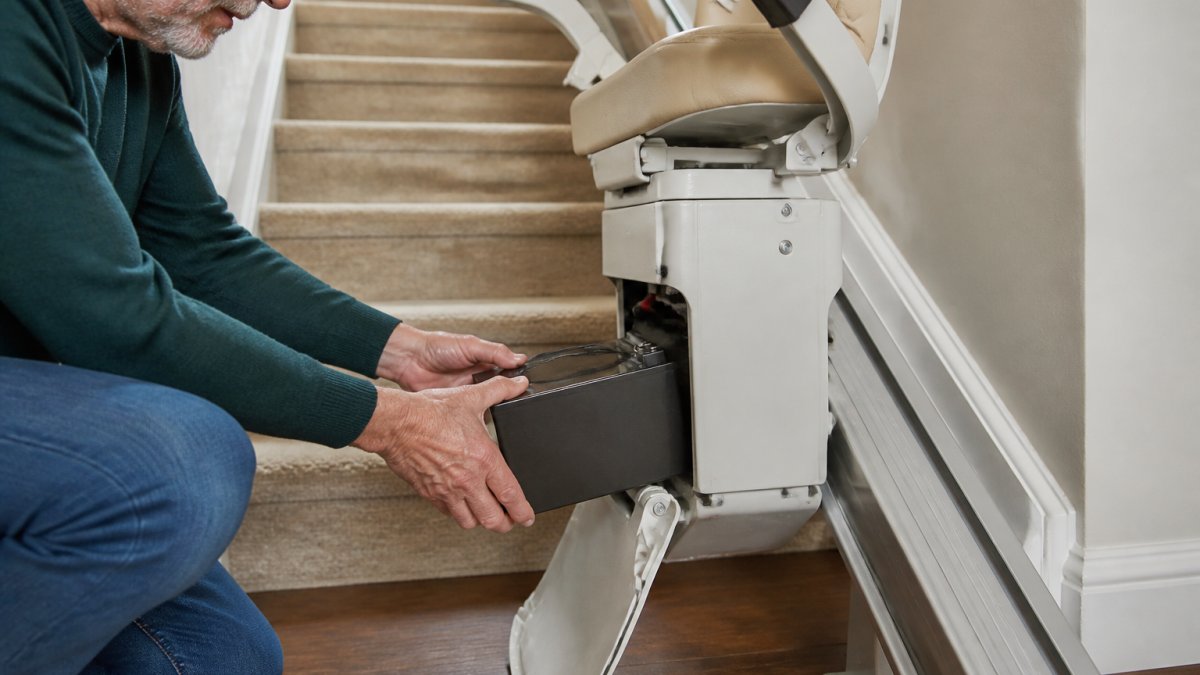
Stair lift battery backup is the onboard power system that lets the chair complete a trip and return to a landing when household power fails. If you are still weighing whether it is worth it, read is a battery backup necessary for stairlifts.
Planning matters as much as the hardware. Before you buy, ask:
- How many trips can the lift make on battery alone after a power cut?
- Where is the battery located, and how is it replaced?
- Does the lift park itself at a landing when the battery runs low, or does it stop wherever it is?
A battery that has never been tested is a battery you cannot count on. Ask the installer to show you the battery status indicator and explain what it looks like when the charge is low.
Choosing a Stair Lift for Steep Stairs: What to Verify Before You Buy
Choosing a lift for a steep staircase comes down to verification, not brochure claims. The lift must fit the rail geometry, the motor and drive system must be rated for the pitch, and the installation must be documented. Ask for the manufacturer's rated maximum incline and confirm your staircase falls within it before you sign anything.
Assessing Whether Your Staircase Is Suitable
Not every steep staircase is a straightforward install, and a good assessment answers that honestly. A curved rail may be needed where a straight rail cannot follow the turn, and a tight hallway at the top or bottom can limit how the chair parks.
Use this checklist when you compare lifts for a steep run:
- Manufacturer's rated maximum incline exceeds your staircase pitch
- Rail type (straight or curved) matches your staircase layout
- Chair parks clear of doorways and tight hallways
For a deeper comparison of models built for sharp pitches, our buyer's guide to steep-stair lifts covers the specifications worth checking side by side.
Maintenance, Inspection, and What to Do When the Lift Stops Unexpectedly
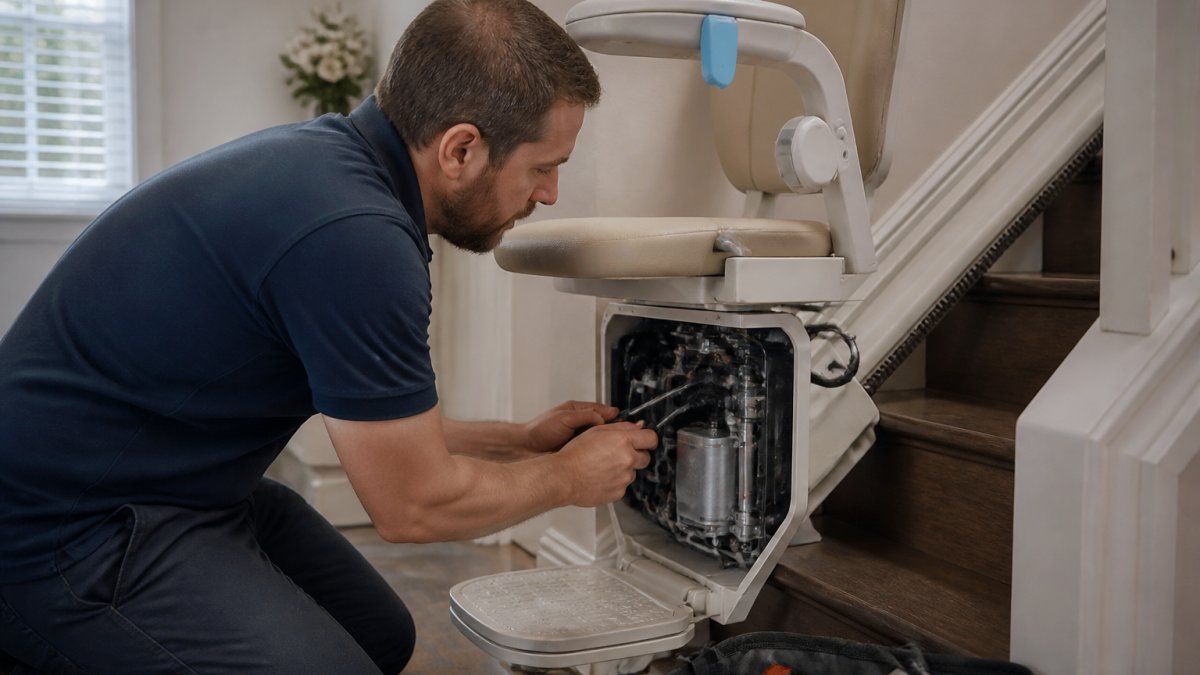
Routine maintenance is what keeps safety features working between installations. A lift that stops unexpectedly is usually telling you something: a low battery, a tripped sensor, a worn component, or an obstruction on the rail. The right response is a sequence, not a panic, and the right maintenance plan is a schedule, not a habit.
A Practical Inspection Schedule
Manufacturers typically publish a recommended service interval; check your model's documentation. Between professional visits, the homeowner should run a short monthly check covering the components that matter most on a steep run:
Monthly (homeowner):
- Test the armrest and landing stop buttons using the reset procedure in the previous section.
- Wipe the rail with a dry cloth and check for debris, pet hair, or grease buildup that could trip the carriage sensor.
- Confirm the seat belt buckles and releases cleanly, and inspect the webbing for fraying or stiffness.
Annually (qualified technician):
- Test obstruction sensors at the footrest and along the carriage with a test object.
- Inspect the belt, buckle, and any harness for wear and correct routing.
- Verify the swivel seat locks in both the riding and transfer positions.
Ask for a written inspection report. A technician who tests sensors and battery under load should be able to show you the results, not just tell you the lift "looks fine."
When the Lift Stops: A Safe Sequence
When a lift stops mid-flight:
- Stay seated and keep the belt fastened.
- Press the emergency stop if the chair is still trying to move.
- Use the armrest control to reverse the chair to the nearest landing.
- If the chair will not move, call for help and use the manual release only as the manufacturer instructs.
- Book a service visit before using the lift again.
Distinguishing a Reset From a Repair
Not every stop needs a technician, and knowing the difference prevents both unnecessary service calls and unsafe DIY repairs. A stop that clears after you remove an obstruction, reset a stop button, or wait for the battery to recharge is a normal event. A stop that recurs in the same spot, a lift that will not hold position on the grade, a burning smell, or a belt that will not latch are fault signals.
Schedule a Home Safety Assessment Before You Decide
The most reliable way to know whether a steep staircase can take a lift, and which safety features your household needs, is a walk-through by someone who installs them for a living.
Contact CT Stairlifts to ask about a home assessment, so you can see the fit, the rail path, and the safety features on your own stairs before committing.
Frequently Asked Questions
Are steep stair lifts safe to use on a steep staircase?
Steep stair lifts are built for the job, but safety depends on correct setup. A lift made for steep stairs uses a heavier-duty drive system, a speed governor to hold consistent speed on the incline, and a rail anchored to the staircase structure. A professional assessment confirms the staircase layout, rail mounting points, and clear path before installation. Ask for verification that the lift is rated for your staircase's pitch, and get a walkthrough of the seat belt, obstruction sensor, and emergency stop before first use.
What happens if a stair lift loses power mid-trip?
Most stair lifts run on battery power charged through the rail, so a household outage does not stop the lift. A stair lift battery backup keeps the chair moving so you can finish the trip and get off safely. If the battery is drained, the lift should stop and hold on the rail rather than free-fall. Keep the charging contacts clean, follow the manufacturer's battery replacement schedule, and ask your installer to show you the manual release and the phone number for service before you need them.
Do stair lifts have sensors that stop the lift if something is in the way?
Yes. Stair lift safety sensors on the footrest and carriage detect obstructions and trigger an automatic stop before contact. On steep stairs these sensors matter more because the chair travels faster and stopping distance is longer. Test them monthly by placing a soft object in the path at floor level while the lift is empty. If the lift does not stop, take it out of service and call for an inspection rather than continuing to use it.
Can a stair lift be installed on a narrow or oddly shaped staircase?
Many narrow and curved staircases can take a lift, but the staircase layout decides the model. A curved rail is custom-made to follow the turns, and a folding seat, armrests, and footrest keep a tight hallway passable when the lift is parked. Steep pitch, short landings, and door swing at the top or bottom all affect the safe fit. A home assessment measures the staircase and confirms whether a straight or curved stair lift for steep stairs will work before anything is ordered.
If your stairs are steep, narrow, or oddly shaped, the right lift is the one that fits your staircase and your rider, not the one with the longest feature list. Get started with CT Stairlifts and book a free home assessment, so you can compare safety features on your own stairs and regain access to every floor of your home with confidence.