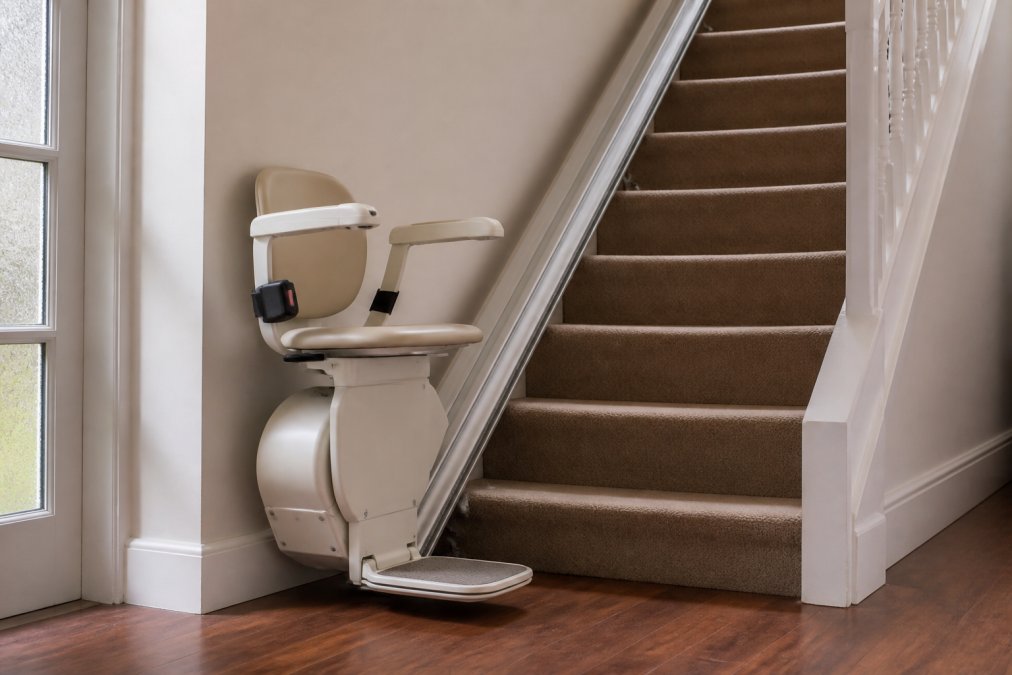
 listicle
Best Stairlift for Steep Stairs: 2026 Buyer's Guide
Table of Contents
- Steep Stairs Change the Stairlift Decision
- Best Stairlift for Steep Stairs: Quick Comparison
- Bruno Elite Curved: Built for Complex Geometry
- Handicare Freecurve: Space-Saving Single-Tube Rail
- Access BDD Flow X: Precision for Narrow Steep Stairs
- Handicare 4000: Maximum Stability on Steep Gradients
- Stairlift Safety Standards ASME A18.1: What They Mean for You
- Stairlift Installation Process Explained: From Assessment to Use
- Frequently Asked Questions
Last Updated: September 6, 2026
Steep Stairs Change the Stairlift Decision
A standard straight stairlift simply won't work on a steep or curved staircase. Choosing the best stairlift for steep stairs requires understanding how rail design, weight capacity, and safety systems interact with your staircase geometry.
CT Stairlifts provides solutions designed to help individuals regain access to every floor of their home. The most common mistake is purchasing a budget straight-rail unit for a staircase that demands a custom curved or steep-gradient system.
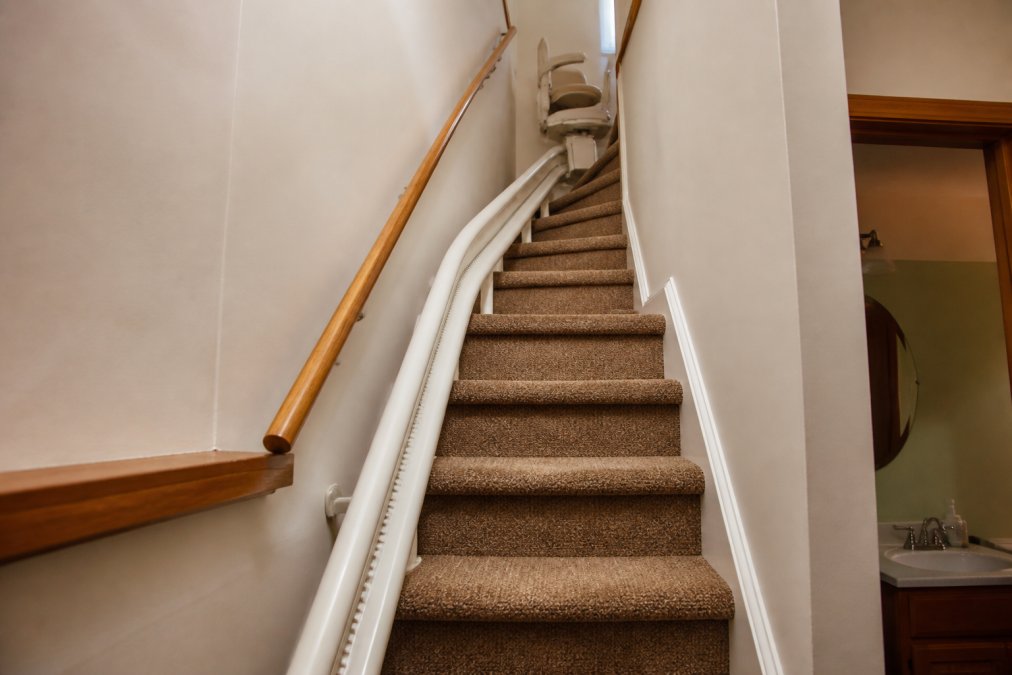
The decision process differs from buying a standard stairlift because you are commissioning a custom-built rail system, fabricated to your home's measurements, then installed by a certified technician. The ASME A18.1 safety standard governs these installations and sets requirements a generic straight-rail unit often cannot meet on steep gradients (asme.org).
Below, we break down the top systems for steep and curved stairs and the technical details that determine whether a unit will serve you safely for the next decade.
Best Stairlift for Steep Stairs: Quick Comparison
The stairlift market splits into straight-rail models and custom curved-rail systems. For steep stairs, you need the latter, which use a rail bent to match your staircase's exact path with a drive system designed for the gradient.
| Model | Rail System | Weight Capacity | Best For | Standout Feature |
|---|---|---|---|---|
| Bruno Elite Curved | Custom-built | Up to 400 lbs | Complex curves and heavy use | Soft start/stop, made in USA |
| Handicare Freecurve | Single-tube | High-capacity | Space-saving on narrow stairs | Minimal rail footprint |
| Access BDD Flow X | Custom curved | High-capacity | Narrow, steep stairwells | Advanced leveling technology |
| Handicare 4000 | Dual-tube | Heavy-duty | Steep gradients and turns | Maximum stability |
Each system is custom-built to your staircase, which is why they can handle steep stairs. The tradeoff is lead time: custom rail fabrication takes weeks, not days, and all require professional installation.
Bruno Elite Curved: Built for Complex Geometry
The Bruno Elite Curved is a system designed for staircases with both steep sections and directional changes. Its custom-built rail matches your precise geometry, so the carriage travels smoothly through transitions that would cause a straight-rail unit to bind or skip.
Its 400 lb weight capacity reflects a heavier-duty drive system and rail construction that handles the stress of steep inclines (bruno.com). Soft start and stop technology prevents jarring motion, which matters for users with joint pain or balance concerns.

The downsides are practical: custom rail fabrication requires a professional home assessment first, and lead time is longer than a straight-rail purchase. Expect a higher price point than entry-level models.
Handicare Freecurve: Space-Saving Single-Tube Rail
The Handicare Freecurve solves a different problem: narrow staircases where a bulky rail would obstruct the stairway. Its single-tube rail design keeps the footprint minimal, leaving more stair width for foot traffic when parked.
Safety sensors stop the lift if an obstacle is detected. A powered swivel seat option makes exiting easier at the top landing, where the turn radius is tight.
Where the Freecurve falls short is customization depth. The single-tube design is lighter than a dual-tube system, limiting its appeal for users who want maximum perceived stability. For most residential applications, space savings usually outweigh the preference for a beefier rail.

Access BDD Flow X: Precision for Narrow Steep Stairs
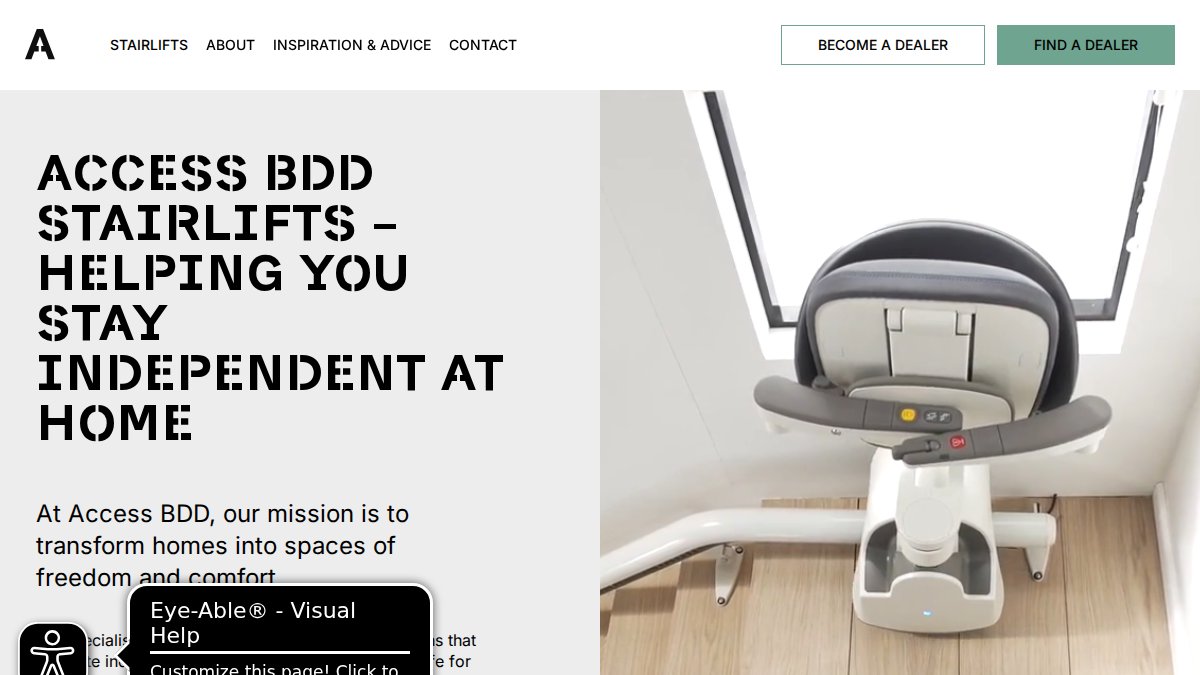
When the staircase is both steep and narrow, the Access BDD Flow X is engineered for that constraint. Its advanced leveling technology keeps the seat horizontal through the transition from incline to landing, preventing the user from feeling like they are tipping backward.
The compact seat design fits through narrow hallways and tight stairwells, reducing the parked unit's footprint. An automatic folding footrest tucks away when the seat is raised, keeping the stair path clear. The ergonomic joystick control is intuitive for users with limited hand strength.
The premium positioning is the main tradeoff. The Flow X is a premium positioning model, and its advanced features are best used by users who actually need the leveling technology.
Handicare 4000: Maximum Stability on Steep Gradients
The Handicare 4000 uses a dual-tube rail system to address the stability demands of steep gradients. Two parallel tubes distribute the load more evenly than a single-tube design, providing a smoother, more planted ride on inclines approaching the upper limits of residential stair angles.
This unit is built for heavy-duty use. The high weight capacity accommodates larger users, and the dual-tube construction resists flex on long, steep runs. A safety seat belt and obstruction sensors are standard, and multiple parking options let you keep the walkway clear.
The tradeoff is space. The dual-tube rail takes up more room than the Freecurve's single-tube design, and on a narrow staircase, that extra width is noticeable. Measure carefully before committing.
Stairlift Safety Standards ASME A18.1: What They Mean for You
The ASME A18.1 standard is the safety benchmark for stairway lifts in the United States, defining requirements for structural integrity, electrical safety, and operational controls. For a steep staircase, compliance isn't just a checkbox, it's the difference between a safe ride and a preventable accident.
Here is what the standard means in practice for steep installations.
Obstruction Sensors and Reversing Logic
On a steep incline, the distance between the stairlift and an obstacle closes much faster than on a gentle slope. ASME A18.1 requires obstruction sensors that stop the lift when something is in its path (asme.org). The critical detail is the reversing logic: after stopping, the lift must reverse direction to move away from the obstacle, not just halt in place. On a steep flight, a lift that stops but cannot reverse leaves the user stranded mid-flight. Ask the installer to demonstrate the reversing function on the actual incline.
Battery Backup and Power Failure Protocols
This is the single most under-discussed safety feature for steep stairs. On a gentle slope, a power outage might mean the lift stops and the user can walk down. On a steep staircase, that is not an option, manual descent is dangerous or impossible. ASME A18.1 requires a battery backup that allows the lift to complete a full trip and park at a landing during a power failure. The specifics matter:
- Battery type and capacity: Most modern units use sealed lead-acid or lithium-ion batteries. The capacity must be sufficient for a full cycle on your specific rail length. A steep, long run draws more current than a short, gentle one. Ask for the manufacturer's rated cycles per charge for your rail length.
- Automatic parking behavior: When power is lost, the lift should automatically complete its current direction and park at the nearest landing. Some budget units only hold position, which is unacceptable on a steep incline. Verify this behavior during the installation test.
- Manual override: Even with a battery, you should know where the manual release lever is and how to use it. On a steep stair, a manual descent should be a last resort, not a routine procedure. The release mechanism should allow a controlled, geared descent, not a free-fall.
Emergency Stop and Speed Governor
ASME A18.1 requires an emergency stop control on the seat or armrest. On a steep incline, descent speed is governed by a centrifugal brake or speed governor that prevents the carriage from accelerating beyond a safe rate, even if the drive system fails. This is a mechanical failsafe, independent of electronic controls. When comparing units, ask whether the speed governor is mechanical (preferred for reliability) or electronic (which can fail silently).
Seat Belt and Occupant Retention
The standard requires a seat belt, but on a steep incline, the belt is a primary safety device. The stair angle means the user leans backward relative to the horizontal plane. A lap belt alone may not be sufficient for users with poor trunk control. Check whether the unit offers a shoulder or chest harness, and whether the seat angle is adjustable to keep the user upright relative to gravity.
What the Standard Does Not Cover
ASME A18.1 does not dictate a specific rail design, drive system, or gradient limit. The choice between single-tube and dual-tube systems comes down to your staircase width, weight requirements, and comfort preferences, not the safety certificate. For steep stairs, the combination of features, mechanical speed governor, full-cycle battery backup, and reversing logic, is what separates a safe installation from a merely compliant one. Ask the technician to walk you through each mechanism on the actual unit they recommend.
Stairlift Installation Process Explained: From Assessment to Use
The stairlift installation process for steep stairs is not the same as a standard straight-rail job. The assessment must evaluate the structural capacity of your staircase to handle the forces a steep incline creates. Here is what the process involves.
Step 1: The Structural Assessment
A professional technician measures your staircase geometry: incline angle, tread width, landing space, and obstructions. For steep stairs, the critical evaluation is where the rail mounts and whether your staircase can support it. There are two primary mounting methods, and the choice is not cosmetic:
- Step/Tread Mounting: The rail is bolted directly to the stair treads. This is the most common method and works well when the treads are solid wood or concrete. However, on a steep staircase, the leverage forces on the mounting brackets are higher. The technician must verify that the treads are thick enough and securely attached to the stringers. If you have hollow or thin treads, the brackets can pull loose over time.
- Wall Mounting: The rail is attached to the wall alongside the stairs. This is often preferred for steep stairs because the wall structure (typically studs or masonry) provides a more rigid anchor point than treads alone. But wall mounting requires the wall to be plumb and structurally sound. If your wall is plaster over lath, the technician may need to reinforce the mounting points with backing plates or plywood before installation.
Step 2: Rail Path and Landing Clearance
On a steep staircase, the rail path is about where the carriage parks at the top and bottom. The technician must verify that the parked lift does not block doorways, hallways, or landings. This is especially critical at the top of a steep flight, where the rail often needs to extend past the last tread to allow the seat to swivel and align with the upper floor. If the landing is short, the rail may need to curve or the seat may need a powered swivel to ensure a safe dismount.
Step 3: Electrical and Power Routing
The lift requires a dedicated electrical outlet near the rail. For steep stairs, the technician should verify that the battery backup is fully charged and tested on the actual rail length. The power cable that travels with the carriage must be routed so it does not pinch or bind on the steep incline. Ask about the cable management system, some units use a rolling chain, others a flat cable track.
Step 4: Installation Day
Installation typically takes a few hours for a straight rail and up to a full day for a custom curved system. The technician tests the unit, including obstruction sensors, reversing logic, and battery backup. For steep stairs, the technician should also demonstrate the descent speed and emergency stop, you should feel the speed governor engage, not just hear it.
Step 5: Home Modification Compatibility
A permanent stairlift installation can affect your home's future resale value and its compliance with local building codes. Before installation, consider:
- Removability: If you plan to sell the home later, a stairlift can be a selling point for aging buyers, but it can also be a deterrent for younger families. Ask the installer whether the rail can be removed cleanly and whether the mounting holes can be patched without visible damage to treads or walls.
- Code Compliance: Some municipalities require a permit for stairlift installation, especially if the rail is wall-mounted and penetrates structural elements. The technician should know your local requirements and pull any necessary permits. A non-permitted installation can complicate a future home sale.
- Structural Reinforcement: If your staircase needs reinforcement, additional brackets, backing plates, or tread replacement, factor that into your budget and timeline. A steep staircase with inadequate structure is not a DIY fix; it requires a carpenter or contractor to address before the stairlift installer arrives.
The maintenance schedule for a steep-stair installation is straightforward: keep the rail clean, check the battery backup monthly, and schedule an annual service visit to inspect the drive system and safety sensors. Units on steep gradients work harder than those on gentle slopes, so regular servicing is important for longevity.
Frequently Asked Questions
What is the maximum incline angle for a standard stairlift?
Standard straight stairlifts typically handle inclines up to 45 degrees. For steeper stairs, you need a custom-built curved rail system designed for your specific staircase geometry. A professional assessment measures your exact incline angle and determines which stairlift for steep stairs will work safely. Never assume a standard unit will suffice for a steep staircase, as the drive system and seat leveling must be matched to your stairs.
Are there specific stairlift features required for steep staircases?
Yes. For steep stairs, look for a powered swivel seat to help you get on and off safely, a seat belt, and obstruction sensors that stop the lift if something is in the way. A smooth soft start and stop is critical on a steep incline. The rail system must be custom-built to match your staircase's angle, and a battery backup ensures the lift operates during a power outage.
Does Medicare pay for a stairlift for steep stairs?
Medicare generally does not cover stairlifts because they are considered durable medical equipment only in limited circumstances, and most plans classify them as home modifications. Some state programs or long-term care insurance policies may offer partial assistance. Check with your specific Medicare plan and your state's assistive technology loan program. CT Stairlifts can discuss your options during a consultation.
How do I know if my staircase is too steep for a stairlift?
You cannot determine this by eye. A professional site assessment is required. Technicians measure the incline angle, staircase width, and landing space to see if a standard or custom stairlift for steep stairs will fit. Stairs with angles over 45 degrees, narrow hallways, or landings mid-way may require a custom-built curved rail system. The assessment is the only way to know for sure.
What are the safety requirements for stairlift installations under ASME A18.1?
ASME A18.1 is the safety standard for platform lifts and stairway chairlifts in the United States. It covers requirements for seat belts, obstruction sensors, emergency stop controls, and a key switch to prevent unauthorized use. A professional installation must comply with this standard. When you choose a stairlift for steep stairs, confirm the dealer installs the unit to meet ASME A18.1 and tests all safety functions before you use it.