 how-to
Are Stairlifts Safe During Power Outages? What to Know
Table of Contents
- What Happens to a Stairlift When the Power Goes Out?
- How Stairlift Battery Backup Systems Keep You Safe
- How to Manually Operate a Stairlift in an Emergency
- Safety Features That Protect You During a Power Failure
- Why Your Stairlift Beeps and Other Warning Signs
- Cold Weather and Stairlift Battery Performance
- Your Stairlift Maintenance Checklist for Reliable Backup Power
- Bottom Line: Staying Safe and Mobile When the Grid Fails
- Frequently Asked Questions
Last Updated: September 4, 2026
What Happens to a Stairlift When the Power Goes Out?
The short answer is yes, stairlifts are safe during power outages, because modern units are designed to fail safe rather than fail stopped. When the electrical grid goes down, the stairlift does not suddenly lock in place or drop you. Instead, it relies on an onboard battery system that keeps the chair operational, allowing you to ride to the top or bottom of the stairs and exit normally.
A stairlift is a mobility device that runs on DC power stored in rechargeable batteries, which are continuously charged by your home's AC power supply. This design means the stairlift is always running on battery power, even under normal conditions. The AC current simply keeps the batteries topped off. When a power cut occurs, the chair automatically switches to full battery operation without any interruption to the ride.
At CT Stairlifts, we explain this to every homeowner considering an installation, because the fear of being stranded is the most common concern we hear. The system is engineered so that a power failure is a non-event for the rider. Below, we'll show you exactly how the backup works, how long it lasts, and what to do if you need to operate the chair manually.
How Stairlift Battery Backup Systems Keep You Safe
A stairlift battery backup system is what guarantees safe operation during a power outage. The chair parks itself at a charge point at the top or bottom of the stairs when not in use, keeping the batteries at full capacity. When you call the chair and ride it, you are drawing power directly from the batteries, not from your home's electrical supply.
This architecture provides two key safety benefits. First, the ride quality is identical during an outage because nothing changes in how the chair operates. Second, the chair is designed to complete its travel distance even if the power fails mid-ride. You will not be left stranded halfway up the staircase.
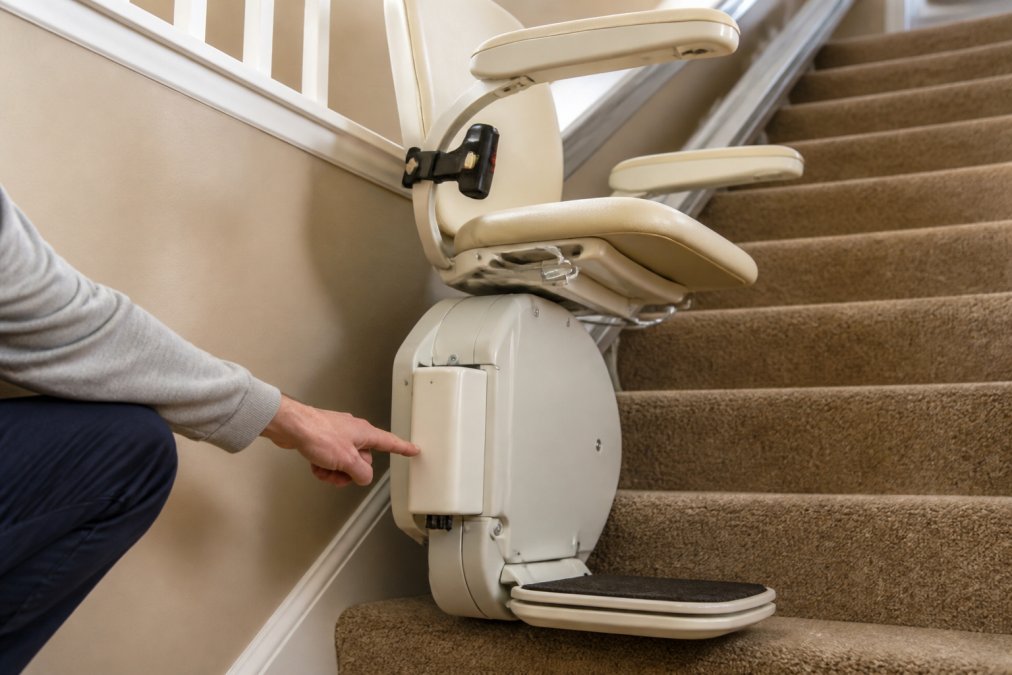
Battery Backup Life vs. Outage Duration
The critical question for most users is how long the backup lasts compared to the length of the outage. A well-maintained stairlift battery is designed for continuous operation that far exceeds a typical single trip up or down the stairs. Most units can handle multiple full rides on a single charge, meaning even a prolonged outage of several hours will not drain the system if you use the chair sparingly.
The real limitation is battery health, not battery capacity. A battery that is several years old and has not been maintained will hold less charge and may struggle during an extended power failure. This is why regular maintenance matters more than the specific minute count of the backup life. If the batteries are healthy, the chair will perform its safety function when the grid fails.
How to Manually Operate a Stairlift in an Emergency
If the battery system itself fails, or if the chair stops between floors for any reason, every stairlift includes a manual override for emergency descent. This is a mechanical release, not an electronic one, so it works even when all power is lost. Understanding exactly how this system works before you need it is the difference between a controlled descent and a stressful situation.
Locating the Manual Release Mechanism
The manual release is typically one of three configurations, depending on your stairlift manufacturer:
- Red pull cord or T-handle located near the seat base or on the side of the carriage.
- Key-operated release that requires a hexagonal or square key inserted into a socket near the drive motor.
- Flip-up lever under the seat or on the underside of the carriage arm.
Consult your owner's manual to find the exact location on your specific model, as it varies by manufacturer. If you cannot locate the release, call your stairlift dealer before an emergency occurs and ask them to walk you through the location over the phone. Do not wait until the power is out and you are stranded to learn where this mechanism is.
The Step-by-Step Emergency Descent Procedure
When the chair is stopped and will not move under its own power, follow these steps in order:
- Clear the staircase completely. Ensure no one is standing below the chair or on the stairs. The manual release will move the chair downward, and you need a clear path.
- Remove any objects from the seat. The chair must be unoccupied during manual descent. If a person is seated in the chair, have them stand and step off carefully before proceeding.
- Engage the release mechanism slowly. If it is a pull cord, pull it gently and hold it. If it is a key release, insert the key and turn it slowly. If it is a lever, lift it gradually.
- Control the descent. The stairlift is equipped with a centrifugal governor that limits descent speed to a safe rate, typically 0.5 to 1 foot per second (peer-reviewed research). The chair will move downward slowly and under control, not free-fall. Keep the release engaged until the chair reaches the bottom landing.
- Release the mechanism at the bottom. Once the chair reaches the bottom, release the pull cord, key, or lever. The chair will stop and remain in place.
What the Manual Release Does Not Do
The manual release is designed for descent only. It does not power the chair upward, and it does not unlock the swivel seat or the armrests. If the chair stops between floors and you need to go up rather than down, the manual release will not help you. In that case, your only option is to wait for professional service or use the chair's backup battery if it has any residual charge.
When Not to Use the Manual Release
Never use the manual release if the chair is occupied. The release is designed to lower an empty chair. Attempting to ride the chair during manual descent can cause injury because the governor is calibrated for the chair's weight, not the combined weight of the chair and a passenger. If you are unable to exit the chair, call for emergency assistance rather than attempting a manual descent while seated.
Practicing the Manual Release
Most practitioners recommend practicing the manual release procedure at least once every three months, even if you never experience a power outage. This ensures that you remember the location of the release and are comfortable with the descent speed. To practice, park the chair at the top of the stairs, engage the release, and allow the chair to descend to the bottom. This also confirms that the governor is functioning correctly and that the mechanism has not seized from lack of use.
Safety Features That Protect You During a Power Failure
Modern stairlifts are equipped with multiple safety features that work independently of the electrical grid, ensuring safe operation during a power failure. The most important is the rack and pinion drive system, which uses a physical gear to move the chair along the rail. This mechanical connection means the chair cannot roll backward or free-fall, even if all electronic systems fail.
Beyond the drive system, stairlifts include obstruction sensors that stop the chair if it encounters an obstacle on the stairs, and a swivel seat that locks at the top landing so you can exit safely without turning your back to the stairs. These features are mechanical or battery-powered, so they remain active during an outage. Load capacity is also rated for continuous use, meaning the chair is designed to carry the same weight whether on grid power or battery power.
The combination of a physical drive gear and battery operation is what makes stairlifts safe during power outages. There is no scenario where the chair drops, rolls, or moves faster than its designed descent speed.
Why Your Stairlift Beeps and Other Warning Signs
A beeping stairlift is almost always a battery warning, not a mechanical failure. Most units emit a beeping alarm when the battery charge drops below a safe operating threshold, or when the chair has been left away from its charge point for too long. This is the stairlift's way of telling you it needs attention before the next power outage occurs.
If you hear a beeping sound, check the following in order:
- Confirm the chair is parked at the charge point and the charging contacts are clean and aligned.
- Check whether the beeping stops when the chair is docked. If it continues, the battery may need replacement.
- Look for a battery indicator light on the carriage. A red or flashing light typically indicates low charge, while a steady green light means healthy battery health.
A beeping alarm that persists after charging usually signals that the rechargeable batteries have reached the end of their service life. Stairlift batteries are not designed to last forever, and a unit that cannot hold a charge will not provide reliable backup during a power cut. This is a maintenance issue, not a safety defect.
Cold Weather and Stairlift Battery Performance
Cold temperatures can reduce the efficiency of stairlift batteries, which is a particular concern for units installed in unheated stairwells or vacation homes (energy.gov). Battery chemistry slows in the cold, meaning a battery that performs well in summer may deliver fewer rides in winter before needing a recharge.
The impact is rarely dramatic for indoor stairlifts, since most residential staircases are kept at comfortable temperatures. However, if your stairlift is in a garage, sunroom, or other unconditioned space, be aware that battery performance will dip during winter months. The chair may beep sooner after use, and the time needed to fully recharge may increase.
The fix is straightforward: keep the stairlift plugged in and charging whenever possible, and consider scheduling a battery health check before winter sets in. A battery that is already weak will fail faster in cold weather, so proactive replacement is the best defense against an outage during a winter storm.
Your Stairlift Maintenance Checklist for Reliable Backup Power
A stairlift is only as reliable as its maintenance routine. The battery backup system that keeps you safe during a power outage depends on regular care, and most issues that cause stairlift failure are preventable. Use this checklist to keep your unit ready for the next grid failure.
| Maintenance Task | Recommended Frequency | Why It Matters |
|---|---|---|
| Keep chair docked at charge point | Always | Prevents battery drain and extends lifespan |
| Clean charging contacts | Monthly | Ensures efficient charging and reliable power |
| Test manual release lever | Every 3 months | Confirms emergency descent works when needed |
| Check for beeping or warning lights | Weekly | Catches battery issues before an outage |
| Schedule professional battery inspection | Annually | Identifies aging batteries before they fail |
Beyond the battery, inspect the rail and carriage for debris or obstructions that could block the chair's travel. Listen for unusual noises during the ride, which can indicate worn gears or rollers. A stairlift that runs smoothly under normal conditions is far more likely to perform correctly during a power failure.
Bottom Line: Staying Safe and Mobile When the Grid Fails
The fear of being trapped on the stairs during a power outage is understandable, but the engineering of modern stairlifts directly addresses it. Stairlifts are safe during power outages because they run on battery power by design, with mechanical safety features that do not depend on the electrical grid. The key to uninterrupted service is battery health, which comes down to consistent charging and regular maintenance.
For homeowners in Connecticut who are evaluating whether a stairlift is right for their home, the power outage question should not be a barrier. CT Stairlifts provides solutions designed to help individuals regain access to every floor of their home, with the safety features and battery backup systems needed for reliable operation when the grid fails. The company tailors each installation to the specific staircase, ensuring the chair fits properly and operates safely.
If you are concerned about what happens during a power cut, or if you have an existing stairlift that needs a battery check, contact CT Stairlifts for guidance on maintaining safe, uninterrupted access to your entire home. Get started with CT Stairlifts and keep your independence, even when the lights go out.
Frequently Asked Questions
Do all modern stairlifts come with battery backup systems?
Yes. A battery backup is a standard safety feature on modern stairlifts, not an optional extra. The stairlift charges itself while resting at the top or bottom charge point. When the power goes out, it automatically switches to DC power from the battery, allowing you to complete your ride safely. This ensures the stairlift never leaves you stranded mid-flight during a power outage.
How long will a stairlift battery last during a power outage?
A fully charged stairlift battery is designed for continuous operation, meaning it can handle several complete up-and-down trips before it needs to recharge. The exact number of trips depends on the battery's health and the travel distance of your stairs. After normal operation, the battery recharges automatically at the charge point. If the power outage lasts longer than the battery's capacity, the manual override lets you lower the stairlift safely.
What should I do if my stairlift stops mid-ride during a power failure?
Your stairlift should not stop mid-ride during a power outage because the battery backup takes over instantly. If it does stop, remain calm. Use the manual override release, usually a key or lever located near the seat or on the motor unit, to disengage the drive. Then, use the manual crank to slowly lower the stairlift to the nearest floor. Contact your stairlift provider for service before using it again.
What does a beeping stairlift mean after a power outage?
A beeping alarm typically indicates the battery is low or needs replacement. After a power outage, the battery may have been drained and needs time to recharge at the charge point. If the beeping continues after several hours of charging, the battery may no longer hold a charge and should be replaced. Consult your stairlift maintenance checklist and contact your provider for a service visit.
This article was written using GrandRanker