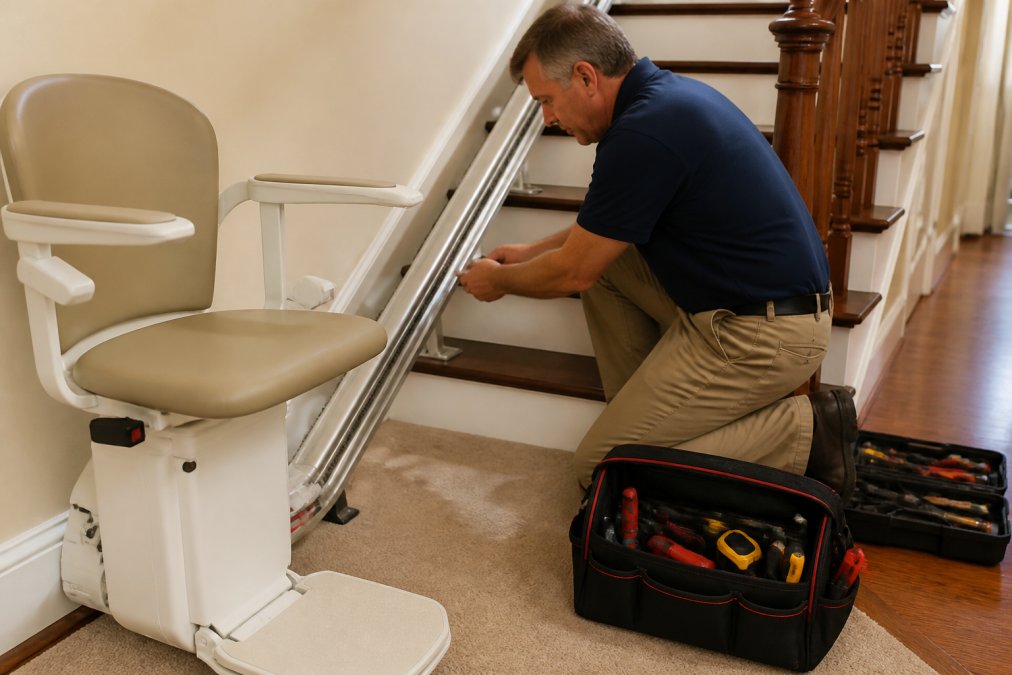
 listicle
Reliable Stairlift Installers: 2026 Guide
Table of Contents
- Top Stairlift Installers Serving Your Area
- Collins Medical Solutions: Family-Owned Since 1931
- Apex Pharmacy Home Care & Nutrition: Bruno and Acorn Specialist
- On The Mend Medical Supplies & Equipment: Harmar and Ameriglide Focus
- USA Medical Supply: Multiple Brands and Rental Options
- Acorn Stairlifts: User-Friendly Controls and Safety
- Next Day Access: Broad Accessibility Solutions
- Understanding Stairlift Installation Cost in Connecticut
- Stairlift Safety Standards and What to Expect
- Stairlift Maintenance and Repair Services
- Straight vs. Curved Stairlifts: Which Fits Your Home
- Insurance and Medicare Coverage for Stairlifts
- How to Choose the Right Stairlift Installer for You
- Conclusion
Last Updated: August 29, 2026
Reliable Stairlift Installers: Your Guide to Safe Home Accessibility
Finding reliable stairlift installers in Connecticut is crucial for your home's accessibility. A properly installed stairlift can mean the difference between independence and isolation. At CT Stairlifts, we understand that choosing the right installer requires technical expertise, local knowledge, and genuine commitment to your safety and comfort.
This guide covers everything you need to know about stairlift installation in Connecticut, from comparing local providers to understanding costs, safety standards, and the decisions that separate smooth installations from frustrating ones.
Top Stairlift Installers Serving Your Area
Connecticut residents have several solid options for stairlift installation, each with distinct strengths.
Collins Medical Solutions: Family-Owned Since 1931
Collins Medical Solutions has served Connecticut for over 90 years with CT-licensed technicians certified through CAPS (Certified Aging in Place Specialist) training. They provide free in-home evaluations, and assistance navigating Connecticut Medicaid and waiver programs. They handle both purchase and rental options and offer post-installation technical support included with every job.
Apex Pharmacy Home Care & Nutrition: Bruno and Acorn Specialist
Apex brings 15 years of professional experience with Bruno and Acorn stairlifts. Their installers are R-5 elevator contractors trained for complex staircase configurations. They offer a 90-day trial plan for rentals, uncommon in the industry and useful if you're testing whether a stairlift suits your needs. Custom-built stairlifts to exact measurements are their standard.
The main limitation: they focus exclusively on Bruno and Acorn models. Pricing isn't publicly available.
On The Mend Medical Supplies & Equipment: Harmar and Ameriglide Focus
On The Mend serves Waterbury and New Haven County with certified local installers who understand regional building codes. They bundle installation, maintenance, and repair services under one roof. Their geographic reach is limited to specific areas, and pricing isn't published.
USA Medical Supply: Multiple Brands and Rental Options
USA Medical Supply operates in Hartford County and carries Harmar, Bruno, and Access BDD stairlifts. They handle new, refurbished, and rental options. Their in-house model means consultation, installation, maintenance, and support flow through one team. Geographic reach is limited.
Acorn Stairlifts: User-Friendly Controls and Safety
Acorn offers straight, curved, and outdoor stairlift models through local installers across Connecticut. Their controls have earned an Arthritis Foundation Ease-of-Use Commendation. Standard packages include two remote controls, swivel seat, safety belt, and obstacle sensors. Weather-proofed outdoor models are available.
Next Day Access: Broad Accessibility Solutions
Next Day Access installs stairlifts alongside ramps, grab bars, and other home modifications. They're BBB Accredited and known for fast service. The upside: one contractor can handle multiple accessibility modifications. The downside: they're generalists, not specialists.

Understanding Stairlift Installation Cost in Connecticut
Cost depends entirely on your specific situation. Oversimplifying it leads to bad decisions.
Factors That Affect Your Quote
Staircase configuration is the primary cost driver. Straight staircases are cheapest because installation is straightforward. Curved staircases require custom-fabricated tracks, adding weeks and cost. Intermediate landings or unusual angles increase complexity further.
Weight capacity matters too. Standard models accommodate up to 300 pounds; specialized heavy-duty units cost more (peer-reviewed research). Track material, battery backup systems, swivel seats, and remote controls all affect pricing. Installation labor varies by complexity: straight staircases take 4-6 hours; curved installations span multiple days.
Purchase vs. Rental: What Fits Your Budget
Purchase makes sense if you plan to stay long-term. Rental works if you're recovering from surgery or uncertain about long-term needs. Rental costs accumulate over time, 24 months of rental may equal purchase cost. Honest installers help you think through this trade-off rather than pushing one option.
Financing and Payment Options
Most installers work with financing companies to spread costs over time. Medicare and Medicaid coverage exists but is inconsistent and requires pre-approval. According to Medicare guidelines on home modifications, stairlifts may qualify as durable medical equipment under certain conditions, but approval isn't automatic. Connecticut's Medicaid program may cover stairlifts for eligible individuals through your local care coordinator.
Veterans may qualify for benefits through the VA Home Improvement and Structural Alteration (HISA) program if the stairlift addresses a service-connected disability.
Stairlift Safety Standards and What to Expect
A stairlift is only valuable if it's safe. Understanding standards and features that protect you separates responsible installers from cut-rate operators.
Key Safety Features in Modern Stairlifts
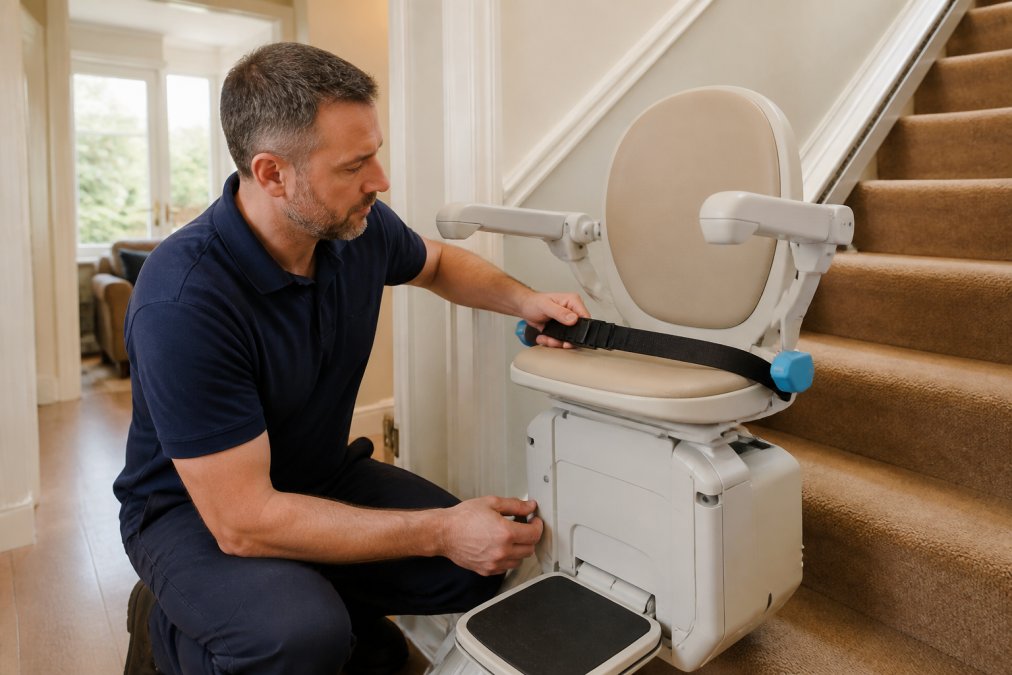
Modern stairlifts include emergency stop buttons, obstacle sensors, seat belts, armrests, and swivel seats that rotate at landings for safe exit. Battery backup systems ensure operation during power outages. Weight sensors prevent overloading. Rail systems are engineered for repeated cycles without degradation.
Reputable manufacturers like Acorn, Bruno, Harmar, and Ameriglide meet or exceed industry safety standards. Cheaper off-brand models sometimes cut corners on safety systems.
How to Verify Installer Credentials and Certifications
Ask about CAPS (Certified Aging in Place Specialist) training. Connecticut requires stairlift installers to be licensed electricians if handling electrical connections. Request references from recent similar installations and call them directly.
Verify the installer carries liability insurance and workers' compensation coverage. According to OSHA guidelines on residential construction safety, installers should follow basic safety protocols during installation. If an installer cuts corners on job-site safety, that's a red flag about overall standards.
Stairlift Maintenance and Repair Services
A stairlift is a mechanical system requiring maintenance for long-term reliability.
Routine Maintenance Tasks You Can Do Yourself
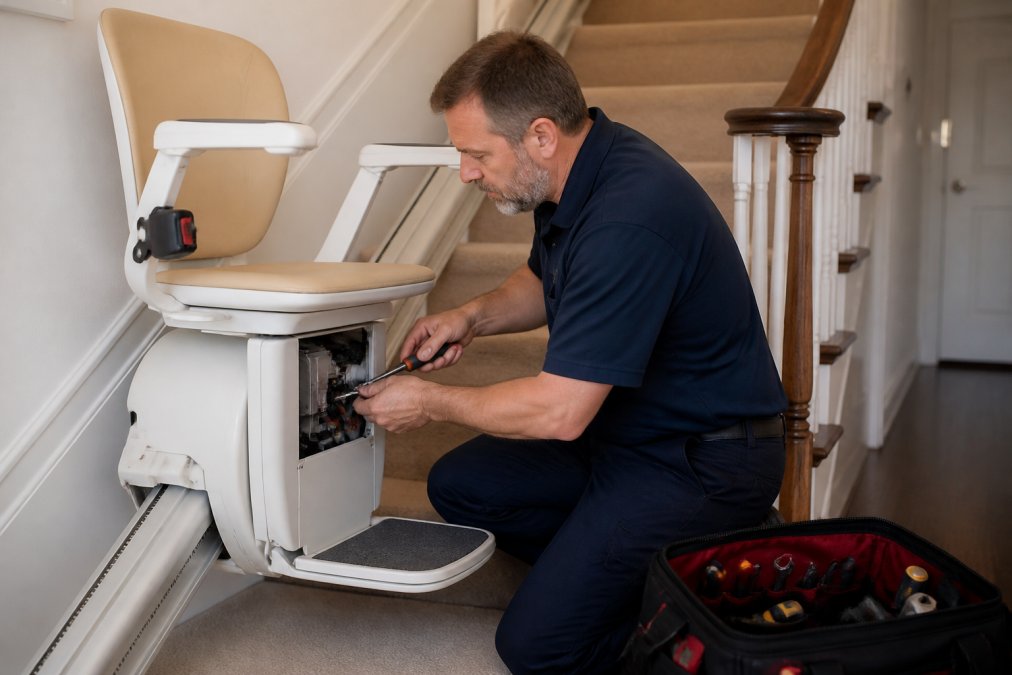
Monthly inspections catch problems early. Check that the chair moves smoothly without jerking. Listen for unusual grinding or squeaking sounds. Test the emergency stop button and obstacle sensors. Verify seat belts and armrests are secure. Keep the track clean with a soft brush and dry cloth. Check battery backup systems monthly. Tighten bolts and fasteners periodically. Most manufacturers provide maintenance guides specific to their models.
When to Call a Professional for Repairs
If the chair doesn't move smoothly, makes grinding sounds, or safety features malfunction, stop using it and call your installer. Electrical problems, battery replacement, motor service, and track realignment require professional technicians.
Most reputable installers offer maintenance contracts covering annual inspections, parts replacement, and priority repair service. For daily-use stairlifts, a maintenance contract ensures problems get addressed quickly. Ask potential installers about repair response times before signing on.
Straight vs. Curved Stairlifts: Which Fits Your Home
Your staircase configuration determines which stairlift type works for you.
Straight Stairlifts: Simple Installation and Lower Cost
A straight stairlift fits staircases with no curves, intermediate landings, or turns. Installation typically takes 4-6 hours. The track is standardized, keeping costs lower. Straight stairlifts are faster to install and easier to remove if you move. Resale value is higher because future homeowners can reuse the track.
The limitation: they only work on truly straight staircases.
Curved Stairlifts: Custom Solutions for Complex Staircases
A curved stairlift accommodates staircases that turn, have intermediate landings, or follow non-linear paths. The track is custom-fabricated to match your specific geometry. Installation takes 2-3 days. Curved stairlifts cost more due to customization but are the only option for non-straight stairs. Once installed, they work seamlessly through turns and landings. The downside: they're staircase-specific and don't transfer to new homes.
Both types require professional installation. The track must be perfectly aligned, and electrical connections must meet code.
Insurance and Medicare Coverage for Stairlifts
Understanding what insurance might cover saves thousands of dollars, though the landscape is complex.
Medicare Part B covers stairlifts under limited circumstances. The stairlift must be prescribed by a physician as medically necessary durable medical equipment. You must meet specific eligibility criteria, and pre-approval is required before purchase. Coverage typically applies to individuals with mobility limitations preventing safe stair navigation due to medical conditions or injury.
Medicare's coverage is inconsistent. Some regional Medicare Advantage plans cover stairlifts; others don't. Even when covered, you may face out-of-pocket costs. The process involves submitting medical documentation and getting pre-approval.
Connecticut's Medicaid program, called HUSKY, may cover stairlifts for eligible individuals, particularly those in waiver programs supporting aging in place. Your local care coordinator can determine eligibility.
Private insurance rarely covers stairlifts unless prescribed as part of rehabilitation following surgery or injury. Veterans may qualify for VA benefits through the Home Improvement and Structural Alteration program if the stairlift addresses a service-connected disability.
Most people pay out-of-pocket or use financing. Insurance coverage is the exception, not the rule.
How to Choose the Right Stairlift Installer for You
Choosing an installer matters more than choosing a brand. A good installer with a solid brand outperforms a great brand installed poorly.
Questions to Ask During Your Free In-Home Evaluation
Every reputable installer offers free in-home evaluations. Ask about their experience with your specific staircase type. Ask about timeline, safety features included versus add-ons, warranty coverage, and post-installation support. Ask for references from three recent similar installations and call them directly.
Ask about financing options and whether they handle insurance pre-approval paperwork. Ask about maintenance plans, what they recommend, and what's included.
Red Flags and What to Avoid
Avoid installers who pressure you into immediate decisions. Avoid quotes significantly lower than competitors, stairlift installation involves genuine costs. Avoid installers who won't provide references. Avoid companies that won't put warranty terms in writing. Avoid installers who don't test safety features before leaving.
Avoid companies with poor online reviews focused on customer service or follow-up support. Avoid installers who won't explain what they're doing or get defensive when you ask questions. Your home and safety deserve clear communication.
Choosing a reliable stairlift installer is one of the best investments you can make for your home's accessibility and peace of mind. The right installer combines technical expertise, local knowledge, transparent communication, and genuine commitment to your safety. Take time to get multiple evaluations, check references, and ask detailed questions.
At CT Stairlifts, we're committed to helping homeowners understand their options and find solutions that truly fit their needs. Contact us for a free in-home evaluation and personalized recommendations based on your specific staircase and mobility needs.
Frequently Asked Questions
What factors affect the cost of stairlift installation?
Stairlift installation cost depends on several variables: whether your stairs are straight or curved, the length of your staircase, the specific model and brand you choose, and any customization needed for your home's layout. Curved stairlifts typically cost more than straight models because they require custom track fabrication. Installation complexity, your location within the state, and whether you choose purchase or rental also impact the final price. Contact a local installer for a free in-home evaluation to get an accurate quote based on your specific situation.
Does Medicare cover stairlift installation costs?
Medicare generally does not cover stairlifts for most beneficiaries. However, some state Medicaid programs and certain waiver programs may provide assistance. Coverage varies significantly by state and individual circumstances. If you receive Medicaid benefits or participate in a home and community-based waiver program, ask your installer whether they have experience working with your specific program. Contact your state Medicaid office or speak with a social worker to understand what funding options may be available to you.
What maintenance is required for a home stairlift?
Regular stairlift maintenance keeps your unit safe and reliable. Monthly tasks include checking that the seat swivels smoothly, testing the safety sensors, and ensuring all controls respond properly. Keep the track clean and free of debris. Most installers recommend annual professional inspections to check mechanical components, battery backup systems, and electrical connections. If your stairlift makes unusual noises, moves slowly, or the remote control doesn't work reliably, contact a repair service promptly rather than attempting DIY fixes.
How do I verify that a stairlift installer has proper credentials?
Ask installers about their certifications and licenses. Look for CAPS (Certified Aging-in-Place Specialist) credentials, state licensing as elevator contractors, or manufacturer training certifications. Request references from recent installations in your area and ask whether they carry liability insurance. Installers working with state agencies typically meet higher safety and training standards. Check online reviews and the Better Business Bureau for complaint history. A reputable installer should be willing to provide documentation of their qualifications and answer questions about their training.
Can I rent a stairlift instead of buying one?
Yes, rental options are available through several installers. Rental is useful if you're recovering from surgery or injury and expect to need the stairlift temporarily, or if you want to try one before committing to a purchase. Some providers offer trial periods, such as 90-day rental plans, allowing you to test the stairlift in your home. Rental costs vary, and some rentals can be applied toward a future purchase. Ask your installer about rental terms, what's included in maintenance, and whether the rental period is flexible.
This article was written using GrandRanker