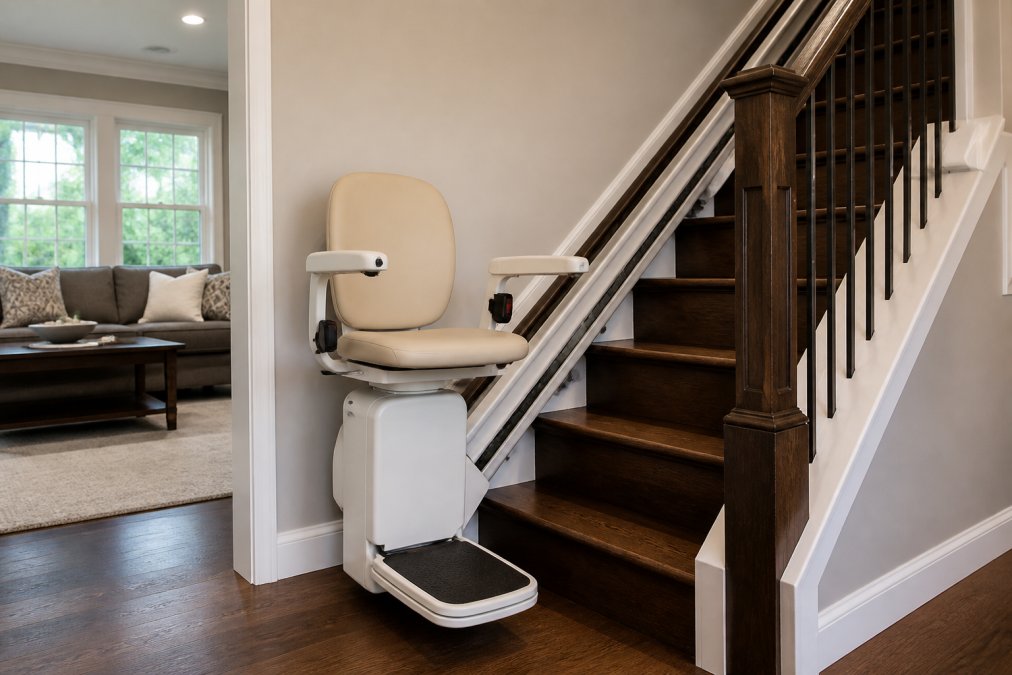
 ultimate-guide
Stairlift Rental Options for Seniors: A 2026 Guide
Table of Contents
- Why Seniors Choose Stairlift Rentals Over Buying
- How Stairlift Rental Works: The Complete Process
- Stairlift Rental Cost Per Month: What to Expect
- Short-Term Stairlift Rental: Flexibility for Recovery and Transitions
- Stairlift Installation Requirements: What Your Home Needs
- Insurance and Medicare Coverage for Stairlift Rentals
- What Happens When Your Rental Ends: Planning Your Transition
- Conclusion
Last Updated: August 26, 2026
Why Seniors Choose Stairlift Rentals Over Buying
Renting a stairlift offers flexibility that ownership doesn't. When recovering from hip surgery, managing temporary mobility challenges, or testing whether aging in place is feasible, committing to a $5,000+ purchase feels risky. Rental changes that calculation entirely.
The core reason seniors choose stairlift rental is straightforward: you pay for what you need, when you need it, without long-term financial commitment. If recovery takes three months instead of six, you're not stuck with equipment gathering dust. If you eventually move or no longer need the stairlift, there's no resale hassle or depreciation loss.
Rentals also eliminate installation permanence. A curved rail stairlift requires wall modifications and structural assessment. With a rental through CT Stairlifts, the company handles professional installation and removal, leaving your home in its original condition. Equipment breaks down, batteries fail, motors wear out, but when you rent, these issues become the provider's responsibility. A service contract typically covers repairs and maintenance, eliminating surprise repair bills.
For many seniors, renting feels less permanent than buying, less like accepting a permanent mobility limitation and more like using a temporary tool during a specific life phase.
How Stairlift Rental Works: The Complete Process
A stairlift rental begins with a home assessment. A certified technician visits your home to evaluate your staircase configuration, measure the landing, check stairway width, and identify structural considerations. This consultation is typically free and determines whether your home needs a straight rail or curved rail configuration.
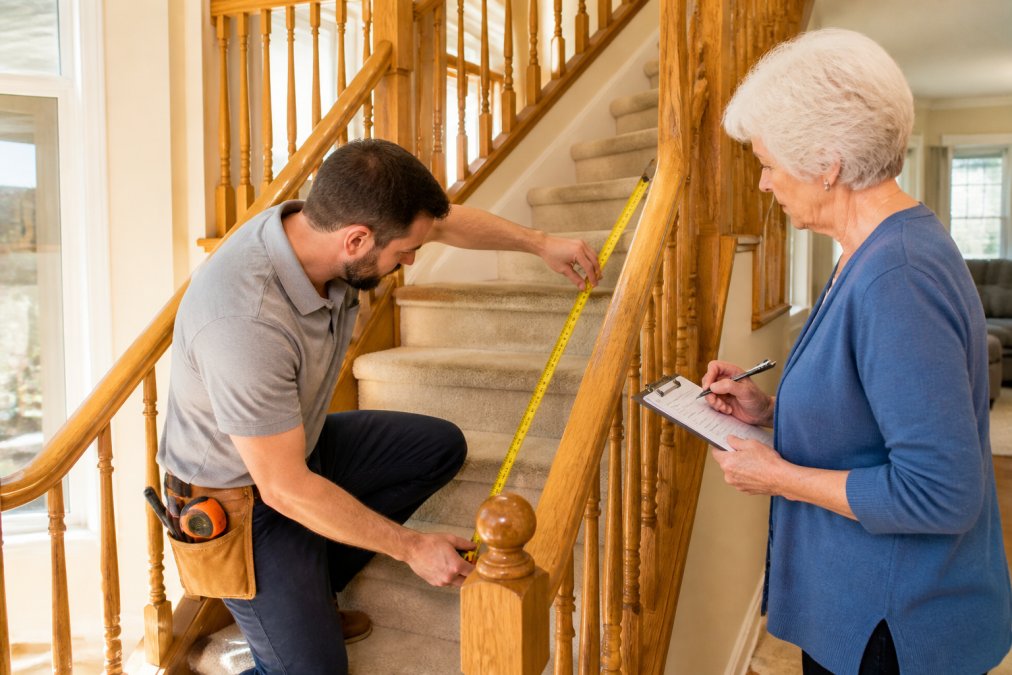
Once feasibility is confirmed, you'll review the rental agreement outlining monthly lease terms, minimum rental period, service contract coverage, and removal procedures. Professional installation typically happens within 1-2 weeks, taking 2-4 hours depending on your staircase configuration. Technicians mount the track, secure the seat and footrest, test safety sensors and emergency stop features, and verify remote controls and battery backup systems function properly.
You'll receive training on safe operation: boarding and exiting the seat, using the remote control, understanding battery backup, and recognizing when maintenance is needed. Most seniors become comfortable within the first few uses.
During your rental period, the service contract handles routine maintenance and repairs. When your rental ends, the company removes the stairlift and restores your staircase to its original condition, typically within 1-2 hours.
Stairlift Rental Cost Per Month: What to Expect
Pricing varies based on whether your staircase is straight or curved, rental duration, and included services. Straight rail stairlifts typically cost less to rent monthly than curved rail systems because installation is simpler.
Short-term rentals (3-6 months) generally have higher monthly costs than long-term commitments, reflecting setup and removal expenses. Most rental agreements include a service contract covering maintenance, emergency repairs, and battery replacement. Some providers offer tiered options: basic coverage (emergency repairs only) or comprehensive coverage (routine maintenance plus repairs).
Installation and removal fees may be bundled into your monthly lease or charged separately. Ask your provider to itemize costs clearly so you understand total out-of-pocket expenses over your rental period.
When evaluating monthly cost, factor in what you're avoiding: the purchase price of equipment you might use briefly, ongoing maintenance responsibility, removal costs, and depreciation if you eventually resell. For short-term needs, renting almost always makes financial sense.
CT Stairlifts can provide a custom quote based on your specific staircase configuration and rental duration. Contact them directly for current pricing and to understand what's included in their rental agreements.
Short-Term Stairlift Rental: Flexibility for Recovery and Transitions
A short-term stairlift rental is ideal for seniors recovering from surgery, managing acute injury, or navigating temporary mobility challenges. If you've had hip replacement surgery or a serious fall, your doctor may recommend avoiding stairs for 6-12 weeks (peer-reviewed research). A rental solves that problem without forcing temporary relocation.
Most providers offer flexibility starting at 1-3 months. If your physical therapist says you'll need stair assistance for 8 weeks but you improve faster, a month-to-month rental lets you end early without penalty. If recovery takes longer, you can extend without renegotiating terms.
Short-term rental also works for testing whether aging in place is realistic. Trying a stairlift for three months helps determine whether you can safely navigate your current home long-term. If it works and you want to continue, many providers offer conversion from rental to purchase or extended rental terms.
Seasonal use is another valid scenario. Some seniors spend winters in warmer climates and return home seasonally. Renting for the months you're actually home makes financial sense rather than maintaining equipment year-round.
One practical consideration: confirm whether your rental agreement allows early termination or month-to-month continuation. Some providers lock you into a minimum term with penalties for early exit; others offer more flexibility. Understanding these terms upfront prevents surprises if your situation changes.
Stairlift Installation Requirements: What Your Home Needs
Your home's staircase configuration determines whether a stairlift rental is feasible and which type you'll need. A straight staircase accommodates a straight rail stairlift, which is simpler to install and typically costs less to rent. If your staircase has a landing, turns, or multiple flights, you'll need a curved rail system, custom-built to match your specific staircase geometry.
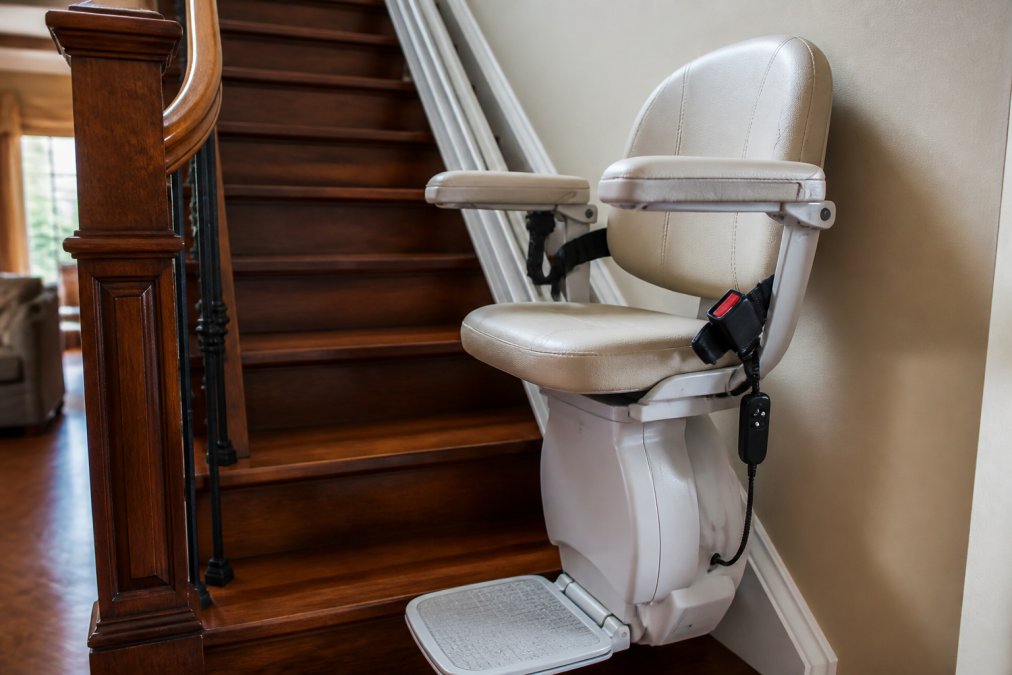
Straight vs. Curved Rail Configurations
A straight rail stairlift follows a single continuous path up your staircase. The track mounts directly along the wall or stair edge, the motorized seat slides along the rail, and the footrest folds away when not in use. Installation is straightforward, typically within 2-3 hours.
A curved rail stairlift is custom-manufactured to match your staircase's exact dimensions, including turns and landings. Installation takes longer (usually 4-6 hours) because the track must be precisely positioned. Both systems include the same core safety features: emergency stop buttons, seat belts, swivel seats, footrests, battery backup, and remote controls. The difference is primarily in track configuration and installation complexity.
Space and Safety Considerations
Your stairway width matters significantly. Most stairlifts require a minimum of 28-30 inches of clear stair width (ada.gov). The technician will measure your stairway width and confirm whether installation is feasible.
The landing at the top and bottom of your staircase must accommodate the stairlift's endpoints. At the top, the seat needs clearance to rotate and allow safe exit. At the bottom, the seat must fold away completely so the staircase remains accessible to others.
Structural integrity of your walls and stairs is important. The track mounts using brackets, and most residential staircases are structurally sound, though older homes sometimes need repairs before installation.
Weight capacity is another consideration. Standard residential stairlifts typically support users up to 300-350 pounds, though heavier-duty models are available. Confirm the equipment matches your weight requirements.
Electrical access is necessary. Your stairlift needs a standard outlet near the top or bottom to charge the battery. Battery backup means the stairlift operates during power outages, but the battery must be charged regularly.
Safety sensors on modern stairlifts detect obstacles and stop the seat automatically. These sensors require clear sightlines, so any clutter on your staircase should be removed.
Insurance and Medicare Coverage for Stairlift Rentals
Whether your insurance or Medicare covers stairlift rental depends on your medical condition, insurance plan, and whether your doctor prescribes the equipment as medically necessary.
Medicare Part B may cover stairlifts if prescribed by a physician as durable medical equipment for a qualifying medical condition (cms.gov). Conditions that sometimes qualify include recovery from hip or knee replacement, severe arthritis, neurological conditions affecting balance, or post-stroke rehabilitation. However, Medicare typically covers ownership, not rental. You may need to appeal or seek documentation from your physician explaining why rental is medically necessary.
Private insurance coverage varies widely by plan. Contact your insurance company directly, provide your diagnosis and physician's prescription, and ask specifically whether stairlift rental is covered. Request written confirmation before proceeding with installation.
For seniors without insurance coverage, out-of-pocket rental remains an option. The monthly cost is typically lower than the purchase price, making it financially accessible for many families.
Documentation matters. Obtain a written prescription from your physician stating that a stairlift is medically necessary for your condition, including specific details about your diagnosis, mobility limitations, and why the stairlift enables you to remain safely in your home. Some rental providers work directly with insurance companies and can submit claims on your behalf.
What Happens When Your Rental Ends: Planning Your Transition
When your rental period concludes, you face a decision: end the rental and remove the stairlift, convert to ownership, or extend your rental agreement. Planning this transition in advance prevents scrambling at the last minute.
If you decide to end your rental, the company removes the stairlift and restores your staircase. Removal typically takes 1-2 hours, and any wall damage from track mounting is repaired.
Conversion to ownership is an option if you've decided the stairlift is essential long-term. Some providers offer purchase options at the end of your rental period, sometimes crediting a portion of your rental payments toward the purchase price. Discuss purchase options with your provider before your rental ends.
Extending your rental agreement is straightforward if your situation hasn't changed. Most companies allow month-to-month extensions after your initial rental period, providing flexibility as your needs evolve.
The transition also involves considering your long-term mobility needs. Be honest about whether the stairlift has become essential to your independence and safety. For adult children managing a parent's care, this involves family conversations about long-term housing and care preferences.
CT Stairlifts can discuss transition options as your rental period approaches, helping you navigate the next step based on your evolving needs.
Navigating stairs safely is essential to maintaining independence at home. If mobility challenges are making your staircase feel like a barrier, stairlift rental options provide a practical solution without forcing permanent decisions. CT Stairlifts specializes in helping homeowners regain access to every floor of their home through professional installation, reliable equipment, and flexible rental terms tailored to your specific situation and timeline.
| Rental Scenario | Best Duration | Key Consideration |
|---|---|---|
| Post-surgery recovery | 2-4 months | Confirm timeline with your physician |
| Testing aging in place | 3-6 months | Helps determine long-term feasibility |
| Temporary injury management | 1-3 months | Flexibility for faster-than-expected recovery |
| Long-term mobility support | 12+ months or purchase | Consider conversion to ownership |
| Seasonal use | 3-6 months annually | Rent only when you're home |
Frequently Asked Questions
Q: Is it cheaper to rent or buy a stairlift?
A: Renting works best for short-term needs, such as recovery from surgery or temporary mobility challenges. Buying makes sense if you need a stairlift long-term and plan to stay in your home for several years. Rental eliminates upfront costs and maintenance responsibility, while buying requires a larger initial investment but spreads costs over time. Your situation, timeline, and budget will determine which option suits you best. Contact a qualified provider for a personalized cost comparison.
Q: How long can you rent a stairlift for?
A: Rental periods vary by provider. Most offer flexible terms ranging from a few weeks to several months or longer, accommodating short-term recovery needs and extended mobility challenges. Some providers allow month-to-month renewals, giving you flexibility to adjust your rental as your situation changes. Discuss your specific timeline with the rental company to confirm minimum rental periods and renewal options available in your area.
Q: Does insurance or Medicare cover stairlift rentals?
A: Coverage depends on your specific insurance plan and whether a physician prescribes the stairlift as medically necessary. Medicare may cover a portion of stairlift costs under certain conditions, but coverage varies. Some private insurance plans and supplemental policies offer partial reimbursement. Contact your insurance provider directly with documentation from your doctor to determine your coverage eligibility. A stairlift rental company can often assist with insurance verification and claims paperwork.
Q: What happens when the rental period ends?
A: At the end of your rental agreement, the provider removes the stairlift from your home. The removal process typically takes 1-2 hours and leaves your staircase unchanged. You have the option to renew your rental if you still need mobility assistance, or transition to purchasing if long-term use is necessary. Discuss exit options and potential removal fees when signing your rental agreement to avoid surprises.
This article was written using GrandRanker