 how-to
How to Prevent Falls at Home: A 2026 Guide
Table of Contents
- Why Falls at Home Happen More Often Than You'd Expect
- Home Safety Modifications for Seniors: Room by Room
- How to Prevent Falls at Home with the Right Footwear and Clothing
- Best Balance Exercises for Fall Prevention
- Medication Management, Vision Screening, and Your Healthcare Team
- Smart Home Technology and Budget-Friendly DIY Upgrades
- Stairlift Benefits for Mobility and How to Prevent Falls at Home on Stairs
- Conclusion
Last Updated: August 21, 2026
Why Falls at Home Happen More Often Than You'd Expect
Falls are the leading cause of injury-related death among adults 65 and older, according to the Centers for Disease Control and Prevention fall prevention data. Most falls happen at home, in familiar rooms, during ordinary tasks, not in hospitals or nursing homes. This guide breaks down exactly how to prevent falls at home, room by room, with practical steps you can act on today.
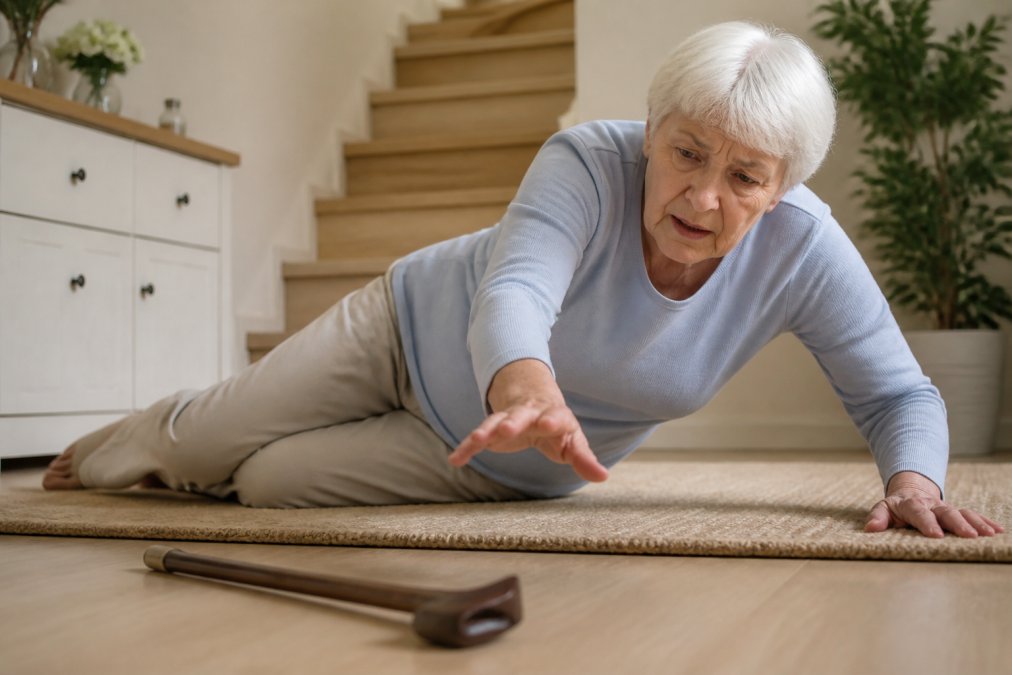
Falls are rarely bad luck. Predictable causes include poor lighting, cluttered floors, slippery surfaces, weak balance, medication side effects, and difficult stairs. The good news is that most of these risks are fixable. Preventing falls requires modifying your environment AND your habits. Neither alone is enough.
Home Safety Modifications for Seniors: Room by Room
Home safety modifications are the single most effective category of fall prevention. A clutter-free, well-lit, properly equipped home eliminates the majority of fall risks before they become dangerous.
Start with a room-by-room home safety audit. Walk through each space and look for trip hazards at floor level, lighting gaps, and surfaces that offer no grip.
Remove Trip Hazards and Improve Lighting
Throw rugs are one of the most common causes of falls at home. They shift, bunch, and catch toes. Remove them entirely or replace them with slip-resistant mats that have non-skid backing and lie completely flat.
Beyond rugs, scan every room for extension cords crossing walkways, low furniture in traffic paths, clutter on stairs, and uneven thresholds between rooms.
Lighting levels matter as much as floor surfaces. Install night lights in hallways, bedrooms, and bathrooms. Motion-activated lights are especially practical: they turn on automatically when someone gets up during the night without requiring switches to be found in the dark.
For stairways, make sure every step is clearly visible from both top and bottom. Add overhead lighting if needed, and consider adhesive LED strip lights along the base of each step.
Bathroom Safety: Grab Bars, Non-Slip Mats, and Raised Toilet Seats
The bathroom is the highest-risk room in any home. Wet floors, smooth tub surfaces, and the physical demands of sitting and standing combine to make it genuinely hazardous.
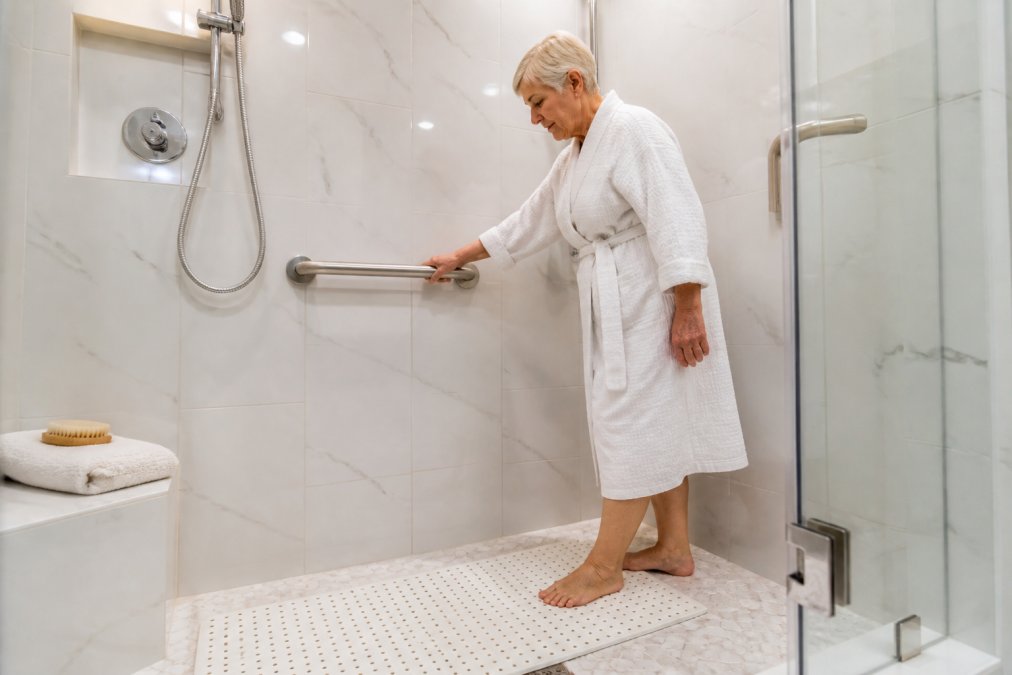
Grab bars are the most impactful single modification you can make. Install them inside the shower or tub and next to the toilet, positioned where you actually reach during transitions. Grab bars must be anchored into wall studs or with appropriate wall anchors rated for the load.
Non-slip mats belong both inside the tub or shower and on the floor outside it. Look for mats with strong suction cups and a textured surface on top.
A raised toilet seat reduces the distance required to sit and stand, taking strain off the knees and hips. A shower chair or bench removes the need to stand throughout bathing, eliminating one of the most common fall scenarios entirely.
Stairway and Hallway Safety
Stair safety comes down to three things: grip, visibility, and confidence. Handrails on both sides of every staircase give you something to hold regardless of which direction you're traveling. If your current railing only runs along one wall, adding a second is worth the investment.
Check that existing handrails are firmly anchored. A wobbly rail provides false confidence and can cause a fall when someone leans on it.
Carpet on stairs adds grip but must be tightly secured. Loose carpet edges are trip hazards. Bare wood stairs should have non-slip treads applied to each step.
Keep hallways completely clear of shoes, bags, and seasonal items.
How to Prevent Falls at Home with the Right Footwear and Clothing
Footwear is one of the most underrated factors in fall prevention. Many people walk around their homes in socks, loose slippers, or bare feet, all of which reduce traction and stability significantly.
Sensible shoes with rubber soles and a low, wide heel provide the best grip on most floor surfaces. The sole should be firm enough to give feedback about the surface underfoot, but with enough texture to grip.
Avoid footwear with smooth leather or synthetic soles, high or narrow heels, loose fit around the heel, or open backs.
Clothing matters too. Pants that are too long drag on the floor and catch underfoot. Loose robes can tangle around the legs during movement. Fitted clothing that doesn't restrict movement but doesn't trail on the floor is the right balance.
According to the National Institute on Aging footwear and fall prevention guidance, wearing well-fitted, slip-resistant footwear indoors is one of the most straightforward preventative measures available.
Best Balance Exercises for Fall Prevention
Balance exercises work by strengthening the muscles that stabilize your body during movement and improving the neurological signals that keep you upright. Regular physical activity, particularly exercises targeting balance and lower-body strength, meaningfully reduces fall risk.
The best exercises to start with are:
- Single-leg stand - Stand on one foot for 10-30 seconds, using a chair back for support. Switch feet. Perform 3 sets per side daily.
- Heel-to-toe walk - Walk in a straight line placing the heel of each foot directly in front of the toes of the other.
- Sit-to-stand - Rise from a chair without using your hands, then lower back down slowly. This builds the quad and hip strength that prevents collapses during transitions.
- Calf raises - Stand behind a chair, hold lightly for balance, and rise up onto your toes, then lower slowly.
- Side leg raises - Hold a chair back and lift one leg out to the side, keeping the torso upright.
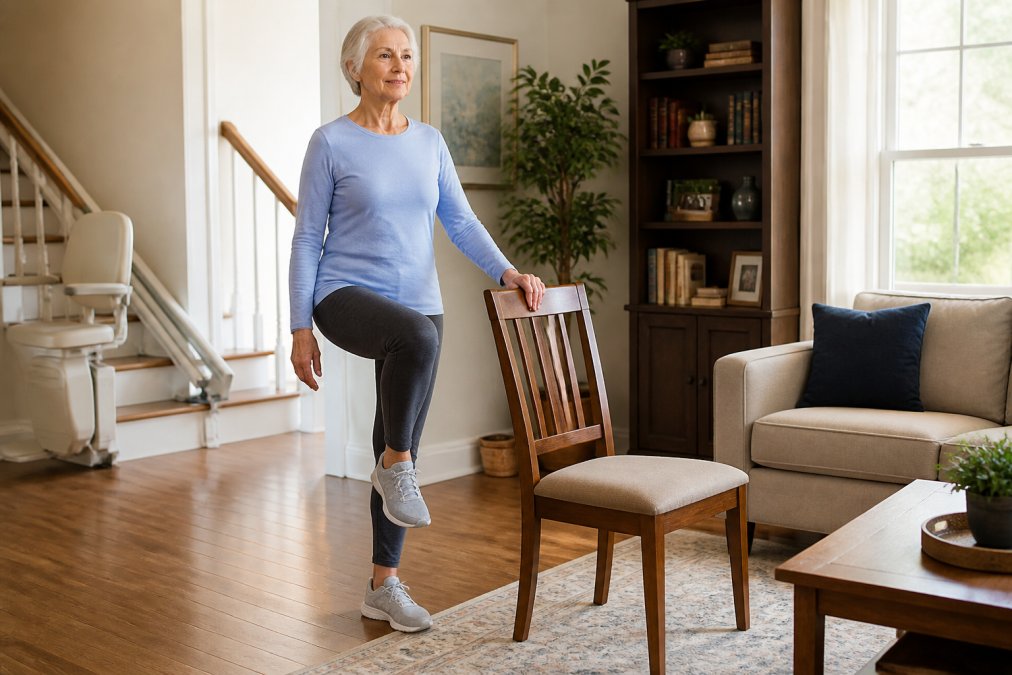
A physical therapist can design a program specific to your current strength and balance level. Many community centers and senior programs also offer group balance classes.
| Exercise | Primary Benefit | Equipment Needed | Frequency |
|---|---|---|---|
| Single-leg stand | Ankle and core stability | Chair for support | Daily |
| Heel-to-toe walk | Balance and coordination | Clear hallway | Daily |
| Sit-to-stand | Quad and hip strength | Sturdy chair | Daily |
| Calf raises | Ankle stabilizer strength | Chair for balance | 3x per week |
| Side leg raises | Hip abductor strength | Chair for balance | 3x per week |
Medication Management, Vision Screening, and Your Healthcare Team
The physical environment matters enormously, but internal factors, medications and vision, are responsible for a significant share of falls.
Many common medications affect balance, blood pressure, or reaction time. Sedatives, blood pressure medications, diuretics, antidepressants, and even some antihistamines can cause dizziness or sudden drops in blood pressure when standing up. This is called orthostatic hypotension, and it's a major fall trigger.
Ask your healthcare provider or pharmacist to conduct a medication review. This is a formal evaluation of every drug you take, looking for interactions and side effects that increase fall risk.
Vision screening is equally important. Depth perception and contrast sensitivity decline with age, making it harder to judge distances and spot edges. Annual eye exams are a minimum standard.
Your healthcare team, which may include a primary care physician, pharmacist, physical therapist, and occupational therapist, is your most important resource. An occupational therapist can conduct a professional home safety audit and recommend specific modifications based on your individual mobility profile.
As noted by the American Geriatrics Society clinical practice guidelines on fall prevention, a multifactorial fall risk assessment conducted by a healthcare team consistently outperforms single-intervention approaches.
Smart Home Technology and Budget-Friendly DIY Upgrades
Smart home technology has made several fall prevention tools genuinely accessible and affordable. Motion-activated lighting can now be installed without any wiring using battery-powered sensors that activate LED lights when someone enters a room or hallway.
Smart doorbells and home monitoring systems allow family members to check in remotely. Medical alert systems, worn as a pendant or wristband, allow a person who has fallen and cannot get up to call for help immediately.
| Modification | DIY Feasible? | Professional Needed? | Approximate Complexity |
|---|---|---|---|
| Non-slip mats and rugs | Yes | No | Low |
| Motion-activated lights | Yes | No | Low |
| Grab bar installation | Sometimes | If into drywall only | Medium |
| Handrail addition or repair | Sometimes | For structural anchoring | Medium-High |
| Stairlift installation | No | Yes | High |
| Threshold ramp installation | Yes | No | Low |
Battery-powered grab bars exist but should not replace properly anchored bars in high-load locations like showers.
For homeowners on a fixed income, many state programs and nonprofit organizations offer home modification assistance. Check with your local Area Agency on Aging for programs available in your area. The Eldercare Locator, a service of the U.S. Administration on Aging can help identify local resources and assistance programs.
Stairlift Benefits for Mobility and How to Prevent Falls at Home on Stairs
Stairs represent the single most dangerous fall location in a multi-story home. A fall on stairs is statistically more likely to result in serious injury than a fall on a flat surface. For anyone with declining mobility, balance issues, or a recent surgery, stairs are an active threat.
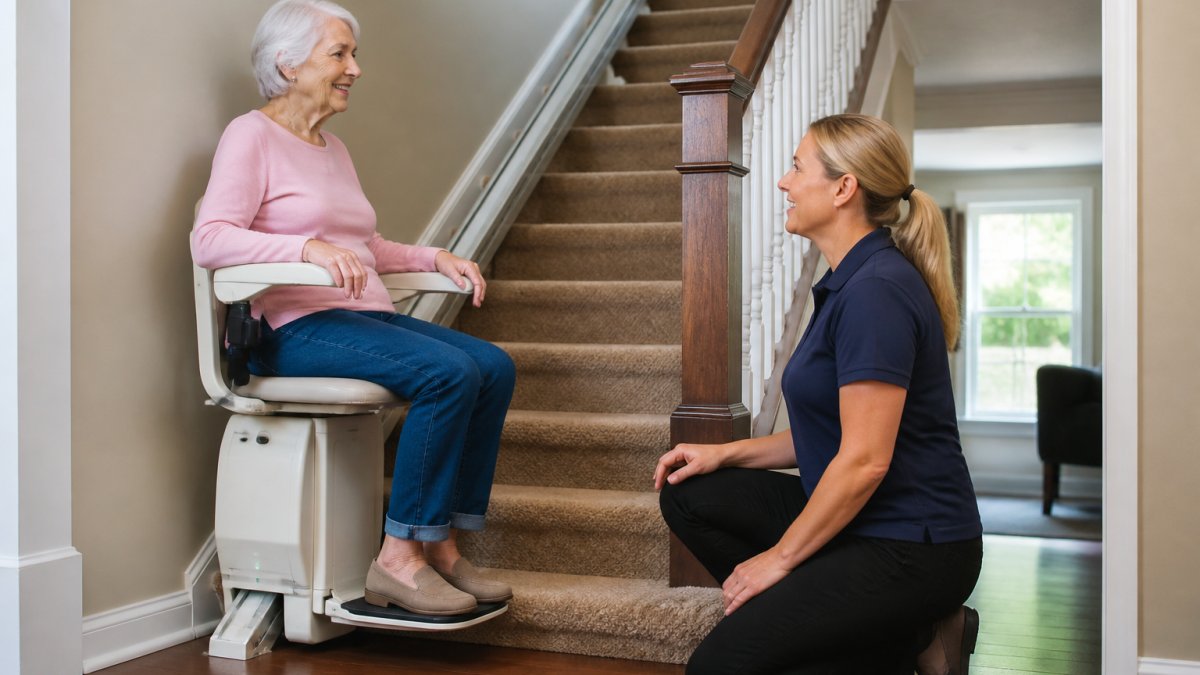
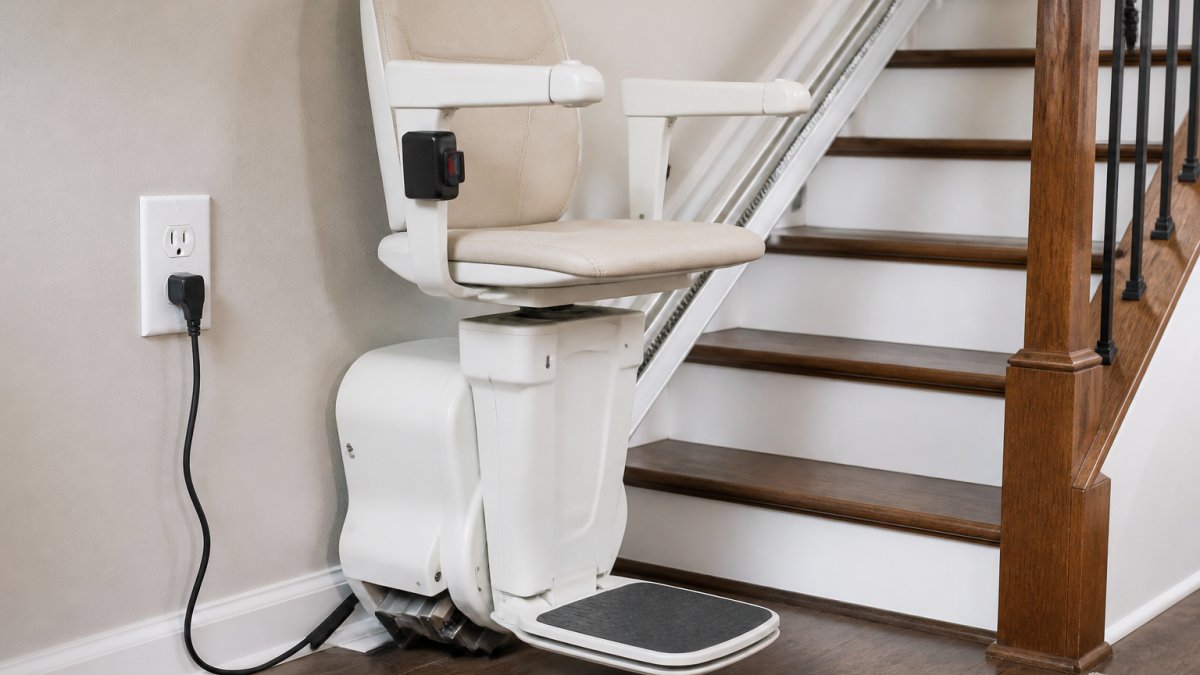
A stairlift eliminates that threat entirely. Rather than attempting to climb stairs independently, a person rides a motorized seat that travels along a rail mounted to the staircase. This removes the physical demand of stair climbing and the fall risk that comes with it.
CT Stairlifts provides solutions designed to help homeowners regain access to every floor of their home safely. For people who want to age in place rather than relocate, a stairlift often makes the difference between staying in a familiar home and being forced to move.
Stairlift benefits for mobility extend beyond fall prevention. They reduce fatigue, preserve energy for other activities, and maintain independence on a daily basis. For someone recovering from hip or knee surgery, a stairlift can be the bridge that makes returning home from a hospital or rehabilitation facility possible.
Stairlifts can be fitted to straight and curved staircases. Safety features typically include seat belts, obstruction sensors, and battery backup systems that allow the lift to continue operating during a power outage. For specific questions about whether a stairlift will fit your staircase, contact CT Stairlifts directly for an assessment.
Addressing the Fear of Falling and Staying Independent
Fear of falling is itself a risk factor. After a fall or near-miss, many older adults restrict their activity, stop walking, and avoid stairs. The paradox is that reduced activity leads to weaker muscles, worse balance, and ultimately higher fall risk. Fear becomes a trap.
The answer is not to stop moving. The answer is to modify the environment, build strength, and use mobility aids that provide genuine support. A walker, cane, or stairlift is not a sign of defeat. It's a tool that preserves independence by making movement safe.
Psychological support, whether through a counselor, support group, or honest conversations with family, can help break the cycle of fear-driven inactivity.
Caregiver Communication: Starting the Conversation
Adult children often see the fall risk before the parent does. Starting that conversation without triggering defensiveness requires care.
A few approaches that work:
- Lead with observation, not conclusion. "I noticed the rug in the hallway has been bunching up. Can we look at that together?" is far less threatening than "You're going to fall."
- Frame modifications as upgrades, not accommodations. Better lighting, a grab bar, a stairlift: these improve the home for everyone.
- Involve the person in decisions. Being asked which options you prefer preserves dignity.
- Bring in a professional. Sometimes a recommendation from a physician or occupational therapist carries more weight than advice from a family member.
The goal is a home that supports independence, not one that signals its loss.
Falls at home are common, but they are not inevitable. The combination of home safety modifications, appropriate footwear, regular balance exercises, medication review, and the right mobility aids creates a genuinely safer environment. For anyone managing stairs that have become a daily risk, CT Stairlifts offers stairlift installation tailored to your home's specific layout, helping you stay in the home you know without compromising your safety. Reach out to CT Stairlifts to discuss your staircase and find out which solution fits your situation.
Frequently Asked Questions
Q: What are the most common household hazards that cause falls?
A: Loose throw rugs, poor lighting, cluttered walkways, slippery bathroom floor surfaces, and stairs without handrails are among the most frequent trip hazards in the home. Cords running across floors and furniture placed too close together also create obstacles. A simple home safety audit, walking through each room and noting anything that could catch a foot or reduce stability, is one of the most effective preventative measures you can take.
Q: How can home modifications reduce the risk of falling?
A: Home safety modifications for seniors directly address the environmental factors that cause most falls. Installing grab bars in the bathroom, adding non-slip mats to tubs and shower floors, improving lighting levels with night lights in hallways, securing or removing throw rugs, and adding handrails to both sides of a stairway all reduce fall risk significantly. These changes support independent living by making the home environment safer without requiring a move to a care facility.
Q: What exercises are most effective for improving balance in older adults?
A: Physical therapy-based programs consistently point to heel-to-toe walking, single-leg stands, sit-to-stand repetitions, and tai chi as some of the best balance exercises for fall prevention. These movements build the leg strength and coordination needed to recover from a stumble before it becomes a fall. Aim to practice at least three times per week, always near a wall or sturdy chair for support, and consult your healthcare team before starting a new exercise routine.
Q: How do stairlifts contribute to fall prevention for seniors?
A: Stairs are one of the highest-risk areas in any home, and stairlift benefits for mobility go beyond simple convenience. A stairlift eliminates the need to grip handrails and negotiate each step under your own power, which is particularly important for anyone with balance issues, joint pain, or reduced lower-body strength. For older adults who want to prevent falls at home without giving up access to every floor, a stairlift is a practical, long-term solution that supports aging in place safely.
This article was written using GrandRanker