 listicle
Alternatives to Stairlifts for Elderly Mobility
Table of Contents
- Understanding Your Options: Alternatives to Stairlifts for Elderly Mobility
- Home Elevators and Platform Lifts
- Mobility Aids: Walkers, Rollators, and Stair Climbing Canes
- Preventing Falls at Home for Elderly: Handrails and Grab Bars
- Home Layout Changes and Aging in Place Home Renovation Checklist
- Medicare Coverage for Home Safety Equipment and Financial Assistance
- Choosing the Right Alternative for Your Home and Mobility Needs
- Frequently Asked Questions
Last Updated: October 8, 2026
Understanding Your Options: Alternatives to Stairlifts for Elderly Mobility
When stairs become a barrier to moving freely through your home, the first solution most people consider is a stairlift. But alternatives to stairlifts exist, and they may be a better fit for your situation, budget, or home layout. At CT Stairlifts, we understand that one-size-fits-all solutions rarely work for aging in place. The goal is to help homeowners maintain independence and safety.
The reality is that mobility challenges come in different forms. Some people need help carrying their body weight up stairs. Others struggle with balance or need a way to move a wheelchair between floors. Still others can modify their living space to reduce stair use altogether. Understanding which alternative to stairlifts makes sense requires honest assessment of your mobility level, home structure, and long-term needs.
This guide covers the major alternatives to stairlifts, from home elevators and platform lifts to mobility aids and home layout changes. We'll walk you through the practical considerations for each option so you can make an informed decision about what works best for your home.
Home Elevators and Platform Lifts
Home elevators and platform lifts represent the most direct alternatives to stairlifts when you need to move between floors safely. Both options carry your full body weight, making them suitable for people with significant mobility limitations.
A home elevator is a full-sized lift that operates much like a commercial elevator. It requires a dedicated shaft, which typically means structural modifications to your home. Home elevators offer the most spacious and comfortable ride. They work well if you have the budget and space to accommodate one.
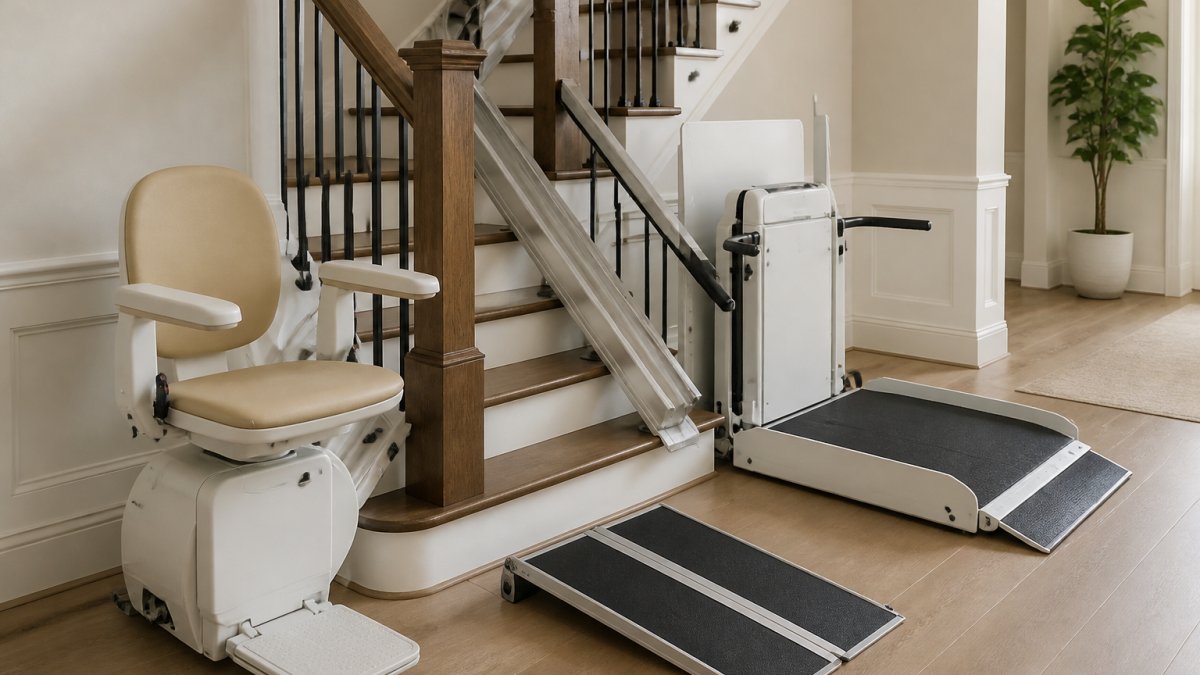
A platform lift (also called a vertical platform lift) is a more compact option. It carries a wheelchair or scooter directly upstairs without requiring a full shaft. Platform lifts work on curved or straight stairs.
Both options require professional installation and regular maintenance. They represent a significant investment, but they're worth considering if your home has multiple stories and you plan to age in place long-term. The choice between them often comes down to your home's layout and whether you use a wheelchair.
Mobility Aids: Walkers, Rollators, and Stair Climbing Canes
For people with mild to moderate mobility limitations, mobility aids can help you navigate stairs more safely without installing equipment. These tools work by providing extra support and stability as you move.
A walker provides a stable frame you hold onto while climbing stairs. It's most effective on stairs with sturdy handrails, which allow you to use both the walker and the rail for support.
A rollator (a wheeled walker) offers similar support with added mobility on flat surfaces. Some rollators are designed to handle stairs, though they work best on gentler inclines.
A stair climbing cane is a specialized mobility aid with multiple contact points designed specifically for stair use. It provides more support than a standard cane while requiring less strength than a walker.
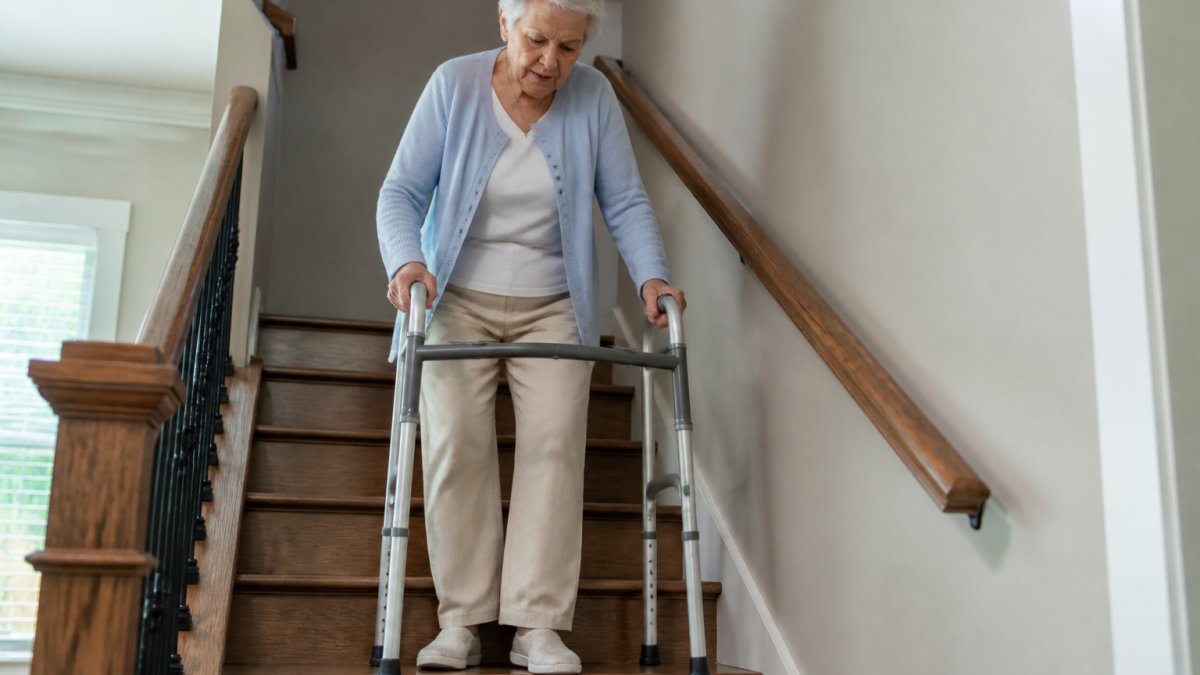
These mobility aids are most effective when combined with other safety measures, like handrails and good lighting.
Preventing Falls at Home for Elderly: Handrails and Grab Bars
One of the most overlooked alternatives to stairlifts is improving your stair safety through better design and equipment. Many falls happen not because stairs are inherently dangerous, but because people lack proper support while using them.
Handrails are the foundation of stair safety. A proper handrail should be graspable, mounted at a comfortable height (typically 34-38 inches), and extend the full length of the stairway. If your stairs lack handrails or have only one side covered, adding a second handrail can dramatically improve safety and allow people with balance issues to climb independently.
Grab bars provide additional support at key points. Install them at the top and bottom of stairs, and consider adding one midway on longer flights. Grab bars should be securely anchored into wall studs and have a diameter that's comfortable to grip (typically 1.25 to 1.5 inches).
Beyond handrails and grab bars, consider these modifications:
- Improve lighting on stairs with bright, shadow-free illumination
- Use contrasting tape or paint on stair edges to make them more visible
- Remove clutter and ensure stairs are clear of obstacles
- Install non-slip treads on stair surfaces
These modifications cost far less than a stairlift or elevator. For many people with mild mobility limitations, better handrails and grab bars are enough to allow safe, independent stair use.
Home Layout Changes and Aging in Place Home Renovation Checklist
Sometimes the best alternative to stairlifts is reorganizing your home so you don't need to use stairs as often. This approach works well if your mobility limitations are significant and you want to avoid the cost and complexity of installing equipment.
Consolidating living spaces means moving your bedroom, bathroom, and main living areas to a single floor. For a two-story home, this typically means claiming the ground floor as your primary living space and rarely using the upper floors. If you have a basement bedroom or bathroom, moving to a main-floor bedroom eliminates daily stair use entirely.
Rearranging the house can also mean creating a self-contained living suite on one floor. If your home has a guest bedroom and full bath on the main level, converting these to your primary bedroom and bathroom allows you to live comfortably without climbing stairs.
This approach requires honest assessment of your needs. If you have family members who live with you or visit regularly, moving bedrooms may not be practical. But if you live alone or with a spouse, consolidating to one floor can be highly effective.
Aging in place home renovation checklist:
- Identify which floor contains your bedroom, primary bathroom, and kitchen
- Confirm that floor has adequate living space for your daily activities
- Install grab bars in bathrooms on your primary floor
- Ensure doorways are wide enough for mobility aids (minimum 32 inches clear)
- Install lever-style door handles (easier to operate than knobs)
- Add non-slip flooring in bathrooms and kitchens
- Improve lighting throughout your primary living area
- Ensure light switches are at accessible heights (48 inches maximum)
- Consider a walk-in shower or tub with grab bars instead of a standard tub
- Organize frequently used items at waist height to avoid bending or reaching
Medicare Coverage for Home Safety Equipment and Financial Assistance
Understanding what financial help is available can make alternatives to stairlifts more affordable. Medicare and other programs offer coverage for certain home safety modifications and mobility equipment.
Medicare Part B covers some durable medical equipment (DME) when prescribed by a doctor. This includes walkers, rollators, grab bars, and raised toilet seats. You typically pay 20% of the approved amount after meeting your deductible.
Grab bars and handrails installed as part of home safety modifications may be covered under some Medicare Advantage plans, though coverage varies. Contact your specific plan to confirm what's included.
Medicaid offers more extensive coverage for home modifications in many states. Some state Medicaid programs cover the cost of installing grab bars, handrails, and other safety equipment.
Veterans Benefits may cover home modifications if you're a veteran. The Department of Veterans Affairs offers grants for home improvements to improve accessibility for service-connected disabilities.
Local and state programs often provide grants or low-interest loans for home modifications. Contact your local Area Agency on Aging or your state's aging office to learn what programs are available in your area.
Out-of-pocket options:
- Mobility aids like walkers and canes are relatively affordable, typically ranging from modest costs to several hundred dollars
- Handrails and grab bars can be installed for a fraction of the cost of a stairlift
- Home layout changes involve no equipment cost, only the effort of reorganization
For comprehensive information about Medicare coverage, visit Medicare's official durable medical equipment guidelines. For state-specific Medicaid programs, the Medicaid.gov state resources provides contact information for your state's office. Veterans should check the VA's home modification benefits program for eligibility details.
Choosing the Right Alternative for Your Home and Mobility Needs
Selecting the right alternative to stairlifts depends on several factors: your mobility level, your home's layout, your budget, and how long you plan to stay in your home.
| Situation | Best Alternative | Why It Works |
|---|---|---|
| Mild balance issues, good strength | Handrails + grab bars | Improves safety without equipment; allows independence |
| Moderate weakness, can bear weight | Walker or rollator | Provides support; affordable; no installation needed |
| Wheelchair user, multi-story home | Platform lift or home elevator | Enables access between floors; maintains independence |
| Significant mobility loss | Home layout change | Eliminates stairs; simplest long-term solution |
| Temporary recovery period | Mobility aids + grab bars | Cost-effective; can transition to other solutions if needed |
| Mixed mobility needs in household | Combination approach | Handrails + grab bars + mobility aids + stairlift |
Key questions to ask yourself:
-
Can you safely bear your own weight on stairs? If yes, mobility aids and grab bars may be enough. If no, you need equipment that carries you.
-
Do you use a wheelchair or scooter? Platform lifts and home elevators are designed for wheelchair users. Stairlifts work if you can transfer yourself.
-
How many floors do you need to access regularly? If you rarely use upper floors, consolidating to one level is practical. If you need regular access to multiple floors, a lift makes sense.
-
What's your budget? Grab bars and handrails cost least. Mobility aids are moderate. Platform lifts and home elevators are significant investments.
-
How long do you plan to stay in your home? If this is temporary housing, mobility aids are practical. If you're aging in place long-term, a permanent solution like a lift or home layout change makes more sense.
-
Do you have family or caregivers who can help? Some alternatives work better with assistance. Others allow complete independence.
At CT Stairlifts, we help homeowners think through these questions. Many people assume a stairlift is their only option, but that's not always true. For some people, reorganizing their living space is the most practical solution.
The goal is maintaining your independence and safety while aging in place in your own home. Whether that means installing equipment, adding safety features, or reorganizing your space, the right choice is the one that fits your specific situation.
Frequently Asked Questions
What are the best alternatives to a stairlift for seniors?
The best alternative depends on your mobility level and home layout. Home elevators and platform lifts provide full-floor access like stairlifts. Mobility aids such as walkers, rollators, and stair climbing canes help some seniors navigate stairs independently. For others, handrails and grab bars combined with home layout changes, moving essential living areas to one floor, may be sufficient. A consultation with a mobility specialist can help identify which alternatives to stairlifts suit your specific situation.
Does Medicare cover the cost of home mobility modifications?
Medicare Part B may cover some home safety equipment and modifications when prescribed by a healthcare provider as medically necessary. Coverage typically includes items like grab bars and walkers. However, coverage varies by item and your specific situation. For detailed information about what Medicare covers for your needs, contact Medicare directly or speak with your healthcare provider, as eligibility and coverage limits apply.
Can I make my home safer for elderly residents without installing a stairlift?
Yes. Installing grab bars and handrails on both sides of stairs significantly reduces fall risk. Improving lighting, removing trip hazards, and ensuring adequate stair width for mobility aids all enhance safety. Rearranging your home to keep essential activities on one floor reduces the need to use stairs regularly. A comprehensive aging in place home renovation checklist should address lighting, flooring, bathroom safety, and bedroom placement to support independent living while minimizing stair use.
Are residential elevators a viable alternative to stairlifts for seniors?
Home elevators are a viable alternative if your home has adequate space and your budget allows for installation. They provide full-floor access and can accommodate wheelchairs and mobility scooters. However, they require significant space, structural modifications, and ongoing maintenance. Platform lifts offer a middle ground, requiring less space than elevators while still providing wheelchair access. Both are more expensive than stairlifts but may suit homes with multiple users or long-term aging in place plans.
If you're exploring alternatives to stairlifts but want professional guidance tailored to your home's layout and your mobility needs, CT Stairlifts can help you evaluate your options. Our team understands the full range of solutions available, including stairlifts, platform lifts, and home modifications, and we'll help you identify the approach that makes the most sense for your situation. Contact us today for a consultation about aging in place safely in your own home.