 ultimate-guide
Mobility Solutions for Aging Adults: A 2026 Guide
Table of Contents
- Understanding Mobility Solutions for Aging Adults
- Types of Mobility Aids and Durable Medical Equipment
- How to Choose the Right Mobility Device
- How to Prevent Falls at Home
- Home Safety Modifications for Seniors
- Medicare Coverage for Mobility Equipment
- Frequently Asked Questions
Last Updated: September 10, 2026
Understanding Mobility Solutions for Aging Adults
Mobility solutions for aging adults are the devices, home changes, and professional services that help older people keep moving safely and live independently as physical function changes. This guide covers the full range of mobility solutions, from canes and rollators to stairlifts and power wheelchairs, plus how to pay for them and prevent falls.
Age-related mobility decline rarely arrives all at once. It shows up as a slower walk to the mailbox, a hand on the wall at the top of the stairs, or a hesitation before stepping into the tub. The question most families face is not whether to act, but when and how.
The National Institute on Aging's resources on mobility and aging notes that staying physically active and addressing balance problems early are two of the most effective ways to protect independence. Below, we break down the warning signs, the device categories, and the practical steps that keep a multi-story home workable.
Signs It May Be Time for Mobility Support
The clearest signal is a change in how someone moves, not just how fast. Watch for grabbing furniture or walls while walking, needing to sit down to dress, or avoiding stairs. A near-fall counts too, even if no one got hurt.
Other signs worth taking seriously:
- Shuffling or dragging feet instead of lifting them
- Leaning heavily on a single armrest or countertop to stand up
- Shortness of breath or leg fatigue after a short walk indoors
- New reluctance to leave the house or run errands alone
A common mistake is waiting for a fall to force the decision. An occupational therapy evaluation can assess gait stability, balance support needs, and daily living activities before an injury happens.
Types of Mobility Aids and Durable Medical Equipment
Durable medical equipment (DME) is the umbrella category for reusable medical devices that support daily function, including most mobility aids. Assistive technology now overlaps with this category, adding fall detection and location tracking to familiar walkers and canes.
Choosing among these categories comes down to three questions: how much balance support is needed, how far the person travels, and whether stairs are part of the daily route.
Walkers, Rollators, and Canes
Canes and walkers handle balance support and short distances. A quad cane has a four-point base for more stability than a single-point cane, suiting mild balance issues or minor injury recovery. A rollator adds wheels, hand brakes, and a built-in seat for resting, helping people who can walk but tire quickly.
| Device | Best For | Key Feature | Main Limitation |
|---|---|---|---|
| Quad cane | Mild balance issues, minor injury recovery | Four-point base for stability | Tripping hazard if used incorrectly |
| Rollator walker | Frequent rest periods during walks | Integrated seat and locking brakes | Needs floor space to maneuver |
| Smart rollator | Independent living with monitoring needs | GPS tracking and fall detection | Requires regular battery charging |
| Walking poles | Active adults maintaining core strength | Adjustable height, ergonomic grips | Requires upper body coordination |
Stairlifts, Scooters, and Power Wheelchairs
Stairs are the hardest obstacle to solve and need a different category of equipment. Mobility scooters and power wheelchairs handle longer distances and varied terrain, while stairlifts and vertical platform lifts address the staircase itself.
- Mobility scooters (such as Pride Mobility models) use adjustable tillers and anti-skid tires for outdoor and indoor travel. They need storage space for charging and parking.
- Power wheelchairs suit people who cannot propel a manual chair or walk safely for long stretches.
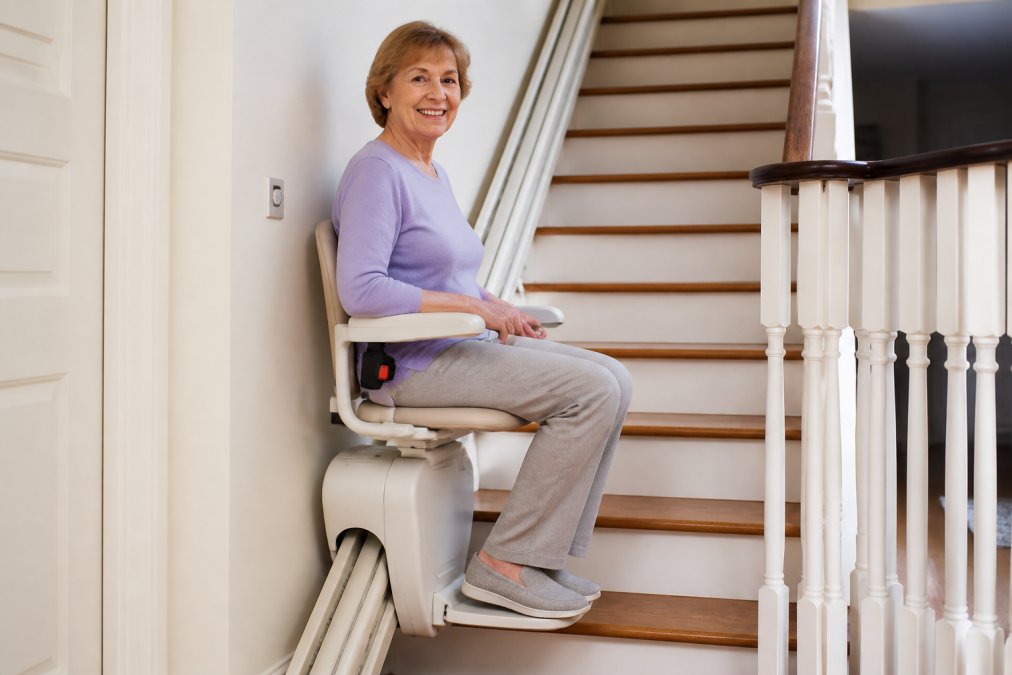
- Stairlifts carry a seated user along the stair line, which preserves access to every floor without remodeling.
- Vertical platform lifts move a wheelchair user between levels, with safety gates, sensors, and an emergency manual lowering system.
For homeowners who want to stay in a multi-story house, the staircase is usually the deciding factor. CT Stairlifts provides solutions designed to help individuals regain access to every floor of their home.
How to Choose the Right Mobility Device
The right device is the one the person will actually use, in the environment they actually live in, on the days they feel worst. That is a higher bar than matching a device to a diagnosis, and where most selection guides stop short.
Start With Function, Not the Catalog
A physical or occupational therapist assessment is the standard starting point because it measures gait stability, balance, endurance, upper-body strength, and transfer needs. But it should also answer three questions the catalog cannot:
- Where does the person need to go on a typical day? Bedroom to bathroom, kitchen to front door, and out to the car are different problems.
- What is the worst day, not the best day? A device sized for a good day gets abandoned on a bad one.
- Who else will handle it? A caregiver who cannot lift a 40-pound scooter into a trunk will not use it.
Match the Device to the Environment
Walk the daily route with a tape measure before shopping. The numbers that matter most are doorway width, hallway turning radius, threshold height, and stair rise and run.
| Constraint | What It Rules Out | What It Points Toward |
|---|---|---|
| Doorways under 32 inches | Most power wheelchairs and wide scooters | Narrow manual chair, rollator, or cane |
| Tight bathroom turns | Standard walkers and scooters | Rollator with a narrow frame, or grab bars plus a transfer bench |
| Multi-story home | Any single-floor solution | Stairlift or vertical platform lift, paired with a floor-level device |
| Long outdoor distances | Canes and basic walkers | Scooter or power wheelchair with appropriate tires |
| Car transport by a caregiver | Heavy scooters and power chairs | Folding rollator or lightweight transport chair |
The Trade-Offs Nobody Lists
Every category has a cost that does not show up on the spec sheet:
- Canes and walkers are inexpensive and portable, but they require enough upper-body strength and coordination to use safely, and improper height is a fall risk.
- Rollators add a seat and brakes, but they need floor space to turn and can be unstable on uneven outdoor surfaces.
- Scooters cover distance well, but they are heavy, need charging space, and are difficult to transport without a lift or ramp.
- Power wheelchairs handle long distances and varied terrain, but they are expensive, require a power source, and are typically rented through Medicare rather than bought outright.
- Stairlifts solve the staircase, but they need a clear rail path, a power connection, and a professional installation.
Trial Before You Commit
Ask for a demonstration on your own stairs, in your own hallway, or in your own bathroom. A device that fits in a showroom may not fit through a 1950s bathroom door. Many suppliers and clinics offer short-term loans or rentals, the cheapest way to find out whether a device will actually be used before committing to a purchase.
The Emotional Side of the Decision
A device that is refused is worse than no device at all. A common pattern is that the person associates a walker or wheelchair with decline and avoids it until a fall forces the issue. Two practical responses help:
- Frame the device as a tool for doing more, not less. A rollator that makes a two-block walk possible is an upgrade in range, not a downgrade in status.
- Let the person choose the model. Color, style, and features matter more than families expect, and involvement in the choice predicts whether the device gets used.
If the home has a staircase and the goal is independent living on both floors, a stairlift or vertical platform lift belongs on the shortlist from the start, alongside whatever floor-level device fits the daily route.
How to Prevent Falls at Home
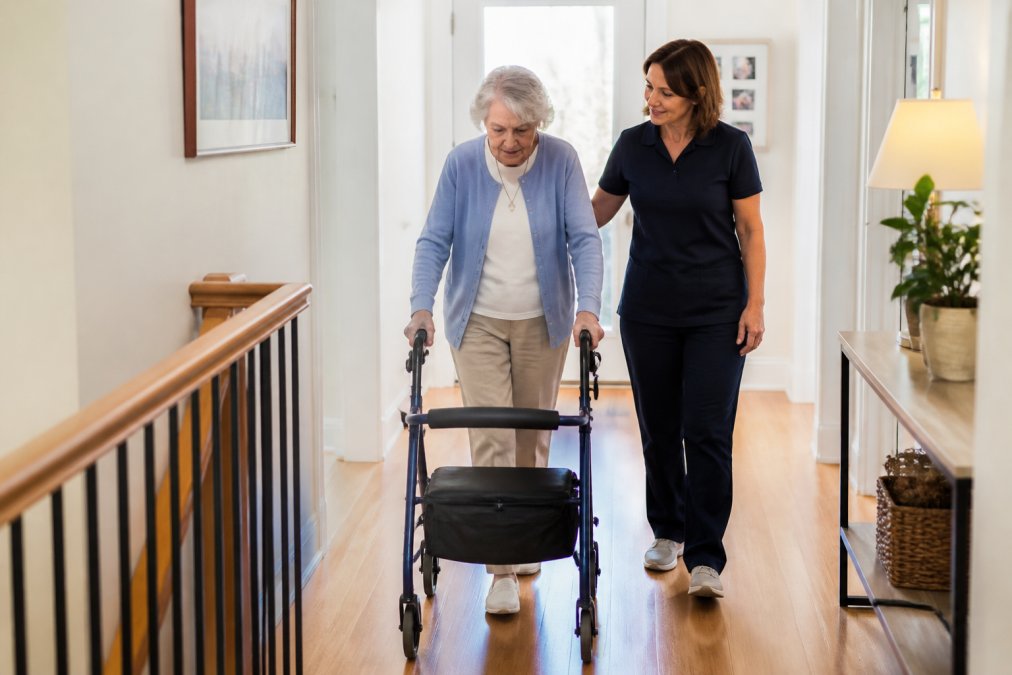
Fall prevention starts with removing the hazards people walk past every day: loose rugs, cluttered paths, poor lighting, and slippery bathroom surfaces. Most falls at home happen during ordinary activities, not risky ones.
Practical steps that make a measurable difference:
- Install grab bars in the shower, beside the toilet, and at the top and bottom of stairs
- Add motion-sensor night lights along the route from bed to bathroom
- Remove or secure loose rugs and trailing cords
- Keep frequently used items between waist and shoulder height
- Wear supportive, non-slip footwear indoors
- Review medications with a physician, since some cause dizziness
The CDC's STEADI initiative for fall prevention provides a clinical framework providers use to screen older adults for fall risk. A safety assessment from an occupational therapist turns that framework into specific changes for one home.
Home Safety Modifications for Seniors
Home modifications for seniors range from inexpensive fixes to structural changes, and the right sequence depends on the home's layout. Start with the highest-traffic path and work outward.
Low-cost changes include grab bars, non-slip mats, a transfer bench for the tub, raised toilet seats, and brighter bulbs in hallways. A transfer bench straddles the tub wall so a person can sit down outside and slide across, removing the most dangerous step in bathing.
Structural changes address the staircase and entry:
- Stairlifts for straight and curved staircases
- Vertical platform lifts for wheelchair access between levels
- Ramps at exterior entries with a step
- Widened doorways where a wheelchair or walker cannot pass
Handy worker services and licensed contractors handle the carpentry, while a stairlift provider handles the rail, carriage, and electrical connection. Getting the staircase resolved early prevents someone from being effectively confined to one floor.
Medicare Coverage for Mobility Equipment
Medicare coverage for mobility equipment depends less on the device and more on how it is classified, prescribed, and billed. Most guides stop at "check with your plan." The mechanics below determine whether a claim is paid.
The Two Buckets: DME vs. Home Modification
Original Medicare Part B covers durable medical equipment meeting four tests: it is durable, used for a medical reason, not useful to someone who is not sick or injured, and used in the home. Canes, walkers, rollators, manual wheelchairs, and power wheelchairs generally fit. Stairlifts, vertical platform lifts, and ramps generally do not, because Medicare treats them as structural home modifications rather than medical equipment.
That single classification decision is why two families with identical diagnoses can get very different answers.
What Part B Actually Pays
For covered DME, Original Medicare pays 80% of the Medicare-approved amount after the Part B deductible, and the beneficiary pays the remaining 20% coinsurance. Many people also carry a Medigap policy or Medicare Advantage plan that changes that split. Two mechanics trip people up:
- Competitive bidding. Medicare sets approved amounts for many DME items through a competitive bidding program. The approved amount is often lower than retail, and a supplier that did not win a bid in your area may not be able to bill Medicare for that item at all. Confirm the supplier is enrolled and has a contract for the specific product code.
- Rent-to-own. Power wheelchairs and some other capped-rental items are typically rented monthly rather than bought outright. After 13 months of continuous rental, Medicare considers the equipment owned. Stopping the rental early, or switching suppliers mid-stream, can reset or complicate that clock.
The Documentation That Decides the Claim
A prescription alone is not enough. For most mobility DME, Medicare expects:
- A face-to-face examination with the treating practitioner within a defined window before the order.
- A written order signed by the practitioner that specifies the item and why it is medically necessary.
- Chart notes documenting the mobility limitation, the diagnosis, and why a less expensive alternative will not meet the need.
A common pattern is a claim denied not because the device was wrong, but because the chart note said "patient has trouble walking" instead of documenting distance, balance, and prior failed alternatives. Ask the practitioner's office to review the note before submission.
What Is Usually Not Covered
- Stairlifts and vertical platform lifts (home modification)
- Ramps and widened doorways (home modification)
- Grab bars and transfer benches (often classified as safety equipment, not DME)
- Backup batteries, extra chargers, and accessories beyond what the order specifies
Some Medicare Advantage plans offer supplemental benefits covering items Original Medicare excludes, and some state Medicaid waiver programs fund home modifications. Those programs vary widely, so call the plan and the state Medicaid office directly and ask for the specific benefit name.
The Medicare.gov guidance on durable medical equipment coverage explains the current requirements and the prescription documentation Medicare expects.
Frequently Asked Questions
Will Medicare pay for a mobility device?
Medicare Part B may cover durable medical equipment (DME) like canes, walkers, and power wheelchairs if a doctor prescribes them as medically necessary. You typically pay 20% of the approved amount after meeting your deductible. Stairlifts are generally not covered because they are considered home modifications. Check with your doctor and Medicare for specific coverage details.
What are the best mobility devices for seniors living at home?
The best device depends on your specific needs. For mild balance issues, a quad cane or rollator walker can help. If stairs are a challenge, a stairlift provides safe access to all floors. For longer distances or outdoor use, a mobility scooter is a good option. An occupational therapist can help you choose the right mobility solutions for your home and lifestyle.
How can I improve my mobility as I age?
Regular physical activity is key. Focus on exercises that improve strength, balance, and flexibility, such as walking, tai chi, or water aerobics. Using walking poles can also help with stability. Always talk to your doctor before starting a new exercise routine, and consider working with a physical therapist to develop a plan that suits your abilities.
What are the primary signs that an aging adult needs mobility assistance?
Common signs include holding onto furniture or walls while walking, feeling unsteady or dizzy, having difficulty getting up from a chair, or experiencing a recent fall. You might also notice a decrease in activity or a fear of falling. If you notice these signs, consult a healthcare professional for an assessment and to discuss mobility solutions.
How can home modifications prevent falls in aging adults?
Home modifications like installing grab bars in the bathroom, adding a stairlift, improving lighting, and removing tripping hazards such as loose rugs can significantly reduce fall risks. These changes make the home safer and support independent living. An occupational therapist can perform a safety assessment to recommend specific modifications for your home.
The hardest part of aging in place is rarely the equipment itself. It is the staircase that quietly turns a two-story home into a one-room existence, and the decision to address it before a fall forces the issue. CT Stairlifts installs stairlifts designed to restore access to every floor of your home, so the bedroom, bathroom, and kitchen stay within reach without uprooting your life. Get started with CT Stairlifts and keep every floor of your home usable.