 Listicle
7 Common Stairlift Repair Issues to Watch For
Quick Summary
Most stairlift repair issues come from a few common faults: power or battery problems, beeping that stops the chair, mid-flight stalls, safety sensor triggers, and unusual noises. Start by checking the key switch, charger light and circuit breaker, then call a technician for anything involving the motor, drive or safety circuits.
- Power and battery failures cause more stairlift complaints than any other fault.
- Check the key switch, charger light and circuit breaker before calling for service.
- If the lift stops halfway up, stay seated with both feet on the footrest.
- Never disable or tape over a safety sensor, even temporarily.
- Write down any error code and the time it appeared before calling a technician.
Table of Contents
- 7 Common Stairlift Repair Issues to Watch For
- 1. Power Supply and Battery Failures
- 2. Stairlift Beeping and Not Moving
- 3. Stairlift Stops Halfway Up the Stairs
- 4. Stairlift Goes Down but Not Up
- 5. Safety Sensor Triggers and Obstructions
- 6. Strange Noises, Carbon Brush Wear and Charging Contacts
- 7. Error Codes, DIY Limits and When to Call a Professional
- Booking Your Next Stairlift Service Visit
- Frequently Asked Questions
7 Common Stairlift Repair Issues to Watch For
Last Updated: November 14, 2026
Stairlift repair issues usually show up as a beep, a stall or a stop halfway up the staircase, and most of them have a simple cause. This guide is intended to help older adults and their families in Connecticut tell a minor fault from a problem that needs a professional. A short check of the power supply, the key switch and the safety sensors can resolve some issues. Others need a technician, and knowing the difference keeps the rider safe.
Here is what we cover below: power and battery failures, beeping, halting on the stairs, one-way movement, safety sensor triggers, unusual noises and error codes. Each section explains the likely cause and what to check first.
National Institute on Aging guidance on home safety and preventing falls
1. Power Supply and Battery Failures
Power problems cause more stairlift complaints than any other fault. A stairlift that will not start at all often has a power or battery issue rather than a mechanical one.
Start by checking whether the lift is charged. Many stairlift units rely on a rechargeable battery that keeps the chair moving when the household power drops. If the chair works on the charger but stops on the stairs, the battery may be worn.
Checking the Key Switch and Circuit Breaker
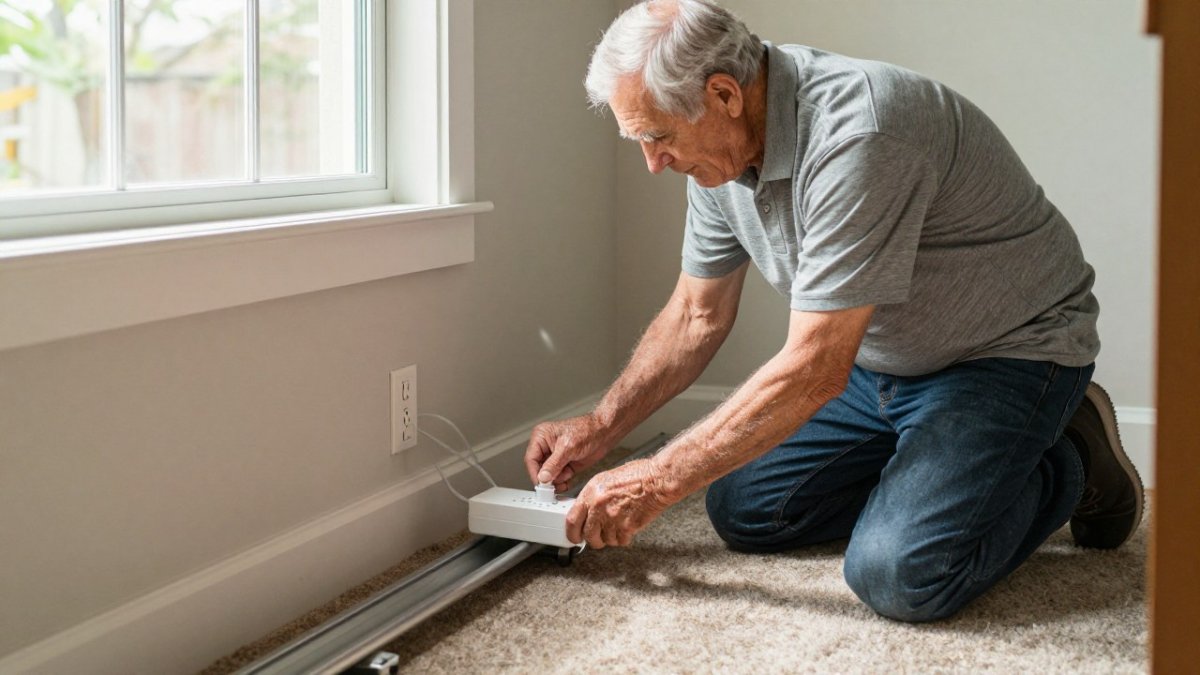
Before calling for service, confirm the key switch is turned to the on position and the wall outlet has power. Next, check the household circuit breaker that feeds the charger. A tripped breaker is a common and easy fix.
Use this quick sequence:
- Confirm the key switch is on.
- Check the charger light.
- Test the outlet with another device.
- Look for a tripped breaker and reset it once.
If the lift still does not respond after these checks, stop and call a technician rather than opening the unit.
2. Stairlift Beeping and Not Moving
A beeping stairlift that will not move is usually signaling a fault. The beep is the lift telling you something is blocking or disabling the drive.
Look first for an object on the stairs, a closed seat or a foot caught in the track. Many lifts refuse to move while the seat is not locked in position. Confirm the swivel seat and the footrest are secured, then try again.
If the beeping continues with a clear track, the cause may be a safety sensor or a power fault. Do not force the chair.
3. Stairlift Stops Halfway Up the Stairs
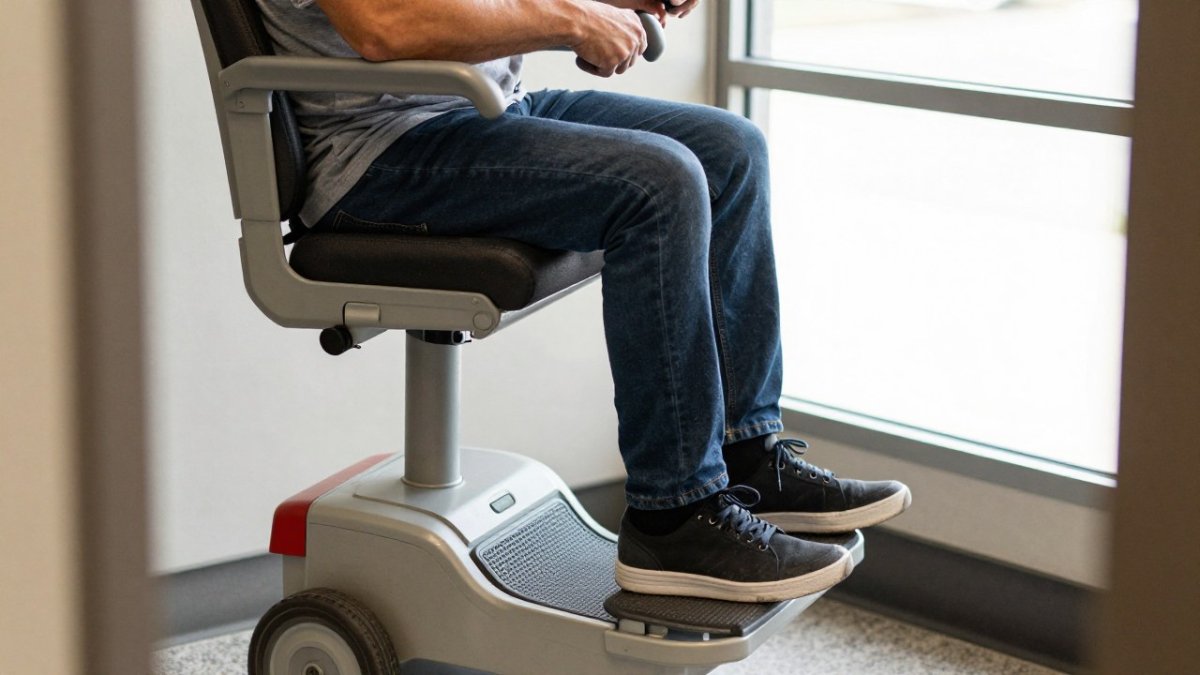
A stairlift that stops mid-flight is one of the most stressful problems a rider can face. Stay seated, keep both feet on the footrest and do not attempt to climb off. Waiting seated is generally the safer response rather than stepping onto a stair tread.
Common causes include a drained battery, a triggered obstruction sensor, a tripped power cut-off or a loose charging contact that left the battery short of a full charge. Press the call button once to see whether the chair responds. If it does not, use the manual controls only if your model has a documented manual lowering method, and follow that method exactly. Do not rock the chair or force the swivel seat.
Why Mid-Flight Stops Cluster in Cold Weather
A common pattern is for mid-flight stops to increase in winter. Seasonal checks, such as confirming the charger light is steady and the contacts are clean, reduce the chance of a stop on the stairs.
What the Repair Typically Involves After Warranty
Repair costs after a warranty has expired depend on the fault and the parts required, and pricing is best confirmed with a technician. Before work begins, ask the technician for a written estimate and whether any part is covered by a separate manufacturer warranty.
Call for help if you cannot move the lift safely. Remaining seated and waiting for assistance is the correct response.
4. Stairlift Goes Down but Not Up
When a stairlift descends but will not climb, a low battery is a common cause, since climbing typically draws more power than descending.
Let the lift charge fully overnight, then test it again. If it still moves down but stalls going up, the problem may be the drive or a worn carbon brush in the motor. That is a job for a qualified technician.
5. Safety Sensor Triggers and Obstructions
Many stairlifts include safety sensors that stop the chair when something blocks its path. Frequent sensor triggers are worth having checked by a technician.
Clear the stairs and track of toys, shoes, cords and debris. Never disable or tape over a safety sensor, even temporarily. That creates a serious risk of injury.
If the sensor keeps triggering with nothing in the way, schedule service. A technician can test the sensor circuit and confirm it is working correctly.
6. Strange Noises, Carbon Brush Wear and Charging Contacts
Unusual sounds are an early warning sign. A scraping, grinding or clicking noise may point to worn carbon brushes in the motor, which carry current to the drive.
Charging contacts can also cause trouble. Dirty or corroded contacts on the chair or the charging station can stop the battery from charging properly. Check that the contacts are clean and that the chair sits correctly on the charger. Wipe them with a dry cloth if they look dusty.
Schedule a service visit if you hear new noises.
7. Error Codes, DIY Limits and When to Call a Professional
Many stairlifts show a fault code on the control panel or flash a sequence of lights when something is wrong. The code is the fastest diagnostic clue a technician has, so write it down before you call for service. Codes can differ between manufacturers and model years, so the owner's manual is the authoritative reference. Keep the manual with the lift, and note the code, the time it appeared and what the chair was doing when it happened.
Reading Beeps and Flashing Lights
Most residential lifts use a small set of signal patterns rather than a full text display. A common pattern is a repeated beep paired with a flashing light on the control panel, which usually points to an obstruction, a seat that is not locked or a low battery. A single long tone at startup often means the lift is not receiving charge. A code that appears only when the chair is loaded usually points to the drive or the battery rather than the sensors. Because the exact mapping varies by brand, treat any pattern you cannot match to the manual as a reason to stop using the lift until a technician inspects it.
What a Homeowner Can Safely Check
A few steps are low-risk and worth doing before you call anyone:
- Confirm the key switch is on and the charger light is lit.
- Reset the household circuit breaker once if it has tripped.
- Clear the track and stairs of objects and confirm the seat and footrest are locked.
- Wipe the charging contacts with a dry cloth.
- Note the error code and whether it repeats after a power cycle.
If those steps do not resolve the fault, stop. Do not open the casing, adjust the rail, or disconnect the battery.
Watch out: bypassing a safety sensor or taping over an obstruction switch to keep the chair moving can cause a serious fall and is one of the most common ways a repairable fault becomes an injury.
DIY Versus Professional Repair and Warranty Risk
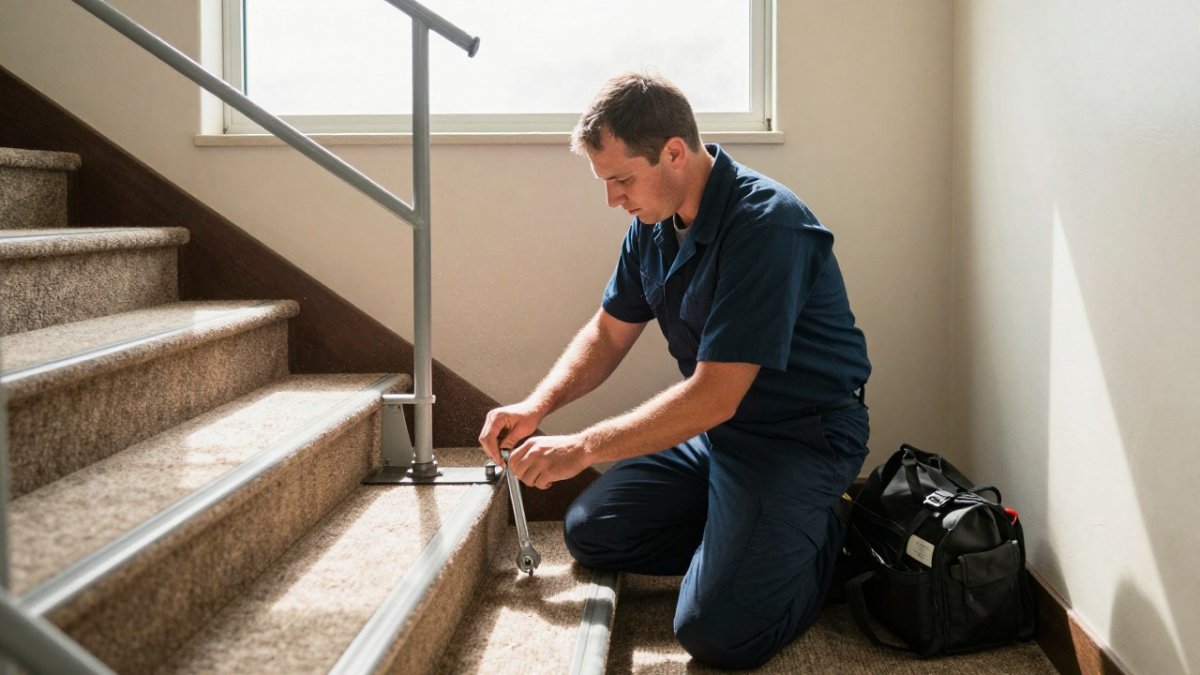
Some repairs are reasonable for a homeowner, and some are not. Checking the key switch, resetting a breaker, clearing the track and cleaning the charging contacts are all low-risk. Anything involving the motor, the drive, the rail, the electrical wiring or the safety circuits should be left to a trained technician. Opening the casing or bypassing a safety device can cause injury and may void the warranty. Some manufacturers may require service by an authorized technician to keep warranty coverage in force, so check the warranty terms before attempting anything beyond the basic checks above. A common pattern is for a homeowner to fix a symptom, such as a tripped breaker, while the underlying fault, such as a failing battery, continues to worsen.
When to Call a Professional Right Away
Call a professional immediately if the lift stops with someone on it, if you smell burning or see scorch marks, if the chair moves unexpectedly or runs without a command, if a safety sensor triggers repeatedly with a clear track, or if an error code returns after a reset. Those signs point to a fault in the drive, the wiring or the safety circuit, and continuing to use the lift risks a mid-flight stop or a fall.
Consumer Product Safety Commission guidance on home elevator and stairlift safety
The table below summarises which checks a homeowner can safely do and which need a professional, as described in this section.
| Check | Safe for homeowner? | Note |
|---|---|---|
| Key switch and charger light | Yes | Confirm the lift is on and charging |
| Household circuit breaker | Yes | Reset once if it has tripped |
| Clear track and seat locks | Yes | Remove objects; lock seat and footrest |
| Charging contacts | Yes | Wipe with a dry cloth |
| Motor, drive, rail or wiring | No | Leave to a trained technician |
| Safety sensors | No | Never bypass or tape over them |
Booking Your Next Stairlift Service Visit
When a fault goes beyond a simple reset, a licensed technician should inspect it. CT Stairlifts provides stairlift installations across Connecticut. For help with a fault, contact CT Stairlifts to arrange an assessment. Many families also ask about the cost of repair. For current pricing, contact CT Stairlifts at 860 590 5500 or visit our website for a quote.
Get your stairlift checked before the next small fault becomes a stuck chair. Call CT Stairlifts today to schedule a service visit.
Frequently Asked Questions
Why is my stairlift beeping and not moving?
A beeping stairlift that will not move usually means a safety system has been triggered or the unit is not receiving enough power. Common causes include an obstruction on the rail, the safety edge being pressed, the seat not fully locked, or a low battery. Start by clearing the track, confirming the seat is locked, and checking that the key switch is on. If the beeping continues after these checks, stop using the lift and contact a qualified stairlift technician. Do not open the motor housing or electrical components yourself.
Why will my stairlift go down but not up?
When a stairlift descends but will not climb, the most frequent cause is a low battery, since climbing draws more power than going down. Check whether the chair charges fully overnight and that the charging contacts are clean. A blocked track or a tripped safety sensor on the upward path can also stop movement. If the battery is charged and the path is clear but the lift still fails to climb, arrange a professional inspection of the drive and battery system.
Where is the reset button on a stairlift?
Reset procedures vary by model, so check your owner's manual for the exact procedure for your stairlift. If a reset does not restore operation, do not repeat it repeatedly, because this can drain the battery. Call a technician instead.
When should I call a technician to repair a stairlift?
Call a professional if the stairlift stops halfway, shows persistent error codes, makes grinding or scraping noises, smells of burning, or fails to respond after a battery charge and reset. Also call a technician if the seat will not lock or the safety edge remains active without an obstruction. Stairlifts are powered devices on a staircase, so repairs involving the motor, carbon brushes, rail or wiring should be handled by a qualified service provider. Keep the lift unused until it is inspected if it has stopped with someone on board.