 listicle
Temporary Mobility Solutions for Stairs: Options Compared
Last Updated: November 3, 2026
Quick Summary
Temporary mobility solutions for stairs include portable stair lifts, stair-climbing chairs, stair climbers, portable ramps, and transfer aids. The best choice depends on how much weight you can bear, whether you can transfer to a seat unassisted, and who will be present during each trip.
- Portable stair lifts need no structural changes to your staircase.
- Most portable stair lifts and stair-climbing chairs need a caregiver for transfers and steering.
- Measure each flight's width, curves, landings and step dimensions before choosing a device.
- Confirm what a device does during a power outage, since many units need a charged battery.
- Check with your insurer or plan before committing, because mobility equipment coverage varies.
Table of Contents
Stairs can turn a routine trip to the kitchen into a real hazard within weeks of hip or knee surgery, or as balance and strength slowly change with age. Temporary mobility solutions for stairs give you a way to reach every floor safely while you recover or while you decide on a longer-term plan. This guide compares the main options, explains who each one suits, and walks through what to weigh before you choose.
Most people do not plan for stair trouble. It usually arrives after a fall, a surgery, a new diagnosis, or a gradual loss of leg strength that makes each step feel harder than the last. The stairs themselves have not changed, but your ability to climb them safely has. Recognizing that shift early gives you more options and more time to choose well.
Stairs demand balance, strength, and reliable knees and hips all at once. After surgery, weight-bearing limits and pain can make even a few steps unsafe. With age-related decline, the risk grows quietly, which is why many households only realize there is a problem after a near miss.
Two signs suggest it is time to act. The first is avoiding a floor altogether, such as sleeping downstairs or skipping the basement laundry. The second is relying on the handrail with both hands or pausing mid-flight to steady yourself. Either one is a reason to talk with your doctor or physical therapist about your options.
Types of Temporary Stair Mobility Solutions
Temporary stair mobility solutions fall into a few broad groups. Each one trades off cost, setup effort, and how much physical ability it assumes you still have.
Portable Stair Lifts and Stair-Climbing Chairs
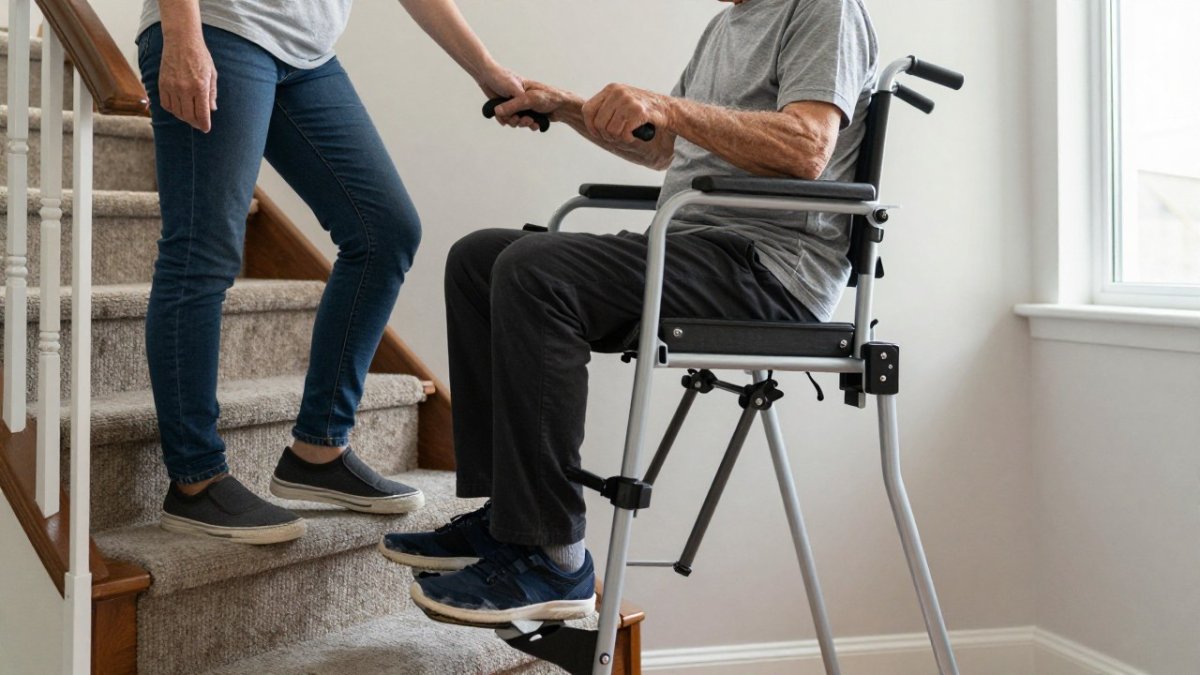
Portable stair lifts and stair-climbing chairs are designed to move a seated person up and down stairs without permanent installation. Their main advantage is that they require no structural changes to your staircase.
The limits are real, though. Most models need a caregiver for transfers and for steering on the stairs. Battery life, weight capacity, and the width of your staircase all affect whether a given unit will work in your home.
Stair Climbers, Portable Ramps and Transfer Aids
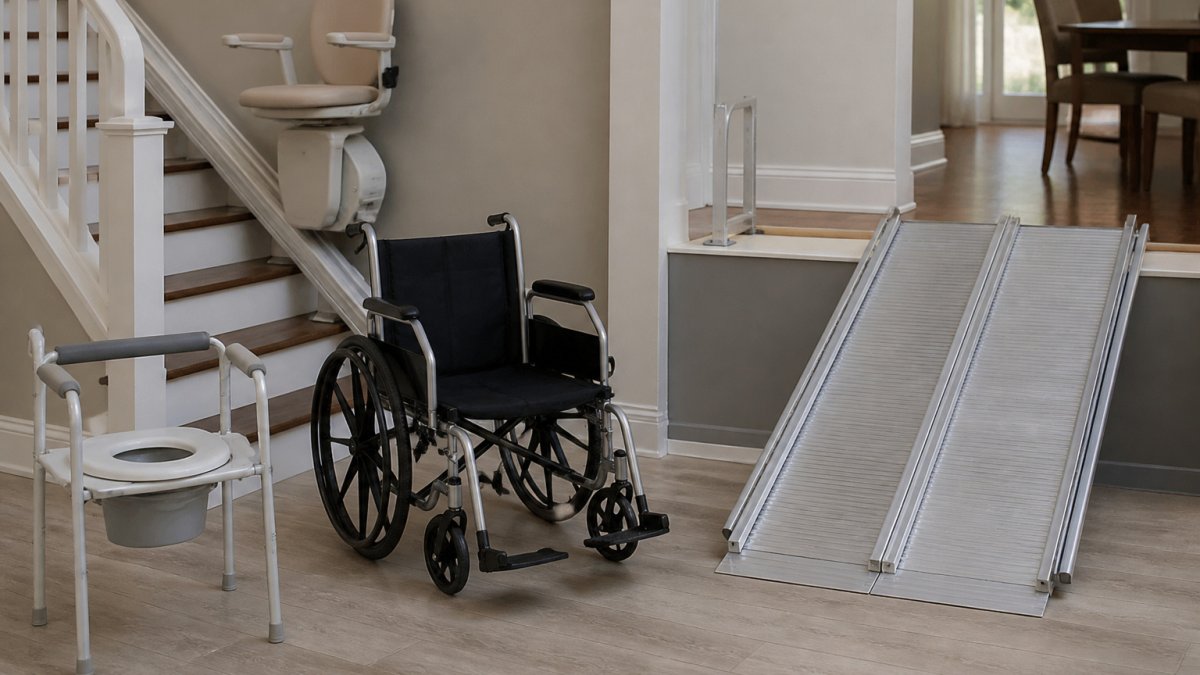
Stair climbers, portable ramps, and transfer aids cover a wider range of needs. Some are tracked devices that climb with a seated user, while ramps handle a single threshold or a short run of entry steps. Transfer aids, such as slide boards and bath seats, help with moving between surfaces but do not solve stair access by themselves.
These tools often work best combined. A ramp may get you through the front door while a stair climber handles the interior flight. Ask your provider whether a combination makes sense for your layout.
Choosing by Mobility Level and Caregiver Support
The right option depends heavily on how much you can do on your own and how much help is available. Someone who can stand and take a few steps with a handrail has different needs from someone who cannot bear weight at all.
Consider three questions. How much weight can you bear and for how long? Can you transfer to a seat without assistance? And who will be present during each trip up or down? If the answer to the last question is "no one," a fully manual option may be unsafe, and a motorized, self-operated unit may be the better fit.
Caregiver requirements matter for safety as much as comfort. Transfers, seatbelts, and emergency stops all assume someone is nearby who knows how the device works. Plan for that support before you choose, not after.
Stair Lift Rental Cost and Total Short-Term Cost Comparison
Cost is often the deciding factor, but the sticker price tells only part of the story. Renting, buying, and short-term portable options each carry different upfront and hidden expenses, including delivery, setup, insurance, and the time you may spend waiting for a unit.
Stair lift rental cost varies by provider, model, and rental length, so request written quotes that list every fee. Compare the total cost over your expected period of use rather than the monthly rate alone. Pricing depends on quantity, dates, and delivery, so contact CT Stairlifts directly for a quote tailored to your home.
Funding is another factor. Coverage for mobility equipment depends on your plan and the reason for the device, so check with your insurer before committing. Our guide to funding home stairlifts covers the common sources of help in more detail.
Staircase Compatibility, Safety and Power Failure Planning
Not every staircase will accept every device. Measure the width of each flight, note any curves or landings, and check the height and depth of the steps. Narrow or winding stairs often rule out certain models, so bring those measurements to any consultation.
Safety planning should cover normal operation and the unusual cases. Confirm the weight rating, the seatbelt and anti-slip features, and what the device does when the battery runs low. Ask what happens during a power outage, since many units need a charged battery to move, and make sure you can reach a phone if you get stuck partway up the stairs.
Stair Lift Alternatives for Seniors and What Medicare Covers
Stair lifts are not the only way to reach every floor. Depending on your home, a single-level living arrangement, a first-floor bedroom, or a home elevator may suit you better over the long term. Each alternative has its own cost and disruption, so weigh them against how long you expect to need help.
Coverage for stair lifts under federal and state programs is not uniform and depends on the plan and the reason for the device. Check with your plan, your state's Medicaid office, or the official Medicare website for the current policy. Verify coverage with your plan, and ask your provider for documentation that supports any claim you submit.
Booking Your Temporary Solution With CT Stairlifts
If you are weighing these options for yourself or a family member, the next step is a conversation about your specific home and needs. CT Stairlifts provides stairlift installations for homeowners in Connecticut.
Bring your stair measurements and a list of your mobility concerns so the visit can focus on the best fit for your home.
Frequently Asked Questions
Will Medicare pay for a stair climbing wheelchair?
Medicare generally covers durable medical equipment only when a doctor certifies it is medically necessary for use in the home. Stair-climbing wheelchairs and stairlifts are often treated as home modifications rather than covered equipment, so coverage is uncertain. Check with your Medicare plan or a supplier before buying, and ask your doctor whether a written order can support a claim. Coverage rules change, so confirm the current policy with the official Medicare website or your plan.
Can you rent a stair lift for short-term use?
Some suppliers offer stair lift rentals for recovery after hip or knee surgery or other temporary limitations. Rental terms, delivery, installation and removal fees vary by provider, so request a written quote that lists the monthly rate, installation charge and removal charge. Ask whether the lift requires a fixed track, and whether it can be moved if you change homes. Pricing depends on the model, the length of the rental and the staircase, so CT Stairlifts can give you a quote specific to your situation.
What can I use instead of a stair lift?
Depending on your mobility, options include a portable stair-climbing chair, a stair climber that you operate with help, a stair-navigation handrail or grab bar, or a temporary ramp for a single entry. Each option works best with different staircases and levels of caregiver support. A professional assessment can help you match the right option to your stairs and your recovery timeline.
What are the best temporary mobility solutions for stairs?
The best choice depends on your mobility level, whether you can transfer safely, how many stairs you need to climb, and how long you need the equipment. Portable stair lifts suit people who can sit and transfer with minimal help, while stair climbers and transfer aids suit people with more limited mobility who have a caregiver present. Compare staircase width, landings and curves before choosing, and talk with CT Stairlifts about your specific needs.