 Listicle
Best Surge Protectors for Home Stairlifts in 2026
Last Updated: November 20, 2026
Quick Summary
The best surge protectors for home stairlifts are matched to how your unit draws and stores power, and many manufacturers require the stairlift to plug directly into a wall outlet. That makes a whole-house device at the electrical panel, such as the Square D HEPD50, the cleaner path for most owners.
- A stairlift spends most of its life parked and charging, so it is plugged in during storms and outages.
- Article 230.67 of the NEC requires surge protection on service equipment for dwelling units.
- The Square D Homeline 25-kA Indoor carries a 25-kA surge current rating for storm-season headroom.
- Lower clamping voltage means the device reacts sooner, the most protective number for a control board.
- Check that any device is listed to UL 1449 before relying on it for mobility equipment.
Table of Contents
- Why a Stairlift Needs Its Own Surge Protection
- Comparison Table: Surge Protectors for Stairlifts
- Whole-House Surge Protector Options for Stairlift Owners
- Heavy Duty Surge Protector Picks for Charging Stations
- When a Surge Protector Breaker Makes More Sense
- Specs That Matter: kA, Joules, Clamping Voltage, and Outlets
- Safe Placement and Cord Management Near the Stairs
- Checking Manufacturer Guidance Before You Buy
- Frequently Asked Questions
Why a Stairlift Needs Its Own Surge Protection
A stairlift is not a lamp. Before choosing a protector, review the stairlift electrical requirements for home setup.
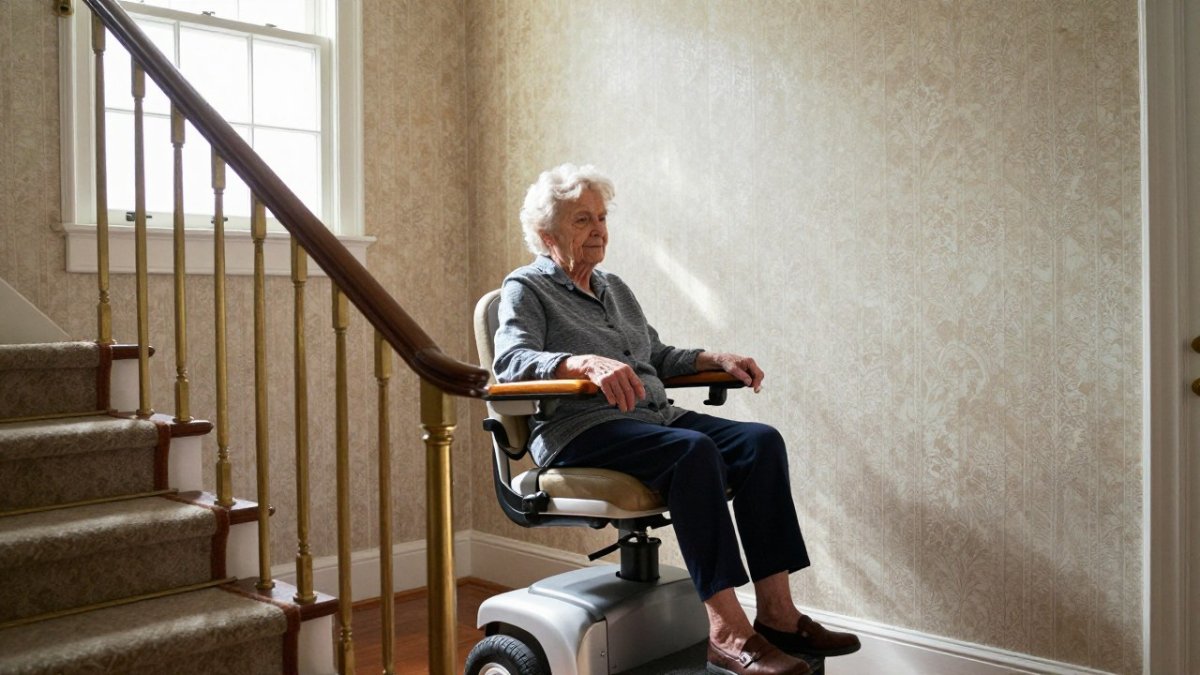
Here is the part most guides skip: a stairlift spends most of its life parked and charging, not moving.
The National Electrical Code addresses this directly. You can read the requirement through the National Fire Protection Association, which publishes the NEC.
In practice, two paths exist and they are not mutually exclusive: a whole-house device at the electrical panel, or a plug-in unit at the outlet the stairlift uses. The right answer depends on your panel, your unit, and your manufacturer's guidance.
Comparison Table: Surge Protectors for Stairlifts
| Option | Type | Protection Scope | Best For | Notes |
|---|---|---|---|---|
| Square D HEPD50 | Whole-house | Entire home | Covering stairlift plus other equipment | Wirecutter's top whole-home pick; listed around $60 |
| Square D Homeline 25-kA Indoor | Whole-house | Entire home | Indoor panel installs | 25-kA rating; listed among Lowe's top-rated models |
| Eaton BR 20-kA Indoor | Whole-house | Entire home | Indoor panel installs | 20-kA rating; top-rated Lowe's listing |
| Siemens FS140 | Whole-house | Entire home | Owners researching panel devices | Verify specs and fit with your panel |
| Leviton 51120-1 | Whole-house | Entire home | Comparison shopping | Confirm compatibility before buying |
| Universal HEPD25 | Whole-house | Entire home | Budget-conscious whole-home coverage | Listed at $104 at Home Depot |
| Belkin 12-Outlet Pivot-Plug | Plug-in | Single outlet area | Multi-outlet charging areas | Confirm manufacturer permits a power strip |
| Tripp Lite TLP1208SAT | Plug-in | Single outlet area | Nearby equipment | CNN Underscored calls it reasonably priced |
Confirm current pricing and compatibility with the manufacturer or retailer before you buy.
Whole-House Surge Protector Options for Stairlift Owners
A whole-house surge protector is mounted at or near your electrical panel and defends every circuit in the home, including the dedicated circuit feeding your stairlift. For stairlift owners, this is often the only path that satisfies both the manufacturer and the electrical code: the stairlift keeps its factory plug directly in the wall outlet, and the protection sits upstream at the panel where nobody can unplug it or trip over it.
The trade-off is simple. A whole-house device costs more upfront and requires panel work by a licensed electrician. Confirm with your electrician whether your panel has a suitable mounting point and breaker space.
Schneider Electric Square D HEPD50
The HEPD50 is the whole-home device Wirecutter names as its top whole-home pick, and it is listed around $60. Wirecutter reports strong build quality and describes its protection as comprehensive. For a stairlift owner, the appeal is coverage without touching the stairlift's own plug: the stairlift, the refrigerator, the router, and the medical equipment all sit behind one device.
Best for: homeowners who want one device to cover the whole house and keep the stairlift plugged directly into its wall outlet. Skip if: your panel setup cannot accommodate it, or you only want protection at a single outlet.
Square D Homeline 25-kA Indoor
The Square D Homeline 25-kA Indoor unit carries a 25-kA surge current rating. The higher kA rating over a 20-kA device gives more headroom for repeated storm-season surges, which matters for a stairlift that stays plugged in and charging through every thunderstorm. It is a panel-mounted device, so an electrician handles the install and confirms breaker space.
Best for: homes in areas with frequent lightning or utility switching surges. Skip if: your panel is a different brand or series that does not accept Homeline breakers.
Eaton BR 20-kA Indoor
The Eaton BR 20-kA Indoor device has a 20-kA rating. It fits panels that accept BR-series breakers, a common configuration in older homes. For a stairlift owner, the practical question is whether your panel accepts the breaker type, which is the first thing an electrician checks.
Best for: homes with BR-series panels that need a straightforward panel-mounted device. Skip if: your panel uses a different breaker series.
Siemens FS140
The Siemens FS140 is a panel-mounted device. Treat the model number as your starting point for a compatibility check with your panel and an electrician's quote.
Leviton 51120-1
The Leviton 51120-1 is another panel-mounted option. Confirm compatibility with your panel and your stairlift manufacturer's guidance before buying.
Universal HEPD25
The Universal HEPD25 is a whole-home device. Verify the kA rating and UL 1449 listing on the label, and confirm current pricing with the retailer, before you commit.
The installation requirements and stairlift compatibility of these devices should be confirmed with your installer and the manufacturer before you buy. A whole-house device can leave the stairlift's own plug and charging setup untouched, which is a setup many manufacturers specify.
Heavy Duty Surge Protector Picks for Charging Stations
A heavy duty surge protector is a plug-in unit built to absorb larger surges than a basic power strip, and it suits the outlet where your stairlift charges.
The Belkin 12-Outlet Pivot-Plug is one option. Techlicious describes it as offering high joule protection and flexible rotating outlets, which helps when the outlet sits in a tight stairwell corner.
The Tripp Lite TLP1208SAT is another plug-in choice that CNN Underscored characterizes as a reasonably priced solution.
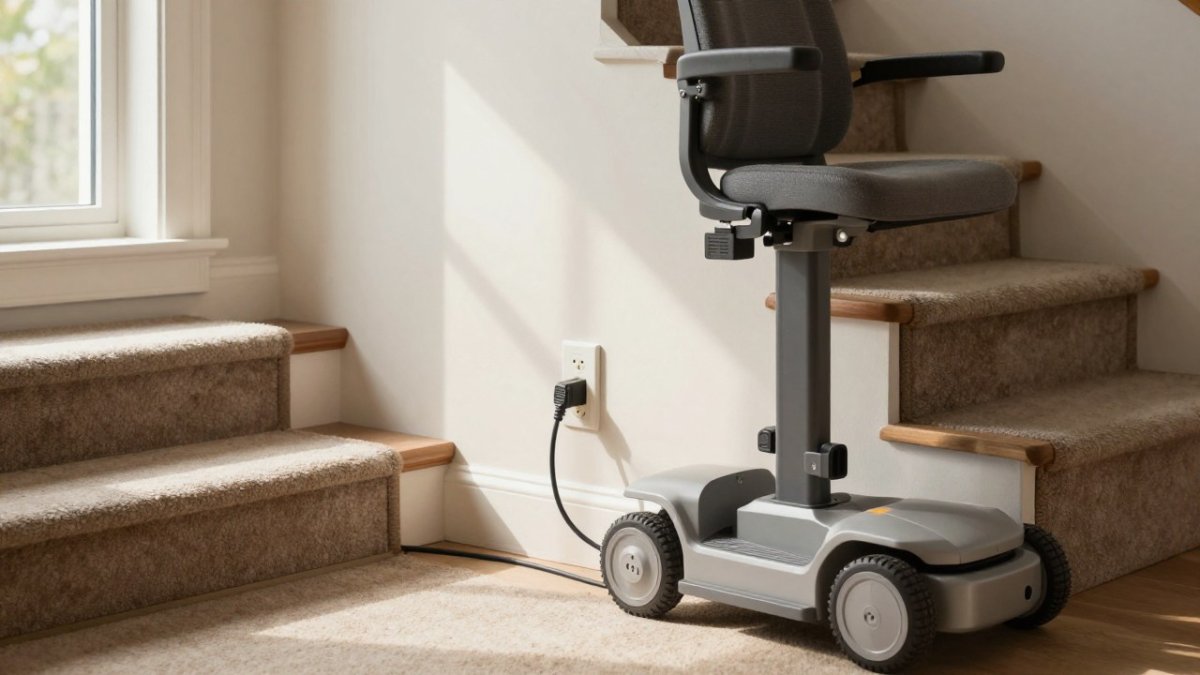
Watch out: many stairlift manufacturers specify that the unit plug directly into a wall outlet, not a power strip or extension cord.
When a Surge Protector Breaker Makes More Sense
A surge protector breaker is a panel-mounted device that combines circuit protection with surge suppression on a dedicated circuit.
If you are unsure whether your panel can support a dedicated breaker, our guide on whether stairlifts require a home electrical upgrade walks through what an electrician will check.
This is also where outages and surges diverge. A surge protector breaker guards against spikes. If outage resilience matters to you, read our explanation of whether a battery backup is necessary for stairlifts alongside this section, because the two forms of protection solve different problems.
Specs That Matter: kA, Joules, Clamping Voltage, and Outlets
The specifications on a surge protector tell you how much energy it can absorb and how quickly it responds.
- kA rating: the surge current the device can handle, measured in kiloamps. Higher is better for whole-house devices; a 20-kA to 25-kA panel device is the common range above. For a stairlift, the kA rating matters because the device sits upstream of the control board and has to absorb the surge before it reaches the charging circuit.
- Joule rating: total energy absorption. Plug-in units list this; higher means more surges absorbed over the device's life. A stairlift that charges nightly accumulates many small surges over years, so a higher joule rating buys more service life before replacement.
- Clamping voltage: the voltage at which the device starts diverting excess power. Lower clamping voltage means it reacts sooner, and for a stairlift control board it is the single most protective number on the label.
- Outlet count: how many devices one unit can protect, plus whether outlets rotate or are spaced for bulky plugs. For a stairlift, outlet count matters less than you might think: the unit needs one outlet, and the extra outlets are for the phone charger and the lamp beside the chair.
There is a fifth spec most guides omit: the manufacturer's own electrical requirement. Stairlift manuals commonly specify a dedicated circuit, a grounded outlet, and direct plug-in with no power strip or extension cord. That requirement outranks every number above.
Watch out: a high joule rating on a plug-in unit does not override a manufacturer's direct-plug-in requirement, and using one anyway can put the warranty at risk. Read the manual's electrical section before you compare specs.
Safe Placement and Cord Management Near the Stairs
Placement is a safety issue, not a convenience issue. A cord run across a stair tread is a trip hazard, and the person using the stairlift is often the person most at risk from a fall.
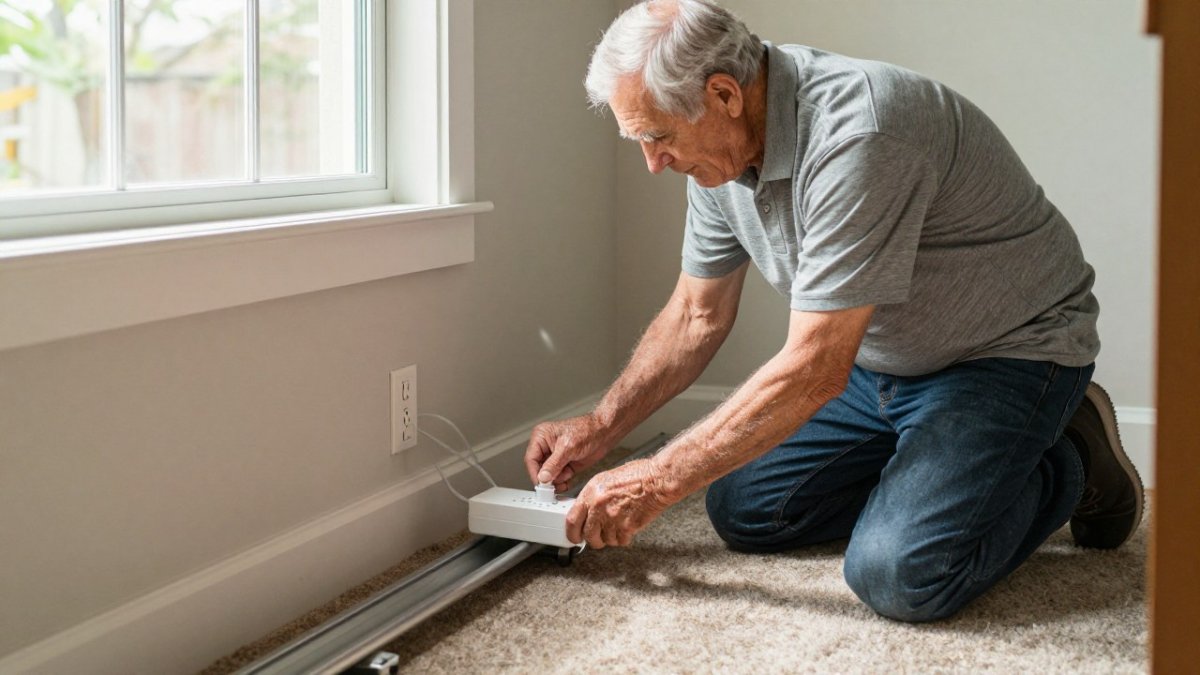
Mount the protector at the base or top of the stairs, whichever end the stairlift plugs in, and keep the cord clipped along the baseboard and clear of the treads and handrail. If the outlet is not near the rail, our guide on whether a stairlift can run on an extension cord explains what is and is not safe.
For caregivers, label the protector so anyone helping knows what it feeds. A small label prevents someone from unplugging the stairlift to charge a phone.
Checking Manufacturer Guidance Before You Buy
Manufacturer guidance should be followed. Before you buy any protector, check your stairlift's manual or call the installer and ask three questions: Can the unit be plugged into a surge protector? Does a power strip or extension cord void the warranty?
The answer is often "plug directly into the wall," which is why whole-house protection is frequently the cleaner path for stairlift owners. Our guide on how to maintain a home stairlift covers the broader maintenance routine, and manufacturer guidance sits at the center of it.
Your pre-purchase checklist:
- Confirm the stairlift's plug type and outlet location
- Ask the manufacturer whether a plug-in protector is permitted
- Check the device is listed to UL 1449
- Confirm clamping voltage and kA or joule rating
- Verify panel capacity if choosing a whole-house device
- Keep the receipt and warranty paperwork
Power surges are one of the stairlift risks you can help reduce before anything goes wrong, and the right device depends on your panel, your outlet, and your manufacturer's rules.
Frequently Asked Questions
Does a home stairlift need a surge protector?
A stairlift is a motorized device with a control board and battery charging system, so a power surge can damage those components. Many manufacturers recommend surge protection, but the right type depends on the model. Check your owner's manual or ask your installer before adding one. A whole-house surge protector at the electrical panel covers the stairlift circuit plus other household appliances, while a plug-in unit only protects what is connected to it.
Can you plug a stairlift charger into a surge protector?
Sometimes, but not always. Some stairlift manufacturers require the charging unit to plug directly into a dedicated wall outlet and warn against power strips. Others permit a surge protector with a sufficient joule and kA rating. Confirm with the manufacturer or your installer first, because using an unapproved power strip can affect the warranty. If a plug-in model is allowed, choose one with a clamping voltage low enough to respond quickly and enough outlets for the charger alone.
Is a whole-house surge protector better than a plug-in model for a stairlift?
A whole-house surge protector protects every circuit in the home, including the stairlift, and is typically installed at the electrical panel by a licensed electrician. A plug-in model only shields the devices plugged into it. For a stairlift that stays connected to charge, whole-house protection covers surges arriving through the wiring even when nobody is nearby. Plug-in units still help for nearby electronics and are easier to add without panel work.
What surge protector specifications should I check before using one with a stairlift?
Look at the kA rating (surge current capacity), joule rating, clamping voltage, response time, outlet count, and UL 1449 listing. A higher kA rating means the device can absorb larger surges. Lower clamping voltage means it starts diverting excess voltage sooner. Confirm the unit is listed to UL 1449 and check that its plug fits the outlet near the stairs without blocking the stairlift's path or the handrail.
Which is better, a power strip or a surge protector, for stairlift equipment?
A power strip only adds outlets; it does not absorb a voltage spike. A surge protector includes metal oxide varistors or similar components that divert excess voltage, and it carries a joule and kA rating plus a UL 1449 listing. For a stairlift charger, only a true surge protector is worth considering, and only if the manufacturer allows it. Plain power strips add a trip and fire risk near a staircase and should be avoided.