 how-to
Stairlift Electrical Requirements for Home
Table of Contents
- Understanding Stairlift Electrical Requirements
- Standard Voltage and Amperage for Stairlifts
- Stairlift Power Outlet Placement and Location
- Dedicated Circuit Requirements and Electrical Code
- Stairlift Battery Backup Systems and Power Outages
- Stairlift Installation Process Explained
- Safety Inspection Checklist Before Operation
- Frequently Asked Questions
Last Updated: September 28, 2026
Understanding Stairlift Electrical Requirements
Stairlift electrical requirements are critical to safe operation. Most homeowners don't realize that incorrect power configurations can lead to safety hazards, equipment damage, or installation delays.
Most homes built in the last 30 years have sufficient electrical capacity for a stairlift, but important details must be verified before installation.
Standard Voltage and Amperage for Stairlifts
Most residential stairlifts in the United States operate on standard household current: 120V at 15A or 20A. This is the same voltage your kitchen outlets use.
Here's what matters:
- Voltage: Stairlifts require 120V single-phase power (standard household current)
- Amperage: Most units draw 15A continuously, though some models use 13A or require a 20A circuit
- Power cord: Typical length is 6-8 feet, though extension options exist
Voltage fluctuations or insufficient amperage cause the lift to operate sluggishly, stop mid-journey, or trigger safety shutdowns.
Check your stairlift's manual for exact specifications. A 15A circuit works for most stairlifts, but heavier-duty or outdoor models may require 20A.
Stairlift Power Outlet Placement and Location
Outlet placement determines whether extension cords are needed, which affects safety and performance.
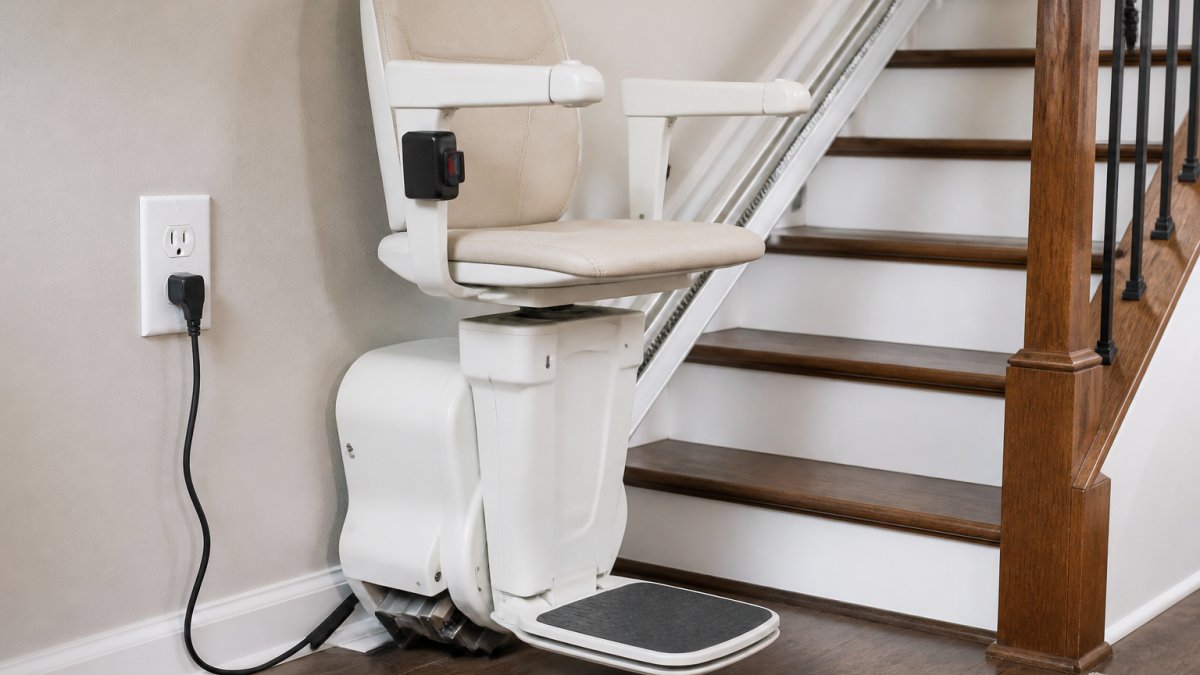
The ideal location is within 6 feet of the stairlift's base or top landing. This allows the power cord to reach without tension or kinking. If no outlet exists nearby, you have two options: relocate an existing outlet or install a new one.
Key placement rules:
- The outlet must be grounded (three-prong)
- It should be on the same wall as the staircase
- Avoid outlets near water sources or high-moisture areas
- Outdoor stairlifts need GFCI-protected outlets
- The outlet should not be blocked by furniture or the stairlift seat
GFCI and AFCI Compatibility, A Critical Modern Code Issue
Many homes built after 2008 have GFCI (ground fault circuit interrupter) or AFCI (arc fault circuit interrupter) protection on bedroom, bathroom, and kitchen circuits. If your stairlift outlet is on a GFCI or AFCI-protected circuit, you may experience nuisance tripping, the breaker cuts power unexpectedly even when no actual fault occurs.
Solutions:
-
Install a dedicated circuit without GFCI/AFCI protection, The best option. Your electrician runs a new 15A or 20A circuit directly from your electrical panel to a standard grounded outlet near the stairlift. This circuit serves only the stairlift and avoids nuisance tripping entirely.
-
Use a GFCI outlet with a "load" side disconnect, Install a GFCI outlet and do not plug other devices into the "load" side. This reduces nuisance tripping from other devices.
-
Consult your stairlift manufacturer, Some newer models are GFCI-compatible and explicitly rated for use on GFCI circuits. Check your unit's manual or contact the manufacturer before installation to confirm compatibility.
-
Install a surge protector rated for continuous loads, A quality surge protector designed for medical or mobility equipment can stabilize the power signal and reduce false triggers. Ensure it is rated for continuous operation and has a capacity of at least 15A.
Dedicated Circuit Requirements and Electrical Code
Stairlifts should operate on a dedicated electrical circuit, one that serves only the stairlift, not other appliances or lights.
A dedicated circuit means:
- The stairlift has its own circuit breaker in your home's electrical panel
- No other devices share that breaker
- The circuit is sized to match the stairlift's amperage (typically 15A or 20A)
- The breaker protects against overload and short circuits
Stairlift Battery Backup Systems and Power Outages
Battery backup systems let you operate your stairlift during power outages. Without backup, a power failure leaves you stranded. Understanding how they work, their limitations, and how to protect them from electrical damage is essential.
How Battery Backup Works
Most stairlift battery backup systems operate on these principles:
- A rechargeable battery (usually 24V DC) sits inside the control unit and charges continuously when plugged in
- During a power outage, the battery powers the motor for limited trips up or down
- Typical backup provides 1-5 full trips depending on staircase length and battery capacity
Power Consumption and Battery Capacity
Surge Protection for Stairlift Electronics
Recommended surge protection strategy:
-
Whole-home surge protector, Install a surge protection device at your electrical panel to protect all circuits from external surges. Cost ranges from $300-$800 installed.
-
Point-of-use surge protector, Plug the stairlift into a surge protector strip rated for continuous loads (not just temporary use). Ensure the protector is rated for at least 15A continuous current and includes a light indicating protection status. Replace it every 3-5 years or after a major surge event.
-
Dedicated circuit with quality breaker, A dedicated circuit provides some protection but is not a substitute for a surge protector. Breakers protect against overload and short circuits, not voltage spikes.
Battery Maintenance and Replacement
- Batteries degrade over time and eventually need replacement, typically every 3-5 years depending on usage and environmental conditions
- Regular testing ensures the backup works when needed; test monthly by unplugging the stairlift and operating it once up and down, then reconnecting
- Some models include battery indicators showing charge level; check these regularly
- Outdoor stairlifts rarely include battery backup due to weather exposure and moisture damage risk
- If your battery backup fails during testing, contact your installer for replacement; do not attempt to replace the battery yourself
Stairlift Installation Process Explained
The stairlift installation process involves several electrical steps that must be done correctly.
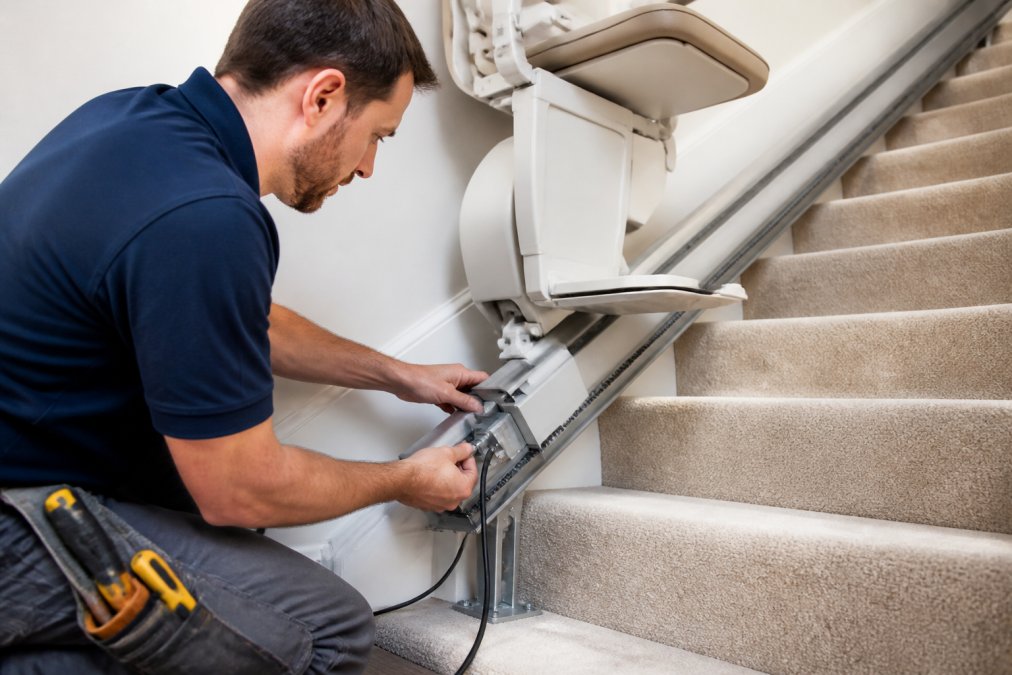
Here's the typical sequence:
-
Site assessment, The installer evaluates your staircase, measures dimensions, and identifies the best outlet location. They check your electrical panel for available circuits.
-
Electrical preparation, If no dedicated circuit exists, an electrician installs one. This involves running new wiring from your electrical panel to the outlet location. This step takes 1-3 hours depending on distance and complexity.
-
Outlet installation, A new grounded, GFCI-protected outlet is installed near the stairlift base or landing. The outlet must meet code requirements for your jurisdiction.
-
Track mounting, The stairlift track is secured to your stairs using brackets and fasteners. This does not require electrical work but must be done before the power cord is connected.
-
Control unit installation, The control box and battery backup system (if included) are mounted to the staircase. Electrical connections are made here.
-
Testing and certification, The installer tests the stairlift under load, verifies the battery backup works, and confirms all safety features function properly.
Safety Inspection Checklist Before Operation
Before you use your stairlift, complete this safety inspection checklist.
Electrical safety checks:
- Power cord is intact with no cuts, cracks, or exposed wires
- Outlet is grounded (three-prong, not two-prong)
- Outlet is GFCI-protected and functions correctly
- No extension cords are in use, power cord reaches the outlet directly
- No water or moisture near the outlet or power connections
- Circuit breaker is labeled and accessible
- Battery backup indicator shows full charge (if equipped)
Mechanical safety checks:
- Track is securely fastened to stairs with no loose brackets
- Seat belt and harness function smoothly
- Emergency stop button is accessible and responsive
- Armrests are stable and secure
- Footrest extends fully and retracts without binding
- No debris or obstructions on the track
Operational safety checks:
- Stairlift moves smoothly at consistent speed
- No unusual sounds, vibrations, or grinding noises
- Stairlift stops immediately when emergency button is pressed
- Seat returns to starting position after reaching the top or bottom
- Battery backup works (test by unplugging during operation, then reconnecting)
Frequently Asked Questions
What power supply does a stairlift need?
Most stairlifts operate on standard household current of 120V at 15 amperes. Some models may require 230V depending on the motor size and lift capacity. The stairlift connects to a grounded outlet, and a dedicated electrical circuit is recommended to prevent overloading your home's electrical system. Check your stairlift's specifications and have a qualified electrician verify your home's power source meets the requirements before installation.
Do stairlifts work during a power outage?
Standard stairlifts stop operating when power is lost. However, many modern models include battery backup systems that allow you to move the chair to the top or bottom of the stairs so you can safely exit. Battery backup provides temporary emergency operation but is not designed for extended use. If you live in an area with frequent outages, discuss battery backup options with your installer to ensure your stairlift electrical requirements include this safety feature.
Is a dedicated electrical circuit required for a stairlift?
A dedicated circuit is strongly recommended by electrical codes and manufacturers. Stairlifts draw significant electrical load during operation, and sharing a circuit with other appliances can trip your circuit breaker or create safety hazards. A dedicated 15-amp or 20-amp circuit, depending on your stairlift model, ensures stable power delivery and protects your home's electrical system. Your electrician will determine the correct amperage based on the charger unit specifications.
How much electricity does a stairlift consume?
Stairlift energy consumption varies by model and usage frequency. Most consume between 50-200 watts during operation and minimal power during standby charging. Monthly kWh usage typically ranges from 5-15 kWh for average users, depending on how many times daily the lift operates. Continuous charge cycles when the chair is docked also contribute to energy consumption. Your specific usage and stairlift model will determine actual costs, which remain relatively modest compared to other household appliances.
Stairlift electrical requirements don't have to be complicated. Most homes have the capacity already. CT Stairlifts handles the assessment, coordinates with electricians, and ensures your installation meets all safety standards. The result: a stairlift that operates reliably for years while keeping you safe on every trip up and down your stairs.