 How-to
How Do You Maintain a Home Stairlift?
Last Updated: November 16, 2026
Quick Summary
Maintain your home stairlift with a simple routine: wipe the rail and seat weekly, clear the stairs, and confirm the lift charges when parked. Each month, inspect the track for debris and test the seat, armrests, and footrest, and book a professional service visit once a year.
- Wipe down the rail and seat weekly with a dry or slightly damp cloth.
- Clear shoes, laundry, and pet toys from the stairs every week.
- Check the rail monthly for debris, loose screws, and visible wear.
- Check your manual before lubricating, since some rails run dry.
- Book a professional servicing visit once a year to catch small problems early.
Table of Contents
- Why Routine Stairlift Maintenance Matters
- Your Stairlift Maintenance Checklist
- How to Lubricate a Stairlift Track Safely
- Stairlift Battery Care and Charging Habits
- Common Stairlift Problems and What They Mean
- When to Call a Technician for Professional Servicing
- Schedule Your Stairlift Maintenance Visit
- Frequently Asked Questions
Why Routine Stairlift Maintenance Matters
A home stairlift is a motorized chair that carries you up and down a fixed rail mounted to your staircase. It is a simple machine, but it works every single day, often several times a day. That daily use is exactly why routine care matters. A well-kept lift runs smoothly, charges reliably, and lasts longer. A neglected one develops squeaks, slow spots, and charging faults that can leave you stranded between floors.
At CT Stairlifts, we install and service stairlifts for homeowners in Connecticut. Lifts that receive regular attention are generally the ones that run most reliably. The good news is that most upkeep takes minutes, not hours. Below, we will show you exactly how to maintain your home stairlift with a simple weekly, monthly, and yearly routine. We will also cover the safety limits of do-it-yourself care and the warning signs that mean it is time for a technician.
Your Stairlift Maintenance Checklist
This stairlift maintenance checklist covers the tasks most owners can safely handle. Keep a copy near the lift, and check items off as you go. If your user manual lists different steps for your model, follow the manual first.
| Task | How Often | Time Needed | Who Does It |
|---|---|---|---|
| Wipe down rail and seat | Weekly | 5-10 minutes | Owner |
| Clear stairs and travel path | Weekly | 2 minutes | Owner |
| Check battery charge indicator | Weekly | 1 minute | Owner |
| Inspect rail for debris and wear | Monthly | 10 minutes | Owner |
| Test the seat, armrests, and footrest | Monthly | 5 minutes | Owner |
| Lubricate the track (if manual allows) | Monthly to yearly | 10 minutes | Owner |
| Professional inspection | Annually | 30-60 minutes | Technician |
Time Needed
Weekly Tasks
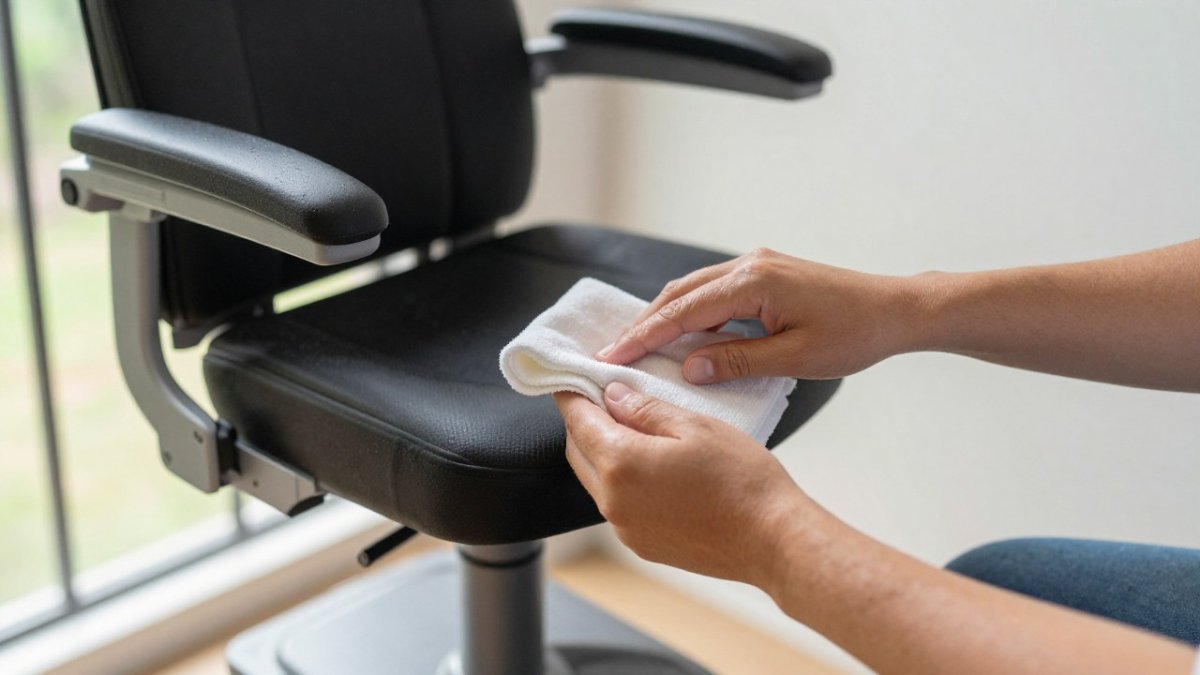
Start with a quick wipe-down. Use a dry cloth or a slightly damp cloth with a mild, non-abrasive cleaner on the seat, armrests, and footrest. Wipe the rail too, since dust and grit collect there and can make the ride rough. Then clear the stairs. Shoes, laundry baskets, and pet toys are common obstructions that can stop the lift or cause a fall. Finally, glance at the charging point and confirm the lift is parked correctly so the battery charges.
Monthly Tasks
Once a month, look closer. Run a dry cloth or soft brush along the track to remove dust and debris from the grooves. Check the rail for visible wear, loose screws, or damage. Test the seat swivel, armrests, and footrest to make sure they lock firmly. Listen for unusual noise during a test ride. A small squeak is normal; grinding or thumping is not.
Annual Tasks
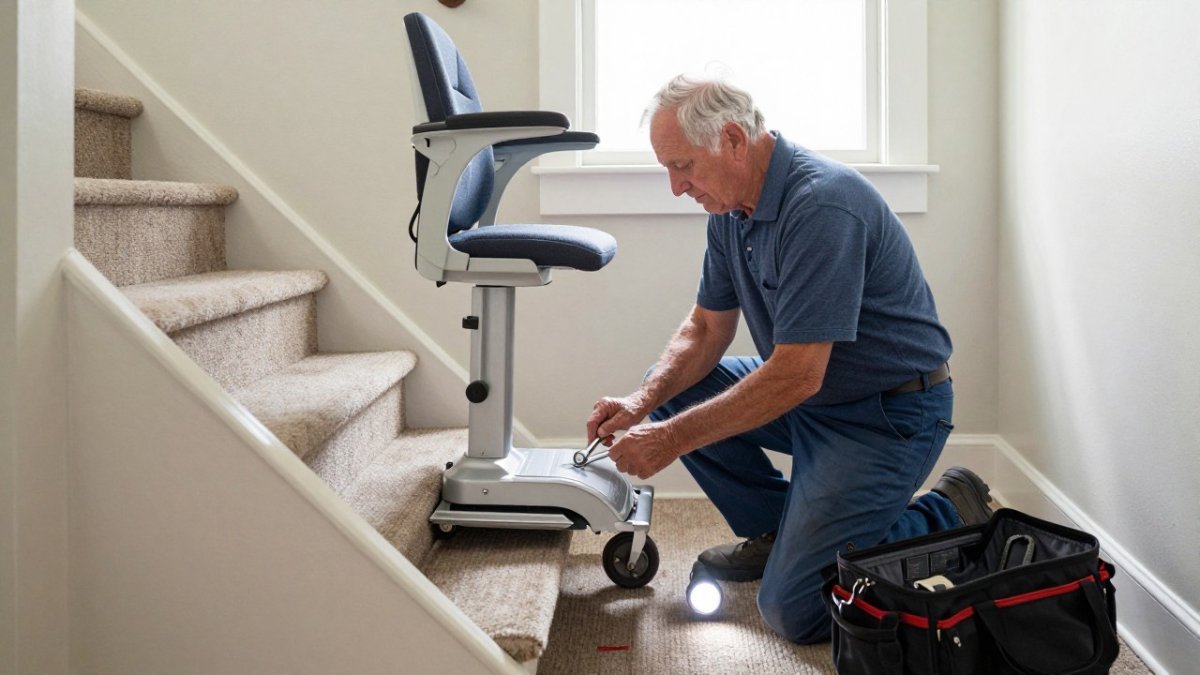
Book a professional servicing visit once a year. A technician will inspect the motor, gears, battery, and safety sensors, tighten hardware, and confirm the lift meets the manufacturer's specifications. This annual inspection is the single best way to catch small problems before they become expensive repairs.
How to Lubricate a Stairlift Track Safely
Lubrication is an area where care matters. The most important rule: check your user manual before you touch the track. Some manufacturers specify a particular lubricant, and some modern rails are designed to run dry. Applying the wrong product can attract dust, gum up the track, and void your warranty.
If your manual calls for lubrication, follow these steps:
- Park the lift at the bottom of the stairs and switch off the power.
- Wipe the rail clean with a dry cloth to remove dust and old residue.
- Apply a small amount of the manufacturer-approved lubricant to a clean cloth, not directly to the rail.
- Run the cloth along the track in a thin, even coat. Less is more.
- Switch the power back on and take a slow test ride to spread the lubricant.
- Wipe away any excess so it does not collect debris.
Watch out: never use household oils, grease, or silicone spray unless the manual names them. The wrong lubricant is worse than none at all.
Stairlift Battery Care and Charging Habits
Stairlift batteries depend on good charging habits, and the manufacturer's manual is the best guide to your specific battery. The simplest rule is to keep the lift plugged in and parked at its charging point whenever it is not in use. Follow your manual's guidance on charging.
A few habits extend battery life:
- Park at the charging point every time, even for short breaks.
- Keep the charging contacts clean and free of dust.
- Check your manual before unplugging the power supply for extended periods.
- Watch the charge indicator. A battery that drains quickly is nearing the end of its life.
Know Which Battery Your Lift Uses
Charging advice is not one-size-fits-all. Stairlifts use different battery types depending on the model, and each has its own charging and storage needs. Your manual will identify the battery type your lift uses and the correct charging and storage guidance for it. Check your manual for the battery type and any storage guidance before you assume the generic advice applies. If the manual specifies a charging window or a storage procedure, follow it over anything in a general guide.
Safe First Checks for Charging Problems
If the lift is not charging, work through these checks before you call anyone:
- Confirm the lift is parked fully at the charging point. A lift stopped a few inches short will not make contact.
- Inspect the charging contacts on the rail and on the lift for dust, pet hair, or corrosion. Wipe them with a dry cloth.
- Check that the wall outlet is live and that the power supply is firmly plugged in.
- Look at the charge indicator after an overnight park. No change usually points to a contact or battery problem.
- If the lift beeps or shows a fault light while charging, stop using it and book service.
Watch out: never open the battery compartment or attempt to replace sealed batteries yourself unless the manual explicitly walks you through it. Stairlift batteries are heavy, wired in series, and carry enough current to cause injury, and a miswired replacement can damage the controller.
Battery life varies with use and model, so have a technician check the battery if it starts losing charge quickly. When yours starts losing charge fast, have it checked rather than waiting for a mid-stair stop. For a deeper look at extending battery life, read our guide on how to maintain your stairlift battery life.
Common Stairlift Problems and What They Mean
Most stairlift problems announce themselves before they become serious. Here is what the common symptoms usually mean.
- Unusual noise: grinding or thumping often points to debris on the track or worn gears. Clean the rail first, then call a technician if it continues.
- Slow or jerky ride: a low battery or a dirty track is the usual cause.
- Not charging: check that the lift is parked correctly and the contacts are clean.
- Warning light or alarm: this usually signals a fault the lift has detected. Stop using it and book a service.
- Stuck mid-stair: stay seated, use the call button or phone for help, and do not try to climb out on the stairs.
If you spot a problem, our rundown of common stairlift repair issues explains the likely causes and what to do next.
When to Call a Technician for Professional Servicing
Some jobs belong to a trained technician. Call for professional servicing if you notice any of the following:
- The lift will not move, or stops without warning.
- A warning light or alarm stays on.
- The rail is loose, bent, or visibly damaged.
- The battery no longer holds a charge.
- You hear grinding, thumping, or repeated beeping.
- The lift has not been serviced in over a year.
What a Professional Service Visit Covers
A routine service visit is more than a quick look. A professional service visit typically involves a qualified technician checking the lift's components and safety features. Ask the provider what their visit includes and how long it takes. Ask for a written summary of what was checked and any parts that are wearing, so you have a record for the next visit.
How Often to Book Service
Check your manufacturer's guidance and warranty terms for the recommended service interval. Heavy daily use, a household with pets, or a lift installed in a dusty or humid space can justify a twice-yearly check. Put the date on a calendar and keep the service records with the manual; when you sell the home or file a warranty claim, that paper trail matters.
How to Prepare for the Appointment
Clear the staircase before the technician arrives, note any symptoms with the date they started, and have the user manual and prior service records on hand. If the lift has been beeping or stopping, write down exactly when it happens, because intermittent faults are much faster to diagnose when the technician knows the pattern.
The Line Between Owner Care and Repair
Cleaning, visual checks, and keeping the travel path clear are owner tasks. Repairs, electrical work, battery replacement, and any adjustment to the motor, gears, or safety sensors belong to qualified service personnel. Attempting those jobs yourself can void the warranty and, more importantly, leave a safety device that fails when you need it most. Our article on the benefits of annual stairlift safety inspections explains what a service visit covers and why it matters.
Schedule Your Stairlift Maintenance Visit
A consistent routine keeps your lift running smoothly, but professional care is what protects it long term. At CT Stairlifts, we provide stairlift installation and ongoing service to help you regain access to every floor of your home. Contact us for details about our services. If you are weighing service plans, our guide on how to compare stairlift service contracts walks you through what to check.
To learn more or request service, visit CT Stairlifts. We help homeowners in Connecticut regain access to every floor of their home.
Keeping a stairlift reliable comes down to small habits repeated often: a weekly wipe-down, a clear staircase, and a yearly service visit. If your lift is due for a check, CT Stairlifts can help. We offer professional servicing, free home assessments, and Harmar straight and curved stairlift installations backed by licensed and insured technicians. Get started with CT Stairlifts and keep your lift running safely for years to come.
Frequently Asked Questions
What are some common problems with stairlifts?
Common stairlift problems include unusual noises, jerky movement, battery charging issues, and warning lights or alarms. Debris on the track can cause grinding sounds, while a loose charger or worn battery can lead to slow operation or failure to charge. If the stairlift stops unexpectedly, check the emergency stop button and power supply first. For persistent issues, contact a technician rather than attempting complex repairs yourself.
How often should a stairlift be serviced?
Manufacturers typically recommend professional servicing once a year. During a service, a qualified technician can check your stairlift's components and safety features. If your stairlift is used heavily or you notice performance changes, ask about more frequent visits. Following the service schedule in your user manual helps extend the lifespan of your home stairlift and ensures safe operation.
Can you clean a stairlift yourself?
Yes, you can clean the seat, armrests, footrest, and track using a mild, non-abrasive cleaner and a damp cloth. Avoid harsh chemicals or excess moisture, especially near electrical components. Wipe down the rail weekly to remove dust and debris, and keep the stairs clear of obstructions. For internal components or deep cleaning, consult your user manual or a professional.
What should you do if a stairlift stops working?
If your stairlift stops working, first check that the power supply is connected and the charger is working. Look for any obstruction on the track and ensure the emergency stop button is not engaged. If the battery is low, charge it fully. If the problem persists, contact a qualified technician. Do not attempt to repair electrical or mechanical parts yourself, as this can void warranties and compromise safety.