 How-to
7 Benefits of Professional Stairlift Installation Services
Last Updated: November 13, 2026
Quick Summary
Professional stairlift installation ensures a safe, stable ride because a trained technician measures your staircase, mounts the rail into sound structure, secures the seat and footrest, and tests the unit under load before handover. It also delivers proper fit to your specific stairs and support after the install.
- An installer records the run, rise, and pitch to set rail length and mounting height.
- Brackets must anchor into wood studs, masonry, or a stair stringer, never drywall.
- Testing includes a loaded ride, swivel locks, sensors, limit stops, and the emergency stop.
- Ask whether the technician is factory-trained on your specific model, not just the company.
- A proper handover includes a practice run and the manual lowering method demonstrated.
Table of Contents
- Why Professional Stairlift Installation Beats a DIY Approach
- Stairlift Installation Requirements: What Your Home Needs First
- Installer Expertise: Training, Testing, and Safety Checks
- Stairlift Safety Features During Power Outages
- Can I Install a Stairlift Myself? What the Manuals Leave Out
- Stairlift Installation Cost: What You Pay For and Why
- After Installation: Training, Warranty, and Ongoing Service
- Schedule Your Home Assessment with CT Stairlifts
- Frequently Asked Questions
Why Professional Stairlift Installation Beats a DIY Approach
Professional stairlift installation is the process of fitting a motorized chair lift to a staircase by a trained technician who measures the stairs, mounts the rail, secures the seat and footrest, and tests the unit before handing it over. The difference between a safe, stable ride and a wobbly one often comes down to that fitting work.
The benefits of professional stairlift installation services start with safety and extend to reliable performance, proper fit to your specific staircase, and support after the install.
Stairlift Installation Requirements: What Your Home Needs First
Before anything is ordered, an installer surveys your staircase and the surrounding space.
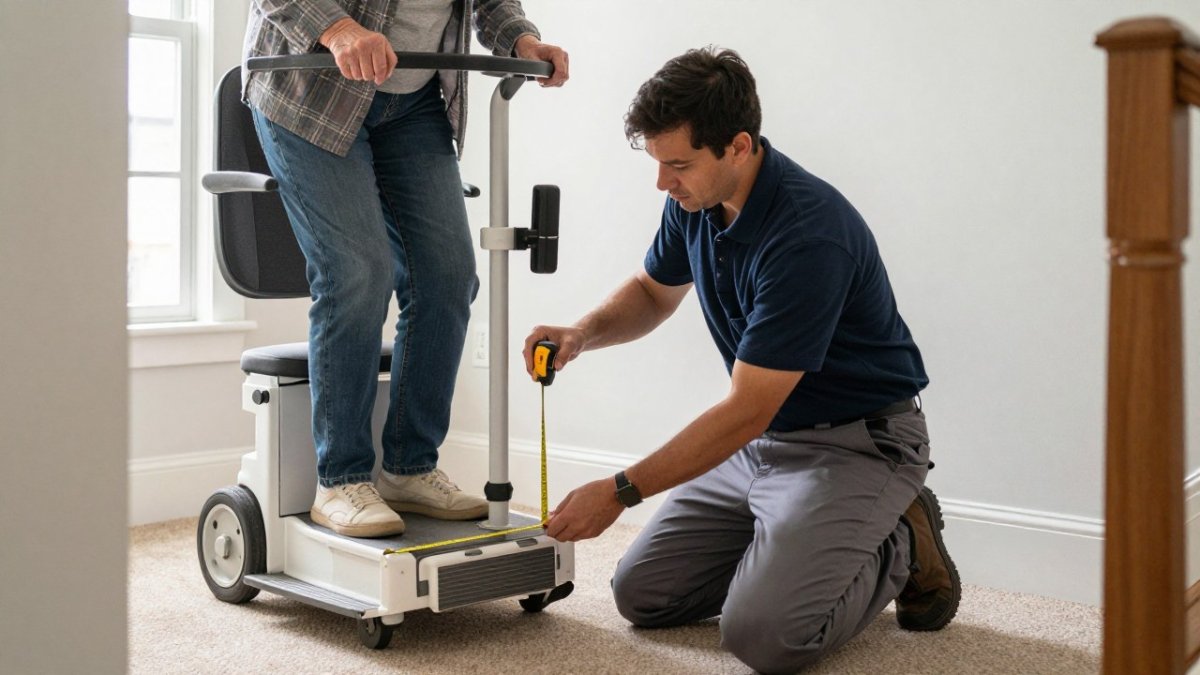
The basic requirements are a sound staircase structure, enough clearance at both landings, a power source near the lower end of the rail, and a rail path that clears obstructions.
Staircase Dimensions and Rail Path
An installer records the run (the horizontal distance from the bottom nose to the top nose), the rise (the total vertical climb), and the pitch (the angle of the stair). For a straight run, those three numbers plus the stair width set the rail length and mounting height. A rail set too low catches the footrest on the treads; set too high, the chair blocks handrail use. The installer also checks that the rail's folded position leaves a walkway at least as wide as the stair code expects for the home's occupancy.
Landings, Doorways, and Transfers
The top and bottom landings are where most usability problems appear. The installer measures the flat space in front of the bottom step to confirm the chair can swivel and the user can stand clear of the rail. At the top, the landing must let the chair park without blocking a doorway or a hallway. Door swing, hinge side, and threshold height all get recorded, because a lift that parks in front of an inward-swinging door turns a safe ride into a daily obstacle.
The User's Mobility Needs
A home assessment is not only about the stairs. The installer asks how the user currently climbs the stairs, which leg leads, whether they use a cane or walker on the landing, and how much grip and balance they have when standing. Those answers shape the recommendation: a swivel seat that locks at the top, a seat belt type, armrest height, and the call-control placement.
Power and Structural Checks
A standard residential circuit near the lower end of the rail is usually enough, but the installer confirms the outlet location and whether an extension or a dedicated circuit is needed. The rail brackets must land on sound structure, wood studs, masonry, or a stair stringer, and the installer probes or reads the framing before drilling. Watch out: a bracket anchored only into drywall or a hollow stair tread can loosen under daily load, and that is the failure mode a DIY install is most likely to produce.
What the Assessment Produces
The survey ends with a written configuration: rail type, chair model, mounting points, power plan, and any customization such as a short rail extension or a folding rail for a tight hallway. Ask for that configuration in writing before you sign, because it is the document you will use to compare one installer's quote against another's.
Installer Expertise: Training, Testing, and Safety Checks
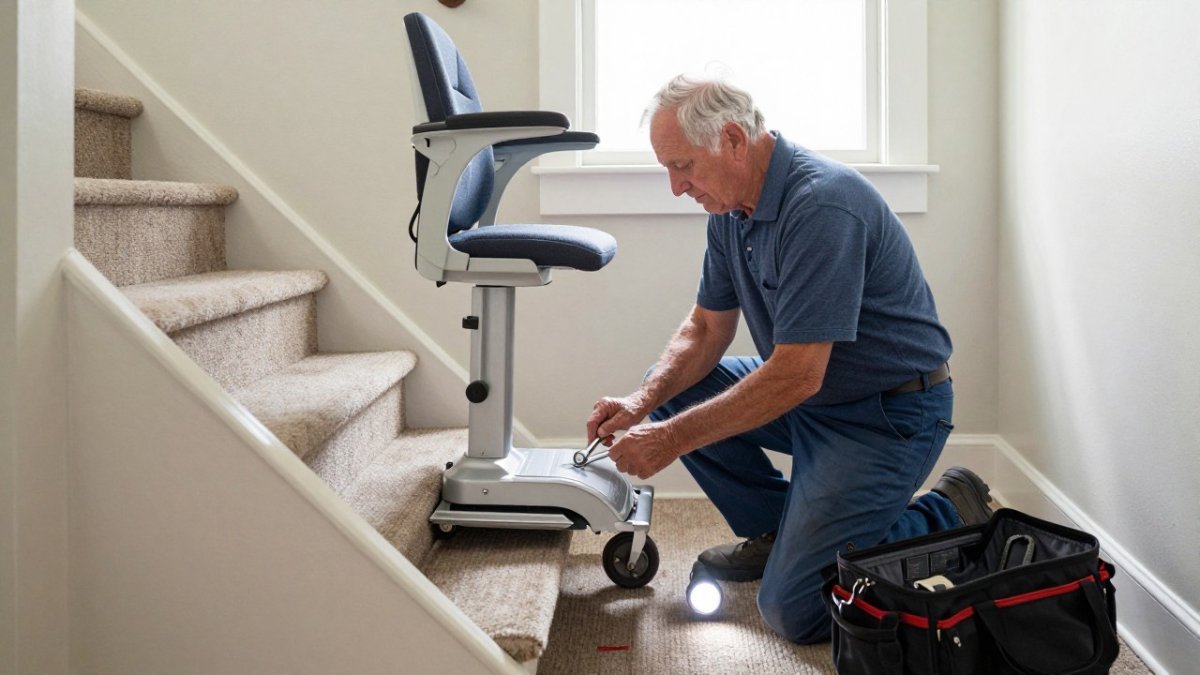
A factory-trained installer follows a set sequence, and the value of professional installation is that the sequence is repeatable. The steps below are what a competent installer should be able to describe before you book, and what you should see happen on installation day.
The Installation Sequence, Step by Step
- Protect and prepare. The installer lays floor protection, confirms the survey measurements against the actual stairs, and marks the bracket locations.
- Mount the rail. Brackets are anchored into structure, the rail is set to the surveyed pitch, and the installer checks level along the run and plumb at the ends.
- Attach the chair. The carriage is seated on the rail, the seat and footrest are fitted, and the swivel and lock are aligned with the landings.
- Connect power and charge. The unit is tied to the charging circuit, and the installer confirms the battery is charging before the first run.
- Test under load. The installer rides the full run with weight on the seat, stops at both ends, and repeats with the swivel and belt engaged.
What the Testing Covers
Testing is not a single ride. The installer checks the seat swivel lock at both landings, the seat belt latch and retraction, the footrest clearance over every tread, the obstruction sensors that stop the lift when something blocks the path, the upper and lower limit stops, and the emergency stop. The installer also confirms the lift handles its rated weight and moves smoothly through the full run without binding or surging. A lift that runs fine empty can behave differently with a person seated, which is why the loaded test matters.
Training and Certification to Ask About
Stairlift installers are often trained by the manufacturer on the specific brand and model they install. Ask whether the technician who will be in your home is factory-trained on your model, not just the company generally. Ask, too, about insurance, general liability and workers' compensation, and whether the company holds any state or local contractor licensing your area requires. Verify licensing with the issuing agency rather than relying on a logo on a brochure.
Standards and Compliance
A professional installer should be able to tell you which standard the unit is listed to and show the label. Local permitting and inspection requirements vary by jurisdiction, so ask the installer who pulls the permit, if one is required, and who arranges the inspection. Watch out: an installer who cannot name the standard the lift is listed to, or who tells you permits are never needed, is a reason to keep comparing providers.
Handover: What You Should Receive
At the end of the appointment, the installer should walk you through operation, demonstrate the emergency stop and the manual lowering method, and leave you with the owner's manual, the warranty terms, and a service contact. A professional handover includes a short practice run with you in the chair while the installer watches. If you leave the appointment unsure how to stop the lift in an emergency, the handover was incomplete.
Here is the installation sequence a competent installer should be able to describe and that you should see happen on installation day.
| Step | What happens |
|---|---|
| Protect and prepare | Lay floor protection, confirm survey measurements, mark bracket locations |
| Mount the rail | Anchor brackets into structure, set rail to surveyed pitch, check level and plumb |
| Attach the chair | Seat carriage on rail, fit seat and footrest, align swivel and lock |
| Connect power and charge | Tie unit to charging circuit, confirm battery is charging |
| Test under load | Ride full run with weight, stop at both ends, repeat with swivel and belt |
Stairlift Safety Features During Power Outages
Stairlifts are built to keep working during a power outage. Many stairlift models are designed to run on battery power during an outage. Ask your installer to confirm how the battery and cut-off work before they leave.
For a deeper look at how lifts behave without power, read our guide on stairlift safety during power outages. If you are ever unsure about your unit mid-outage, stay seated, use the belt, and call your service provider rather than attempting to climb around the chair.
Can I Install a Stairlift Myself? What the Manuals Leave Out
You can physically install a stairlift yourself, but the manuals leave out the parts that matter most. They do not measure your staircase for you, they do not tell you whether your wall studs will hold the brackets, and they do not test the finished unit under a real load.
The safety risks of going it alone are real: an unstable rail, a mis-set angle, or a lift that stalls halfway up. Our article on DIY stairlift installation risks walks through them in detail. For most homeowners, the peace of mind is worth the professional call.
Stairlift Installation Cost: What You Pay For and Why
Stairlift installation cost depends on the staircase, the lift type, and the features you choose, so we quote each home individually rather than publishing a flat figure. What you are paying for is the assessment, the measuring and custom rail work, the mounting and testing, and the after-install support.
For a full breakdown of what professional installation involves, see our guide on the real costs of professional stairlift installation. We recommend getting a written quote that separates equipment from labor so you can compare fairly.
Questions to Ask Before You Book an Installer
- Are you factory-trained on the brand you are installing?
- Will you measure my staircase in person before quoting?
- What does your testing and safety check include?
- What warranty covers the rail, the motor, and the battery?
- Who do I call for repair service, and how fast do you respond?
- Can you show me references from other local homeowners?
Our guide on choosing a reliable stairlift installer covers how to weigh the answers.
After Installation: Training, Warranty, and Ongoing Service
Installation ends with user training. A good installer should show you how to use the seat, the belt, the swivel and the call controls, and how to handle the lift if it stops.
Ongoing service keeps the lift reliable. Ask what the warranty covers and how long it lasts, since terms vary. Ask what happens after installation, because a lift is a long-term piece of equipment, not a one-time purchase.
Schedule Your Home Assessment with CT Stairlifts
Every safe stairlift starts with an accurate assessment of your home. Get started with CT Stairlifts and book your free home assessment to find the right fit for your staircase.
A stairlift only delivers independence when it is fitted correctly and supported afterward. CT Stairlifts handles the assessment, the installation, and the ongoing service so you can move between floors with confidence. Our team offers a free home assessment, licensed and insured installation, and support for both straight and curved staircases.
Frequently Asked Questions
What are the benefits of professional stairlift installation?
Professional stairlift installation gets you a rail fitted to your actual staircase, not a one-size approximation. A professional installer can measure your staircase and fit the rail to your actual stairs, which supports safe and reliable operation. Ask any installer what their installation includes before you book.
Can I install a stairlift myself?
Manufacturers generally sell stairlifts through dealers and require certified installation, so DIY is rarely an option for a new unit. The rail must be anchored into studs or masonry at the correct angle, and a curved or custom rail cannot be fitted without factory measurements. Getting the swivel seat and obstruction sensors wrong creates a fall risk on the stairs themselves. If you are handy and considering a used lift, ask the seller for the installation manual and confirm the model still has parts and service support before you buy.
How much does stairlift installation cost?
Published ranges vary widely because they bundle the lift and the labor differently. Stairlift pricing depends on stair length, lift type, and features. CT Stairlifts has not published pricing, so request a written quote that separates equipment, installation, and any aftercare plan.
What happens to a stairlift during a power outage?
Many stairlifts are designed to run on battery power during an outage. Ask the installer to show you the manual override and explain how long the battery holds a charge, and ask what the service response time is if the unit stops mid-flight.