 comparison
DIY Stairlift Installation: Safety Risks vs. Professional Setup
Table of Contents
- Is DIY Stairlift Installation Safe?
- Professional Installation vs. DIY: Key Differences
- Stairlift Installation Cost and Budget Considerations
- Building Codes and Stairlift Safety Standards (ASME A18.1)
- Warranty Implications and Coverage Protection
- Structural Assessment and Installation Complexity
- Insurance Liability and Home Modification Concerns
- Conclusion
- Frequently Asked Questions
Last Updated: October 1, 2026
Is DIY Stairlift Installation Safe?
DIY stairlift installation carries significant risks. It involves precision rail alignment, electrical wiring, load-bearing calculations, and safety mechanisms that require professional expertise.
Consequences of improper installation include misaligned rails causing unsafe operation, bracket failure under load, electrical fire hazards, and voided warranties that leave you liable for repairs and uninsured if injury occurs.
CT Stairlifts and other reputable providers emphasize professional installation because the stakes are high. Your stairlift must meet building codes and safety standards like ASME A18.1, the American Society of Mechanical Engineers' safety standard for stairlifts. These standards exist because improperly installed equipment fails, and failures on stairs cause falls.
The real question isn't whether you can install a stairlift yourself. It's whether the risk to your safety and your home's value justifies the cost savings. For most homeowners, the answer is no.
Professional Installation vs. DIY: Key Differences
Professional technicians bring three things DIY cannot replicate: training, equipment, and accountability.
A certified installer performs structural assessment, measures staircase geometry, evaluates load-bearing capacity, uses specialized mounting brackets, tests safety sensors and emergency stops, and provides warranty coverage.
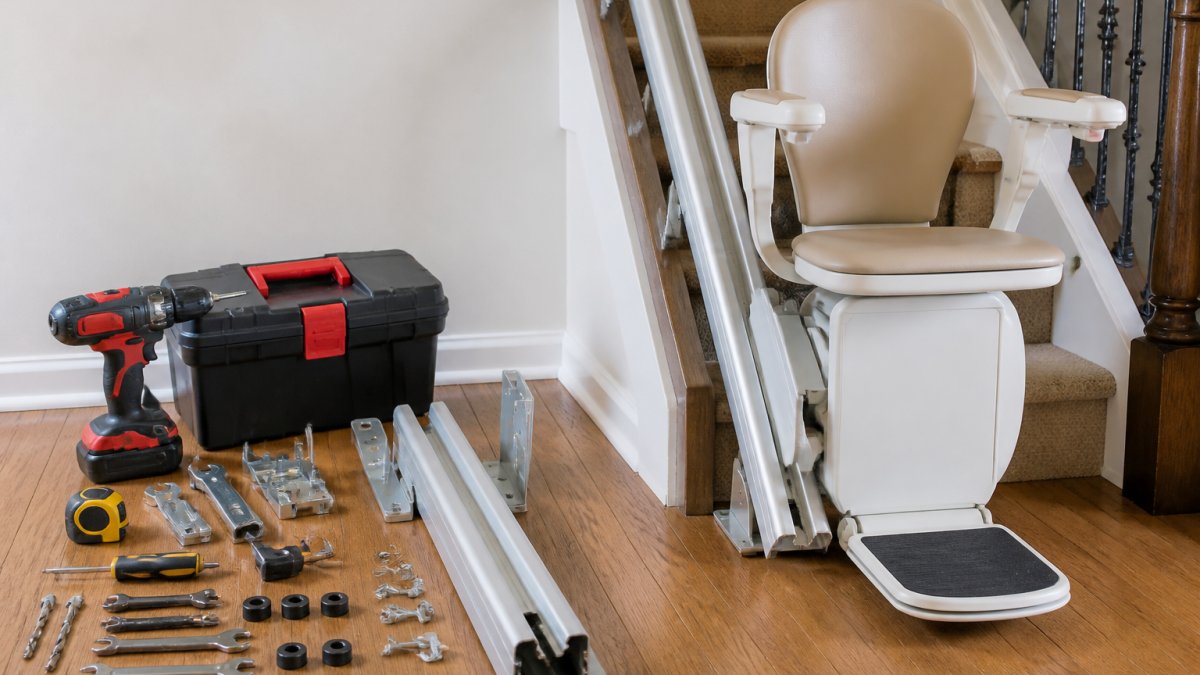
DIY installation skips structural assessment, load-bearing evaluation, safety testing, and requires specialized tools for precise rail alignment that most homeowners lack.
Professional installation takes one day; DIY takes days or weeks depending on skill level and complications.
Professional installers carry liability insurance and stand behind their work. With DIY, you're responsible. Your homeowner's insurance may not cover injuries if the installation was DIY.
Stairlift Installation Cost and Budget Considerations
Professional installation costs include equipment and labor. Straight-rail lifts cost less than curved-rail lifts, which require custom engineering.
A DIY kit costs less upfront but ignores hidden costs: tool rental, professional correction of mistakes, and voided warranties. Errors requiring professional correction mean paying twice.
A professionally installed stairlift increases resale value; a DIY installation may reduce it or create liability concerns for future owners.
Building Codes and Stairlift Safety Standards (ASME A18.1)
The primary safety standard for stairlifts in the United States is ASME A18.1, the American Society of Mechanical Engineers standard for safety of stairlifts. This standard specifies requirements for rail alignment, weight capacity, emergency stops, electrical safety, and mechanical integrity. Manufacturers design their equipment to meet ASME A18.1. Professional installers know these standards and ensure installations comply.
Most jurisdictions require stairlift installations to meet ASME A18.1 standards. Some require permits signed off by a professional. DIY installation without required permits violates building code.
Non-compliant installations can result in removal orders, denied insurance claims, and liability if someone is injured.
Professional installers handle permits, inspections, and documentation, ensuring compliance with all applicable standards.
Warranty Implications and Coverage Protection
All stairlift warranties require professional installation. DIY installation voids the warranty automatically.
Without warranty coverage, you pay for all repairs out of pocket. If malfunction causes injury, your liability increases because you cannot claim proper installation.
Professional installation maintains warranty coverage and installer liability insurance, providing recourse if failure occurs.
| Aspect | Professional Installation | DIY Installation |
|---|---|---|
| Warranty Coverage | Maintained | Void |
| Liability Insurance | Installer carries coverage | You bear all liability |
| Compliance Documentation | Provided and filed | None |
| Safety Testing | Performed and documented | Unlikely |
| Recourse if Failure Occurs | Manufacturer/installer responsible | You responsible |
Structural Assessment and Installation Complexity
Before stairlift installation, the staircase must be assessed for structural suitability. DIY attempts often fail because homeowners lack expertise to recognize failure modes.
Load-Bearing Capacity Assessment
A stairlift and user weigh 300-500 pounds, concentrated at mounting bracket points. Inadequate mounting points cause rail shift, sag, or failure.
Professionals evaluate whether walls and stairs support the load. Older homes, water damage, or non-standard framing may require reinforcement before installation.
DIY installers often miss structural problems, drilling into drywall without backing or mounting to compromised stringers. Mounting points shift or fail under repeated use.
Specific Failure Modes from Improper Mounting
Failure patterns from skipped assessment include: rail sagging causing mid-staircase stops and fall risk; bracket pullout from inadequate backing; stringer damage from undetected rot; and electrical hazards from moisture that DIY installers miss.
Geometry and Alignment Precision
Rail alignment must be precise; even 1/4-inch deviation over 12 feet causes binding or unsafe operation.
Professionals use laser levels and specialized tools to achieve precision, accounting for staircase geometry variations.
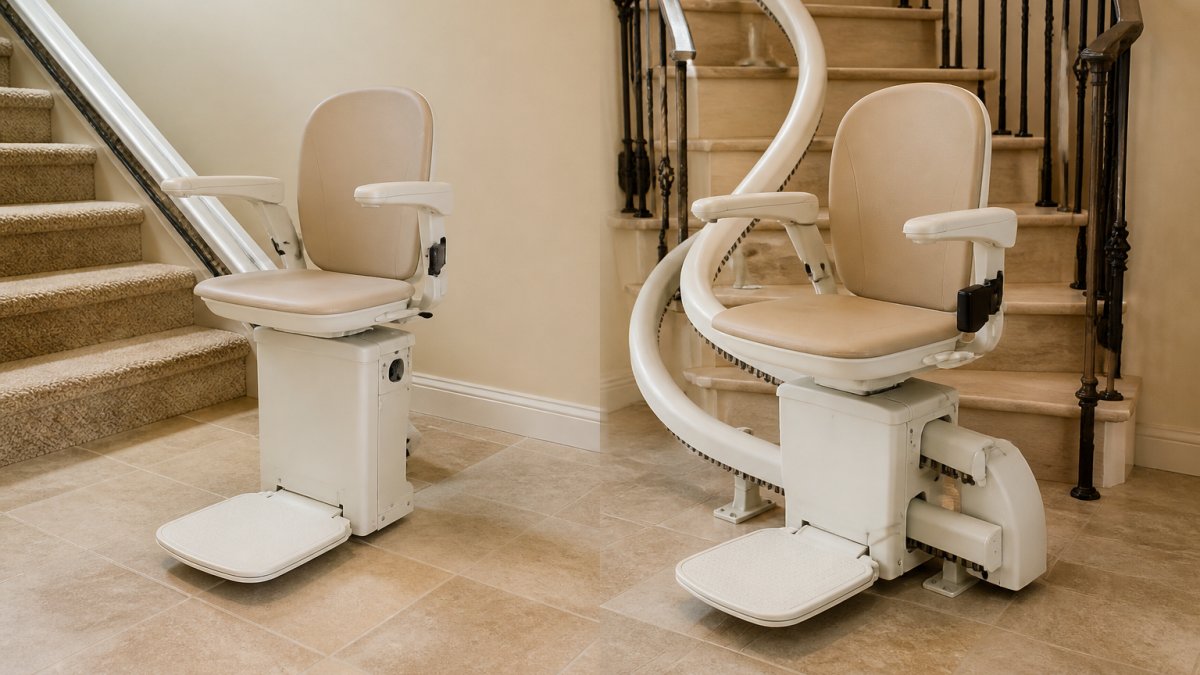
Curved staircases require custom-engineered rails. Standard kits cannot achieve the precision needed; incorrect geometry causes binding, derailment, or unsafe operation.
Complications That Require Professional Solutions
Assessment identifies complications: landings and turns requiring custom bracket placement; wall material variations requiring specific fasteners; structural damage requiring repair; and clearance issues that may prevent installation.
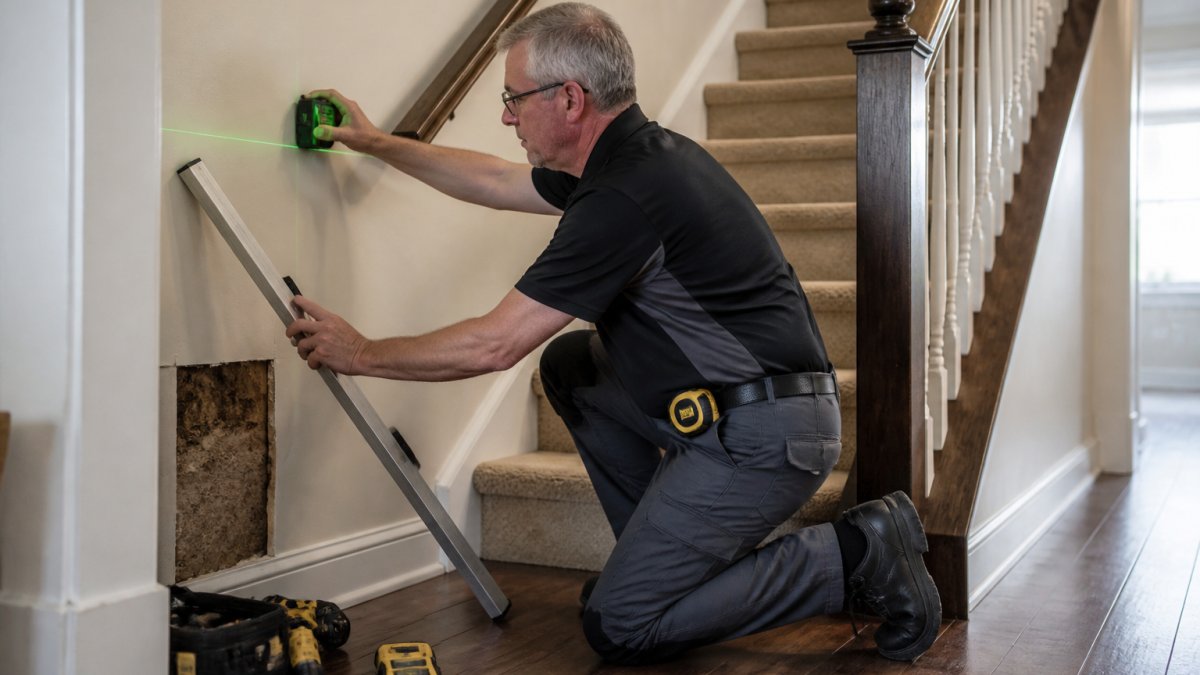
Why DIY Assessment Fails
Visual inspection cannot determine load-bearing capacity or hidden damage. Professionals use experience and tools; DIY installers rely on assumptions that often prove wrong.
Structural assessment is the foundation of safe installation. Skipping it is where most DIY installations create risk.
Insurance Liability and Home Modification Concerns
How DIY Installation Affects Homeowner's Insurance Coverage
Homeowner's insurance excludes equipment installed in violation of manufacturer specifications or building codes.
DIY installation violates manufacturer requirements and voids warranty. Insurance can deny claims if someone is injured.
If someone is injured on a DIY-installed stairlift, insurers investigate, discover the DIY installation, and deny the claim citing manufacturer requirements for professional installation.
You become personally liable for medical bills, lost wages, pain and suffering, and legal costs without insurance coverage.
Specific Claim Denial Scenarios
Insurers deny claims for: stairlift malfunction from improper installation; code violations from unpermitted work; manufacturer specification violations; and undisclosed modifications.
These are not hypothetical scenarios. Insurance claim denials for DIY home modifications are common, and stairlifts, because they involve fall risk, are high-stakes equipment where insurers scrutinize installation carefully.
Professional Installation Maintains Coverage
When a stairlift is professionally installed, your coverage picture changes significantly:
- The installation meets manufacturer specifications, so the warranty is valid.
- The installation meets building codes and local requirements, so there are no code violations.
- The installer carries liability insurance and stands behind the work.
- If an injury occurs and is caused by installation defect, the installer's liability insurance may cover it, not your homeowner's policy.
- Your homeowner's insurance covers injuries caused by other factors (e.g., user error, equipment malfunction unrelated to installation), but the installer bears responsibility for installation-related failures.
This division of responsibility protects you. Your insurer is more likely to cover injury claims when the stairlift was professionally installed because the risk of installation defect is transferred to the installer.
Liability Exposure Beyond Insurance
Liability extends beyond your homeowner's insurance. If someone is injured on your stairlift, they may sue you directly, regardless of insurance. Your homeowner's insurance may defend you in the lawsuit, but if they deny the claim (as described above), you must hire your own attorney and pay legal costs out of pocket.
If the injured party wins a judgment against you, they can pursue collection against your personal assets. In cases of gross negligence (installing a stairlift knowing it's unsafe), punitive damages may be awarded, which homeowner's insurance typically does not cover.
A professional installation significantly reduces this exposure because the installer, not you, bears responsibility for installation quality and safety.
Home Modification Documentation and Resale Impact
Home modifications must be documented for several reasons: safety, insurability, and resale value.
When a stairlift is professionally installed, the installer provides:
- A signed work order and invoice documenting the installation date and scope of work.
- Warranty documentation showing the equipment is covered against defects.
- Compliance documentation showing the installation meets applicable codes and standards.
- Permit and inspection records (if required by local code).
This documentation becomes part of your home's record. When you sell the home, you disclose the stairlift installation to buyers and their inspectors. The documentation proves the installation was done properly, reducing buyer concerns and protecting you from liability claims after the sale.
A DIY installation has no documentation. When you sell the home, buyers and their inspectors see a stairlift with no clear installation history. They may question whether it was installed safely. Some buyers will demand a professional inspection of the stairlift before purchase, adding cost and delay to the sale.
Removal and Restoration Costs
Lender and Insurer Concerns
The Bottom Line on Liability and Insurance
Conclusion
DIY stairlift installation carries risks that outweigh the cost savings for most homeowners. Safety standards exist because stairlifts are complex mechanical devices that must perform reliably. Professional installation ensures your stairlift meets building codes, maintains manufacturer warranty coverage, and protects you from liability if something goes wrong.
Frequently Asked Questions
Is it safe to install a stairlift yourself?
DIY stairlift installation carries significant safety risks. Improper mounting can cause the lift to malfunction, creating fall hazards for users. Professional installers ensure correct rail alignment, secure load-bearing attachment to the staircase structure, and proper electrical wiring. Additionally, DIY installation typically voids the manufacturer's warranty and may violate building codes, leaving you liable for injuries.
How does professional installation impact stairlift warranty requirements?
Most manufacturers require professional installation by certified technicians to maintain full warranty coverage. If you attempt DIY installation, the warranty becomes void, meaning you bear all repair and replacement costs. Professional installers document the installation process and ensure compliance with safety standards, protecting both your investment and your legal liability.
What are the primary risks of improper stairlift installation?
Improper installation can lead to mechanical failure, jerky operation, rail misalignment, inadequate weight support, and electrical hazards. These issues create serious fall risks, especially for older adults or people with limited mobility. Additionally, structural damage to the staircase itself may occur if mounting brackets are not secured to load-bearing components, resulting in costly repairs.
What building codes govern stairlift installation?
Stairlift installations must comply with ASME A18.1 safety standards, which establish requirements for mechanical integrity, electrical safety, weight capacity testing, and emergency stop functionality. Local building codes may impose additional requirements. Professional installers understand these regulations and obtain necessary permits, ensuring your installation meets all legal requirements and passes inspections.