 ultimate-guide
7 Real Costs of Professional Stairlift Installation
Last Updated: November 5, 2026
Quick Summary
The cost of stairlift installation depends on staircase layout, since two homes with identical equipment budgets can end up with very different final invoices. Quotes may leave out electrical work and stair or wall modification until the site visit, so a quote listing only installation without electrical and carpentry allowances is not complete.
- A narrow flight may need the rail mounted closer to the wall or a folding seat and footrest.
- Original Medicare generally does not pay for a stairlift, which is treated as a home modification.
- If there is no outlet near the base or top landing, an electrician may need to run a dedicated circuit.
- Ask what year five of ownership costs, including service and battery replacement.
- Budget for removal and disposal as a real cost if you plan to move.
Table of Contents
- What Professional Stairlift Installation Really Costs
- Stairlift Cost With Installation: What the Quote Includes
- Straight Stairs vs. Curved Stairs: The Biggest Price Split
- New, Refurbished or Rented: Three Ways to Buy
- The Stairlift Installation Process Explained, Step by Step
- Stair Chair Lift Cost and Medicare: What Insurance Covers
- Hidden Costs Most Quotes Leave Out
- Permits, Building Codes and Resale Value
- Getting a Stairlift Quote for Your Home
- Frequently Asked Questions
What Professional Stairlift Installation Really Costs
Stairlift installation is the process of mounting a motorized rail system to your staircase and commissioning it for safe use. Staircase layout can strongly influence the overall cost. Two homes with identical equipment budgets can end up with very different final invoices. Below, we break down the cost lines that often appear on a quote and which ones homeowners may not expect.
Stairlift Cost With Installation: What the Quote Includes
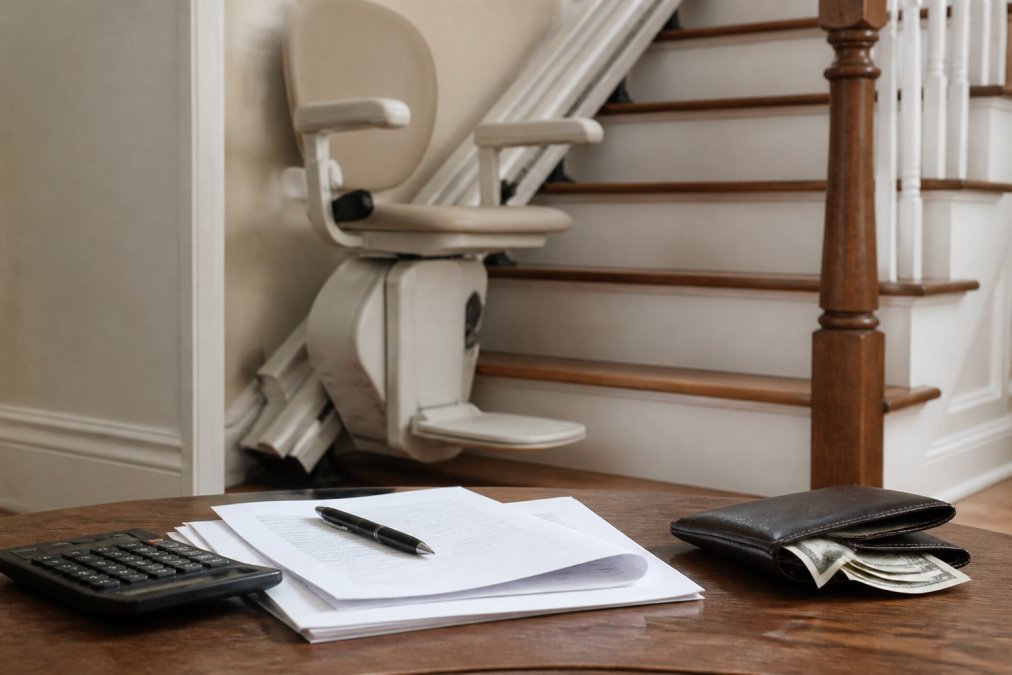
Electrical work and any stair or wall modification are line items that a quote may leave out until the site visit. If there is no outlet near the base or top landing, an electrician may need to run a dedicated power supply circuit. Watch out: a quote that lists only "installation" without specifying electrical and carpentry allowances is not a complete quote.
Straight Stairs vs. Curved Stairs: The Biggest Price Split
For a closer look at how curved configurations change the picture, see our guide to the best stairlift for curved stairs, which covers model options and what drives cost on custom tracks.
Beyond geometry, several site factors can affect the install:
- Stairway width and landing requirements: a narrow flight may need the rail mounted closer to the wall or a folding seat and footrest.
- Rail mounting surface: solid wood or masonry treads take fixings more easily than floating or open-riser stairs.
- Obstructions: radiators, banister posts, and door swings at the top landing can force a shorter track.
New, Refurbished or Rented: Three Ways to Buy
The honest trade-off: refurbished and rental units are not inferior, but they are less predictable. Ask specifically what the warranty covers and who performs the removal at the end of a rental term. If your need may be short-term, say so at the assessment stage rather than after the install is booked.
The Stairlift Installation Process Explained, Step by Step
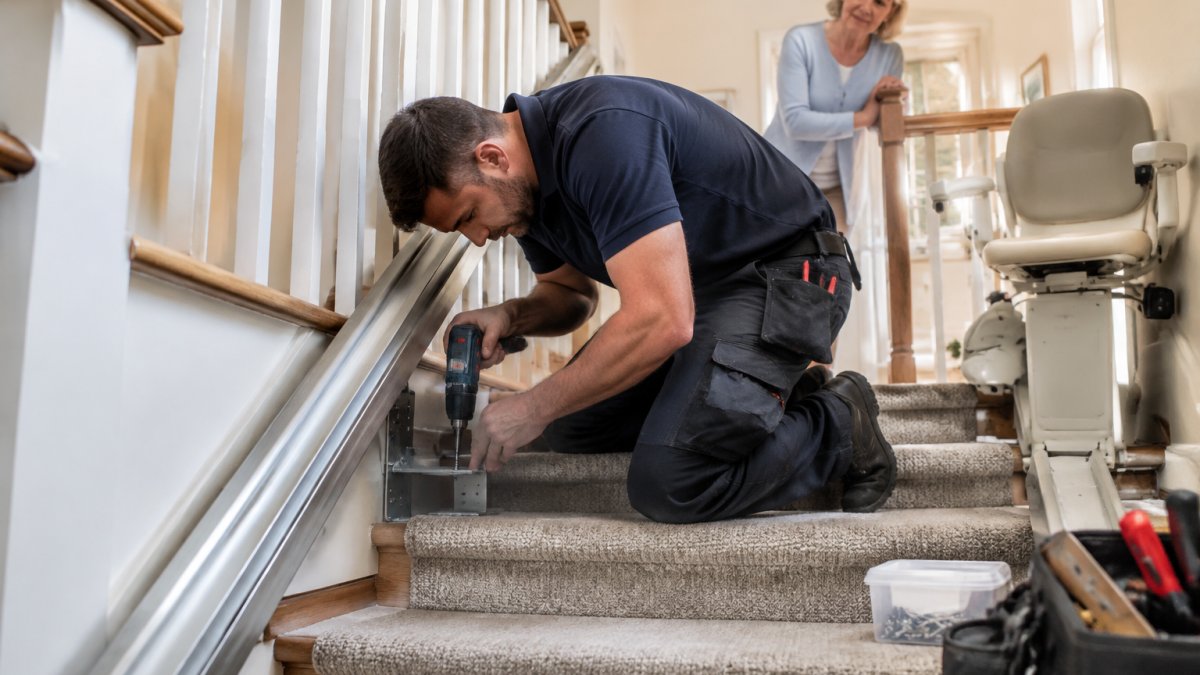
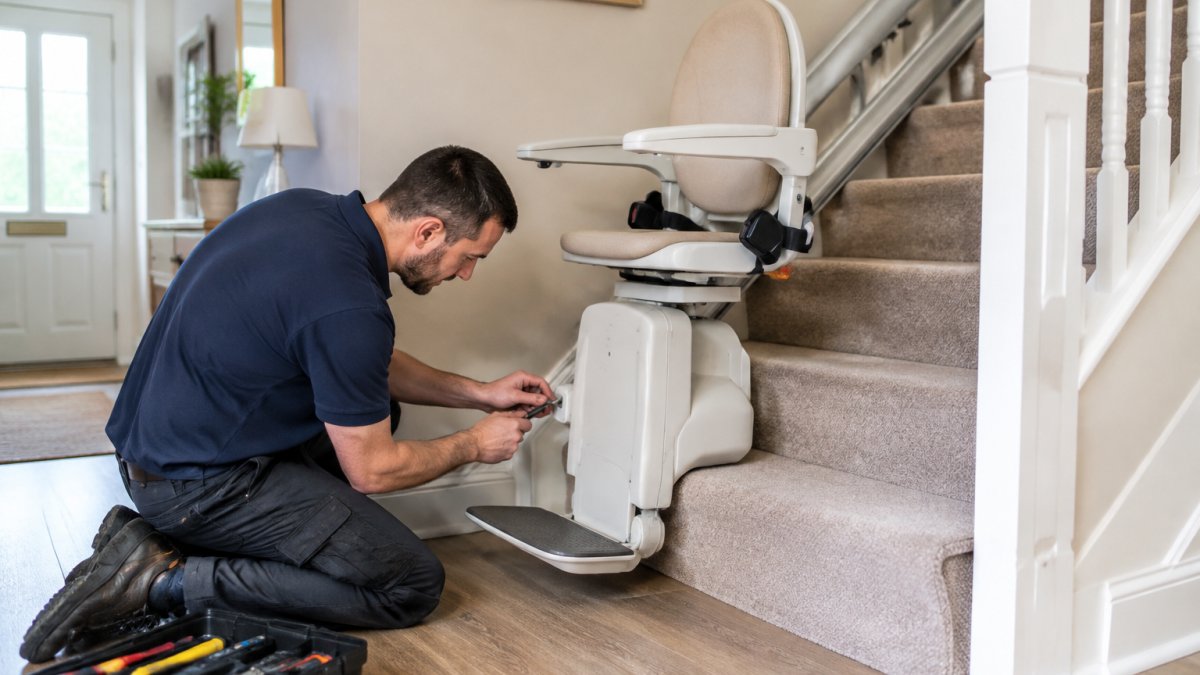
For a more detailed walkthrough of each stage before you commit, our guide to the stairlift installation process covers what happens on the day and how to prepare your staircase.
The Home Assessment and Site Survey
It also covers the user's mobility assessment: whether a swivel seat is needed at the top landing, whether a seat belt and footrest configuration suits the user, and whether the user can transfer safely. Ask for the survey findings in writing. If a company quotes you over the phone without measuring, treat that figure as an estimate, not a price.
Stair Chair Lift Cost and Medicare: What Insurance Covers
Original Medicare generally does not pay for a stairlift, which is typically treated as a home modification rather than durable medical equipment. Check with Medicare's official guidance for current coverage rules.
Medicare Advantage (Part C) plans must cover everything Original Medicare covers, but they can add supplemental benefits, and a small number of plans have experimented with in-home support allowances that a member could apply toward accessibility equipment. Those extras are plan-specific, capped, and frequently tied to a chronic-condition diagnosis. Confirm directly with your plan and with Medicare's official coverage guidance before you budget, and get any approval in writing before signing an install contract.
Other funding channels exist, but each has a narrow gate:
- Other funding sources. Medicaid waivers, veterans' benefits, long-term care insurance and workers' compensation may sometimes help with home modifications, but eligibility rules vary. Check the official source for each program.
Watch out: do not sign an install contract on the assumption of reimbursement, get any approval letter first, or budget the full amount as out-of-pocket.
Our article on stairlifts and insurance explains what is typically covered and what is not, so you can plan your out-of-pocket expenses realistically.
Hidden Costs Most Quotes Leave Out
The line items that surprise homeowners are rarely the lift itself. They are the conditional costs that only appear once the technician is on site, plus the ownership costs that arrive years later.
Conditional install costs. These are triggered by your staircase, not your equipment choice:
-
Electrical work. If there is no outlet within reach of the base or top landing, an electrician may need to run a dedicated circuit.
-
Permit fees. Where a local jurisdiction requires a permit, fees may apply. Confirm the requirement for your address.
Long-term ownership costs. These are the numbers that never appear on the install quote:
Ask for each of these to be listed as a separate line, even if the answer is "not required." An all-in figure hides which costs are conditional. Then ask a second question: what does year five of ownership cost, including service and battery replacement? A quote that cannot answer that is an install price, not an ownership price.
The costs that surprise homeowners are the conditional and long-term items a quote often omits.
| Cost item | When it applies | Note |
|---|---|---|
| Electrical work | No outlet near base or top landing | Electrician may run a dedicated circuit |
| Permit fees | Where local jurisdiction requires a permit | Confirm requirement for your address |
| Removal and disposal | If you plan to move | Budget as a real cost |
| Service and battery replacement | Year five of ownership | Ask what year five costs |
Permits, Building Codes and Resale Value
Local rules on permits vary, so confirm the requirement for your address with your local authority or installer. Stairlifts are not governed by the ADA's accessibility standards in a private home, since those apply to public accommodations, but the unit should still carry recognized safety certifications and be installed to the manufacturer's specification.
Budget for removal and disposal as a real cost if you plan to move. Watch out: leaving a rail mounted when you sell can complicate a home inspection, so ask the installer about removal terms up front.
Getting a Stairlift Quote for Your Home
An accurate quote starts with a home assessment. CT Stairlifts provides solutions to help people regain access to every floor of their home, and you can contact the company for current prices or a quote.
To prepare, have ready: the staircase you need covered, the user's mobility needs, whether the need is temporary or long-term, and any insurance or benefits you plan to use. For a step-by-step walkthrough of the request itself, read our guide to getting a stairlift installation quote. You can also book a free home assessment and get a written quote for your stairs.
Frequently Asked Questions
Does Medicare cover the cost of professional stairlift installation?
Original Medicare generally treats stairlifts as home modifications rather than durable medical equipment, so it typically does not pay for the device or the installation. Medicare Advantage plans and other programs may differ, so check your plan documents and official sources. Check your specific plan documents and ask your plan directly before assuming anything is covered. A written quote from your installer makes those conversations easier.
How long does a professional stairlift installation take?
Installation timing depends on the staircase and the configuration. Ask your installer for a realistic window for your specific stairs.
Are there hidden fees associated with stairlift installation?
Possible extras can include electrical work if no outlet is near the staircase. Ask any installer to list each cost individually and state what is excluded, so you can compare quotes line by line.
Are stairlifts worth the money compared with moving to a one-story home?
That depends on how long you plan to stay and what moving would cost. A stairlift keeps you in a home you already know, avoids the expense and disruption of a sale, and can often be removed later. Moving eliminates stairs entirely but brings its own costs and emotional weight. For many homeowners, the lift is the smaller and more reversible decision. Discuss your situation with an installer and, if relevant, an occupational therapist.
The cost of professional stairlift installation comes down to your staircase, not guesswork. If you are ready to know what your home actually needs, CT Stairlifts offers free home assessments, licensed and insured installation, and straight and curved stairlift options tailored to your staircase. Get started with CT Stairlifts and regain access to every floor of your home.