 how-to
7 Benefits of Annual Stairlift Safety Inspections
Last Updated: October 27, 2026
Quick Summary
Annual stairlift safety inspections catch wear and faults before a ride becomes a fall risk, protecting a rider who may be stuck mid-flight if a sensor fails or the lift stops. A yearly visit also gives you a written record of every check and peace of mind.
- A technician should test the battery under load, not just at rest, since a battery can read full and still fade under a rider's weight.
- Ask for a written record of what was checked, adjusted, and flagged, and keep those records together.
- If the same fault appears on two consecutive visits, ask whether a part should be replaced rather than adjusted again.
- Curved tracks have more moving parts than straight ones, so they tend to need closer checks.
- Do not tighten or adjust parts yourself, as that can void coverage and throw off the safety settings.
Table of Contents
- Why Annual Stairlift Safety Inspections Matter More Than You Think
- The Safety Benefits of a Routine Inspection
- Preventing Mechanical Faults and Costly Breakdowns
- Your Stairlift Inspection Checklist: What a Technician Checks
- 1. Power, Battery, and Charging System
- 2. Track, Rail, and Travel Path
- 3. Moving Components and Drive System
- 4. Seat, Armrests, Footrest, and Built-In Safety Features
- 5. Safety Sensors, Limit Switches, and Obstruction Detection
- 6. Documentation and Follow-Up
- What Owners Can Check vs. What Needs a Technician
- What You Can Check Yourself vs. What Needs a Technician
- How Stairlift Maintenance Needs Vary by Model, Use, and Environment
- Stairlift Repair Signs That Should Not Wait for the Annual Visit
- Book Your Stairlift Safety Inspection with CT Stairlifts
- Frequently Asked Questions
Why Annual Stairlift Safety Inspections Matter More Than You Think
A stairlift is a motorized medical device that carries a person up and down a staircase, and like any machine with moving parts, it wears down with use. That is the case for benefits of annual stairlift safety inspections: they catch wear and faults before a ride becomes a fall risk.
The stakes are higher than they look. A stairlift carries someone who already has trouble with stairs. If it stops mid-flight or a sensor fails, that person may be stuck on a step they cannot safely manage.
Below, we will walk through the benefits of a yearly safety inspection and warning signs that should not wait.
The Safety Benefits of a Routine Inspection
And there is peace of mind. Many of our customers tell us the annual visit is the one time all year they stop worrying about the machine. That matters when the lift is how you get to your bedroom.
Preventing Mechanical Faults and Costly Breakdowns
For a deeper look at keeping your system in shape between visits, read our stairlift maintenance tips for homeowners.
Your Stairlift Inspection Checklist: What a Technician Checks
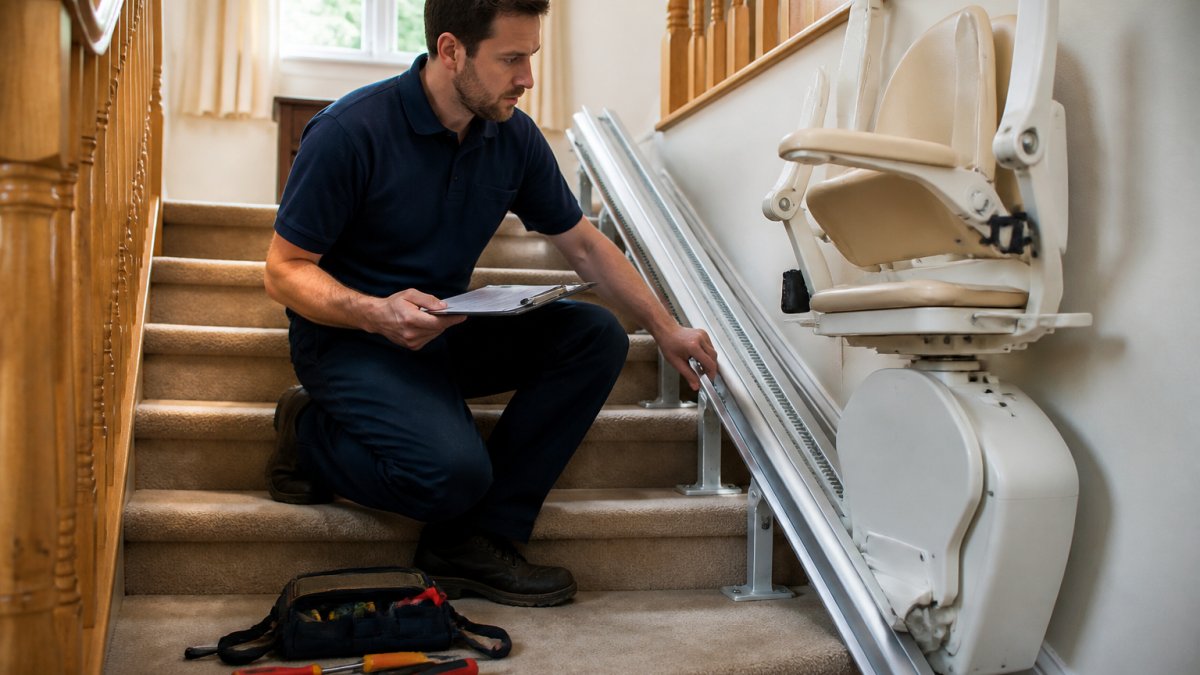
A professional inspection follows a set order so nothing gets missed. The best way to judge a service visit is to know what should happen during it. Below is a consolidated checklist of what a thorough annual inspection typically covers, organized the way many technicians work through a lift. Exact steps vary by manufacturer and model, so treat this as a guide for the conversation, not a universal protocol.
1. Power, Battery, and Charging System
- Confirm the charging contacts at the top and bottom parking positions are clean and making solid contact.
- Check the charge indicator and confirm the lift holds a charge after a full ride cycle.
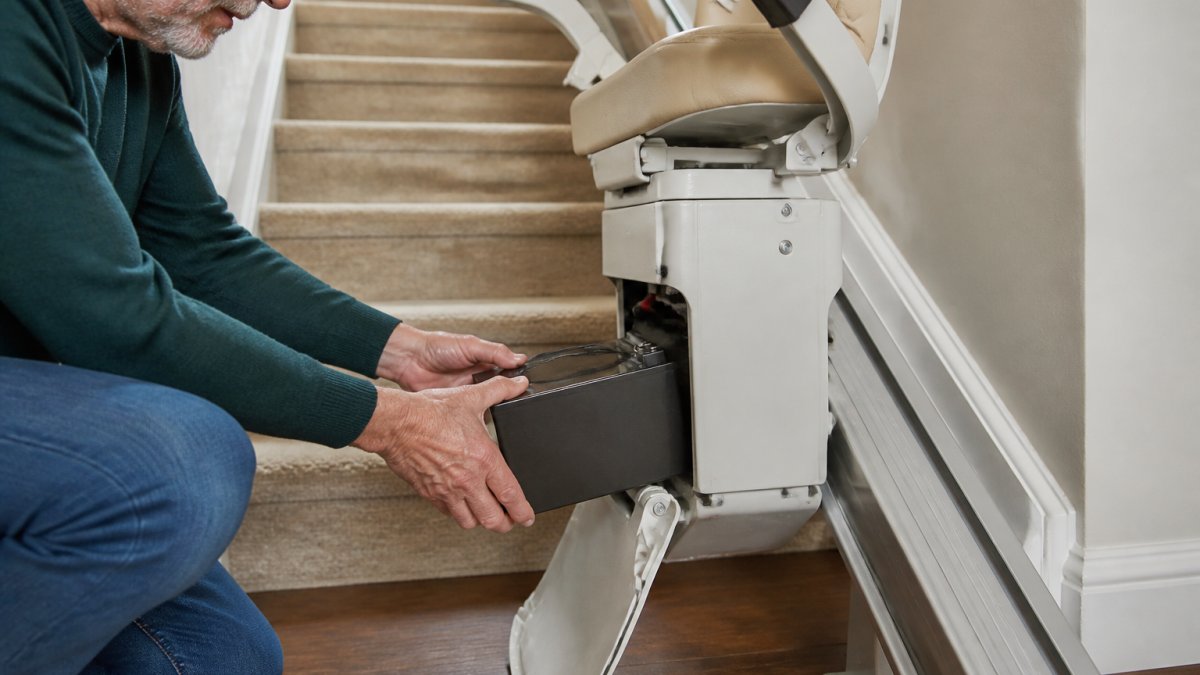
- Test the battery under load, not just at rest, since a battery can read full and still fade under the weight of a rider. If you are weighing whether a battery backup is worth having, see Is a Battery Backup Necessary for Stairlifts?.
- Verify the emergency stop and the call/send controls respond correctly.
- Confirm the charging light behaves as the manual describes (steady, blinking, or off) so you know what "normal" looks like between visits.
2. Track, Rail, and Travel Path
- Inspect the rail for wear, debris, and loose brackets, and confirm the brackets are torqued to the manufacturer's specification.
- Check the travel path for obstructions and confirm the lift moves smoothly from end to end without binding.
- On curved systems, pay closer attention to the joints and the additional moving parts that curved tracks introduce.
- Confirm the lift parks flush at both landings and does not drift or overshoot.
3. Moving Components and Drive System
- Assess the rollers, gear rack, and drive system for wear.
- Listen for grinding, squealing, or clunking during a full up-and-down cycle.
- Confirm lubrication points are serviced per the manufacturer's schedule, since over-lubricating some sealed drives is as harmful as under-lubricating exposed gear racks.
4. Seat, Armrests, Footrest, and Built-In Safety Features
- Check the swivel mechanism and confirm it locks in the riding position.
- Inspect the seatbelt and its anchor point for fraying or looseness.
- Check the upholstery for cracks that can catch clothing.
- Confirm the footrest is secure and does not snag on the stairs.
5. Safety Sensors, Limit Switches, and Obstruction Detection
- Test the obstruction sensor directly by placing an object in the path and confirming the lift stops.
- Confirm the limit switches stop the lift at each end of the track.
- Test the brake and confirm it holds on an incline.
- Verify any seatbelt-interlock or pressure-sensor features function as designed.
6. Documentation and Follow-Up
This is the step owners most often overlook. Ask for a written record of what was checked, what was adjusted, and what was flagged for future attention. Keep those records together. If the same fault appears on two consecutive visits, that pattern is a signal to ask whether a part should be replaced rather than adjusted again. Confirm in writing that any recommended repair was completed, and keep the invoice with the inspection record.
What Owners Can Check vs. What Needs a Technician
What you can check:
- The travel path is clear of clutter
- The charging light is on at the parking spot
- The seatbelt is not frayed
- The lift moves smoothly with no new noise
- The controls respond as expected
What needs a technician:
- Battery load testing
- Brake and sensor calibration
- Track alignment and bracket torque
- Motor and gear inspection
- Any repair or part replacement
A common mistake is tightening or adjusting parts yourself. That can void coverage and throw off the safety settings. For step-by-step guidance on day-to-day use, see our guide to safely using a stairlift.
What You Can Check Yourself vs. What Needs a Technician
What you can check:
- The travel path is clear of clutter
- The charging light is on at the parking spot
- The seatbelt is not frayed
- The lift moves smoothly with no new noise
- The controls respond as expected
What needs a technician:
- Battery load testing
- Brake and sensor calibration
- Track alignment and bracket torque
- Motor and gear inspection
- Any repair or part replacement
A common mistake is tightening or adjusting parts yourself. That can void coverage and throw off the safety settings. For step-by-step guidance on day-to-day use, see our guide to safely using a stairlift.
How Stairlift Maintenance Needs Vary by Model, Use, and Environment
Not every lift needs the same attention, and a fixed calendar date is a starting point rather than a rule. A straight stairlift in a one-person home sees far less wear than a curved unit used by two people all day. Curved tracks have more moving parts, so they tend to need closer checks. The practical question is how to translate those differences into a service interval you can actually follow.
The Factors That Move the Interval
| Factor | Lower Maintenance Need | Higher Maintenance Need |
|---|---|---|
| Track type | Straight | Curved |
| Daily use | A few rides | Constant use |
| Users | One person | Two or more |
| Environment | Climate-controlled | Coastal, dusty, or humid |
| Age of lift | Newer system | Older system |
How to Set an Interval Without Guessing
Manufacturer guidance is the starting point, and your inspection history fills in the rest. If you are unsure, ask the technician to note in the record why a given interval was recommended for your lift.
Warranties, Costs, and the Consequences of Missed Servicing
This is where the math gets real.
On cost, preventive maintenance is generally cheaper than reactive repair, but the difference is not just the part. A breakdown means downtime, a lift you cannot use, and often an emergency service call at a higher rate than a scheduled visit. The larger risk is disruption: a lift that fails while someone is mid-flight is a safety event, not just an inconvenience.
A Note on Records
That is why we set the service interval around your actual use, not a one-size-fits-all rule. Manufacturer guidance is the starting point, and your inspection history fills in the rest.
Stairlift Repair Signs That Should Not Wait for the Annual Visit
Any one of these points to a fault that could affect safe operation. Early detection keeps a small repair from turning into a breakdown, or worse, a fall.
Book Your Stairlift Safety Inspection with CT Stairlifts
Annual inspections are the cheapest insurance you can buy for a lift that carries someone you love. They catch wear early, keep the ride smooth, and give you a record of every check. If you are ready to schedule, start by comparing what each service plan covers with our guide on how to compare stairlift service contracts. Then visit CT Stairlifts to request a free home assessment or call 860 590 5500.
Frequently Asked Questions
What are the benefits of an annual stairlift safety inspection?
An annual inspection catches wear and mechanical faults before they cause a breakdown, confirms the safety sensors and obstruction detection still work, and keeps the stairlift running smoothly. It also gives you a written inspection record and maintenance history, which helps with warranty claims and planning repairs. For anyone who relies on the stairlift to reach every floor, the biggest benefit is confidence that the equipment will work when it is needed.
What stairlift checks can homeowners safely do themselves?
Owners can run simple checks between professional visits: confirm the charging system is working, look for debris on the track and travel path, test the controls at both ends, check that the seatbelt fastens, and listen for unusual noise during a ride. Anything involving the battery condition, moving components, wear assessment, or fault identification should go to a qualified technician. Never attempt repairs or remove covers yourself.
How can you tell if a stairlift needs servicing?
Common stairlift repair signs include jerky or uneven movement, unusual noise, a seat or armrest that feels loose, the lift stopping short of a landing, slow charging or a battery that drains quickly, and safety sensors that fail to stop the lift when something is in the travel path. If any of these appear, stop using the stairlift and call for service rather than waiting for the next annual inspection.
Does a stairlift need maintenance if it is used only occasionally?
Yes. Stairlifts that sit idle still suffer battery drain, dust on the track, and stiffened moving components. Manufacturer guidance usually sets a service interval regardless of frequency of use, and an annual inspection keeps the warranty valid. Tell your technician if the lift is rarely used so they can pay extra attention to the battery and charging system during the visit.
Your stairlift should be the most reliable thing in your home, not the thing you worry about. At CT Stairlifts, we install Harmar straight and curved stairlifts and help homeowners keep them running safely with licensed, insured service and a free home assessment. Get started with CT Stairlifts and regain safe access to every floor of your home.