 comparison
Stairlift vs Home Elevator: Comparison Guide
Table of Contents
- Stairlift vs Home Elevator: Overview and Key Differences
- How Stairlifts Work and What They Offer
- How Home Elevators Work and Their Accessibility Advantages
- Installation Requirements and Home Modifications
- Cost of Home Elevator Installation vs Stairlift Pricing
- Safety Features, ADA Compliance for Residential Elevators, and Power Backup
- Stairlift Maintenance Requirements and Long-Term Reliability
- Resale Value Impact and Making Your Decision
- Frequently Asked Questions
Last Updated: October 3, 2026
Stairlift vs Home Elevator: Overview and Key Differences
A stairlift vs home elevator decision affects independence, safety, and how you age in place. The choice fundamentally changes how you navigate your home.
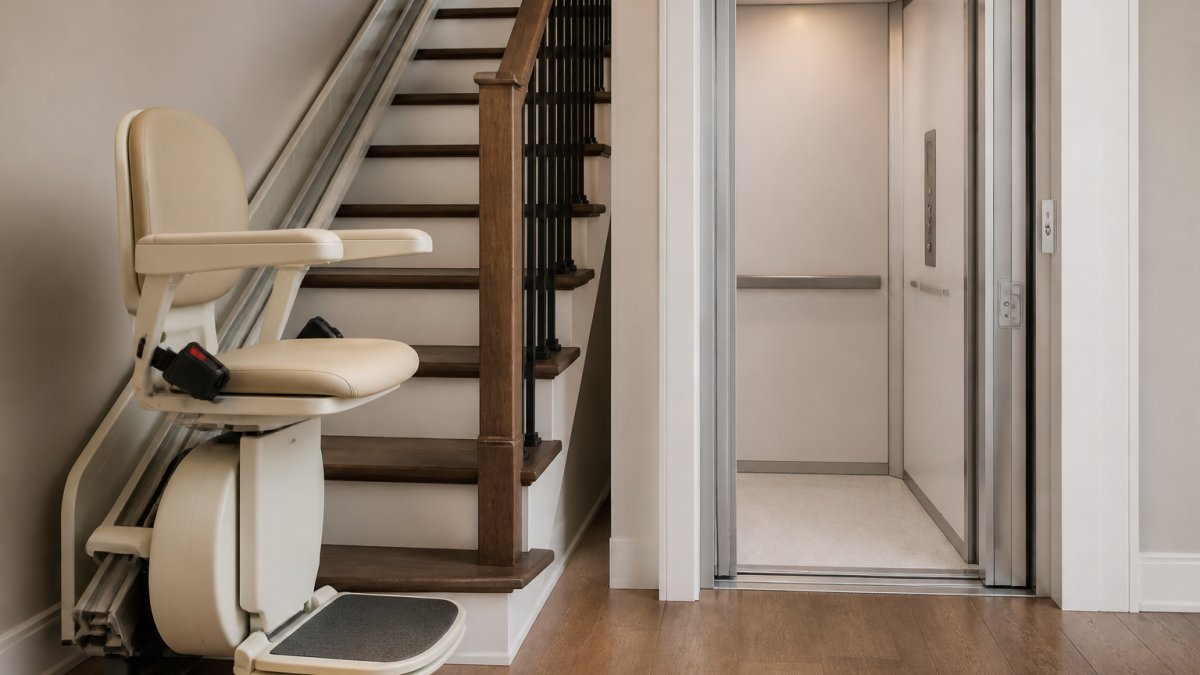
The core difference is straightforward: a stairlift carries you up the stairs while seated, whereas a home elevator is a separate compartment that moves vertically through a shaft. One fits your existing staircase; the other requires significant structural modification.
Stairlifts work for people who can transfer in and out of a seat; home elevators accommodate wheelchairs, walkers, and multiple passengers. A stairlift takes days to install; an elevator takes weeks or months.
The right choice depends on your mobility needs, home layout, and budget. If you're recovering from surgery with expected full recovery, a stairlift makes sense. If you use a wheelchair permanently, an elevator is essential. If your stairs are narrow or curved, a stairlift may not fit; an elevator or platform lift becomes necessary.
This guide covers both options in depth, including installation requirements, safety features, maintenance, and the real financial impact on your home's resale value.
How Stairlifts Work and What They Offer
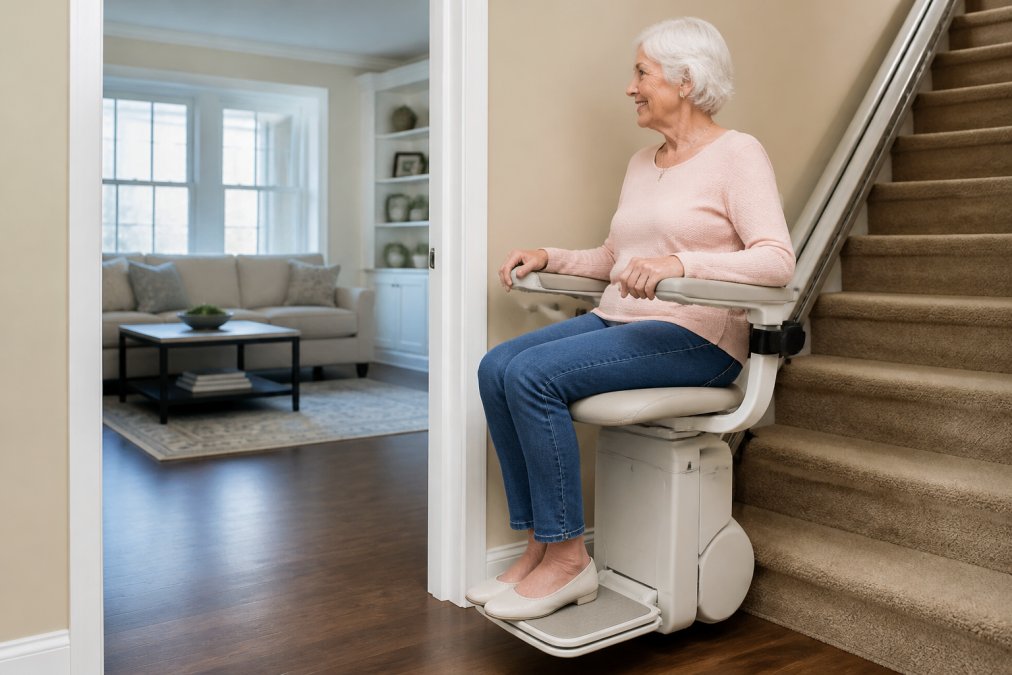
A stairlift is a motorized seat attached to a rail running along your staircase. You sit, fasten a safety belt, and press a button. The seat ascends or descends following the stair contour, then you step off at the landing.
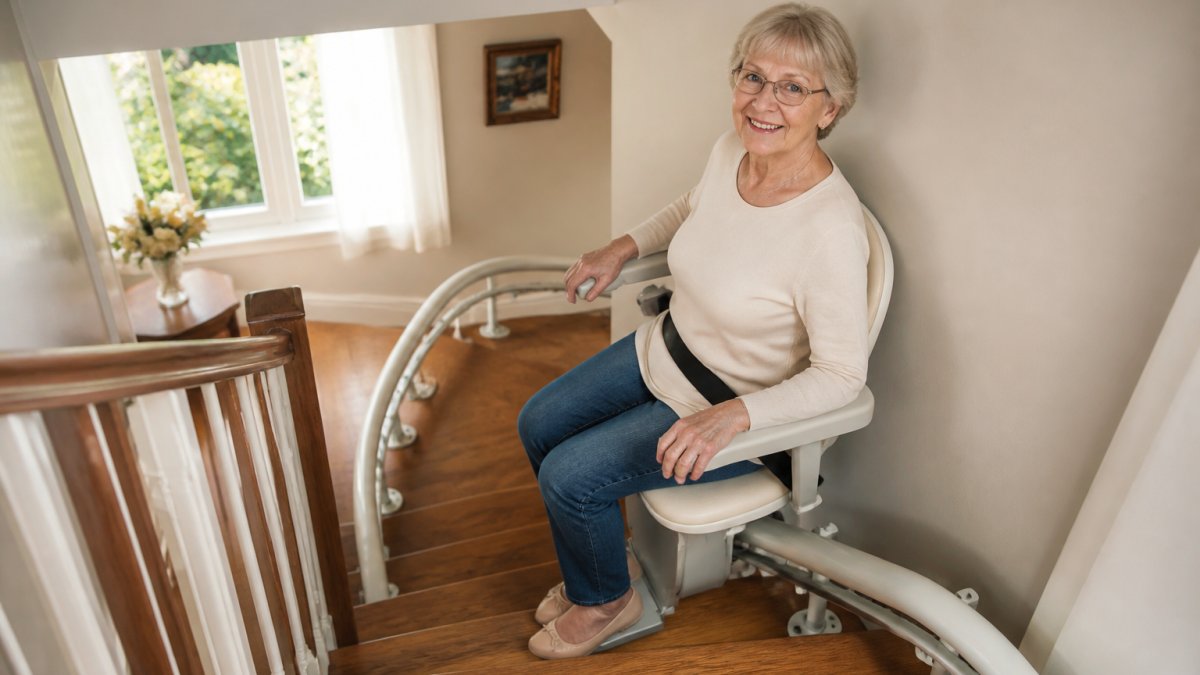
Stairlifts let you stay in your home without climbing stairs. The seat folds up when not in use, keeping your staircase open and accessible to other family members.
Most stairlifts include battery backup for power outages. Safety sensors detect obstructions and stop the lift automatically. Armrests, footrests, and adjustable speed support safe transfers.
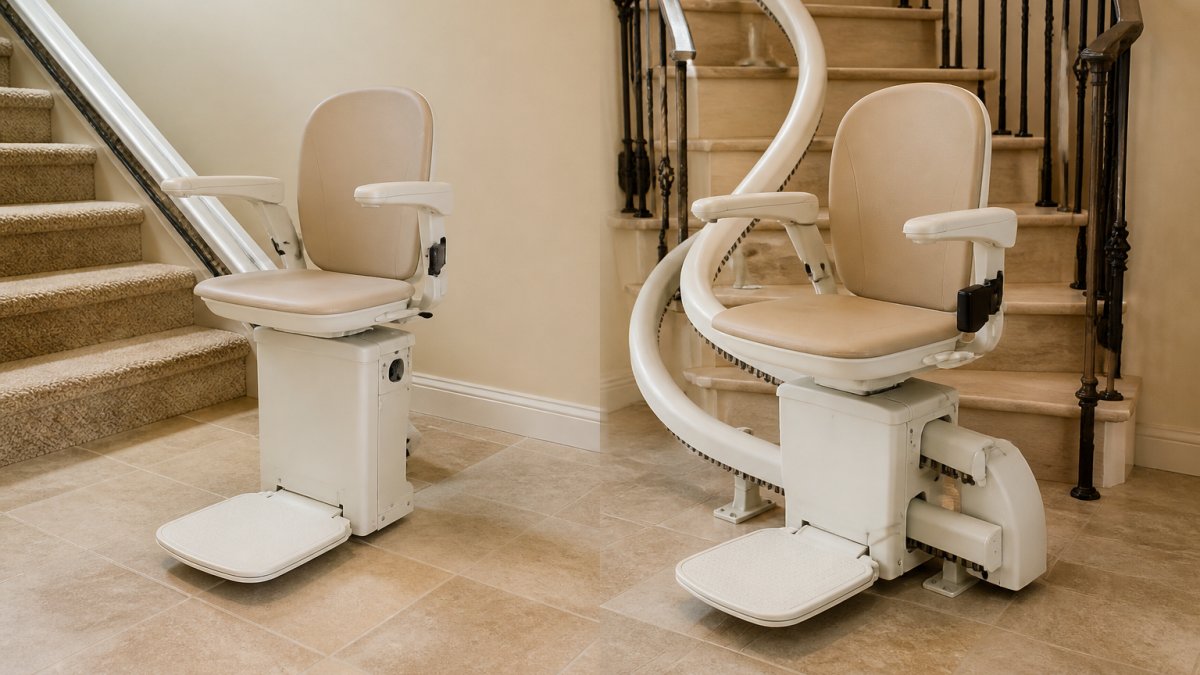
Stairlifts come in straight-rail models for staircases without turns and curved-rail models for stairs with landings or bends. Curved rails require custom fabrication, increasing cost and installation time.
Weight capacity typically ranges from 250 to 300 pounds. If you use a wheelchair or heavy mobility device, you'd need a platform lift or elevator instead.
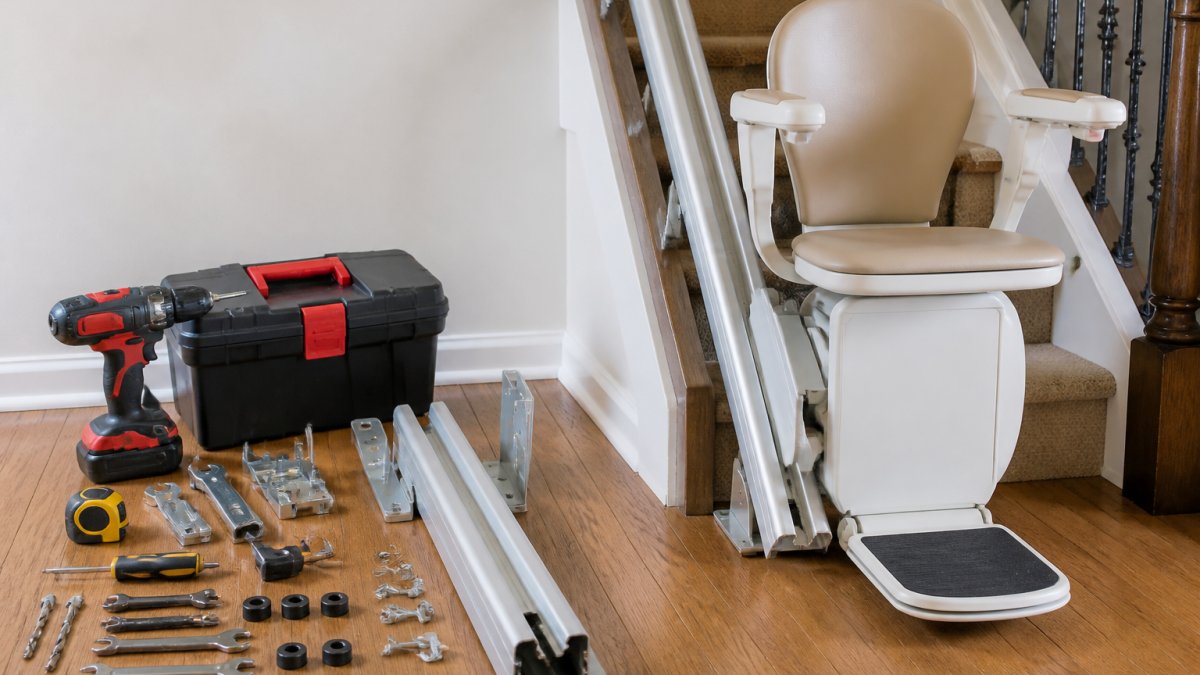
Installation is non-invasive. Technicians mount the rail using brackets attached to stair treads or stringers with no structural modifications required.
How Home Elevators Work and Their Accessibility Advantages
A home elevator is a self-contained compartment that moves vertically through a shaft. You step inside, select your floor, and the cabin rises or descends smoothly. Multiple people and wheelchairs fit comfortably inside.
Home elevators provide full accessibility without transferring from a mobility device. You can carry groceries, laundry, or furniture between floors, and a caregiver can ride with you.
Hydraulic systems and winding drum drives power most residential elevators. Hydraulic models use fluid pressure for smooth, quiet operation; winding drum systems use cable and motor and are more compact.
Leading manufacturers design cabins with customizable finishes and door styles, supporting wheelchair access and automatic operation with safety interlocks. Load capacity typically exceeds 1,000 pounds.
Pneumatic vacuum elevators use air pressure instead of cables or hydraulics, requiring no pit or machine room, ideal for retrofitting. However, they have lower weight and size capacity than traditional hydraulic elevators.
Platform lifts occupy a middle ground between stairlifts and full elevators, transporting wheelchairs or scooters between levels. They don't require a full elevator shaft, making them suitable for porches, decks, or interior floor transitions.
Installation Requirements and Home Modifications
Stairlift installation is straightforward. No structural work is needed, though your staircase must be structurally sound.
Home elevator installation is complex and invasive. You need a dedicated shaft running through multiple floors. Creating this shaft requires cutting through floors, walls, and potentially the roof. Structural engineers must verify your home can support the additional weight and stress.
Most residential elevators require a pit (a recessed area beneath the ground floor) with typical depth of 3 to 5 feet. Shallow basements or concrete slab foundations make pit digging expensive or impossible. Pneumatic vacuum elevators eliminate the pit requirement but cost more and have weight limitations.
Machine rooms house the motor, pump, and control systems. Traditional hydraulic elevators need a dedicated 8-by-8-foot machine room; winding drum systems are more compact. Pneumatic elevators integrate machinery into the unit, saving space but reducing weight capacity.
Building permits are mandatory for elevators. Local codes govern shaft dimensions, door width, cabin size, and safety systems. Permit timelines typically add two to eight weeks to your project.
Platform lifts require less structural work than full elevators, needing only a solid foundation and dedicated footprint on each level. Installation usually takes one to two weeks.
Cost of Home Elevator Installation vs Stairlift Pricing
Stairlift pricing usually covers the unit and installation. Elevator pricing often excludes permit fees, structural engineering, shaft construction, and electrical upgrades, additional costs that vary dramatically by home.
Some insurance plans cover mobility equipment; stairlifts are more commonly covered than elevators. Medicare does not cover either. Veterans may qualify for VA grants. Tax deductions are possible with healthcare provider documentation; consult a tax professional.
Renting a stairlift costs significantly less than buying for temporary recovery needs. Home elevators are almost never rented due to installation costs.
A stairlift can be removed when you sell, leaving no permanent mark. A home elevator is permanent. In some markets, an elevator increases home value for aging-in-place buyers; in others, it narrows your buyer pool. Location, buyer demographics, and local trends determine whether an elevator adds or subtracts value.
Safety Features, ADA Compliance for Residential Elevators, and Power Backup
Stairlifts include safety sensors that detect obstructions and stop immediately, manual overrides via handheld remote or wall button, seat belts, and armrests and footrests for stability.
Battery backup is standard, allowing the lift to descend to the nearest landing if power fails. Test your battery regularly.
For residential elevators in private homes, ADA compliance is not legally required, but many homeowners follow ADA guidelines for future accessibility, which specify minimum cabin width (36 inches), door opening (32 inches), and handrail heights.
Residential elevator safety systems include automatic doors that prevent entry if the cabin isn't aligned with the landing, emergency brakes that stop the cabin if the cable fails, and backup power systems. Modern elevators have redundant safety controls, if one system fails, others take over.
Power outage contingency is critical. Most residential elevators have battery backup that allows the cabin to descend to the nearest landing and open the doors. Pneumatic vacuum elevators automatically descend when power fails because the vacuum seal releases. This passive safety feature is a significant advantage in areas prone to power outages.
Stairlifts undergo load testing to verify they safely carry users at rated weight capacity. Elevators are inspected annually by certified inspectors who verify mechanical operation, electrical safety, and emergency systems.
Stairlift Maintenance Requirements and Long-Term Reliability
Stairlifts are mechanically simple, which translates to low maintenance costs. Annual inspections are recommended, a technician checks the rail for debris, tests the battery backup, verifies safety sensors, and lubricates moving parts.
Battery replacement is the most common maintenance expense. Stairlift batteries last 5 to 7 years before losing capacity. If your stairlift uses a standard 24-volt system, you might find aftermarket batteries at lower cost, though OEM batteries ensure compatibility.
Rails accumulate dust and debris over time, especially on curved sections. Periodic cleaning, wiping the rail with a dry cloth, prevents buildup that could interfere with the seat carriage. You can do this yourself or request it during annual service.
Mechanical wear is minimal if the lift is used regularly and properly maintained. Bearings, motors, and drive mechanisms are designed for decades of use. Most stairlifts remain functional for 15 to 20 years with routine maintenance.
Home elevator maintenance is more demanding. Annual inspections are legally required in most jurisdictions. Inspectors check hydraulic fluid levels, verify brake operation, test safety interlocks, and inspect cables or drum systems.
Hydraulic fluid needs periodic replacement, typically every 5 to 10 years, depending on usage and fluid condition. Worn seals and pumps eventually fail and require replacement at significant cost.
Elevator reliability is generally high when maintenance is current. However, a major component failure, a pump, motor, or control board, can be costly to repair. Over a 20-year lifespan, expect to budget for at least one significant repair.
Platform lifts fall between stairlifts and elevators in maintenance complexity. Annual inspections and battery replacement follow the stairlift model. Hydraulic platform lifts require fluid checks and occasional seal replacement, similar to elevators but at lower cost.
Resale Value Impact and Making Your Decision
A stairlift is a temporary modification. When you sell your home, you can remove it, leaving your staircase unchanged. The equipment has residual value, offsetting some of your cost. For most homeowners, a stairlift doesn't significantly impact resale value because it's not a permanent feature.
A home elevator is permanent. It increases usable square footage and appeals to older buyers or those with mobility limitations. In markets with aging populations or strong demand for accessible homes, an elevator can add to resale value.
To assess resale impact in your area, talk to local real estate agents. They understand buyer preferences and can estimate whether an elevator would appeal to future purchasers. If you're planning to stay in your home long-term, resale value matters less than your current quality of life.
Psychological transition matters, too. Some people resist mobility aids initially, viewing them as a loss of independence. In reality, a stairlift or elevator preserves independence by letting you stay in your home safely.
Making the decision requires honest assessment of your mobility needs. Can you transfer safely from a stairlift seat? Do you use a wheelchair or walker that requires the full accessibility of an elevator? How many floors do you need to access regularly? Is your staircase straight or curved?
Consider your timeline. If you're recovering from surgery with a clear end date, renting a stairlift makes sense. If your mobility limitations are permanent or progressive, buying equipment that meets your long-term needs is more cost-effective.
Consult with a healthcare provider if you're unsure. Physical therapists can assess your transfer ability and recommend appropriate solutions. Occupational therapists can evaluate your home layout and suggest modifications that work with your lifestyle.
CT Stairlifts specializes in helping homeowners like you navigate this decision. We assess your specific staircase, discuss your mobility goals, and recommend solutions that fit your home and budget.
Frequently Asked Questions
Why are stairlifts not covered by Medicare?
Medicare classifies stairlifts as convenience devices rather than medically necessary equipment. Coverage depends on whether a medical condition prevents you from safely using stairs without assistance. Your doctor must document that the stairlift addresses a specific mobility limitation. Some private insurance plans or Medicaid programs may offer partial coverage. Contact your insurance provider and speak with your physician about documenting medical necessity if you believe your situation qualifies.
What is the cost difference between a stairlift and a home elevator?
The final cost of home elevator installation depends on shaft requirements, structural modifications, cab customization, and your home's layout. Stairlift pricing varies based on whether your stairs are straight or curved. For current pricing and a personalized quote, contact CT Stairlifts directly to discuss your specific needs and home configuration.
Which mobility solution is better for wheelchair users?
Home elevators are the best choice for wheelchair users because they accommodate the chair's footprint and weight capacity. Stairlifts require users to transfer from their wheelchair to the seat, which may not be feasible for everyone. Platform lifts offer a middle option, lifting both user and wheelchair vertically without requiring a full elevator shaft. If wheelchair accessibility is your priority, a home elevator provides the most independence and safety for long-term aging in place.
What happens to a stairlift during a power outage?
Most modern stairlifts include battery backup systems that allow you to reach the top or bottom of the stairs safely during a power outage. The battery provides enough power for several trips before needing recharge. Home elevators also typically have battery backup, though capacity depends on the system design. Battery-powered stairlifts ensure you maintain mobility even when the power is down. Ask your installer about battery specifications and backup duration for your specific model.
The choice between a stairlift and home elevator shapes how you'll move through your home for years to come. Both solutions enable aging in place and maintain independence, they just work differently and carry different costs. At CT Stairlifts, we help homeowners in Connecticut evaluate their options and find the mobility solution that fits their specific needs, home layout, and budget. Contact us today for a free assessment of your home and a personalized recommendation.