 comparison
Stairlift vs Home Elevator for Seniors: 2026 Guide
Table of Contents
- Stairlift vs Home Elevator for Seniors: Quick Comparison
- What Is a Stairlift and Who Is It For?
- What Is a Home Elevator and When Does It Make Sense?
- The Stairlift Installation Process: What to Expect
- Cost of Home Elevator Installation vs Stairlift Pricing
- ADA Compliance for Residential Elevators: What Homeowners Need to Know
- Space, Structural Requirements, and Home Resale Value
- Which Option Offers Better Long-Term Value for Seniors?
- Frequently Asked Questions
Last Updated: September 14, 2026
Stairlift vs Home Elevator for Seniors: Quick Comparison
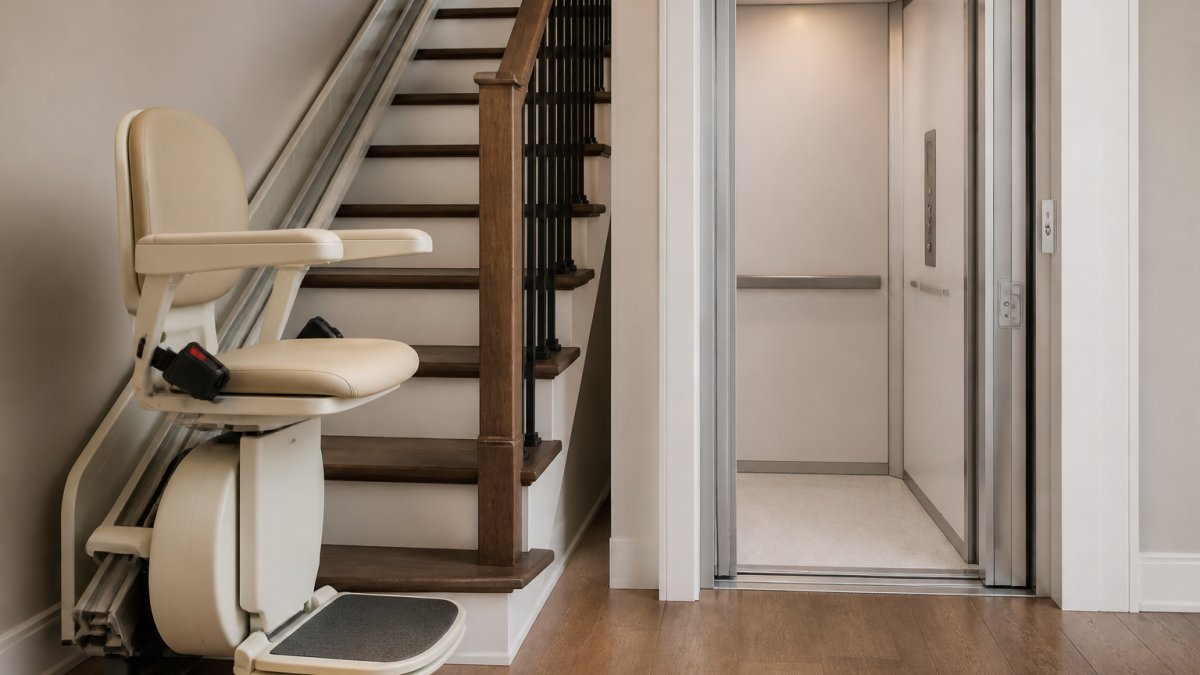
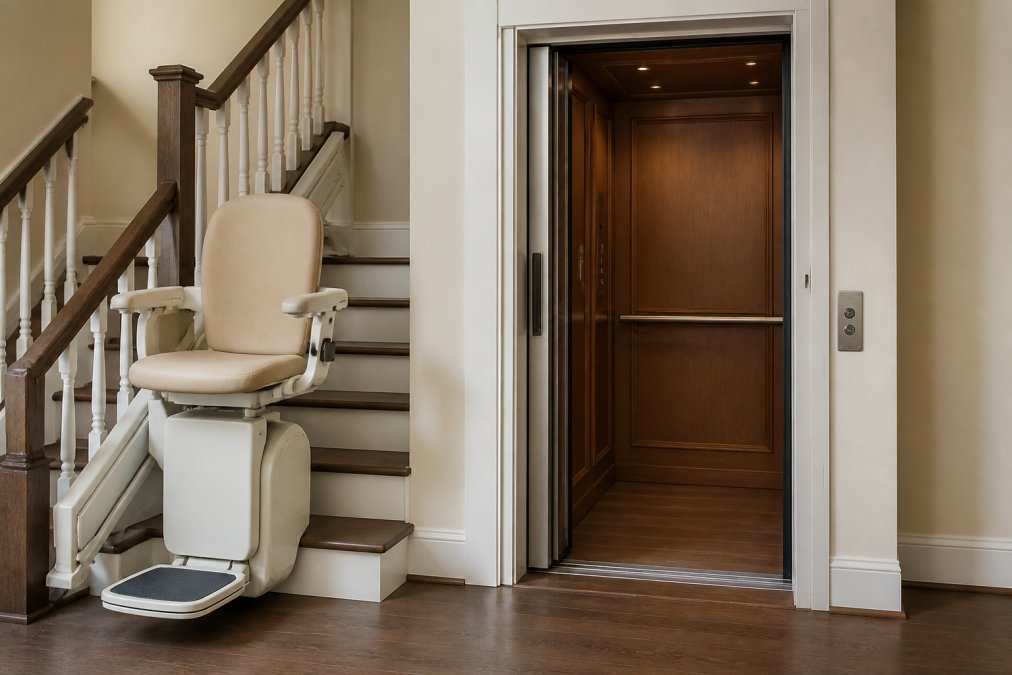
Choosing between a stairlift vs home elevator for seniors comes down to three factors: staircase layout, budget, and space. A stairlift moves one person seated along the stairs; a home elevator moves a wheelchair, a walker, or several people between floors in an enclosed cab. This comparison from CT Stairlifts covers installation, cost, ADA rules, and long-term value.
A stairlift is a motorized chair on a rail that carries one seated passenger up and down a single staircase. A home elevator moves people or equipment between floors inside a cab or platform.
The short answer: if you can still transfer into a seat and your stairs are usable, a stairlift solves the problem for a fraction of the cost and disruption. If you use a wheelchair full-time or need to move between three or more floors, an elevator is the more complete solution.
| Factor | Stairlift | Home Elevator |
|---|---|---|
| Typical footprint | Rail along the staircase | Dedicated shaft or closet space |
| Seating | One seated user | Wheelchair and multiple passengers |
| Structural work | Minimal | Significant |
| Best for | Straight or curved stairs, one to two floors | Multi-floor homes, wheelchair users |
| Installation timeline | Usually days | Usually weeks to months |
What Is a Stairlift and Who Is It For?
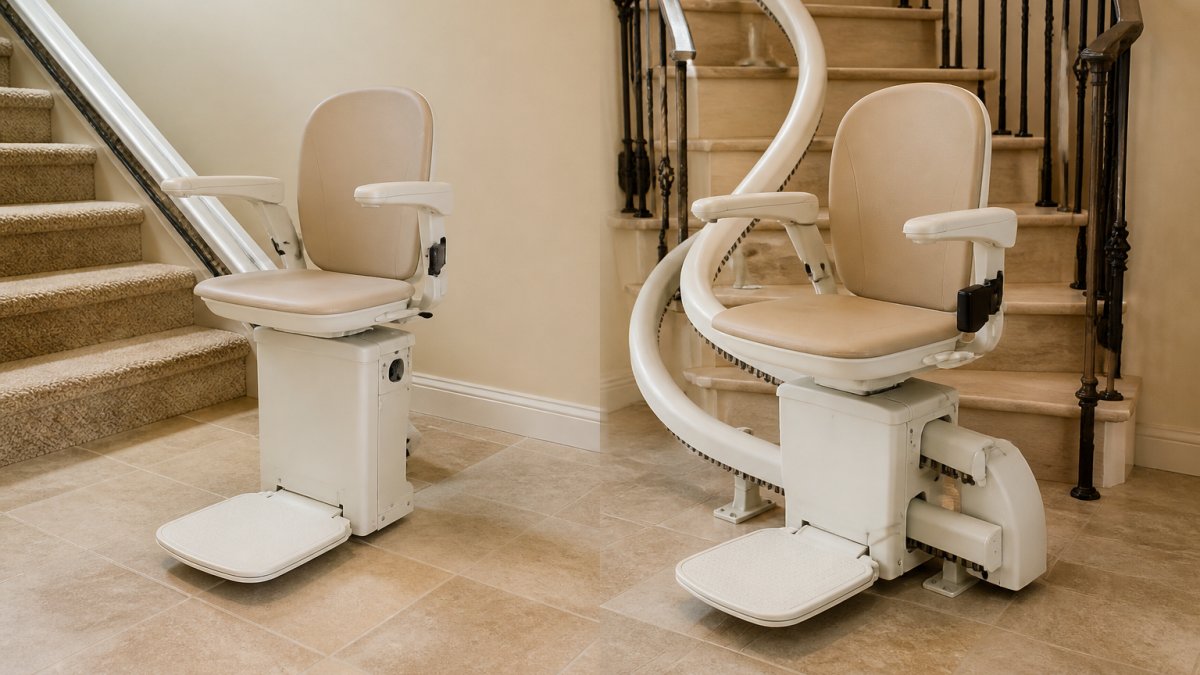
A stairlift is built around a single stairway. A rail is fixed to the treads or wall, and a motorized chair carries one person seated and facing forward. Most models run on battery power, so the lift works during an outage.
Stairlifts suit homeowners who can still stand and pivot into a seat, including people managing arthritis, chronic conditions, or surgery recovery. Straight-run stairs are simplest and cheapest to fit; curved stairways need a custom rail, which takes longer to build and install.
Narrow stairs can often still fit a stairlift: the rail hugs the staircase rather than taking floor space, keeping your hallway clear.
What Is a Home Elevator and When Does It Make Sense?
A home elevator, or residential elevator, is a permanent system that moves people and equipment between floors without stairs. It needs its own footprint: a shaft, a closet conversion, or a platform in a hoistway.
An elevator makes sense when a stairlift cannot do the job: if you use a wheelchair full-time, need to move between three or more floors, carry heavy equipment like a walker or oxygen tank, or live with more than one person who has mobility needs.
The trade-off is space and money. A residential elevator requires structural modification, and home elevator installation costs substantially more than a stairlift. Some layouts cannot accommodate a shaft without major renovation.
The Stairlift Installation Process: What to Expect
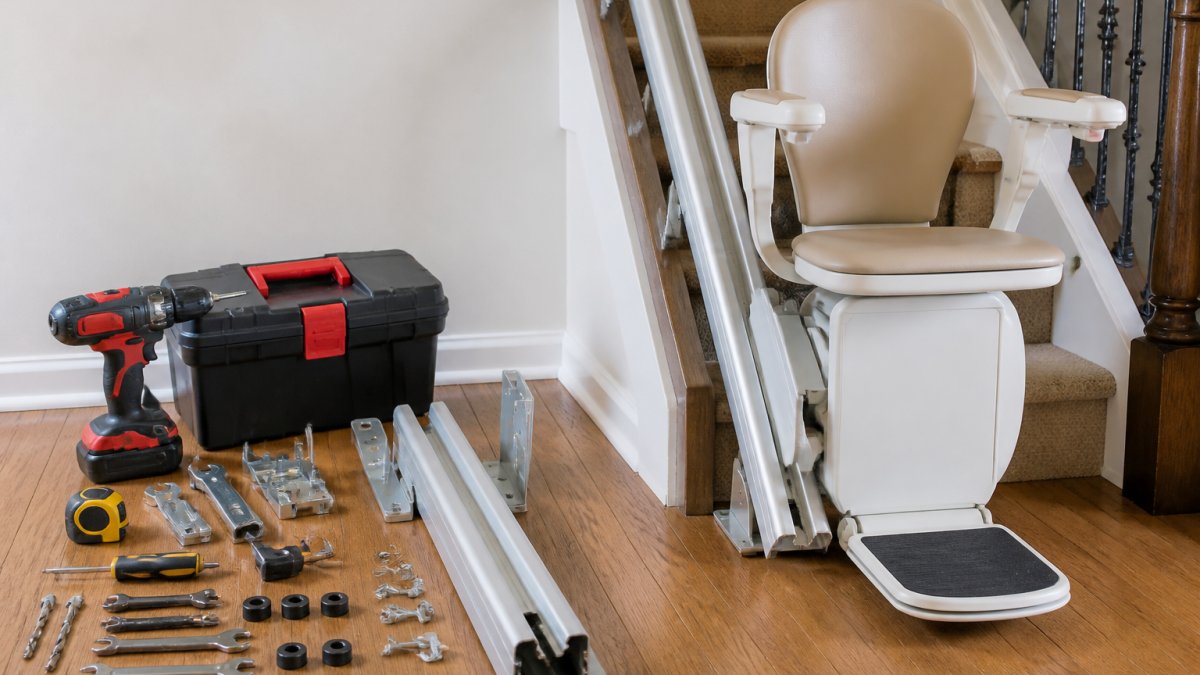
Most straight-rail stairlift installations finish in a single day, often within hours: a technician surveys the staircase, mounts the rail, attaches the chair, and tests the full run. Curved rails are custom-built, so expect a longer lead time.
Here is what the process typically looks like:
- In-home assessment. A technician measures the staircase, checks for obstructions, and confirms the rail path.
- Rail fabrication. Straight rails are often ready quickly; curved rails are custom-built to your stairway.
- Installation. The rail is fixed in place, the chair is mounted, and power is connected.
- Testing and handover. The technician runs the lift, checks the safety sensors, and shows you how to use it.
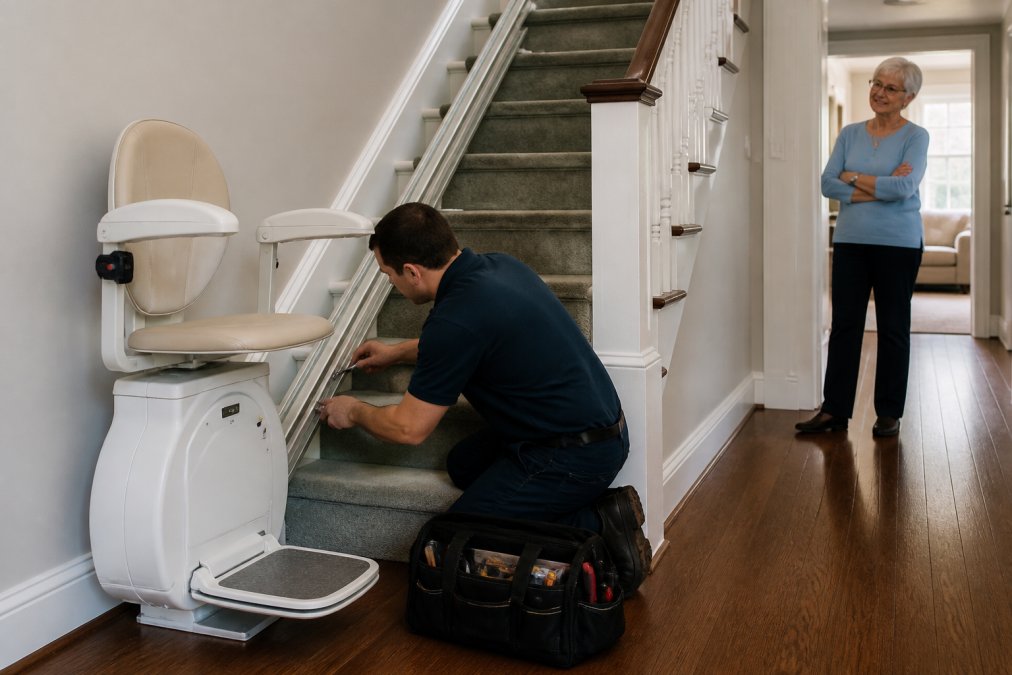
Most homeowners are surprised by how little mess the job creates: no demolition, no drywall removal, and no need to move out.
Cost of Home Elevator Installation vs Stairlift Pricing
Cost is the biggest reason families pick a stairlift over an elevator, but both are quoted per home. Understand the cost structure so you know which line items to question when a quote lands.
Stairlift cost drivers
- Staircase shape. A straight run is the baseline; a curved, multi-landing, or switchback staircase needs a custom rail, the largest cost multiplier.
- Rail length and configuration. Longer runs and outdoor installations add material and labor.
- Power and charging. Most units run on battery with a charging station, so a nearby outlet is usually the only electrical requirement.
- Features. Powered swivel seats, folding rails, and perching seats add cost but matter for narrow hallways and limited mobility.
- Refurbished vs. new. Refurbished straight-rail units cut the upfront number; ask what warranty transfers.
Home elevator cost drivers
- Hoistway construction. A shaft, closet conversion, or pit dominates the cost, often more than the equipment itself.
- Drive system. Winding drum, hydraulic, and machine-room-less traction systems carry different equipment and service profiles.
- Cab finish and size. Custom cabs, wheelchair-width doors, and finished interiors push the number up.
- Electrical. A dedicated circuit and often a dedicated disconnect are typical.
- Permits and inspections. Residential elevators generally require a permit and inspection, sometimes periodic thereafter.
Rental vs. purchase
If the need is temporary, a knee replacement, hip repair, a few months of recovery, a stairlift rental bridges the gap without a permanent commitment. Ask about minimum rental period, whether installation and removal fees are included, whether payments apply toward a purchase, and who owns the rail if you buy. For a permanent need, purchase usually wins on total cost; for a short-term need, rental often does.
Insurance, Medicare, and tax treatment
This is where the real money questions live.
- Medicare. Original Medicare (Part B) covers medically necessary durable medical equipment (DME) used in the home, but stairlifts and home elevators are generally treated as home modifications, not DME, and are typically not covered (Durable Medical Equipment Coverage). Confirm current rules directly.
- Medicaid. Coverage is state-by-state. Some states offer home- and community-based services waivers that can fund accessibility modifications, including stairlifts, for eligible beneficiaries. Eligibility and waitlists vary widely.
- Private insurance. Rarely covers either device, but some long-term care policies and Medicare Advantage plans include home modification benefits. Read the plan documents.
- Veterans. The VA has programs that assist with home modifications and mobility equipment for eligible veterans, one of the most underused funding paths.
- Tax treatment. Medically necessary home modifications may be deductible if they exceed the applicable adjusted gross income threshold. A home elevator or stairlift installed for a medical reason may qualify in whole or in part. Talk to a tax professional.
The cost-benefit bottom line
For a single staircase and a user who can transfer into a seat, a stairlift delivers most of the daily benefit for a fraction of the investment, and it is removable. An elevator earns its cost when it replaces the stairs entirely, serves a wheelchair user, or covers multiple floors daily. Neither pays you back at closing, both are quality-of-life purchases, and the right one matches your mobility level and timeline.
ADA Compliance for Residential Elevators: What Homeowners Need to Know
ADA compliance for residential elevators is a common point of confusion. The Americans with Disabilities Act sets standards for public and commercial buildings, not private homes (Americans with Disabilities Act Title II Regulations). A single-family residence is generally not covered, so a home elevator does not have to meet commercial accessibility standards.
That said, some state and local building codes do regulate residential elevators, and manufacturers often build to accessibility-friendly dimensions anyway. For a private residence, check with your local building department and confirm what your state requires before you commit to a design. The ADA National Network's guidance on the ADA and private homes explains that the ADA's public-accommodation rules do not extend to private residences.
Space, Structural Requirements, and Home Resale Value
Space and structure are where the two options stop being comparable. A stairlift adapts to the staircase you already have; an elevator requires a new vertical shaft, and in older houses, that is where projects stall.
Stairlift space and structural profile
- Footprint. The rail follows the staircase; the chair folds flat against the wall, so the hallway stays usable.
- Structural load. Minimal. The rail anchors to the treads or wall, distributing load along the staircase.
- Electrical. A standard outlet near one end of the rail is usually the only requirement, no dedicated circuit or panel upgrade in most cases.
- Stair width. Narrow staircases are usually workable, but a powered swivel or perching seat may be needed for a safe transfer at the top landing.
- Obstructions. Door swing, a tight newel post, or a mid-run landing can change the rail path and price.
Home elevator space and structural profile
This part decides whether an elevator is even possible in your home.
- Hoistway. You need a shaft, converted closet, or framed hoistway, dedicated square footage on every floor it serves.
- Pit. Many residential elevators require a pit below the lowest landing; on a slab, that means cutting concrete. Some machine-room-less designs reduce or eliminate the pit, confirm the model's requirement.
- Overhead clearance. Minimum headroom above the top landing is typically required. A finished attic or low roofline can rule out a location.
- Load-bearing capacity. The shaft and equipment add concentrated weight, often requiring reinforcement, sistered joists, or a new frame. A structural engineer's assessment is a common first step.
- Electrical. A dedicated circuit is standard and a dedicated disconnect often required. If your panel is full, budget for a service upgrade.
- Landing clearances. Each floor needs a clear path and door swing clearance; a hallway fine for walking can be too tight for a wheelchair turning radius.
- Permits and inspection. A residential elevator generally requires a permit, sometimes periodic inspection. Budget time for approval, not just the build.
Home resale value
Neither option is a guaranteed financial win; the resale math differs.
- Stairlift. Removable and reversible. It rarely affects a sale and can be taken with you or sold. The main risk is a buyer seeing the rail as clutter during showings, most sellers remove it before listing.
- Home elevator. A permanent fixture. It can be a strong selling point for a buyer with mobility needs or a multigenerational household, but it narrows the buyer pool and adds a maintenance item in disclosures. Ask a local real estate professional how elevators are treated in your market before treating the cost as recoverable.
The structural bottom line
A stairlift is a retrofit; a home elevator is a construction project. An older home, slab foundation, finished attic, or full electrical panel are the red flags that decide the question before cost enters the conversation.
Which Option Offers Better Long-Term Value for Seniors?
For most seniors who can still transfer into a seat and live in a one- or two-story home, a stairlift delivers better long-term value: it costs less, installs faster, requires less structural work, and keeps you in the home you know. That is the core of aging in place.
A home elevator wins when the stairs are unusable, a wheelchair is involved, or multiple floors are in daily use, the higher upfront cost buys independence a stairlift cannot match.
If you are weighing rental or purchase, ask directly. Many homeowners recovering from surgery need help for only a few months, and a rental can bridge that gap without a full commitment. A reputable installer will walk you through both.
The deciding question is simple: can you get into a seat and ride, or do you need to stay in your wheelchair? Answer that honestly, and the choice usually makes itself.
Frequently Asked Questions
What are the downsides of having a stairlift?
Stairlifts require you to transfer from a wheelchair or walker onto the seat, which can be difficult for some users. They also occupy part of the staircase, limiting space for others. Curved staircases need custom rails that cost more and take longer to install. Battery backup handles short outages, but the lift will not run indefinitely without power. Maintenance contracts keep the unit reliable over time.
How much space is required for a home elevator versus a stairlift?
A home elevator needs a dedicated shaft or closet space, often 3 to 5 feet square, plus structural reinforcement and a pit or machine room depending on the drive system. A stairlift mounts directly to the stair treads or wall and uses the existing staircase, so it takes up far less room. For homes with narrow hallways or limited floor space, a stairlift is usually the more practical fit.
Are there specific building code requirements for home elevator installations?
Residential elevators must comply with ASME A17.1 and local building codes, which cover cab size, door interlocks, emergency lowering, and inspection schedules. ADA compliance for residential elevators is not federally mandated for private homes, but the standards provide useful guidance for accessibility. Always confirm requirements with your local building department and a licensed installer before committing to a design.
Which mobility solution offers better long-term value for seniors?
It depends on your mobility level and home layout. A stairlift costs less upfront and installs in a day, making it a strong choice for those who can still transfer independently. A home elevator costs significantly more but supports wheelchair users and adds resale value in multi-story homes. Factor in maintenance, insurance, and how long you plan to stay in the home.
Can a stairlift be installed on any type of staircase?
Straight staircases are the simplest and least expensive to fit. Curved, narrow, or unusually shaped staircases require custom rails, which increase both cost and installation time. A site assessment determines whether your staircase can accommodate a stairlift or whether a home elevator is the better option. Most reputable installers offer a free evaluation to confirm fit before you buy.
The real challenge is not picking a product; it is knowing which one fits your stairs, your body, and your budget without guesswork. CT Stairlifts specializes in stairlift installation designed to help you regain access to every floor of your home, with assessments tailored to your staircase and your mobility needs. If you want a clear, no-pressure answer on whether a stairlift is right for you, get started with CT Stairlifts and take back the run of your whole house.