 how-to
Stairlift Maintenance Tips for Owners: A 2026 Guide
Table of Contents
- Why Regular Stairlift Maintenance Matters for Safety and Reliability
- Weekly Stairlift Maintenance Tips: Cleaning the Rail and Track
- Battery Care and Charging Habits That Extend Lifespan
- How Often Should a Stairlift Be Serviced by a Professional?
- Troubleshooting Common Stairlift Issues Before Calling for Help
- Understanding Stairlift Safety Features During Power Outages
- Seasonal Maintenance Checklist and Knowing Your DIY Limits
- Conclusion: Protect Your Investment with a Simple Routine
- Frequently Asked Questions
Last Updated: September 9, 2026
Why Regular Stairlift Maintenance Matters for Safety and Reliability
A stairlift is a significant investment in home safety, and regular stairlift maintenance is the single most important factor in protecting that investment. Consistent upkeep prevents breakdowns, ensures smooth operation, and extends the life of your equipment.
Many owners assume these machines are maintenance-free, but like any mechanical system, they require attention to moving parts, electrical components, and safety mechanisms.
Stairlift maintenance is the routine care and inspection of a stairlift's mechanical, electrical, and safety systems to ensure safe and reliable operation. This includes cleaning, battery care, and professional servicing.
Below, we'll walk through the exact steps you should take weekly, monthly, and annually to keep your lift in peak condition, plus when to call a professional versus when a DIY fix is appropriate.
Weekly Stairlift Maintenance Tips: Cleaning the Rail and Track
The most common cause of stairlift malfunctions is debris buildup on the track. Dust, pet hair, and carpet fibers accumulate on the rail and interfere with the carriage's movement, so a quick weekly wipe-down prevents most issues.
Use a dry, lint-free cloth to wipe the full length of the rail and track. For stubborn residue, slightly dampen the cloth with water or a mild household cleaner. Avoid abrasive cleaners, which can damage the rail's finish and affect the carriage's glide. Never use oil-based lubricants on the track unless the manufacturer explicitly recommends them, as these attract more dust and create a sticky film.
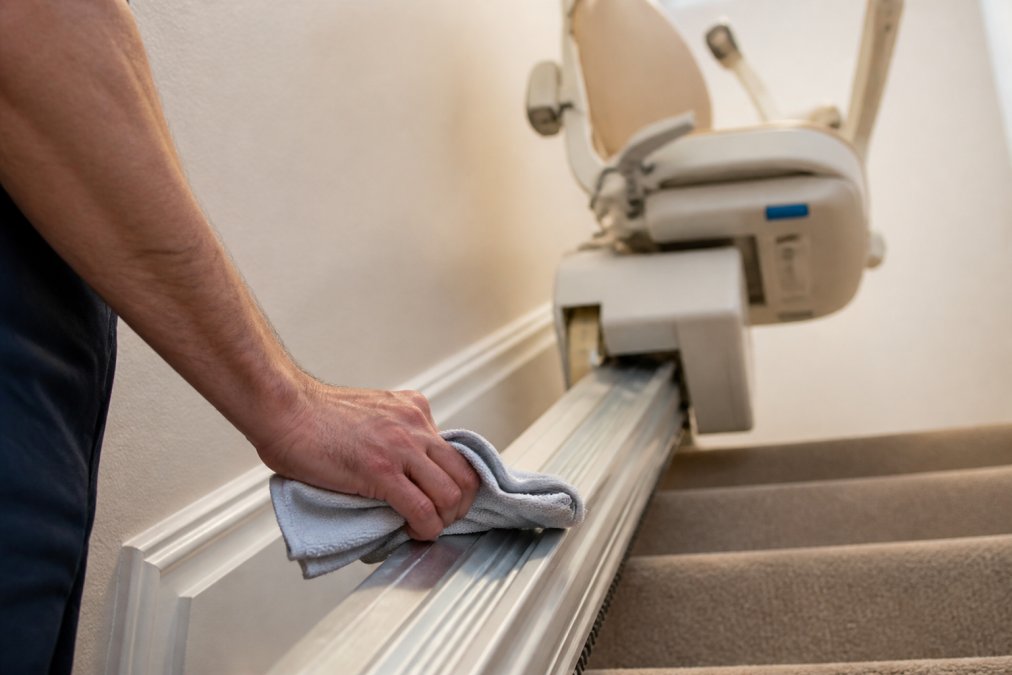
Check the carriage wheels and the area where the seat folds for debris as well. Don't neglect the ends where the lift parks and charges, keeping that area clear ensures proper contact and reliable charging.
Battery Care and Charging Habits That Extend Lifespan
Your stairlift's battery is its lifeline, especially during power outages. Most modern stairlifts use sealed lead-acid (SLA) or lithium-ion batteries that charge automatically when the lift parks. Proper charging habits directly extend battery lifespan.
Charging Habits That Matter
Keep the lift parked at its designated charging station whenever not in use. This maintains the battery at full charge and ensures the emergency battery backup is ready. If your home experiences frequent power fluctuations, consider a surge protector for the stairlift's power supply to protect the charging electronics.
The charging system is designed to trickle-charge, so leaving the lift parked will not overcharge the battery. If you plan to be away for more than a few weeks, consult your user manual, some models require a maintenance charge even when not in use.
Battery Types and Expected Lifespan
Sealed lead-acid batteries are the most common in stairlifts. They typically last 2 to 3 years with proper care. Lithium-ion batteries, found in newer models, can last 5 to 7 years but are more expensive to replace. Check your user manual to confirm which type your lift uses, as the charging behavior differs slightly.
Testing Your Emergency Battery Backup
Most owners never test the backup battery until a power outage occurs, and that is too late. A simple monthly test takes less than five minutes:
- Unplug the stairlift from its wall outlet (do not use the main circuit breaker).
- Run the lift through a full cycle from top to bottom.
- Listen for any slowing or hesitation during the ride.
- Plug the lift back in and allow it to recharge fully.
If the lift runs noticeably slower on battery power than on household power, the battery is losing capacity and should be replaced. A fully charged SLA battery should deliver 24 volts (or the voltage specified in your manual) when measured at the battery terminals with a multimeter. If you are comfortable using a multimeter, check the voltage at the charging station contacts, readings below the manufacturer's minimum indicate the battery is nearing end of life.
Signs Your Battery Needs Replacement
Batteries typically last several years, but capacity diminishes over time. If the lift moves slower than usual or struggles on the incline, the battery may need replacement. Other warning signs include:
- The lift stops mid-travel and requires a reset
- The battery backup fails during your monthly test
- The charging indicator light stays red or does not illuminate
Always use manufacturer-approved replacement batteries. Aftermarket options may not meet specifications and can damage the charging system or create a fire risk. Replacement batteries cost between $150 and $400 depending on your model, and replacing one every 3 to 4 years is the single most cost-effective maintenance step.
How Often Should a Stairlift Be Serviced by a Professional?
While weekly cleaning is your responsibility, an annual professional service is essential for long-term reliability. Industry guidance recommends a qualified technician inspect your stairlift at least once per year, with more frequent servicing for high-use households (medicare.gov).
The stairlift safety guidelines from the American Medical Association emphasize that professional inspections catch wear on moving parts that owners cannot see. During an annual service, a technician will:
- Inspect and tighten all bolts, screws, and mounting brackets
- Test the safety sensors and emergency stop functions
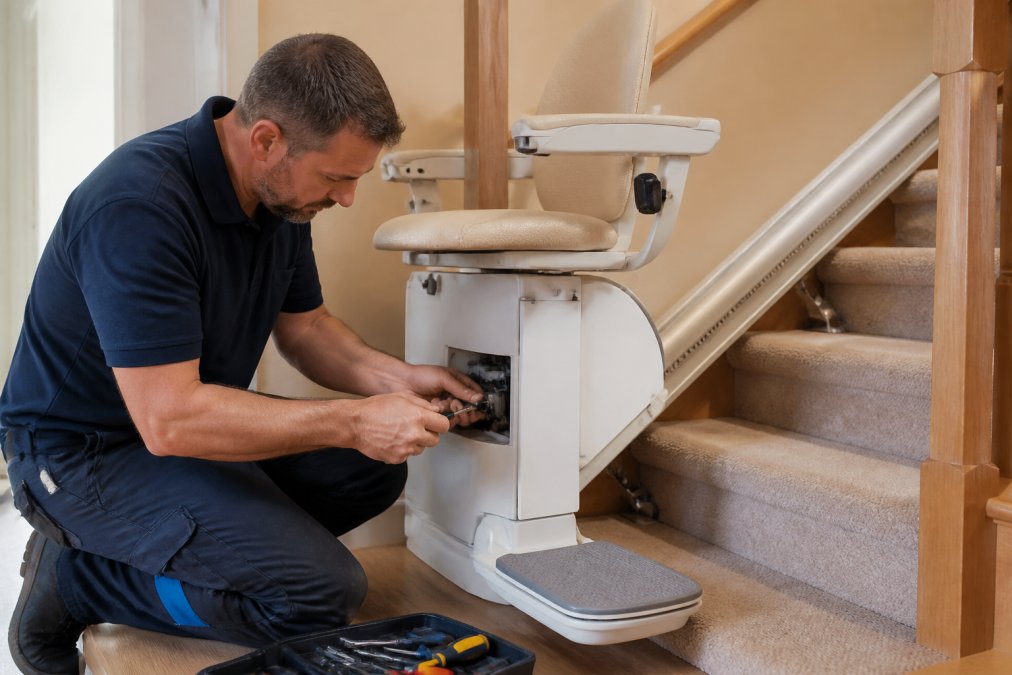
- Check the condition of the gearbox and drive mechanism
- Verify the battery and charging system are operating correctly
- Lubricate components according to manufacturer specifications
Schedule service before winter, as cold weather affects battery performance and mechanical components. Keep a record of each service visit, including parts replaced, to track ownership costs and anticipate future needs.
Troubleshooting Common Stairlift Issues Before Calling for Help
Many minor issues can be resolved without a service call. The most frequent problem is the lift not moving, which often has a simple explanation. Below is a structured approach to diagnosing common issues, and knowing when to stop and call a technician.
Issue 1: The Lift Will Not Start
First, check that the swivel seat is fully locked and the safety arm is lowered. Most stairlifts have safety interlocks that prevent operation when the seat is not positioned correctly. Next, verify there are no obstructions on the track.
If the seat is locked and the track is clear, check the remote control and replace its batteries if the indicator light is dim. Many models display diagnostic codes on the carriage or remote that you can cross-reference in your user manual.
Issue 2: The Lift Stops Mid-Travel
If the lift stops halfway, the most common cause is debris on the rail. Run your hand along the track (with the lift parked) to feel for objects or fibers, clean it thoroughly, and try again.
If it still stops, check the safety sensors along the rail. Wipe them with a dry cloth to remove dust or residue that may be triggering a false reading.
Issue 3: The Lift Runs Slowly or Makes Unusual Noises
A slow ride often indicates a battery issue, especially on backup power, test the battery as described earlier. Grinding or clicking sounds usually point to debris or worn gears; inspect the track first, then call a professional if the noise persists.
Issue 4: The Lift Will Not Charge
If the charging indicator light does not illuminate when the lift parks, check the charging contacts at both the lift and docking station, wiping them with a dry cloth. If the contacts are clean but the light still does not come on, the charging unit or battery may need professional attention.
Performing a Hard Reset
Before calling for service, perform a hard reset by turning the lift off at the main power switch, waiting 30 seconds, and turning it back on. This clears many temporary electronic glitches. If the lift has a removable key, remove it for 30 seconds and reinsert it.
When to Stop and Call a Professional
Knowing your DIY limits is essential. You can safely clean the track, inspect visible components, check battery voltage, and perform basic operational checks. However, never attempt to:
- Adjust the gearbox or drive mechanism
- Modify electrical connections or wiring
- Repair or replace the motor
- Adjust the safety sensors or interlocks
- Disassemble the carriage or rail system
These tasks require specialized training and tools that only a qualified service technician possesses. Attempting complex repairs without proper training risks damaging the equipment and creating a safety hazard. When in doubt, call a professional.
The User Manual Is Your Best Resource
Your user manual contains model-specific troubleshooting charts, error code definitions, and maintenance schedules. Keep it accessible and review the troubleshooting section before calling for service, many owners find that 80% of common issues are resolved with the simple steps outlined in the manual.
Understanding Stairlift Safety Features During Power Outages
A common worry is what happens when the power goes out while the lift is in use. Stairlift safety features during power outages are designed to keep you safe, and understanding them provides peace of mind.
Every modern stairlift has a battery backup system that allows the lift to complete its journey when household power is lost. When power fails, the lift automatically switches to battery power, allowing you to ride safely to the top or bottom. Once it parks, the backup is depleted until power is restored.
The emergency stop button is your primary safety control. Pressing it halts the lift immediately and safely. The safety sensors along the rail detect obstructions and stop the lift automatically, preventing accidents. These [home safety(/how-to-buy-a-stairlift) recommendations from the Consumer Product Safety Commission | cpsc.gov] highlight why regular testing of these features is critical.
Test your emergency battery backup monthly by unplugging the lift and running it through a full cycle. This confirms the battery holds a charge and the backup system functions correctly. If the lift runs slowly on battery power, the battery may need replacement.
Seasonal Maintenance Checklist and Knowing Your DIY Limits
Adjusting your maintenance routine to the seasons helps address environmental factors that affect stairlift performance. Winter brings salt, sand, and moisture into the home, which can accumulate on the track and cause wear.
Establish a seasonal checklist to stay ahead of potential issues:
- Spring: Deep-clean the entire track, check for winter damage, and test all safety features
- Summer: Inspect the rail for sun damage or warping, especially in sunrooms or near windows
- Fall: Schedule your annual professional service before colder weather arrives
- Winter: Wipe the track more frequently, and check the battery monthly as cold reduces efficiency
You can safely clean the track, inspect visible components, and perform basic operational checks. However, never attempt to adjust the gearbox, modify electrical connections, or repair the drive mechanism yourself, these tasks require specialized training and tools.
Attempting complex repairs without proper training risks damaging the equipment and creating a safety hazard. When in doubt, call a professional.
Conclusion: Protect Your Investment with a Simple Routine
A stairlift is only as reliable as the care it receives. By following these stairlift maintenance tips, you protect your investment and ensure the lift is ready whenever you need it. The routine is simple: wipe the track weekly, charge the battery consistently, and schedule an annual professional service.
At CT Stairlifts, we understand that maintaining independence at home is about more than just equipment. Our team specializes in stairlift installations that help you regain access to every floor of your home, safely and conveniently. We recommend establishing a maintenance schedule from day one and keeping records of all service visits.
Frequently Asked Questions
Can I perform my own stairlift maintenance?
Yes, you should handle basic weekly tasks like wiping the rail with a lint-free cloth and checking for debris or obstructions. You can also keep the charging station contacts clean. However, annual professional service is essential. A certified service technician has the training to inspect moving parts, test safety sensors, and address mechanical wear that isn't visible or safe for you to manage on your own.
What are some common problems with stairlifts?
The most frequent issues owners encounter include a stairlift that stops moving due to an obstruction on the rail or track, a seat that won't swivel properly, or a unit that runs slowly. Many of these stem from simple debris buildup or a depleted battery backup. Before calling for service, check the rail for obstructions and confirm the carriage is parked at its charging station to maintain battery health.
What is the average lifespan of a stairlift?
With proper care, a stairlift can last for 10 to 15 years or more. The key to reaching that lifespan is consistent preventative maintenance. This includes regular cleaning of the rail, avoiding abrasive cleaners that can damage components, and adhering to the manufacturer's recommended annual service schedule. A well-maintained unit that receives routine inspections from a qualified technician will provide reliable service for many years.
How do I test the safety features on my stairlift?
Your stairlift is equipped with safety sensors and an emergency stop. To test them, ensure the track is clear of obstructions. Gently place an object, like a small box, on the stair steps in the path of the lift. The unit should stop when its sensors detect the obstacle. Also, locate and test the emergency stop button to confirm it halts the motor immediately. Refer to your user manual for the exact procedure for your model.