 ultimate-guide
Is a Stairlift Worth the Investment? 2026 Guide
Table of Contents
- Is a Stairlift Worth the Investment?
- The Real Cost of a Stairlift vs. the Cost of a Fall
- Stairlift Rental vs Purchase: Which Makes Financial Sense?
- Does Medicare Pay for Stairlifts? Understanding Your Coverage
- Stairlift Maintenance and Service Costs: The Long-Term Picture
- How a Stairlift Affects Home Resale Value
- Alternatives to a Stairlift: When Moving Might Be the Better Choice
- Conclusion: Making the Decision That Fits Your Home and Your Life
- Frequently Asked Questions
Last Updated: September 7, 2026
Is a Stairlift Worth the Investment?
Deciding whether a stairlift is worth the investment is a major home-safety decision, and the question of is a stairlift worth the investment deserves careful thought. This guide covers the true costs, coverage options, and long-term considerations.
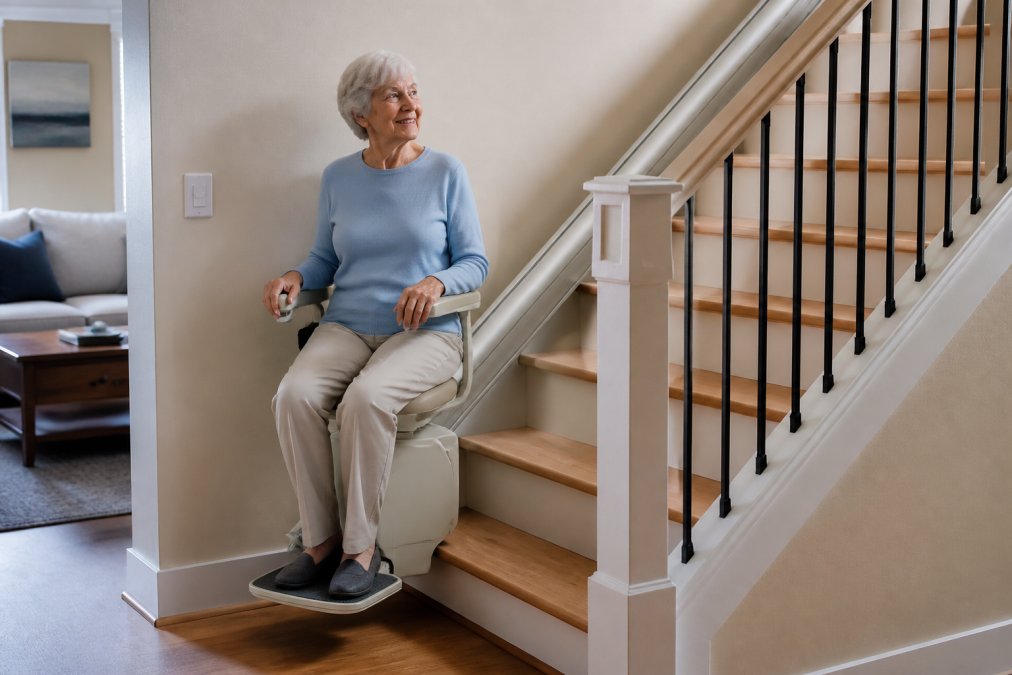
A stairlift is a motorized chair on a rail mounted to your staircase, letting someone with limited mobility move between floors safely. The key benefit is continued access to every floor, avoiding a move and preserving daily routines.
The Real Cost of a Stairlift vs. the Cost of a Fall
The price of a stairlift is a tangible, upfront number, while the cost of a fall is often hidden until it happens. A single fall requiring an ER visit, surgery, and rehabilitation can far exceed the cost of a home modification.
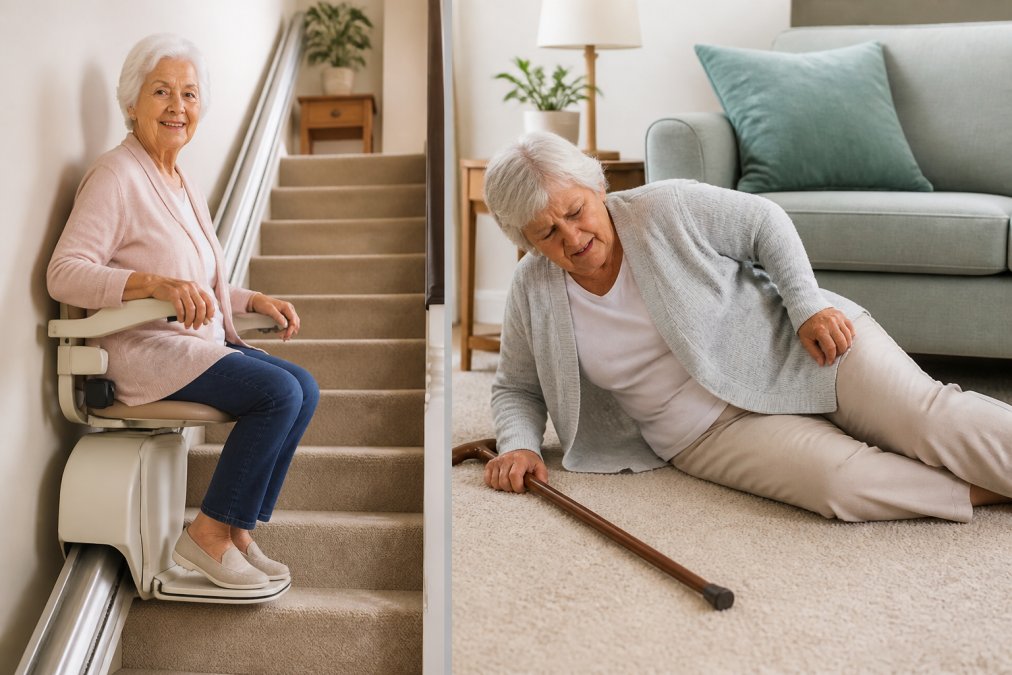
The Centers for Disease Control and Prevention resources on older adult falls highlight that falls are a leading cause of injury among older adults. While the exact figures vary, the message is consistent: prevention is far less costly than treatment. A stairlift is a fall prevention measure that addresses the highest-risk area of the home, the stairs, directly.
Beyond the financial math, fear of falling leads many older adults to limit activity, accelerating physical decline and social isolation. A stairlift removes that daily anxiety.
Stairlift Rental vs Purchase: Which Makes Financial Sense?
A rental stairlift makes sense when the need is clearly short-term, such as a six-to-nine-month recovery window. Monthly payments avoid a large upfront commitment, but rarely offer the best long-term value.
Purchasing becomes more economical when the need extends beyond roughly a year. Ownership also provides flexibility, as the unit may be transferable to a new home.
The decision also depends on your staircase configuration. Straight stairlifts are simpler to install and typically cost less than curved models. A professional home assessment is essential to determine which type fits your stairs.
Does Medicare Pay for Stairlifts? Understanding Your Coverage
Original Medicare generally does not cover stairlifts because they are classified as home modifications rather than durable medical equipment.
However, there are other avenues worth exploring. Some long-term care insurance policies include coverage for home safety modifications, and certain state-based assistance programs may offer support for accessibility improvements. Additionally, a stairlift may qualify as a deductible medical expense if it is recommended by a physician to treat a specific medical condition. The Internal Revenue Service guidelines on medical expenses provide criteria for what qualifies, so it is wise to review the requirements and consult a tax professional.
Stairlift Maintenance and Service Costs: The Long-Term Picture
Most purchase decisions focus on the upfront price, but the true cost unfolds over a decade of ownership. This section takes a total-cost-of-ownership approach.
What Actually Wears Out
A stairlift is a simple electromechanical system, but it has three components that will fail over time:
- The battery. Every modern stairlift runs on a 24-volt sealed lead-acid or lithium battery that keeps the chair operable during a power outage. These batteries are not designed to last the life of the unit. Most manufacturers rate them for 2,000 to 3,000 charge cycles, which translates to roughly 2 to 3 years of daily use. Replacement batteries typically cost between $150 and $400 depending on the brand, and swapping one is a 15-minute service call.
- The drive gear and rack. The pinion gear that moves the chair along the rack is a wear item. On a straight stairlift used several times daily, most service technicians expect to inspect this at the annual visit and replace it somewhere between years 5 and 8. Parts cost is modest, but the labor is where the expense lands.
- The seat swivel mechanism. The mechanism that rotates the seat at the top of the stairs sees heavy mechanical stress. If it becomes loose or grinds, it is a safety issue, not just a comfort one. Catching this early is exactly what the annual service visit is for.
The Real Cost of Skipping Service
Skipping the annual service to save $150 to $250 frequently backfires. A stairlift unserviced for 2 to 3 years accumulates dust and debris on the rack, often resulting in a $600 to $900 repair bill that a $200 annual visit would have prevented. Most manufacturers also void the warranty without documented service history.
Service Contracts: Run the Numbers
Providers typically offer three tiers of post-installation support:
- Pay-per-visit. You call when something breaks. This is the most expensive route over time because emergency service calls carry a premium, often $300 to $500 per trip.
- Annual service plan. A flat yearly fee, usually $150 to $300, covers one preventive inspection and gives you priority scheduling. This is the sweet spot for most owners.
- Full-coverage plan. A higher annual fee, often $400 to $600, includes the annual inspection plus all parts and labor for repairs. This makes sense for curved stairlifts, where replacement parts are custom and significantly more expensive than straight-rail components.
The 10-Year Cost Model
Here is a realistic 10-year ownership scenario for a straight stairlift purchased new at $3,500:
| Year | Expected Expense | Typical Cost |
|---|---|---|
| 1 | Annual service | $200 |
| 2 | Annual service | $200 |
| 3 | Annual service + battery replacement | $450 |
| 4 | Annual service | $200 |
| 5 | Annual service + drive gear inspection | $350 |
| 6 | Annual service + battery replacement | $450 |
| 7 | Annual service | $200 |
| 8 | Annual service | $200 |
| 9 | Annual service + battery replacement | $450 |
| 10 | Annual service + major component review | $400 |
Total 10-year maintenance cost: approximately $3,100. That brings the true cost of ownership to roughly $6,600 over a decade, or about $55 per month. Compared to a single fall with a hip fracture, which the CDC data suggests averages over $30,000 in direct medical costs, the maintenance picture is remarkably affordable.
Warranty Fine Print That Matters
Most new stairlifts come with a warranty. Many warranties do not cover the battery, upholstery, or damage from power surges. A basic surge protector is a worthwhile investment that protects the motor.
The Unique Angle: Plan for Year 8, Not Just Year 1
The decision-support question is not "Can I afford the installation?" but "Can I afford to maintain this device for the next decade?" Setting aside $25 per month into a maintenance fund covers battery replacements and service visits without financial strain.
How a Stairlift Affects Home Resale Value
A common concern is whether a stairlift will hurt resale value. A permanently installed stairlift can be seen as a specialized modification that narrows the pool of potential buyers.
However, the broader context of home accessibility is shifting. With a growing number of older adults choosing to age in place, home modifications that support accessibility are becoming more desirable. The AARP research on home accessibility and aging in place indicates that most older adults want to remain in their homes, which suggests the demand for accessible features will only increase.
The practical solution for sellers is often removal. Many stairlifts are designed to be uninstalled with minimal damage to the staircase, allowing the homeowner to restore the home before listing. This offers the best of both worlds.
Alternatives to a Stairlift: When Moving Might Be the Better Choice
A stairlift is one tool in a larger accessibility toolkit, and the right answer depends on your home's layout, your mobility pattern, and how you feel about staying.
The Full Range of Alternatives
Before assuming a stairlift is the only option, consider what else could solve the problem:
- Relocating the primary bedroom to the main floor. If your home has a den, office, or formal living room that could convert to a bedroom, the cost of that conversion, often $2,000 to $8,000 for a closet, door, and electrical work, may be far less than a stairlift. This eliminates the need for the stairs entirely on a daily basis.
- A through-floor platform lift. For wheelchair users or those who cannot transfer to a seated position, a stairlift is not viable. A vertical platform lift installed through the floor costs $15,000 to $25,000 and requires significant construction, but it is the only option that keeps a wheelchair user on both floors.
- A ramp for step-free entry. If the only barrier is a few steps at the entrance, a modular aluminum ramp costs $1,500 to $5,000 depending on length. This is a fraction of a stairlift's cost and may eliminate the most dangerous trip hazard.
- Stair glide or rental stairlift. For temporary needs, a rental at $150 to $300 per month bridges the gap during recovery without a long-term commitment.
The Emotional Math of Moving
The financial comparison between a stairlift and a move is straightforward; the emotional comparison is not. The psychological weight of leaving a home you have lived in for decades is often the deciding factor.
AARP research consistently shows that over 75% of adults over 50 want to stay in their current home as they age. That preference is about identity, community, and daily rituals, not line items on a budget.
When comparing a stairlift to a move, ask yourself: "What am I losing beyond square footage?" For many, the answer is a social network and a sense of belonging that cannot be replaced by a newer, more accessible home.
The Hidden Costs of Moving That Nobody Quotes
A move is rarely just the real estate commission. The full financial picture includes agent fees (typically 5-6% of the sale price), moving services ($1,500 to $5,000), new furniture, higher monthly costs, and the cost of selling in a market where your home may need updates. A $5,000 stairlift installation often looks like remarkable value against a move that can easily cost $30,000 to $60,000 in total.
The Decision Framework Most Articles Miss
Here is a practical framework that goes beyond the simple "stay or go" binary:
Choose a stairlift when:
- The stairs are the only significant barrier in an otherwise suitable home
- You can safely transfer into and out of the chair
- You have a trusted local provider for maintenance
- You want to preserve your current community and daily routines
Choose a move when:
- You need to use a wheelchair or walker on a daily basis
- The bathroom is upstairs and cannot be modified for safety
- The home has multiple levels of stairs, not just one staircase
- You are already isolated and a move would bring you closer to family or services
- The cost of maintaining the home is becoming overwhelming regardless of the stairs
Choose a hybrid approach when:
- You install a stairlift now but begin a 3-to-5-year plan to downsize
- You use the stairlift for the upstairs bedroom but also add a main-floor bathroom for future flexibility
The Psychological Relief of a Decision Made
What is rarely discussed is the mental toll of indecision. Families often spend months or years debating whether to install a lift, creating stress for the older adult and their adult children alike.
A stairlift is not just a mechanical device, it is a statement that the older adult's independence matters. For many, installation day brings an emotional release: the fear of the stairs is gone, and the home feels safe again.
A stairlift is the better choice when the home is otherwise suitable and the stairs are the primary barrier. Moving makes more sense when the entire home has become difficult to navigate or when the homeowner wants to eliminate stairs entirely. But the decision is never purely financial, it is also about what makes the older adult feel safe, valued, and at home.
Conclusion: Making the Decision That Fits Your Home and Your Life
Ultimately, determining whether a stairlift is worth the investment requires an honest assessment of your health, your home, and your finances. The decision weighs the cost of the unit against the potential expense of a fall, the disruption of a move, and the daily value of moving freely through your own home.
The first step is a professional home assessment to understand your staircase configuration and receive accurate pricing. CT Stairlifts provides solutions designed to help individuals regain access to every floor of their home, with installations tailored to your specific layout. Get started with CT Stairlifts and take the first step toward safer, more confident movement in your home today.
Frequently Asked Questions
What are the primary disadvantages of installing a stairlift?
The main drawbacks are the upfront purchase and installation cost, the visual impact on your stairway, and the fact that a straight stairlift won't work on curved stairs without a more expensive custom track. There is also a common concern about whether a lift will affect your home's resale value, though many buyers view it as a useful home accessibility feature. Finally, you will have ongoing maintenance requirements, though regular service keeps most lifts running safely for many years.
Does Medicare pay for stairlifts?
Original Medicare (Part A and Part B) does not cover stairlifts because they are classified as home modifications, not durable medical equipment (DME). Medicare only pays for equipment like wheelchairs or walkers that a doctor prescribes for use inside the home. While some Medicare Advantage plans offer supplemental benefits for home modifications, coverage varies widely by plan. You should contact your specific plan provider to ask about their benefits. Some state programs and nonprofit organizations offer financial assistance for home accessibility improvements.
Does a stairlift devalue a house?
A professionally installed stairlift does not typically devalue a home, and it can be a positive feature for buyers seeking to age in place. If a buyer does not need it, they may factor the removal cost into their offer. However, a high-quality unit can be removed without damaging the staircase, and the track holes are easily patched. For homes in areas with an older demographic, a stairlift is often seen as a valuable home accessibility feature that broadens the pool of potential buyers.
When is a stairlift rental the better choice over a purchase?
A stairlift rental makes sense when your need is temporary, such as recovering from hip or knee surgery where you expect to regain your mobility within a few months. Renting avoids a large upfront investment and typically includes maintenance and service in the monthly fee. Purchasing is the more cost-effective choice if you have a progressive condition or anticipate needing the lift long-term, as the upfront cost is spread over many years of use.
This article is for informational purposes only and does not constitute medical or tax advice. Consult with a qualified professional regarding your specific medical condition and financial situation.