 blog
blog
Stairlift Rental vs Buying: A 2026 Guide
Table of Contents
- Stairlift Rental vs Buying: The Core Decision
- Straight vs. Curved Staircase: How Your Home's Layout Affects Your Choice
- Short-Term Recovery vs. Long-Term Mobility Needs
- Average Cost of Stairlift Installation and Rental Pricing
- Stairlift Maintenance and Service Contracts: What to Expect
- Medicare Coverage for Home Modifications and Stairlift Assistance
- Safety Features and What Happens When Power Fails
- Renting vs. Buying: The Financial Comparison
- Frequently Asked Questions
Last Updated: October 2, 2026
Stairlift Rental vs Buying: The Core Decision
A stairlift rental vs buying decision fundamentally comes down on how long you'll need mobility assistance and your home's configuration. We help homeowners navigate this choice by examining both the financial and practical sides of each option. (Source: the U.S. Department of Health and Human Services)
Renting suits temporary recovery situations like post-surgery healing or broken bones.
Buying suits permanent or long-term mobility challenges. The upfront cost is higher, but over several years ownership often becomes more economical, and you avoid contract restrictions.
The catch: neither option is universally "better." The right choice depends on your specific situation, your home's layout, and how long you realistically need the equipment.
Straight vs. Curved Staircase: How Your Home's Layout Affects Your Choice
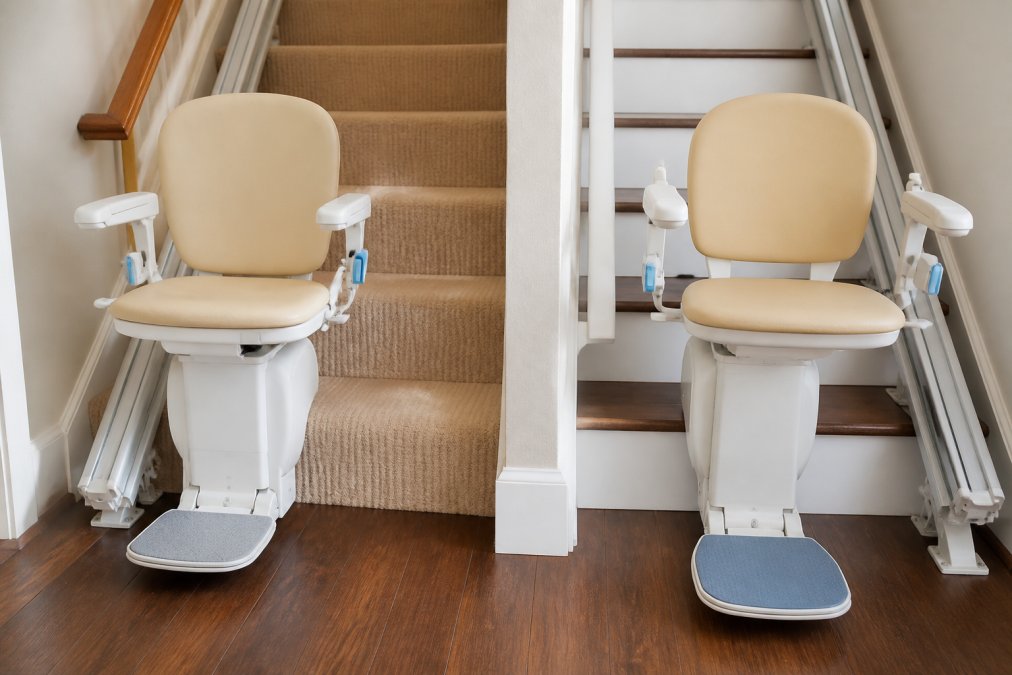
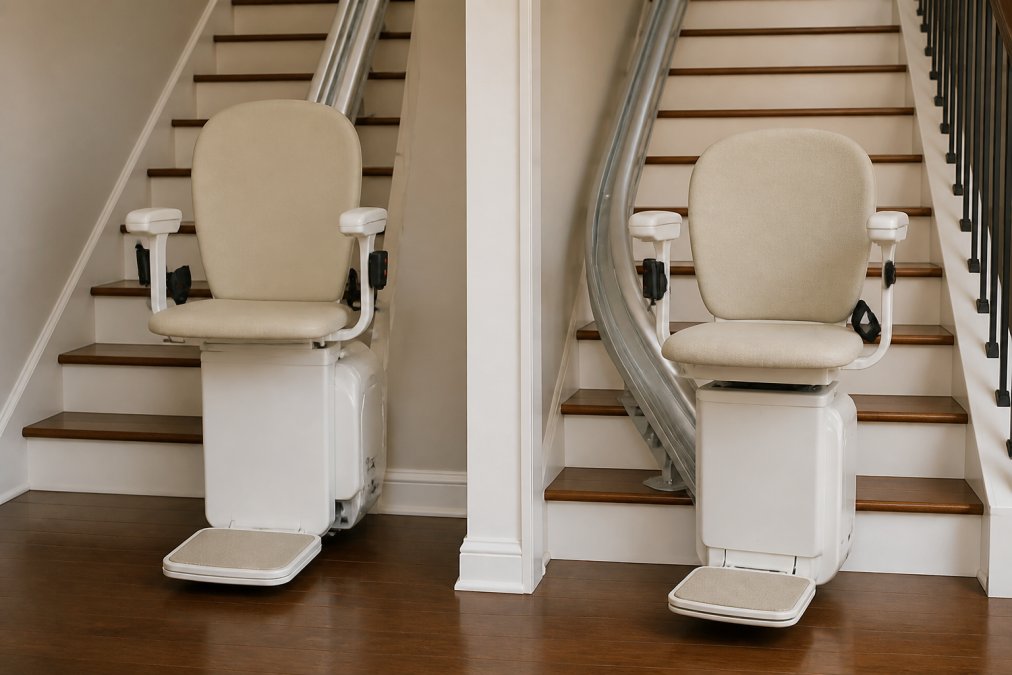
Your staircase configuration determines feasibility and cost. Straight staircases are simpler and more affordable to outfit. Curved rail systems require custom track fabrication and more involved installation.
Some rental companies hesitate with curved configurations, preferring straightforward installations. If your home has a curved staircase, buying may be your only practical option.
Before making any decision, have a professional assess your staircase. They'll evaluate the track complexity, weight capacity requirements, and structural integrity of your stairs.
Short-Term Recovery vs. Long-Term Mobility Needs
Duration of need is the most important factor. Short-term recovery situations, post-surgery, broken bones, temporary injury, are textbook rental scenarios where you know roughly when you'll recover.
Long-term mobility challenges, arthritis, chronic pain, balance issues, require years of use. Over five to seven years, cumulative rental payments often exceed the purchase price, and ownership offers customization advantages.
If uncertain about long-term need, start with a rental. After a few months, you'll have real data to decide whether to buy.
Average Cost of Stairlift Installation and Rental Pricing
Understanding the true financial picture requires moving beyond headline prices to the hidden costs embedded in rental contracts and purchase agreements.
Rental Pricing and Hidden Fees
Monthly rental fees typically range from $150 to $400 depending on equipment complexity and your region, but the total cost of renting extends far beyond the monthly charge. Most rental contracts include these additional costs:
Delivery and Installation: Rental companies charge a one-time setup fee of $200-$500 to install the track, test the unit, and train you.
Removal and Restocking: Rental companies charge a removal fee ($150-$300) to uninstall the track and restore your staircase, plus possible restocking fees ($100-$200) for early cancellation.
Service Call Charges: Emergency after-hours service calls may carry a surcharge of $75-$150 per visit.
Example: A two-year rental at $250/month with $300 setup, 18-month cancellation with three-month penalty, and $200 removal totals $6,200, significantly higher than the monthly rate suggests.
Purchase Pricing: Equipment, Installation, and Ongoing Costs
Purchase prices for new stairlifts typically range from $3,000 to $15,000 depending on whether your staircase is straight or curved and the features you select.
Straight staircase units cost $3,000-$6,000 for equipment plus $1,500-$3,000 installation labor, totaling $4,500-$9,000.
Curved staircase units cost $8,000-$15,000 for equipment plus $3,000-$5,000 installation, totaling $11,000-$20,000 or more.
Ongoing ownership costs include annual maintenance ($200-$400), battery replacement every 5-7 years ($400-$800), and out-of-pocket repairs after warranty ($500-$1,500).
The Break-Even Analysis
To determine whether renting or buying makes financial sense for your situation, calculate the total cost of each option over your expected usage timeline.
Two-year scenario (short-term recovery):
- Rental: ($275/month × 24) + $300 setup + $200 removal = $7,100
- Purchase: $7,000 equipment + $2,000 installation + ($300 × 2 years maintenance) = $9,300
- Winner: Rental saves approximately $2,200
Five-year scenario (long-term mobility need):
- Rental: ($275/month × 60) + $300 setup + $200 removal = $16,800
- Purchase: $7,000 equipment + $2,000 installation + ($300 × 5 years maintenance) = $10,500
- Winner: Buying saves approximately $6,300
Seven-year scenario (permanent aging-in-place solution):
- Rental: ($275/month × 84) + $300 setup + $200 removal = $23,500
- Purchase: $7,000 equipment + $2,000 installation + ($300 × 7 years maintenance) + $600 battery replacement = $11,900
- Winner: Buying saves approximately $11,600
The break-even point typically falls between 3 and 4 years of use. If you anticipate needing the stairlift longer than that, purchasing becomes the more economical choice despite the higher upfront cost.
Refurbished Units: The Middle Ground
Refurbished stairlifts cost 30-50% less than new equipment ($2,000-$4,500 for straight stairs) and come with 1-2 year warranties. This option suits buyers wanting to reduce upfront investment or those uncertain about long-term need.
Stairlift Maintenance and Service Contracts: What to Expect
Maintenance responsibilities differ sharply between rental and ownership, and understanding these differences is critical to avoiding surprise costs and service failures.
Rental Maintenance: What's Included and What Isn't
When you rent a stairlift, the rental company is legally responsible for keeping the equipment in safe, working condition. This is a major advantage of renting.
What's often NOT covered: Damage from misuse or accidents, cosmetic repairs, customizations, and service calls for user error.
Critical contract details to verify: response time for breakdowns (standard 24-48 hours), loaner equipment availability, preventative maintenance schedule (annual or semi-annual), battery replacement policy, and cancellation penalties.
Ownership Maintenance: Your Responsibility and Real Costs
When you buy a stairlift, you own the equipment and are responsible for keeping it safe and functional.
A professional annual service typically costs $200-$400.
Warranty coverage and what happens after it expires:
Most stairlifts come with 1-2 year manufacturer's warranties.
Many manufacturers offer extended warranties (3-10 years) that cover parts and labor beyond the standard warranty.
Maintenance neglect and safety risks:
Skipping annual maintenance creates safety hazards. A poorly lubricated track increases friction and can cause the motor to overheat.
Comparing Maintenance Burden: Rental vs. Ownership
| Aspect | Rental | Ownership |
|---|---|---|
| Annual Maintenance Cost | Included in monthly fee | $200-$400 per year |
| Battery Replacement | Included | $400-$800 every 5-7 years |
| Major Repairs | Covered by rental company | Out-of-pocket ($500-$1,500+) |
| Emergency Service | Included (may have surcharges) | You arrange and pay |
| Preventative Maintenance | Company schedules | Your responsibility to arrange |
| Extended Warranty Available | No (maintenance is built in) | Yes ($500-$1,200 for 5-10 years) |
| Maintenance Predictability | Highly predictable | Variable; depends on equipment age and use |
The hidden advantage of rental: The rental company handles maintenance proactively, reducing breakdowns and stress. For elderly or disabled users, this peace of mind is worth the higher long-term cost.
The hidden advantage of ownership: You control maintenance decisions, can perform basic upkeep yourself, and avoid company service schedules. Equipment lasting 10+ years reduces per-year maintenance costs significantly.
Medicare Coverage for Home Modifications and Stairlift Assistance
Medicare generally doesn't cover stairlifts because they're considered home modifications rather than portable medical devices. Medicare covers equipment that can follow you to different locations.
Some supplemental insurance or state Medicaid programs may cover home modifications. Contact your state's Medicaid office or insurance provider to explore coverage options.
Private insurance sometimes covers stairlifts if they're prescribed as medically necessary by your physician.
For many households, stairlifts are an out-of-pocket expense. Some people explore payment plans or financing options through equipment providers.
Safety Features and What Happens When Power Fails
Modern stairlifts include swivel seats for safe exit, fold-up footrests, armrests for stability, and sensors to detect track obstructions.
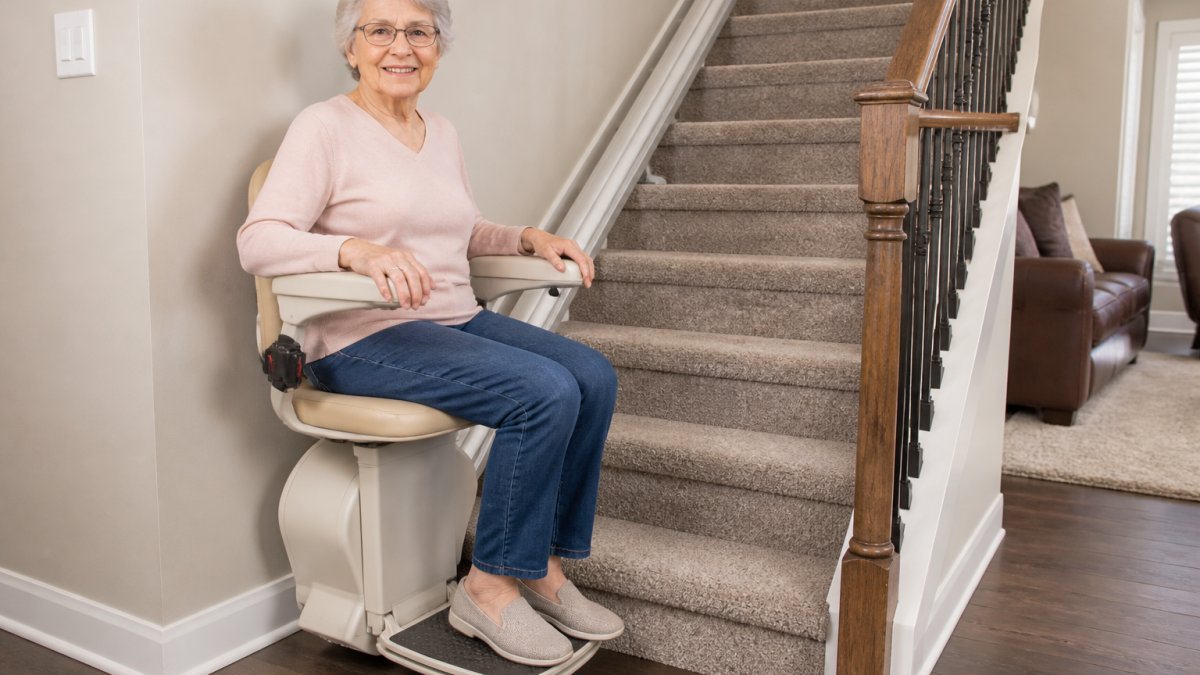
A battery backup system keeps the stairlift operational during outages, providing enough power for one or two complete trips to reach safety.
Emergency stop buttons are standard on all units. If something feels wrong during operation, you can press the button to halt immediately.
When evaluating any stairlift, rental or purchase, ask about the specific safety features and test them if possible.
Renting vs. Buying: The Financial Comparison
| Factor | Renting | Buying |
|---|---|---|
| Upfront Cost | Low to none | High (equipment + installation) |
| Monthly/Ongoing | Fixed monthly fee | Maintenance and repairs |
| Maintenance | Included in rental | Your responsibility |
| Flexibility | Easy to return/cancel | Permanent installation |
| Long-term (5+ years) | Expensive | Often more economical |
| Short-term (under 2 years) | Usually more economical | High relative cost |
| Customization | Limited options | Full control |
| Warranty Coverage | Included | Typically 1-2 years |
For short-term needs under two years, renting usually costs less overall. For long-term use beyond five years, buying typically becomes more economical.
Consider also the accessibility assessment checklist: evaluate whether your home's layout, electrical access, and structural condition support installation.
The decision between renting and buying a stairlift isn't about picking the objectively "better" option, it's about matching the solution to your actual needs and timeline.
The best first step is a professional consultation.
Frequently Asked Questions
Is it better to buy or rent a stairlift?
The answer depends on your timeline and mobility needs. Renting works best for short-term recovery from surgery or injury, typically lasting a few months. Buying makes financial sense if you need a stairlift long-term or expect to stay in your home for many years. Rental offers flexibility and lower upfront costs; buying builds equity over time and avoids monthly fees. Consider your staircase configuration and whether you plan to move, as custom curved staircase installations are harder to relocate.
Why are stairlifts not covered by Medicare?
Medicare classifies stairlifts as home modifications rather than durable medical equipment, and it does not cover permanent home alterations. However, some supplemental insurance plans, Medicaid programs, or Veterans Affairs benefits may offer partial assistance depending on your eligibility and state. Ask your healthcare provider about financial assistance programs or grants for aging in place modifications. A consultation with CT Stairlifts can help identify funding options specific to your situation.
What is the average cost to rent a stairlift versus buying one?
Rental costs and purchase prices vary significantly based on staircase configuration, track complexity, and installation requirements. Straight staircases typically cost less than curved rails that require custom fabrication. For accurate pricing on both rental and purchase options, contact us for a personalized quote. We can assess your home's structural integrity and mobility equipment needs.
Are there long-term savings in buying a stairlift versus renting?
Yes, buying typically offers long-term savings if you need mobility equipment for five years or more. Monthly rental fees accumulate, while a purchased stairlift has a fixed depreciation curve. However, buying requires accounting for maintenance and service contracts, potential repairs, and the fact that you cannot recover the investment if you move. Renting avoids these concerns but costs more per month. Calculate your break-even point based on your expected timeline and consult CT Stairlifts about both options.