 blog
7 Essential Home Lighting Upgrades for Seniors
Last Updated: November 12, 2026
Quick Summary
Essential home lighting upgrades for seniors mean layered lighting: ambient light for the room, task lighting for close work, and low-level lighting for safe movement at night. Start with the highest fall-risk spots, stairs and hallways, then the bathroom, then everyday task areas.
- Aging eyes need more light, handle glare worse, and adjust more slowly between bright and dark rooms.
- Put a switch at the top and bottom of each staircase and light the treads, not just the ceiling.
- Place nightlights low, near the floor, so light guides the feet without glare.
- Add a light above the bathroom mirror and one over the shower or tub, and keep a nightlight on all night.
- Walk your home at night, note every dark spot, then prioritize stairs first, then the bathroom.
Table of Contents
- Why Home Lighting for Aging Eyes Needs Different Rules
- Senior Home Lighting for Fall Prevention: Where to Start
- Stair and Hallway Lighting for Seniors
- Bathroom Lighting for Seniors: Bright, Even, and Shadow-Free
- Task Lighting for Reading, Cooking, and Everyday Activities
- Accessible Switches and Controls: Lighting You Can Actually Operate
- Room-by-Room Upgrade Checklist and What to Do First
- Planning Your Lighting and Stair Safety Upgrades
- Frequently Asked Questions
Why Home Lighting for Aging Eyes Needs Different Rules
Aging eyes generally need more light than younger eyes to see the same detail. That is the core reason essential home lighting upgrades for seniors matter so much. The eyes lose some ability to adjust to darkness, and glare becomes harder to handle. For the broader picture, see our guide to preventing falls at home.
Senior vision changes in three ways that affect home lighting. Less light reaches the retina (Pupillary responses to short-wavelength light are preserved in aging). The lens scatters light, which creates glare. And it takes longer for eyes to adjust between bright and dark rooms. So a lamp that worked fine at 40 may now leave shadows on the stairs.
The fix is not one bright bulb. It is layered lighting: ambient light for the room, task lighting for close work, and low-level lighting for safe movement at night.
Senior Home Lighting for Fall Prevention: Where to Start
Start with the places where falls happen most: stairs, hallways, bathrooms, and the path from bed to bathroom. Good senior home lighting for fall prevention targets those spots first.
Brightness, Glare, and Contrast: Getting the Balance Right
Brightness alone does not prevent falls. Too much glare can make things worse.
Aim for even light with no dark patches. Choose bright LED bulbs, and pick a warmer color temperature in living spaces. Shield exposed bulbs so light lands on the floor, not in the eyes. Contrast matters too: steps should stand out clearly from the landing, so add light that shows the edge of each step.
Stair and Hallway Lighting for Seniors
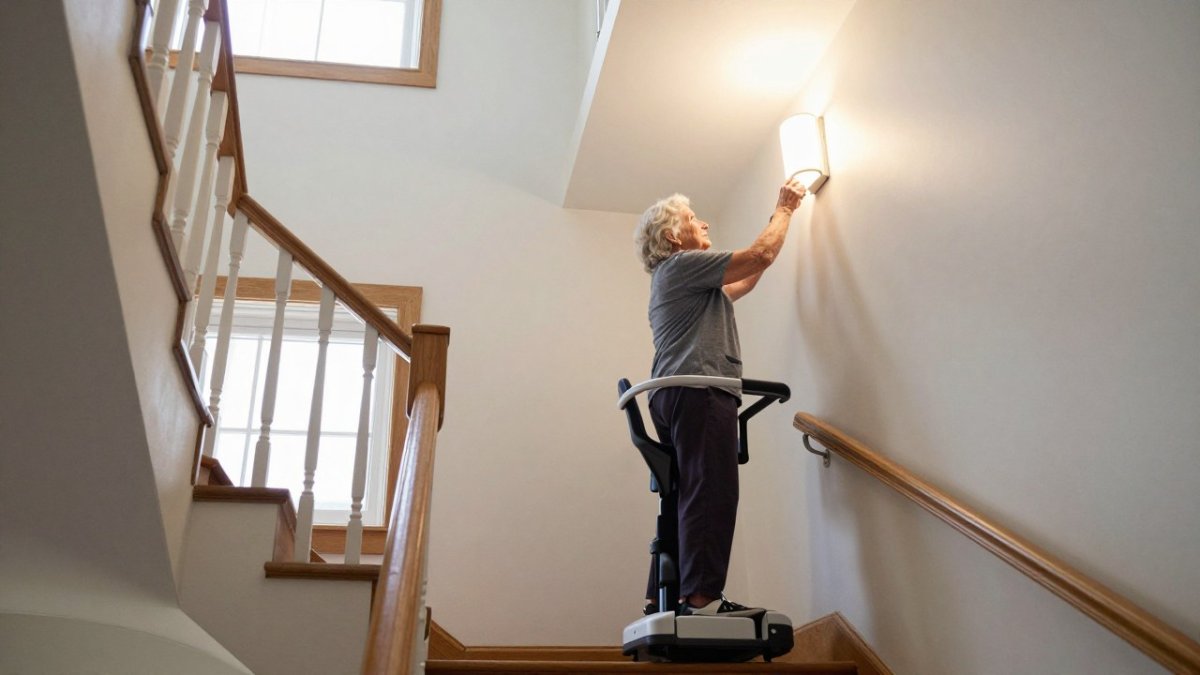
Stair and hallway lighting for seniors should light every step and both ends of the run. Put a switch at the top and bottom of each staircase. Add a fixture that lights the treads, not just the ceiling.
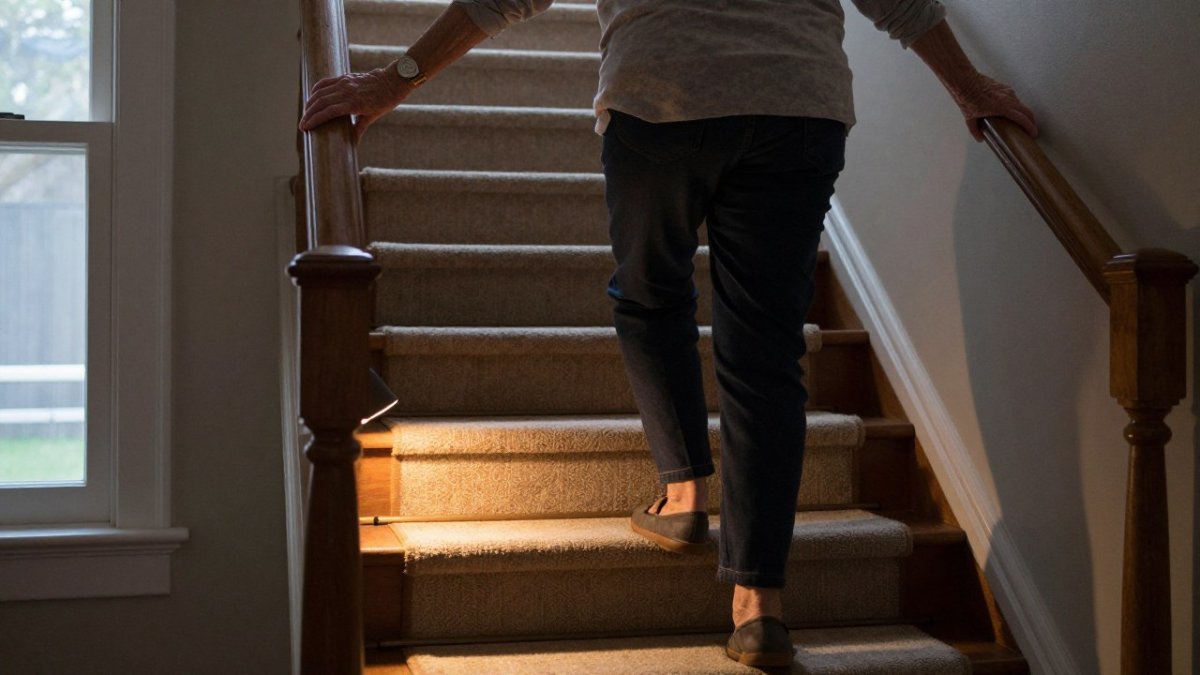
Motion-Sensor and Nightlight Placement That Works
Motion-sensor lights can turn on as you approach, so no one has to find a switch in the dark. Place them at the top and bottom of stairs, in hallways, and along the route to the bathroom.
Nightlights should sit low, near the floor, so the light guides the feet without glare. Check that each one is reachable and easy to replace. For a deeper look at stair safety, see our guide to preventing falls on stairs for seniors, and if you are upgrading the rail too, read about choosing the right handrail for elderly.
Bathroom Lighting for Seniors: Bright, Even, and Shadow-Free
Bathroom lighting for seniors needs to be bright and even, with no shadows across the floor or tub. Add a light above the mirror and one over the shower or tub. Use a warm, diffused bulb behind a cover so the light does not hit the eyes directly.
Keep a nightlight on all night. Bathrooms are slippery, so good light plus a grab bar and a non-slip mat all work together.
Task Lighting for Reading, Cooking, and Everyday Activities
Task lighting puts light where the work happens. A reading light placed slightly behind and to the side of the shoulder, aimed at the page, can help avoid shining into the eyes or reflecting off glossy paper.
In the bedroom, a bedside lamp with a reachable switch, or a plug-in remote, helps with nighttime navigation. A low-level nightlight on the path to the door is more useful than a bright overhead light that ruins night vision.
Accessible Switches and Controls: Lighting You Can Actually Operate
Lighting is most useful when it is easy to turn on. Larger rocker switches, touch controls, or smart bulbs that can be operated by voice or phone may make this easier.
Keep switches at a comfortable height near each doorway. A common mistake is putting the only switch far from the stairs. Fix that first.
Room-by-Room Upgrade Checklist and What to Do First
Work from the highest fall risk down. Use this checklist to set your order:
| Room | Upgrade | Why It Comes First |
|---|---|---|
| Stairs | Two-way switches, tread lighting | Highest fall risk |
| Hallways | Motion-sensor lights | Path to bathroom at night |
| Bathroom | Mirror and tub lights, nightlight | Slippery surfaces |
| Bedroom | Reachable bedside lamp | Safe nighttime movement |
| Kitchen | Under-cabinet task lights | Sharp tools, hot surfaces |
Start with stairs and hallways. Then handle the bathroom. For living-room hazards, see our guide on removing tripping hazards in living rooms.
Planning Your Lighting and Stair Safety Upgrades
Plan the whole route before you buy. Walk your home at night and note every dark spot. Then set priorities: stairs first, then the bathroom, then everyday task areas.
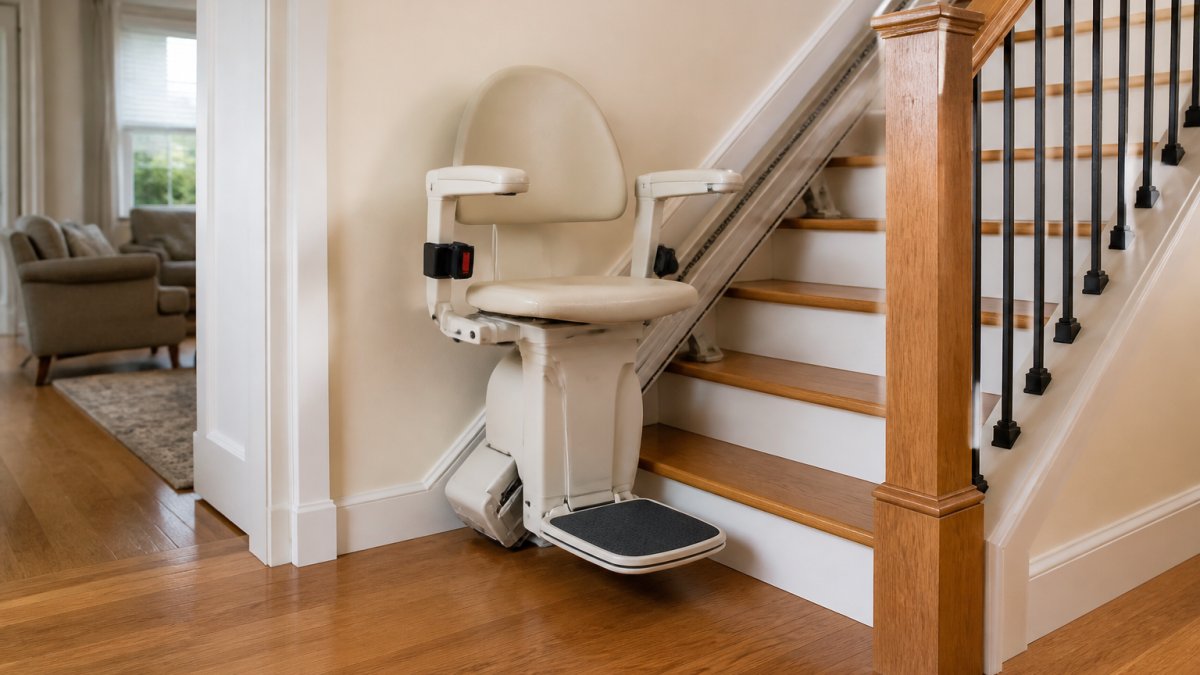
Lighting and mobility go together. Bright stairs still feel risky if climbing them is hard. A stairlift may help you move between floors while you focus on light and rail upgrades. Our guide to aging in place safely helps you plan both.
The safest home is one you can move through without thinking about the light. If stairs are still a barrier, CT Stairlifts installs stairlifts that help you regain access to every floor of your home. We tailor each installation to your staircase and your needs, so navigating your home stays safe and convenient. Get started with CT Stairlifts and make every floor easy to reach again.
Frequently Asked Questions
What type of lighting is best for elderly people?
Look for LED bulbs in a warm-to-neutral color temperature. Layer ambient, task, and low-level nightlights so no room relies on a single ceiling fixture. Avoid bare bulbs and unshaded fixtures that put light directly in the eyes. The goal is even, bright light on floors and work surfaces without glare.
How can better lighting help prevent falls at home?
Fall risk rises when you cannot see step edges, thresholds, or small objects on the floor. Brighter, layered lighting reveals those hazards and reduces deep shadows that hide them. Senior home lighting for fall prevention focuses on stairs, hallways, bathrooms, and the path between the bed and the bathroom, with motion-sensor lights and nightlights so the route is lit before you step onto it.
Where should seniors add nightlights?
Place nightlights along the route you walk after dark: beside the bed, in the hallway at knee-to-hip height, near the top and bottom of stairs, and in the bathroom. Choose models with a warm glow and a light sensor so they come on automatically. Avoid plugging them into switched outlets, and keep cords out of walking paths. Motion-sensor options work well in hallways where you want light only when you move.
What lighting is best for stairs and hallways?
Stair and hallway lighting for seniors should light each tread and the floor below without glare. Use two or more fixtures rather than one bright ceiling light, add a lit switch at both ends of the stairs, and consider motion-sensor lights or a low-level strip near the bottom step. Keep bulbs warm and shaded, and check that the handrail stays visible from the top of the staircase.