 how-to
How to Remove Tripping Hazards in Living Rooms
Table of Contents
- Why Living Room Tripping Hazards Matter
- Step 1: Clear Clutter and Objects from Walking Paths
- Step 2: How to Secure Area Rugs and Remove Unsafe Carpets
- Step 3: How to Hide Electrical Cords Safely
- Step 4: Arrange Furniture to Create Open, Unobstructed Routes
- Step 5: Improve Lighting in the Room and Along Walking Routes
- Home Safety Checklist for Seniors: Room-by-Room Inspection
- Clear Walkways for Fall Prevention: Final Assessment
- Frequently Asked Questions
Last Updated: October 17, 2026
Why Living Room Tripping Hazards Matter
Falls are a serious concern, especially for older adults (the CDC). A single fall can cause broken bones, lost independence, or long-term pain.
The good news: most falls are preventable. Your living room is where you spend the most time. Making it safer now protects you later.
At CT Stairlifts, we work with homeowners every day who want to stay safe and independent at home. Small living room changes make a huge difference, and removing tripping hazards is often the first step toward aging in place safely.
This guide covers how to remove tripping hazards in living rooms step by step. We'll walk you through each area of your space and show you exactly what to fix.
Step 1: Clear Clutter and Objects from Walking Paths
Your walking paths are the routes you use most often. These are where falls happen most. Clear them completely.
Identify your main walking routes: bedroom to bathroom, chair to kitchen, front door to your favorite seat. These paths need to be completely clear.
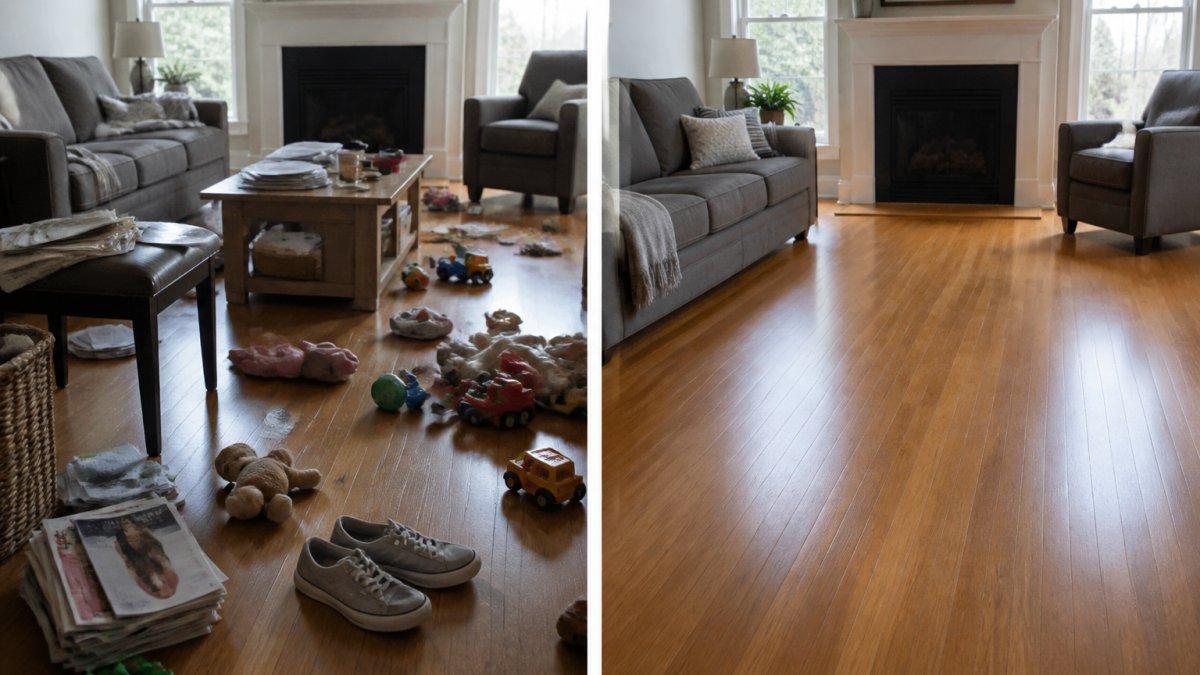
Remove these items from your walking paths:
- Shoes and slippers
- Toys, books, and magazines
- Remote controls and small objects
- Pet toys and bowls
- Baskets and storage containers
- Throw blankets and pillows
- Electrical cords (we'll cover cords separately)
Pick up items daily, five minutes each morning clearing your paths.
Store items in designated places: a basket for magazines, a shelf for remotes, a closet for shoes. Everything should have a home.
Step 2: How to Secure Area Rugs and Remove Unsafe Carpets
Area rugs are beautiful but dangerous, a loose rug can catch your foot and cause a fall.
Match the rug pad to the rug and the floor. A non-slip pad goes under your rug and grips both surfaces. But not all pads are equal:
- Felt-and-rubber pads combine a felt top (cushioning) with a rubber bottom (grip). They work well on hard flooring and add comfort underfoot.
- All-rubber or PVC pads are thinner and provide maximum grip with minimal cushioning. They're a good choice under low-pile rugs on hardwood or tile.
- Open-weave or grid pads allow airflow and are less likely to trap moisture on solid surfaces.
Avoid thick, plush pads under thin rugs, they can make the rug crown and curl at the edges, which is itself a trip hazard.
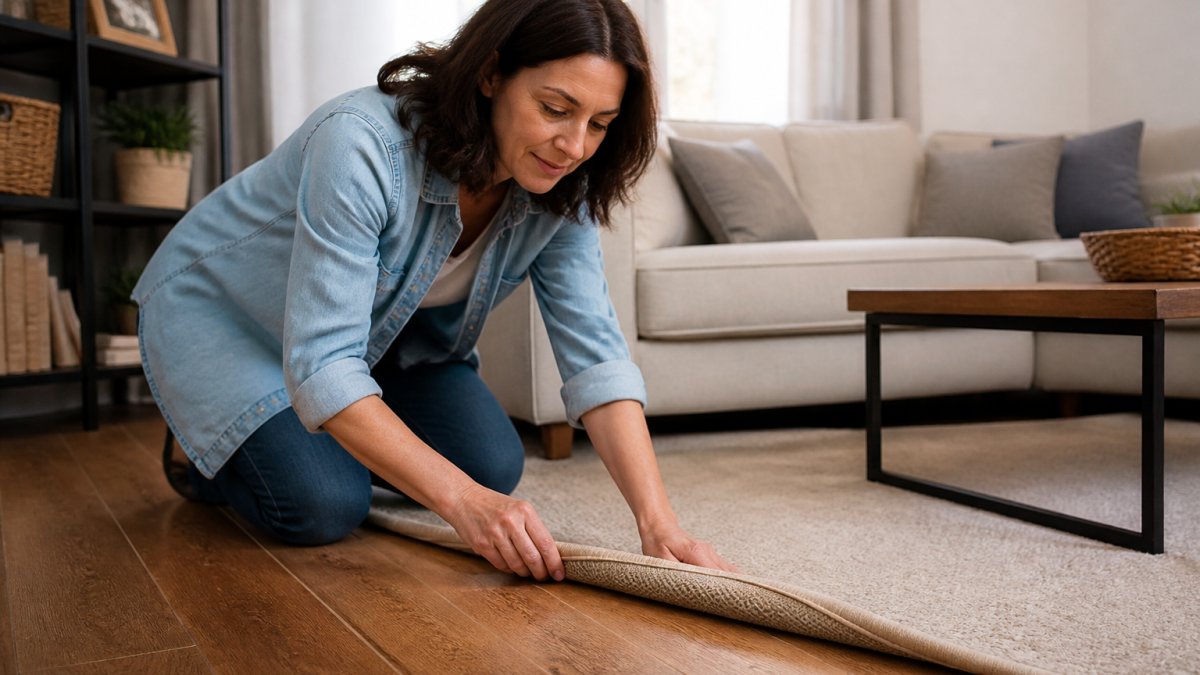
How to secure an area rug with a pad:
- Lift one corner of your rug.
- Slide the non-slip pad underneath, centering it so no pad edge extends past the rug.
- Smooth out wrinkles and bubbles from the center outward.
- Walk the full perimeter and test by pushing the rug with your foot, it should not slide.
Use rug tape or corner grippers for edges that still lift. Double-sided rug tape can hold down a curling corner, but check it monthly, adhesive degrades and can leave residue on hardwood.
Remove unsafe carpets completely. Some rugs are too loose, worn, or thick to secure safely.
Check carpet edges and transitions. Carpet pulling away from the wall is a tripping hazard.
Floor transitions between rooms deserve special attention, they're one of the most overlooked trip risks.
Never stack rugs or place a small rug on top of carpet without a pad designed for carpet-to-carpet grip. Layered rugs slide against each other and are a frequent cause of falls.
Step 3: How to Hide Electrical Cords Safely
Electrical cords lie across floors and wrap around furniture, creating a serious tripping hazard. Most guides say "move cords out of the way", here's how, and when to call a professional.
Reroute before you cover. The safest cord is one that isn't in the walking path at all.
Choose the right cord cover. Cord covers are raceways that bundle and protect cords. They come in a few common types:
- Adhesive-backed raceways stick to baseboards or walls. They're easy to install but can loosen over time or damage paint when removed.
- Screw-mounted raceways are more secure and better for permanent runs, but require drilling.
- Floor cord covers (often called cord ramps) have a tapered profile that lets a walker or wheelchair roll over the cord. They're the right choice when a cord must cross an open floor.
How to install a cord cover:
- Gather all cords in the area and unplug them.
- Measure the distance they need to travel.
- Buy a cover long enough for the run, plus a little slack.
- Slide cords into the cover.
- Secure the cover to the wall or floor with the manufacturer's adhesive, clips, or screws.
- Run the covered cords along the baseboard, not across the room.
- Plug everything back in and test.
Use cord clips and anchors for single cords. Clips hold a cord against the wall and keep it from dangling or lying loose on the floor. Space them every 12-18 inches along the run.
Hide cords behind furniture when possible. Move your lamp to a different side table or your charger to an outlet behind the couch. Fewer visible cords means a safer space.
Know when to call a qualified electrician. Cord covers manage cords, they don't fix wiring problems. Call a licensed electrician if:
- A cord is damaged, frayed, or has exposed wires.
- You need an outlet moved or added to eliminate a cord run.
- A cord feels warm to the touch or the plug or outlet is discolored.
- You're running cords through walls, ceilings, or under carpet (never do this with extension cords).
Check cords regularly. Cords wear out. Exposed wires are dangerous. Replace damaged cords immediately, and don't run extension cords as permanent wiring.
A cord stretched across your walking path can catch your foot even if it's thin. Always assume any cord in your path is a tripping hazard and move it. Never run an extension cord under a rug or carpet, friction and heat can damage the cord and create a fire risk.
Step 4: Arrange Furniture to Create Open, Unobstructed Routes
Furniture placement affects how easily you move through your living room; tight, crowded layouts increase fall risk.
Create a 36-inch pathway. This is the standard width for safe walking. A 36-inch pathway gives you room to move without hitting furniture.
Measure your main walking routes. If they're narrower than 36 inches, move furniture.
Remove unnecessary furniture. If you don't use that end table, ottoman, or extra chair, remove it. Fewer pieces mean more open space.
Arrange furniture against walls. Push couches, chairs, and tables to the walls to open up the center of the room and create clear pathways.
Avoid furniture with sharp corners. If you must keep furniture, choose pieces with rounded edges.
Keep frequently used items within reach. Your phone, remote, and water glass should be on a sturdy table next to your seat.
Step 5: Improve Lighting in the Room and Along Walking Routes
Add bright overhead lighting. A ceiling fixture or flush mount provides general light. Make sure it's bright enough to see the entire room clearly.
Install motion-activated lights. These turn on automatically when you enter a room. They're especially helpful at night when you're moving from your bedroom to the bathroom.
Light your walking paths specifically. Place lamps along the routes you use most, in the hallway, near the bedroom door, near the kitchen entrance.
Use nightlights for nighttime safety. Place low-level lights along your path to the bathroom. These guide you in the dark without being so bright that they disturb sleep.
Avoid dark corners. Add a lamp to any dark corner so no part of your walking path is in shadow.
Check lighting regularly. Replace burned-out bulbs immediately. Dim lighting is almost as dangerous as darkness.
Home Safety Checklist for Seniors: Room-by-Room Inspection
A systematic inspection catches hazards you might miss. Use this checklist to evaluate your living room.
| Area | Hazard | Fix | Done |
|---|---|---|---|
| Floor | Clutter, shoes, toys | Clear all items from walking paths | |
| Rugs | Loose or worn area rugs | Add non-slip pads or remove | |
| Carpet | Worn, pulled edges, transitions | Secure edges, add transition strips | |
| Cords | Cords across walking paths | Move to walls, cover, or secure | |
| Furniture | Blocking pathways, sharp corners | Rearrange, remove, or replace | |
| Lighting | Dark areas, poor visibility | Add overhead, task, and motion lights | |
| Stairs (if present) | Steep, narrow, no rail | Consider a stairlift for safe access |
Print this checklist. Walk through your living room. Check off each item as you fix it. This ensures you don't miss anything.
Older adults living alone or those recovering from surgery who need a systematic way to identify and fix fall risks in their homes.
Clear Walkways for Fall Prevention: Final Assessment
You've now addressed the major tripping hazards in your living room. Take a final walk through your space.
Walk your main routes slowly, looking down at the floor and ahead at furniture and cords. Fix any hazards you see now.
Walk faster. Do you feel confident? Do you feel safe? If not, there's still work to do.
Test your pathways at night. Turn off the lights. Use only nightlights. Can you navigate safely? If not, add more lighting.
Ask for feedback. Have a family member walk through your space. Ask them what hazards they see.
Make it a habit. Check your walking paths weekly: pick up clutter, smooth out rugs, replace burned-out bulbs. Small maintenance prevents big problems.
Know when to get help. Transition strips, cord covers, and new lighting may need an electrician or handyman.
If you're having trouble with stairs or multiple levels of your home, consider professional solutions. At CT Stairlifts, we help homeowners regain safe access to every floor of their home.
Frequently Asked Questions
What is the most common tripping hazard in a living room?
Loose or unsecured area rugs are the leading cause of tripping incidents in living rooms. Electrical cords, clutter on floors, and furniture blocking walkways are also frequent culprits. Fall risk increases significantly when multiple hazards exist together. A systematic inspection of your living room, checking for rugs, cords, toys, shoes, and furniture placement, helps identify and address these hazards before they cause an accident.
Should you remove area rugs to prevent falls?
Removing all rugs is one option, but securing them properly is often better. Non-slip rug pads or rug backing can make area rugs safer by preventing them from sliding or bunching. If you decide to keep rugs, ensure they lie flat, have secure backing, and are positioned away from primary walking paths. If a rug cannot be secured adequately, removing it reduces fall risk. Choose the approach that works best for your living space and mobility needs.
How can you keep electrical cords from becoming trip hazards?
Route cords along walls rather than across walkways. Use cord covers or protective channels to bundle cords together and keep them flush against baseboards. Secure cords with clips or tape so they don't shift. Avoid running cords under rugs, which creates both a tripping hazard and a fire risk. When possible, rearrange furniture or devices to minimize cord length crossing open floor space. Regularly inspect cords for damage and replace worn ones.
What lighting level is needed to prevent falls in a living room?
Adequate lighting along walking routes and in corners is essential for fall prevention. Install bright, even lighting that eliminates dark corners and shadows where people might misstep. Consider motion-activated lights for nighttime navigation, and use nightlights along pathways if mobility occurs during low-light hours. Test your lighting by walking the room during different times of day and evening to identify any poorly lit areas that could increase tripping risk.
Removing tripping hazards in living rooms takes time but pays off immediately. You'll feel more confident moving through your space. You'll reduce your fall risk. You'll maintain your independence. Start with the highest-risk areas, loose rugs, clutter, and poor lighting, and work your way through the checklist. Your safety is worth the effort. If you need help with stairs or multiple-floor access, reach out to CT Stairlifts for a consultation on how we can help you navigate your home safely.