 how-to
Choosing the Right Handrail for Elderly: A Safety Guide
Last Updated: October 23, 2026
Quick Summary
A handrail for elderly users provides sturdy grip support while moving up, down, or along stairs, reducing fall risk by offering stability when balance becomes uncertain. The right handrail should be mounted between 34 and 38 inches above the stair nosing, support 200 pounds of horizontal force, and extend the full length of your stairs plus 12 inches at each end.
- Handrails must be mounted 34 to 38 inches above the stair nosing and support 200 pounds of horizontal force per building codes.
- Wood handrails offer excellent grip and warmth indoors, while metal and stainless steel are more durable for outdoor stairs.
- Handrails should extend at least 12 inches before the first step and 12 inches past the last step for full support.
- Textured or rubberized surfaces improve grip for people with limited hand strength or arthritis.
- Professional installation ensures proper mounting and load-bearing capacity, making it safer than DIY installation.
Table of Contents
- Why Handrails Matter for Fall Prevention in Older Adults
- Understanding Stair Handrail Height and Installation Requirements
- Best Handrail Material for Grip and Durability
- Handrails for Outdoor Steps: Special Considerations
- Determining Handrail Length for Stairs
- Selecting a Handrail Based on Mobility Needs
- Installation, Maintenance, and Safety Checks
- Complementary Safety Solutions Beyond Handrails
- Frequently Asked Questions
Why Handrails Matter for Fall Prevention in Older Adults
Falls are a serious concern for older adults. A secure handrail can be the difference between safely navigating your home and suffering a serious injury.
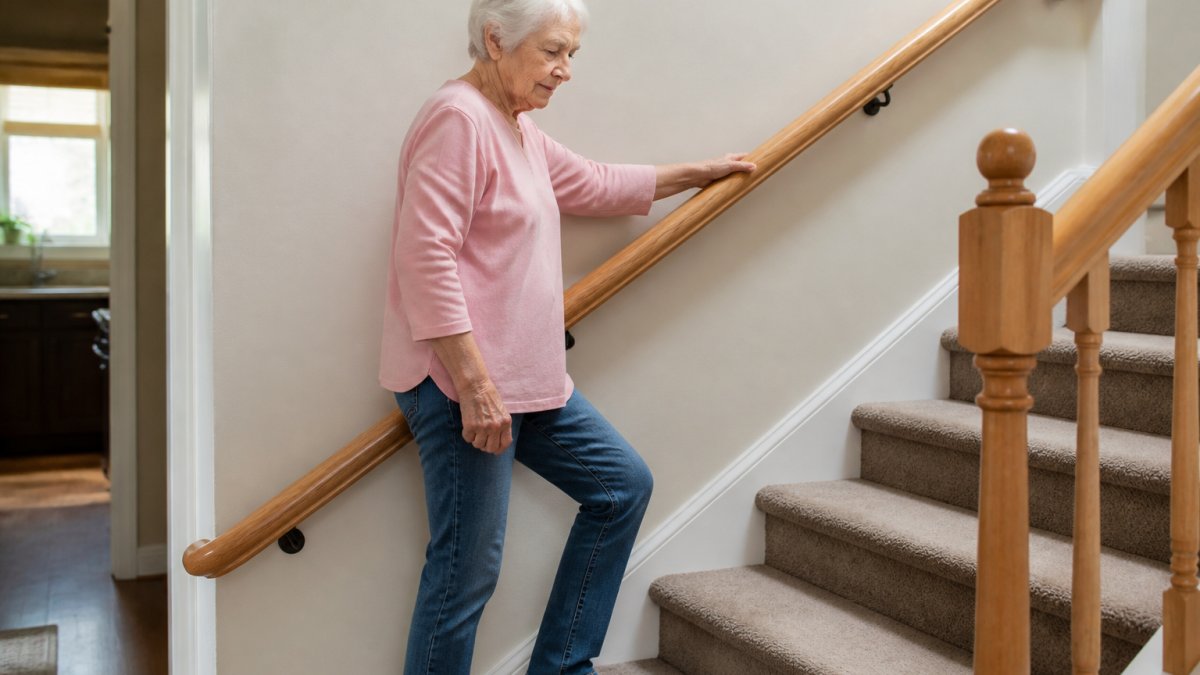
A handrail for elderly users serves one critical purpose: it gives your hands and arms something sturdy to grip while moving up, down, or along stairs and steps. Learn more about preventing falls on stairs for seniors with comprehensive strategies that complement handrail installation.
The right handrail does more than prevent falls. It restores confidence. When you know you can rely on a sturdy rail, you're more likely to move through your home independently. That independence matters.
Understanding Stair Handrail Height and Installation Requirements
Handrail height matters more than most people realize. Your hand should rest comfortably on the rail when your arm hangs naturally at your side. This positioning lets you grip and push without awkward angles that strain your wrist or shoulder.
Building Code Requirements
Building codes set minimum standards for handrail installation. The International Building Code (IBC) specifies that handrails must be mounted between 34 and 38 inches above the stair nosing (the edge of each step). This range accommodates most adults.
Handrails must also support significant weight. Building codes require rails to withstand a force of 200 pounds applied horizontally. This ensures the rail won't fail if you lean heavily on it or catch yourself during a stumble. A properly installed stair handrail meets these load-bearing requirements.
Measuring for Proper Height
Measure from the stair nosing straight up 34 to 38 inches. Mark this height on your wall or post. Your handrail should sit at this level.
If you're shorter or taller than average, you might prefer a slightly different height. The key is comfort and control. If reaching the rail strains your arm, it won't provide the support you need.
Best Handrail Material for Grip and Durability
Material choice affects both safety and longevity. The best handrail material for grip combines comfort with durability. Different materials suit different locations, indoors versus outdoors, wet versus dry environments.
Wood vs. Metal: Indoor Considerations
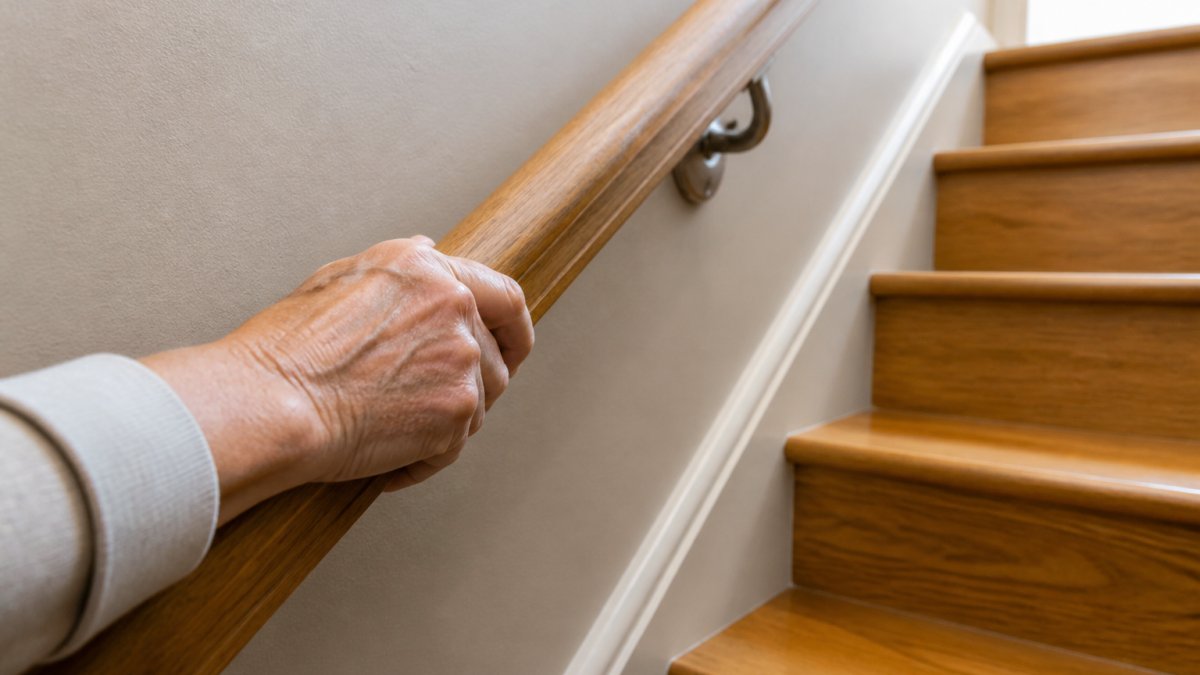
Wood handrails feel warm to the touch and provide excellent grip. Wood naturally resists slipping, even when your hands are slightly damp. Oak, maple, and ash are popular choices because they're strong and smooth.
Metal handrails, typically aluminum or stainless steel, are durable and low-maintenance. They don't splinter and resist moisture well. However, metal can feel cold and may be slippery if your hands are wet or sweaty.
For indoor stairs, wood often wins for comfort and grip. Metal works well in kitchens or bathrooms where moisture is common.
Outdoor Materials and Weather Resistance
Outdoor handrails face sun, rain, snow, and temperature swings. These conditions break down materials quickly.
Wrought iron looks beautiful and lasts decades with proper care. It requires regular painting to prevent rust.
Aluminum resists rust naturally and requires minimal maintenance. It's lightweight and strong.
Composite materials (wood-plastic blends) resist rot and splinters better than wood. They don't require staining or sealing.
Stainless steel is the most durable outdoor option. It won't rust or corrode.
For outdoor steps, aluminum or stainless steel offer the best balance of durability and low maintenance.
Different materials suit different locations and conditions, each with distinct advantages for grip and durability.
| Material | Best For | Key Advantage |
|---|---|---|
| Wood (oak, maple, ash) | Indoor stairs | Excellent grip, warm to touch, naturally resists slipping |
| Metal (aluminum, stainless steel) | Kitchens, bathrooms, outdoors | Durable, low-maintenance, resists moisture |
| Wrought iron | Outdoor stairs | Beautiful appearance, lasts decades with care |
| Composite (wood-plastic blend) | Outdoor stairs | Resists rot and splinters, no staining needed |
| Stainless steel | Outdoor stairs | Most durable, won't rust, minimal maintenance |
| Anodized aluminum | Outdoor stairs | Rust-resistant, lightweight, holds up well outdoors |
Handrails for Outdoor Steps: Special Considerations
Outdoor steps present unique challenges. Weather exposure, temperature changes, and uneven lighting all affect safety.
Weather resistance is non-negotiable. Choose materials that resist rust, rot, and weathering. Stainless steel and anodized aluminum are excellent choices.
Slip resistance matters more outdoors. Rain, ice, and morning dew make surfaces slippery. Select a rail with a textured finish or grip-enhancing coating.
Visibility is critical. A rail you can't see is a rail you can't use. Choose a color that contrasts with your surroundings.
Length should extend the full length of your outdoor steps.
CDC guidelines on fall prevention for older adults emphasize that environmental modifications like handrails are among the most effective ways to reduce fall risk at home.
Determining Handrail Length for Stairs
Ideally, your handrail starts at least 12 inches before the first step and extends at least 12 inches past the last step.
For a typical staircase with 12 to 14 steps, a handrail might be 12 to 16 feet long, including the extensions at each end.
A longer rail is always safer than a shorter one. It gives you more time to find your grip as you move.
Selecting a Handrail Based on Mobility Needs
Not all handrails serve the same purpose. Your specific mobility challenges should guide your choice.
For Limited Grip Strength
If arthritis, weakness, or neurological conditions affect your hands, you need a handrail with diameter and shape that works with your grip. A standard 1.25-inch diameter rail is comfortable for most people. If gripping is difficult, look for rails with larger diameters (up to 1.5 inches) or oval-shaped rails that rest more naturally in your palm.
Textured or rubberized surfaces improve grip without requiring as much hand strength. Some rails have soft grips molded into the surface. These reduce the force you need to apply and are easier on arthritic hands.
For Balance and Stability Issues
If your main challenge is balance rather than grip strength, you need a rail you can rely on for support. This means a sturdy, well-anchored rail that won't shift or flex when you lean on it.
Consider a handrail for elderly users with balance problems should be mounted at a height that lets you use it for both grip and push-off support. Some people benefit from dual rails, one on each side of the stairs. This gives you balanced support and more control.
For Post-Surgery or Temporary Recovery
After hip surgery, knee replacement, or other procedures, you need temporary support while healing. A sturdy handrail helps you navigate stairs during recovery without putting full weight on the injured leg.
Temporary handrails can be mounted with adhesive strips or clamps that don't damage walls. Once you've recovered, they're easy to remove. Talk to your physical therapist about what height and grip diameter work best during your specific recovery phase.
Installation, Maintenance, and Safety Checks
A handrail is only as safe as its installation. Poor installation defeats the purpose.
Professional Installation vs. DIY
Professional installation ensures your handrail meets building codes and supports the required 200-pound load. Installers know how to find studs in walls, use appropriate fasteners, and position the rail at the correct height and angle. They also understand local building codes and can pull permits if required.
DIY installation is tempting to save money. However, a poorly installed rail can fail when you need it most. If you're not experienced with carpentry or metalwork, professional installation is worth the cost.
Many handrail manufacturers offer installation services or can recommend local installers.
Regular Maintenance and Inspection
Check your handrail monthly. Grasp it firmly and try to move it side to side. It should be completely solid, no flex, no give.
Inspect the surface for splinters (wood), rust (metal), or cracks. Sand splinters smooth. Treat rust spots immediately with rust converter and paint.
Clean your handrail regularly. Dust and grime reduce grip. Wipe with a damp cloth and mild soap. Dry immediately to prevent water damage.
For wood handrails, reseal or refinish every 2-3 years, depending on your climate and use. For metal rails, check fasteners and touch up any chipped paint annually.
National Safety Council recommendations for home safety modifications stress that regular inspection and maintenance of safety devices prevents failures that could lead to serious injury.
Complementary Safety Solutions Beyond Handrails
Handrails are essential, but they're one piece of a larger safety picture.
Stair lighting prevents trips and falls. Install lights at the top and bottom of stairs.
Non-slip stair treads add grip to steps.
Adequate step height and depth matter. Inconsistent step dimensions cause trips.
Clear sightlines let you see where you're stepping. Remove clutter from stairs and landings. Keep stairs well-lit.
For comprehensive fall prevention, explore stair safety grab bars for seniors, which provide additional grip points in bathrooms and other areas. For broader strategies, our guide on preventing falls at home covers multiple modifications that work together.
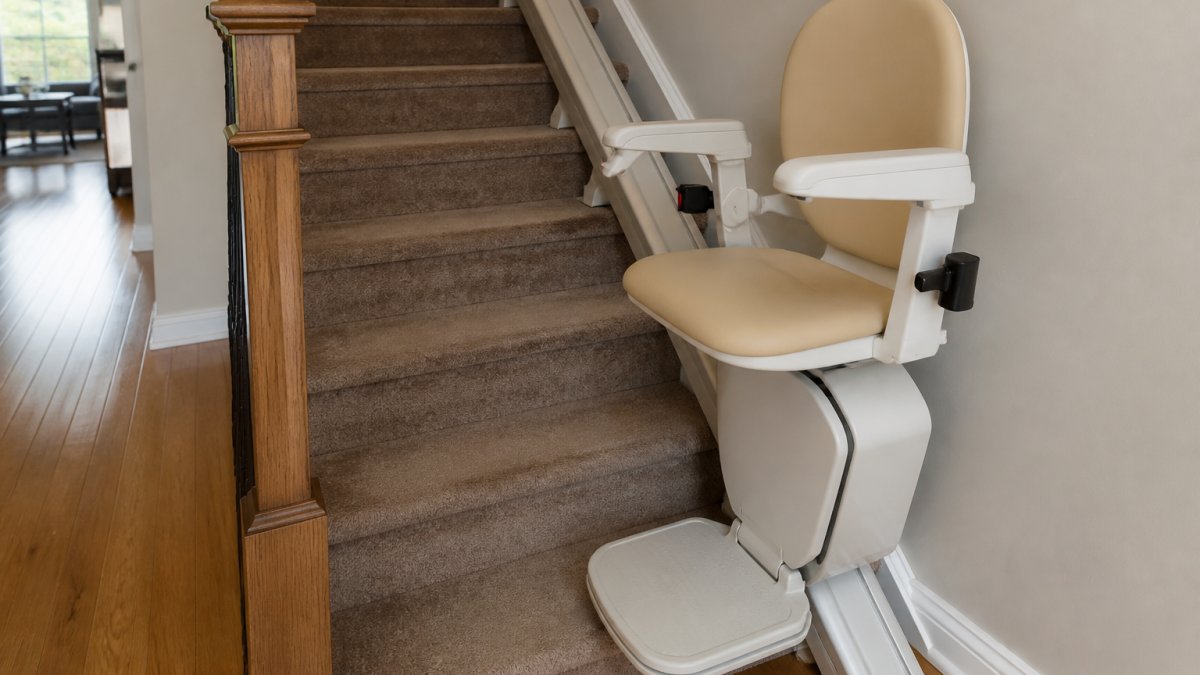
If navigating stairs remains unsafe even with handrails, stairlift installation may be the right solution.
Choosing the right handrail for elderly family members is an investment in safety and independence.
Frequently Asked Questions
What is the proper height for a handrail?
Handrail height is measured from the top of the rail to the stair nosing (the edge of the step). The standard height is 34 to 38 inches, with 36 inches being the most common target. This range allows most older adults to grip comfortably while maintaining stable support. Your specific height may vary slightly depending on your own arm length and comfort, so test the position before finalizing installation.
How do you choose a handrail for outdoor steps?
Outdoor handrails must resist weather, moisture, and temperature changes. Stainless steel, powder-coated aluminum, and treated wrought iron are durable choices that resist corrosion and won't become slippery when wet. Avoid untreated wood or materials that become slick in icy conditions. Ensure the grip diameter (1.25 to 2 inches) feels secure in your hand, and consider adding slip-resistant tape or coating to improve traction during wet or icy weather.
What handrail material is easiest to grip?
Materials with natural texture and moderate diameter offer the best grip for older adults. Wood handrails provide warm, comfortable grip and natural friction. Metal rails should have a diameter of 1.25 to 2 inches, too thin and they're hard to hold, too thick and they're difficult to grasp. Textured finishes, knurled surfaces, or non-slip coatings improve grip security. Avoid polished metal that becomes slippery when wet or dusty.
How long should a handrail be for stairs?
Handrails should extend the full length of the stairway. For safety, the rail should start at least 12 inches before the first step and continue at least 12 inches beyond the last step, or to the newel post (the vertical support at the top or bottom). This extended length gives you something to grip as you approach and leave the stairs, reducing fall risk during the most vulnerable moments of your ascent or descent.