 how-to
How to Choose the Right Stairlift for Your Home
Table of Contents
- Assess Your Mobility Needs and Physical Condition
- Straight vs. Curved Stairlift: Which Layout Matches Your Stairs
- Measure Your Staircase: Installation Requirements and Home Fit
- Evaluate Key Stairlift Features for Comfort and Safety
- Questions to Ask a Stairlift Installer Before Committing
- Calculate Total Cost of Ownership, Not Just Purchase Price
- Make Your Final Decision: Testing, References, and Confidence
- Frequently Asked Questions
Last Updated: October 10, 2026
Assess Your Mobility Needs and Physical Condition
The first step in how to choose the right stairlift for your home is understanding your specific mobility challenges. Your physical condition, strength, and ability to transfer onto and off the seat will shape which model makes sense for you.
Ask yourself these questions honestly:
- Can you stand and turn to sit, or do you need a swivel seat that rotates to help you get on and off?
- Do you have full use of both arms, or do you rely on one side more?
- Are there balance issues that require extra safety features?
- What's your current weight, and do you need a chair rated for heavier capacity?
- Will you use the lift daily, or only occasionally during recovery?
Someone recovering from hip surgery has different needs than someone managing arthritis long-term. These details determine which features are essential versus nice-to-have.
The goal is independence and safety, not just getting upstairs. A stairlift that doesn't fit your actual abilities creates frustration and defeats the purpose.
Consider talking to your doctor or physical therapist about your specific limitations. They can give you concrete information about what movements are safe for you right now and what might change as you recover or adapt.
Straight vs. Curved Stairlift: Which Layout Matches Your Stairs
Your staircase shape determines whether you need a straight or curved stairlift, this is determined by your home's physical layout, not preference.
Straight stairlifts work on staircases with no turns, landings, or curves. They're simpler to install, less expensive, and take up less space.
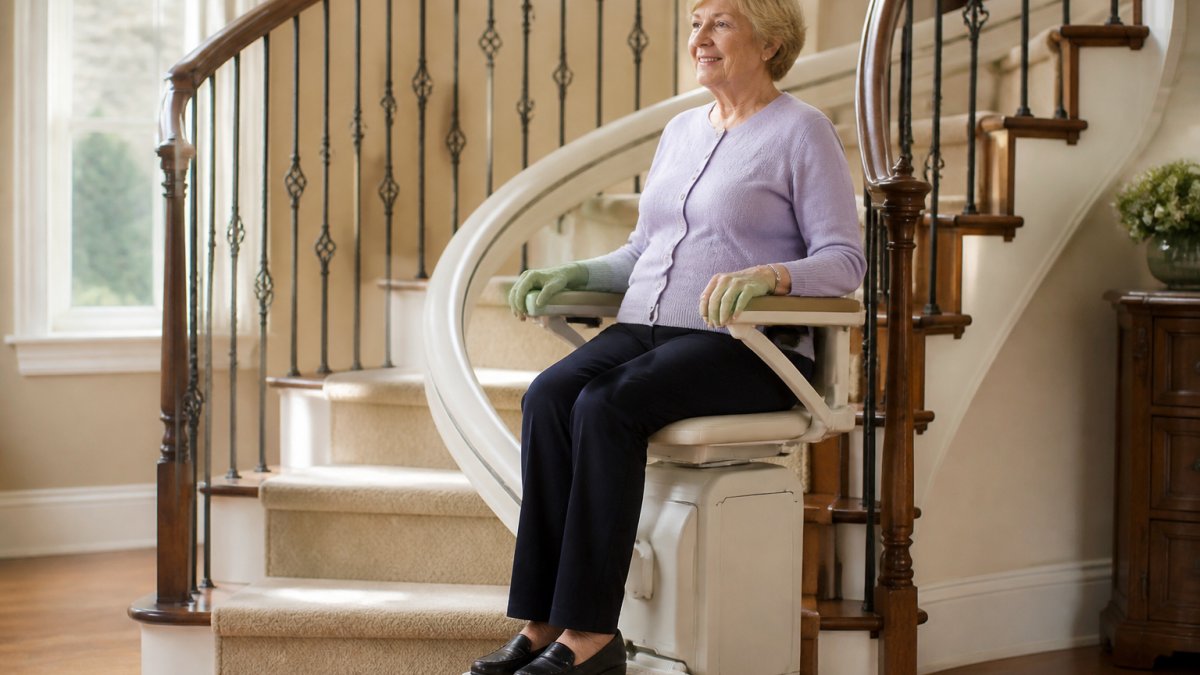
Curved stairlifts follow the contour of staircases with turns, landings, or winding sections. They're custom-built to match your staircase's exact shape, which means higher cost and longer installation time.
A straight stairlift uses a standard track; a curved stairlift requires a custom rail built to your staircase's measurements, affecting both price and installation timeline.
If you have a landing halfway up, you'll likely need a curved stairlift. The installer will assess whether the landing is large enough to accommodate the track transition.
Measure Your Staircase: Installation Requirements and Home Fit
A stairlift that's technically possible to install but doesn't fit your home's layout creates daily frustration. Before you commit to any model, your staircase needs a thorough assessment.
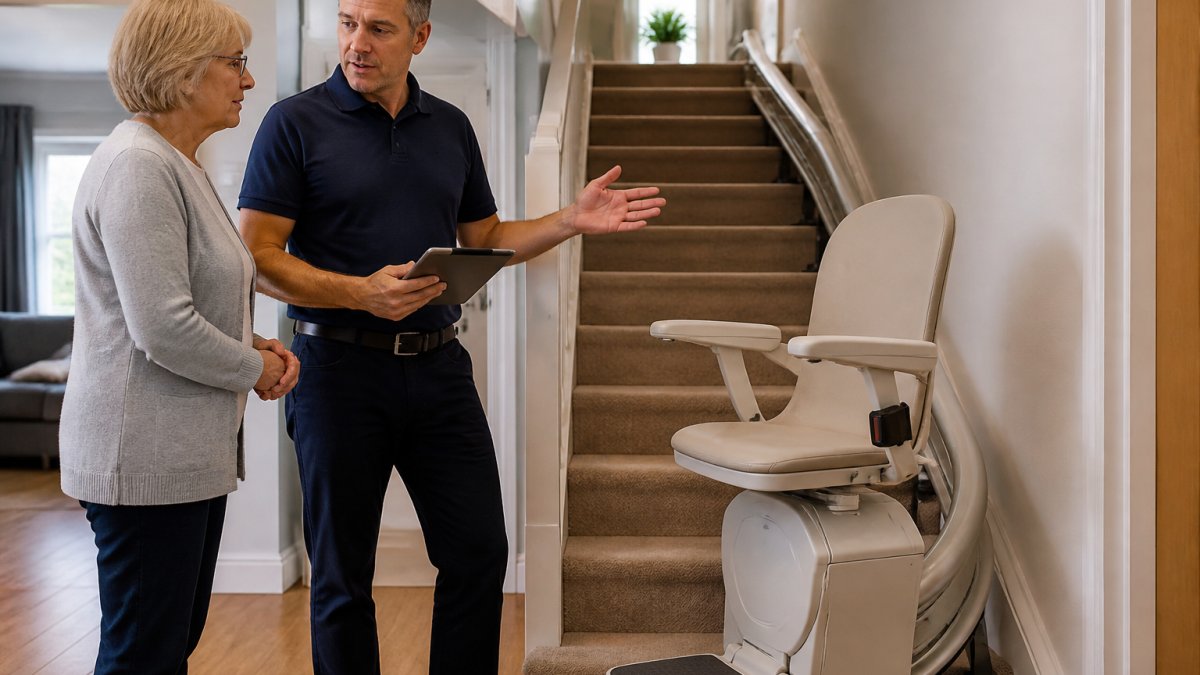
An installer will measure total staircase length, width, riser height, angles, and parking space at top and bottom. These measurements determine whether a standard model fits or custom modifications are needed.
Staircase Width and Narrow Stairs
Staircase width is critical. Most stairlifts have a folding seat, but they still need clearance. If your stairs are narrow, the folded seat might obstruct foot traffic or block a second person from passing.
Narrow stairs (typically under 36 inches wide) require stairlifts designed for tight spaces with narrower seats and compact folding mechanisms. Confirm the model has been tested in similar homes.
Even folded, the seat extends several inches into the staircase. In narrow homes, confirm someone can walk past it safely and emergency responders can access the stairs.
Measure your staircase width at the narrowest point and ask the installer how much space the folded seat will use, this affects whether the lift is livable for your household.
Landings, Doorways, and Parking Space
At the top of the stairs, the lift needs space to park safely without blocking doorways or creating a tripping hazard. If a bedroom or bathroom door opens onto the landing, the parked lift can't obstruct it.
At the bottom, you need clear space for the lift to stop without blocking entry or exit.
Landings need enough room for the lift to transition smoothly. If your landing is very small, the track might not fit without modifications, adding cost and complexity.
Walk through your home with the installer to identify doorways, furniture placement, and tight spots. They'll tell you honestly whether your home can accommodate the model you want.
Evaluate Key Stairlift Features for Comfort and Safety
The right stairlift combines comfort features that let you use it daily without pain or frustration, plus safety systems that protect you if something goes wrong.
Seat Comfort and Ergonomic Design
You'll spend time in this seat. Look for adequate width and cushioning. A seat that's too narrow causes thigh pressure; one that's too soft lacks support. The backrest should support your lower back without forcing an unnatural position.
Good armrests help you transfer safely and provide stable grip during the ride. Some have padded armrests that fold up for extra room.
Footrests should be adjustable and supportive. Your feet shouldn't dangle, and proper angle reduces leg strain during the ride.
Test the seat before buying. Does it feel stable? Do the armrests support your weight? Can you adjust the footrest comfortably?
Safety Sensors and Obstruction Detection
Obstruction sensors stop the lift if something blocks the track, a toy, pet, or furniture, preventing damage or injury.
Seat belt sensors ensure you're buckled in before the lift moves. Some lifts detect if you've shifted too far to one side and trigger a stop to prevent tipping.
Ask the installer what safety features come standard versus optional. Higher-end models typically have more redundant sensors, adding cost but increasing safety margin.
Battery Backup and Power Supply
Most stairlifts plug into a standard outlet and charge continuously. Battery backup systems allow you to move the lift even without power if you're stuck midway. Capacity varies by model, some allow multiple trips, others just one.
Ask specifically about battery life and how many trips you can make on a full charge if power is lost.
Batteries require periodic testing and eventual replacement, factor this into your long-term cost planning.
Questions to Ask a Stairlift Installer Before Committing
Before signing a contract, ask these questions:
- What's the timeline from assessment to installation?
- Does the price include delivery, installation, and testing?
- What happens if measurements change or the lift doesn't fit? (Get in writing.)
- How long does installation take?
- What's included in the warranty?
- What maintenance is needed and how often?
- Who do I call if something breaks, and what's the response time?
- Can I get references from other homeowners?
- Is there a trial period?
Reputable installers will answer these questions clearly and provide written documentation. If an installer is vague or pushes you to decide quickly, that's a red flag.
References matter. Talking to someone who's actually using the lift in their home tells you more than any brochure. Ask about their experience with comfort, reliability, and customer service. Ask whether they'd make the same choice again.
Calculate Total Cost of Ownership, Not Just Purchase Price
The price tag on a stairlift is only part of the actual cost. Installation, maintenance, batteries, and potential repairs add up over time. Understanding the full picture helps you make a realistic financial decision.
Installation, Servicing, and Maintenance Costs
Installation costs vary based on whether your stairs are straight or curved, and whether custom modifications are needed. A straight stairlift on standard stairs costs less than a curved lift on complex stairs. Some homes require structural reinforcement or additional electrical work, which increases the bill.
After installation, most lifts need annual servicing. This includes inspection, lubrication, testing of safety features, and battery checks. Servicing typically costs less than installation but is a recurring expense.
Batteries eventually fail and need replacement. The cost depends on the battery type and capacity. Budget for this as a maintenance expense, not a surprise.
Repairs beyond basic servicing happen occasionally. A worn motor, a damaged seat, or a faulty sensor might need replacement. These aren't always covered by warranty, so they're out-of-pocket expenses.
Rental, Refurbished, and New Stairlift Options
Not everyone needs to buy a stairlift. If you're recovering from surgery and expect to need it for a few months, renting makes more sense than purchasing.
Rental costs are typically a monthly fee. This includes installation, maintenance, and removal when you're done. For short-term use, the total rental cost is often less than buying, even accounting for installation fees.
Refurbished lifts cost less than new ones. They've been inspected, repaired, and tested to ensure they work properly. If the original warranty has expired, a refurbished lift might come with a shorter warranty period. This is a trade-off between cost and coverage.
New lifts come with full warranties and the latest features. They're the most expensive option but offer the longest expected lifespan and the most comprehensive protection.
Calculate the total cost for each option over your expected timeline. If you think you'll need the lift for more than 3-4 years, buying usually makes financial sense. If you're uncertain about duration, renting removes the risk of owning equipment you no longer need.
Make Your Final Decision: Testing, References, and Confidence
By this point, you've learned how to choose the right stairlift for your home by assessing your needs, measuring your stairs, evaluating features, and understanding the costs. The final step is building confidence that you're making the right choice.
Request a test ride with the actual model you're considering, not a demonstration model. Sit in the seat, experience the motion, and test the controls. Does it feel stable? Are the controls intuitive?
Talk to references. Ask them about comfort, reliability, and whether customer service was responsive when they needed help. Ask whether they use the lift daily and whether it's met their expectations.
Get everything in writing. The quote should itemize all costs. The warranty should clearly state what's covered and for how long. The installation timeline should be confirmed in writing.
Trust your instincts. If something feels off about the company or the equipment, keep looking. You're making a decision that affects your daily independence and safety. It should feel like the right choice.
Choosing the right stairlift means matching your home's layout, your physical needs, and your budget to equipment that works reliably every day.
Frequently Asked Questions
How do I know whether I need a straight or curved stairlift?
A straight stairlift works on stairs with no turns or landings. If your staircase has one or more turns, landings, or curves, you'll need a curved stairlift. Walk your stairs and note any direction changes. Curved stairlifts are custom-built to your staircase's exact layout, which is why a professional home assessment is essential before deciding.
What should I ask a stairlift installer before buying?
Ask about installation timeline and disruption to your home, warranty coverage and what it includes, ongoing maintenance schedules and costs, battery backup performance and how long it lasts during a power outage, and what happens if the stairlift needs repair or relocation. Request references from other local homeowners who've had work completed.
Can a stairlift be installed on narrow stairs?
Many stairlifts can fit on narrow stairs, but it depends on your staircase width and how the track is positioned. Some models have folding rails or seats that fold away when not in use, freeing up space for others to use the stairs. A professional installer will measure your staircase and determine whether a standard or custom-fit model is needed.
What's the difference between buying, renting, and refurbished stairlifts?
New stairlifts offer full warranties and the latest features but carry the highest upfront cost. Refurbished models are typically less expensive and still reliable, though warranties may be shorter. Rental options work well for temporary recovery periods after surgery or injury. Discuss your timeline and budget with an installer to determine which option makes sense for your situation.