 comparison
Straight vs Curved Stairlifts: Key Differences
Table of Contents
- Straight vs Curved Stairlifts: Core Differences
- Staircase Shape and Rail Configuration
- Straight vs Curved Stairlift Cost
- Stairlift for Stairs With a Landing
- Stairlift Installation Time and Process
- Safety, Maintenance, and Reliability
- Which Option Is Right for Your Home
- Frequently Asked Questions
Last Updated: October 9, 2026
Straight vs Curved Stairlifts: Core Differences
Understanding the distinction between straight vs curved stairlifts is essential before investing thousands of dollars in a solution that may not fit your home.
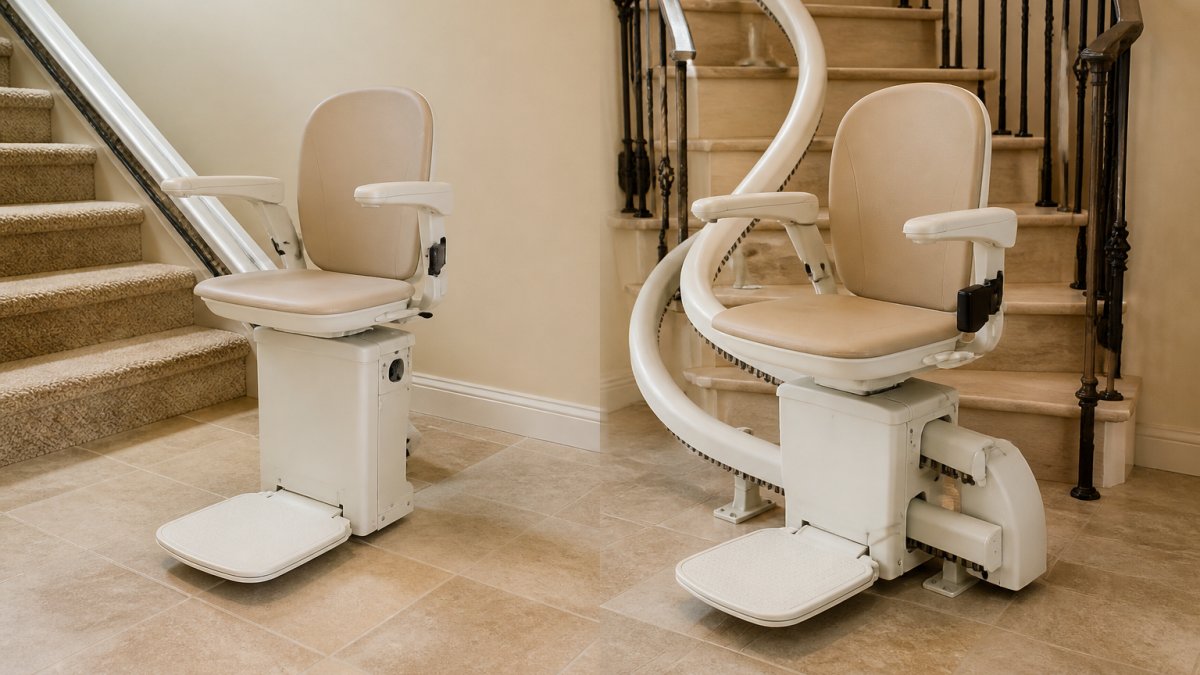
The core difference: a straight stairlift follows a single, uninterrupted flight of stairs, while a curved stairlift bends to accommodate turns, landings, or changes in staircase geometry. That distinction cascades into differences in cost, installation complexity, customization, and reliability.
At CT Stairlifts, we work with homeowners facing both scenarios.
What Straight Stairlifts Are
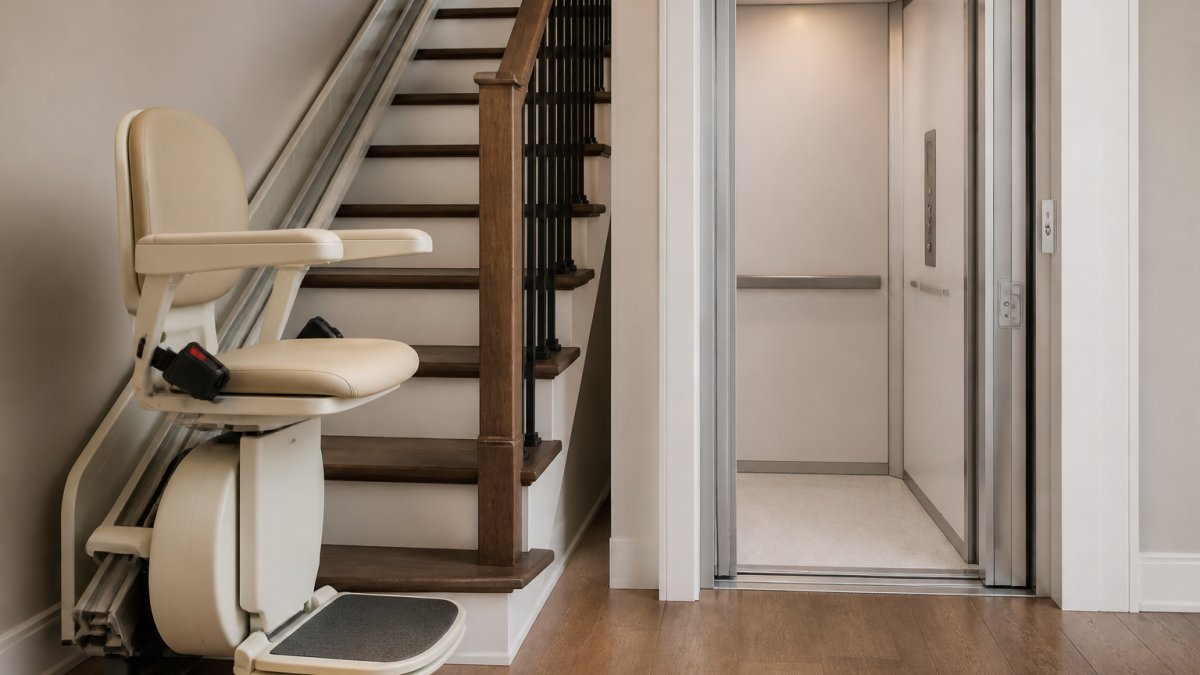
A straight stairlift is a standardized rail system for staircases without bends, turns, or intermediate landings. The rail runs in one continuous line from bottom to top, so manufacturers can produce standardized components that fit most single-flight staircases.
The seat, motor, and track follow the same basic geometry, and installation is faster because no custom fabrication is required. For homeowners with simple staircases, this means lower costs and quicker installation.
What Curved Stairlifts Are
A curved stairlift is a custom-built system whose rail bends to follow your staircase's exact path. If your stairs turn at a landing, curve around a corner, or change direction mid-flight, it navigates those transitions seamlessly, with seat, track, and motor engineered for your home's geometry.
Because each curved stairlift is custom-fabricated to your exact measurements, no two installations are identical. That customization makes them more expensive and time-intensive, but it's what allows them to work where a straight stairlift cannot fit.
Staircase Shape and Rail Configuration
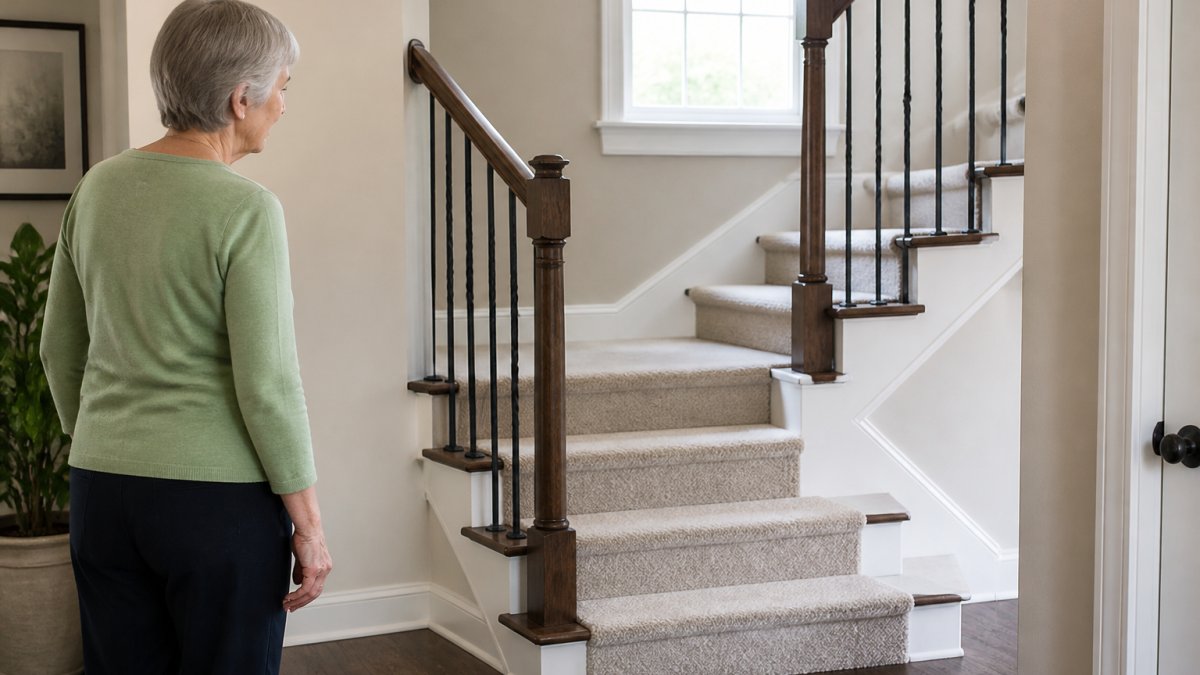
Your staircase's layout determines which stairlift you need. Many homes feature turns, landings, or changes in direction that require a curved rail.
Single Flight vs Multiple Turns
A single flight of stairs runs straight from bottom to top without interruption. If your staircase fits this description, a straight stairlift is appropriate, the rail runs in one continuous line and installation is straightforward.
If your stairs go up, turn at a landing, and continue in a different direction, you need a curved stairlift.
Intermediate landings are common in L-shaped or U-shaped stairwells. Determining whether your staircase has one continuous flight or multiple sections is the first step in choosing a stairlift type.
Custom Fabrication Requirements
Straight stairlifts use standardized rails whose dimensions, angles, and mounting points follow industry standards, reducing manufacturing costs and installation time.
Curved stairlifts require custom fabrication because no two staircases are identical.
This custom work adds time and expense but is the only way to create a rail that fits without gaps or misalignment. Fabrication typically takes several weeks, giving curved stairlifts longer lead times than straight models.
Straight vs Curved Stairlift Cost
Cost is often the first question homeowners ask, and the price difference between straight and curved stairlifts reflects manufacturing complexity and customization.
Price Range Comparison
Straight stairlifts start at lower price points thanks to standardized components and simpler manufacturing; curved stairlifts cost more because they require custom engineering and fabrication.
The price difference between straight and curved stairlifts reflects manufacturing complexity and customization. However, these are general industry ranges, and your actual cost depends on your specific situation.
The difference is substantial, but you're not just paying for equipment, you're paying for custom design, fabrication, and installation labor specific to your home.
What Affects Total Cost
Several factors influence final price beyond stairlift type. A longer rail requires more material and a more powerful motor; more turns increase customization complexity; and staircase width may require custom modifications to the rail or seat.
Installation complexity matters too: a straight stairlift might take a few hours, while a curved one with multiple turns could require a full day or more.
Staircase condition matters too, heavy carpeting, unusual angles, or structural issues may require extra work. Getting a quote from a qualified installer is the only way to know your actual total cost.
Stairlift for Stairs With a Landing
Intermediate landings are common, and understanding how one affects your stairlift options is crucial.
When a Landing Changes Your Options
If your staircase has a landing where the stairs change direction, a straight stairlift won't work, the rail cannot navigate the turn. A curved stairlift is required because the rail must bend at the landing.
A landing is the flat area between two flights where the staircase changes direction. Its presence automatically moves you into the curved stairlift category, meaning custom fabrication and higher cost.
Some homeowners are surprised to learn their seemingly simple staircase requires a curved system because of a landing they didn't initially consider, it fundamentally changes the rail configuration.
Intermediate Landing Considerations
When a curved stairlift navigates a landing, the rail bends and the seat moves through the transition. The bend angle, landing width, and height difference between flights all factor into the custom design.
Some systems have a parking position at the landing so the user can exit and rest before continuing; others keep the seat moving continuously. Your mobility needs and landing geometry determine which works best.
Landing measurements are critical: the landing width and the angles of approach and departure from each flight must be precise, since any variation affects the rail design.
Stairlift Installation Time and Process
Installation timelines differ significantly between straight and curved stairlifts. Here's what's involved.
How Long Installation Takes
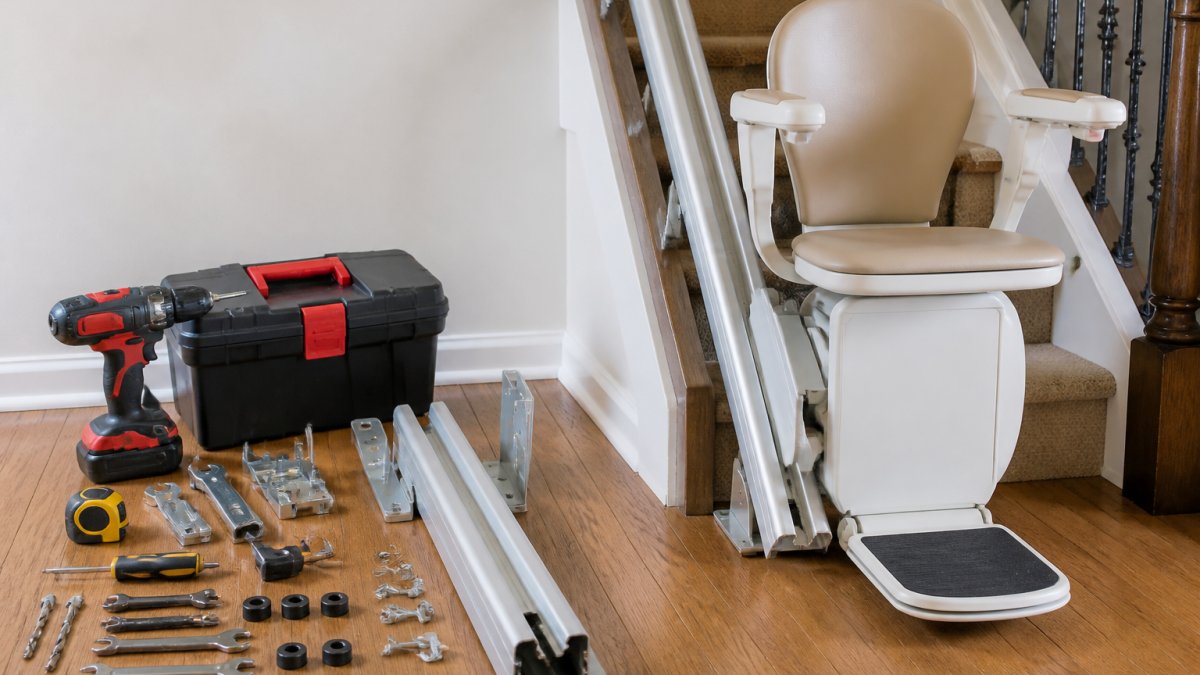
A straight stairlift installation typically takes a few hours to a full day.
A curved stairlift takes longer because the custom rail must be fabricated first, typically two to four weeks. Once it arrives, installation still requires a full day or more for careful alignment and securing.
Total time from consultation to riding is weeks for a curved system versus days for a straight one, a timeline that matters if you need mobility assistance quickly, such as after surgery.
Site Assessment and Measurement
Before installation, a technician assesses your staircase. For a straight stairlift this is quick: verifying a single, straight flight and taking basic rail length and angle measurements.
For a curved stairlift, the assessment is more detailed: the technician measures every section, documenting angles, landing dimensions, and obstacles. Precision is essential because the rail is fabricated from these measurements.
The assessment also identifies structural or safety issues, loose treads, unusual angles, or damage, so you understand the full scope before committing.
Safety, Maintenance, and Reliability
Both straight and curved stairlifts include safety features and maintenance requirements worth understanding before you decide.
Built-In Safety Features
Modern stairlifts include multiple safety mechanisms: a seat belt, footrests that fold up automatically, safety rails on both sides of the track, and an emergency stop button.
Most have a backup battery that descends the seat to the nearest landing if power is lost, preventing users from being stranded mid-staircase, plus automatic motor shut-off to prevent overheating or mechanical failure.
The seat is secured to the rail so it cannot derail, controls are positioned for easy reach, and staircase clearance is maintained so the stairlift doesn't block the stairs for others.
Ongoing Maintenance and Warranty
Stairlifts require minimal maintenance: regular cleaning and occasional rail lubrication, plus annual professional servicing to inspect the motor, battery, and mechanical components.
Warranty coverage varies by manufacturer and model, typically one to three years for parts and labor, with extended warranties available for additional cost. Knowing what's covered helps you plan long-term costs.
Curved stairlifts are comparable in reliability to straight ones when properly installed and maintained, custom rails meet the same safety standards, and regular maintenance keeps both types running for years.
Which Option Is Right for Your Home
Choosing between straight vs curved stairlifts requires evaluating your staircase layout, mobility needs, budget, and timeline.
Choosing Based on Staircase Layout
Start with your staircase geometry. If you have a single, straight flight of stairs with no turns or landings, a straight stairlift is appropriate and more affordable.
Your staircase width also matters. Narrow staircases may have clearance limitations that affect which models fit. Very wide staircases might require special configurations.
The condition of your stairs influences the choice too. Heavily carpeted stairs, unusual angles, or structural issues don't prevent installation, but they may affect cost or timeline. Understanding your staircase's specific characteristics helps you evaluate options realistically.
Accessibility and User-Specific Needs
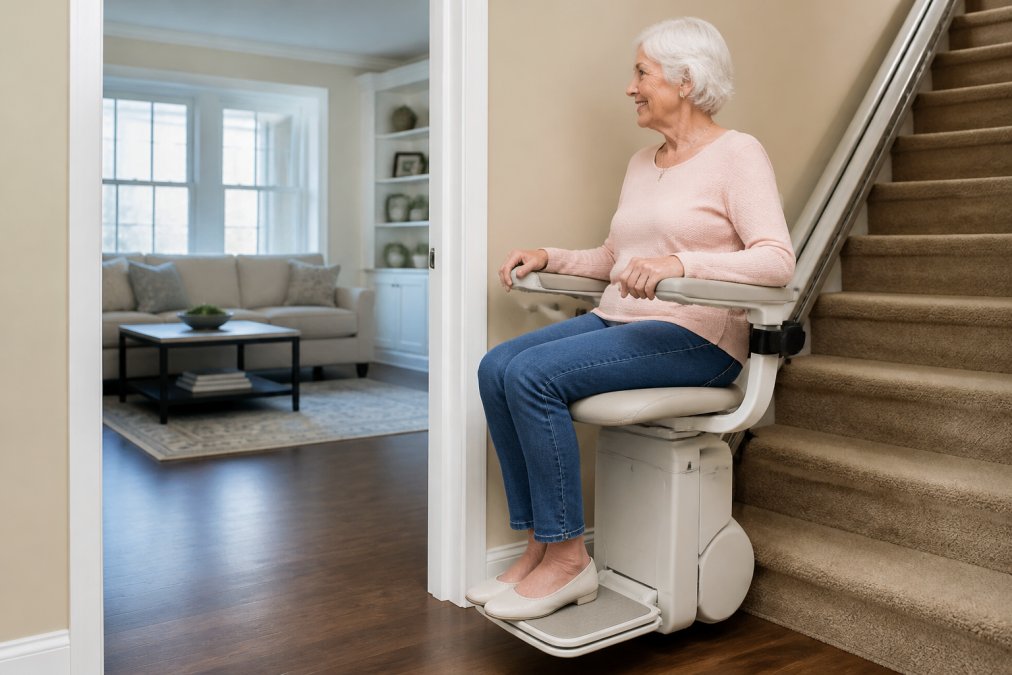
Consider who will use the stairlift and what mobility assistance they need. Someone recovering from surgery might need a stairlift temporarily. An older adult with arthritis might need one permanently.
Your physical ability to transfer on and off the seat matters. Some users can stand and pivot; others need a seat that swivels to ease the transfer. The height and width of the seat affect comfort and safety.
The number of people using the stairlift affects your choice. If multiple household members use it, the stairlift must accommodate different body types and mobility levels.
Budget and Long-Term Value
Your budget determines what's feasible. A straight stairlift is more affordable upfront and requires less installation time. If cost is your primary concern and your staircase is straight, this is the logical choice.
A curved stairlift costs more, but it's the only option if your staircase has turns or landings.
Long-term value includes reliability, maintenance costs, and how long you'll use the stairlift. A stairlift you'll use for years justifies a higher upfront investment. A temporary solution for recovery might warrant a lower-cost option.
| Comparison Factor | Straight Stairlift | Curved Stairlift |
|---|---|---|
| Staircase Type | Single, uninterrupted flight | Multiple flights with turns or landings |
| Rail Configuration | Standardized, pre-manufactured | Custom-fabricated to your staircase |
| Installation Time | Hours to one day | Two to four weeks for fabrication, plus installation |
| Cost Range | Generally $3,000-$6,000 (reported industry range) | Generally $9,000-$15,000 (reported industry range) |
| Customization | Minimal; standard components | Extensive; rail designed for your home |
| Best For | Simple staircases, faster installation, budget-conscious buyers | Complex staircase geometry, homes with landings or turns |
Frequently Asked Questions
What is the difference between a straight and curved stairlift?
Straight stairlifts follow a single unbroken flight of stairs without bends or turns. They use standardized rails and are designed for staircases that go from one level to another without intermediate landings. Curved stairlifts have custom-built rails that follow the exact contours of your staircase, including bends, turns, and landings. This customization is what makes curved models more expensive and time-intensive to install.
How much does a straight stairlift cost compared to a curved stairlift?
Straight stairlifts generally cost less because they use standardized components and installation methods. Curved stairlifts, which require custom fabrication and more complex installation, typically cost more. Exact pricing depends on your specific staircase measurements, features selected, and local installation factors. Contact CT Stairlifts for a personalized quote based on your home.
Can a straight stairlift be installed on a staircase with a landing?
A straight stairlift cannot navigate a staircase with a landing because it requires a continuous, unbroken rail. If your staircase has an intermediate landing where the stairs change direction or bend, you need a curved stairlift with a custom rail that follows that turn. A home assessment by a qualified installer will determine whether your staircase layout requires a curved model.
How long does it take to install a curved stairlift?
Curved stairlift installation typically takes longer than straight models because of custom fabrication and measurement requirements. A straight stairlift may be installed in a single day, while a curved stairlift often requires multiple visits: an initial home assessment for precise measurements, custom rail fabrication, and then installation. The total timeline can range from one to two weeks or longer, depending on the complexity of your staircase and the manufacturer's production schedule.
What happens if the power goes out while I'm using a stairlift?
Modern stairlifts include battery backup systems that allow you to continue moving to the nearest landing or floor in the event of a power outage. The backup battery is recharged whenever the stairlift is plugged in. Additionally, most stairlifts have manual lowering mechanisms so you can safely descend if the battery is depleted. Always ask your installer about the specific safety features and emergency procedures for your model.
Choosing the right stairlift means understanding your home's specific layout and your mobility needs. At CT Stairlifts, we help homeowners navigate this decision by assessing your staircase, explaining your options, and recommending the solution that works best for your situation. Regain access to every floor of your home with a stairlift designed for your needs. Contact CT Stairlifts for a home assessment and personalized quote to explore which option is right for you.