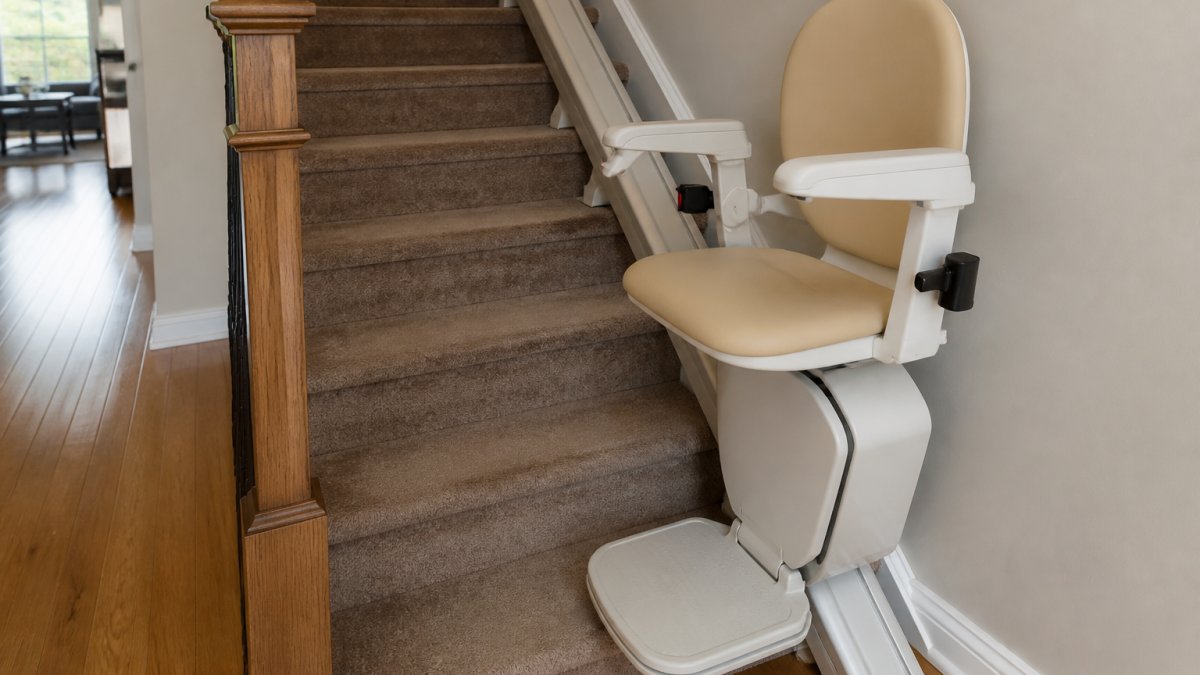
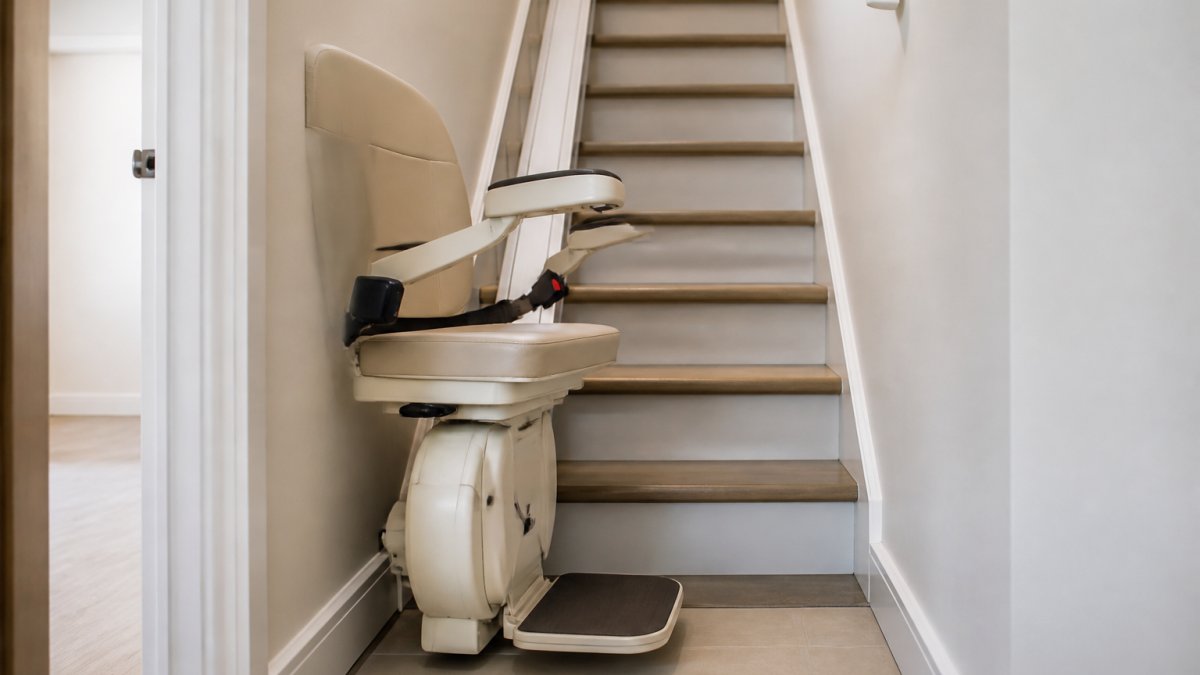
 how-to
7 Maintenance Tips for Narrow Staircase Stairlifts
Last Updated: October 25, 2026
Quick Summary
Maintenance tips for narrow staircase stairlifts start with cleaning the rail weekly with a soft, damp cloth, then drying it fully. Dust the rail, seat, footrest and controls weekly, keep the stairway clear, and park the lift fully on its charging point after every ride. Wipe charging contacts with a dry cloth and book professional servicing at least once a year.
- Wipe the full rail with a damp cloth, then a dry one, working top to bottom in short sections.
- Skip harsh chemicals, bleach and scouring pads; a damp microfiber cloth handles most rail grime.
- Set one day a week to dust the rail, carriage, seat, belt, footrest and controls.
- Park the lift fully seated on its charging point after every ride, since parking short is the most common cause of slowdowns.
- Book professional servicing at least once a year, or sooner for a daily-use narrow-stair lift.
Table of Contents
- Why Narrow Staircase Stairlifts Need Their Own Maintenance Routine
- Stairlift Track Cleaning on a Tight Staircase
- Weekly Dusting and Clearing the Stairway
- Stairlift Safety Checks You Can Do Yourself
- Battery, Charging Contacts, and Keeping the Lift Powered On
- Stairlift Servicing Frequency and When to Call a Technician
- Stairlift Troubleshooting: Warning Signs and Escalation Steps
- Booking a Professional Service Visit for Your Narrow Staircase
- Frequently Asked Questions
Why Narrow Staircase Stairlifts Need Their Own Maintenance Routine
A narrow staircase changes how a stairlift works.
At CT Stairlifts, we install and service lifts. Those installs need closer attention, not less.
Here is the short version. On a narrow staircase, stairlifts have less clearance, so small problems turn into big ones fast.
Below, we break down a simple routine: what to clean, how often, and when to stop and call a technician.
Stairlift Track Cleaning on a Tight Staircase
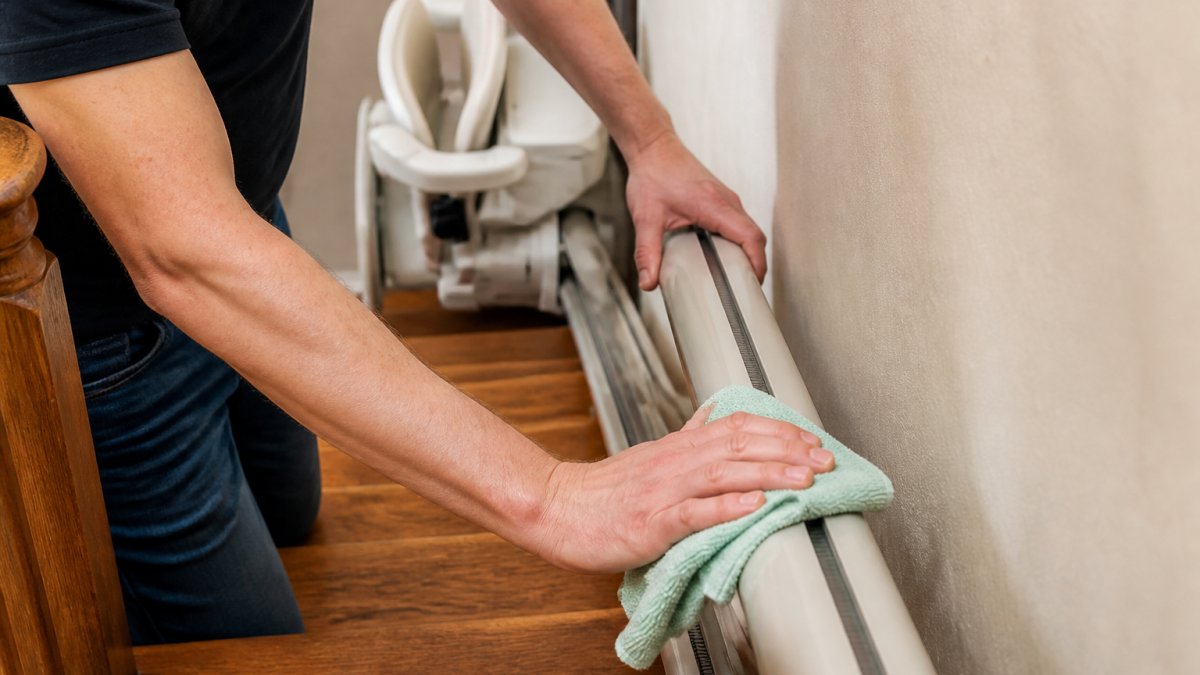
Clean the rail first, because everything else depends on it. A stairlift rail is the metal track the carriage rides on.
Wipe the full length of the rail with a soft, damp cloth. Then go back over it with a dry cloth so no moisture sits on the metal.
Work in short sections, top to bottom. On a tight staircase, you may need to fold the seat up and step around the carriage to reach the far side.
Tools and Products That Work on Narrow Rails
Keep the kit small and simple:
- Microfiber cloths for dust and light grime
- A soft-bristle brush for the rail groove and roller track
- A mild, non-abrasive cleaner for greasy spots
Skip harsh chemicals, bleach, and scouring pads. They can dull the rail finish and leave residue that gums up the rollers. A damp microfiber cloth handles most of it.
Weekly Dusting and Clearing the Stairway
Dust is the quiet enemy of a narrow-stair lift. It settles on the rail, the seat, and the controls, then works its way into the moving parts.
Set one day a week and stick to it. Run a duster or dry microfiber cloth over:
- The rail and the carriage housing
- The seat, armrests, and safety belt
- The footrest and its edges
Then clear the stairway itself. On a narrow staircase, clutter is a real hazard.
Keep the path clear at the top and bottom landings too. The lift needs open space to park and to let you step on and off safely.
Stairlift Safety Checks You Can Do Yourself
A quick visual inspection each week catches most problems early. You do not need tools. You need to look, listen, and test.
Run through this list:
- Look for signs of damage: cracks, frayed wires, loose bolts, worn belt edges.
- Check the safety belt for frays or a stiff buckle.
- Press every control button and confirm the lift responds.
- Test the stop button or key switch.
- Listen for new grinding, squealing, or clicking sounds.
- Confirm the seat and armrests lock firmly in place.
If something feels loose or sounds wrong, stop using the lift and call a technician. For a full walkthrough of safe day-to-day use, see our guide on how to safely operate a stairlift.
Checking Clearance, Obstructions, and the Seat Area
On a narrow staircase, clearance is everything. Check that the folded seat and footrest clear the wall and the handrail through the whole ride.
Keep children and pets off the stairs when the lift is moving.
Watch out: a footrest set too close to the step edge can scrape or catch. If you hear it dragging, stop and have the clearance checked rather than forcing it.
Battery, Charging Contacts, and Keeping the Lift Powered On
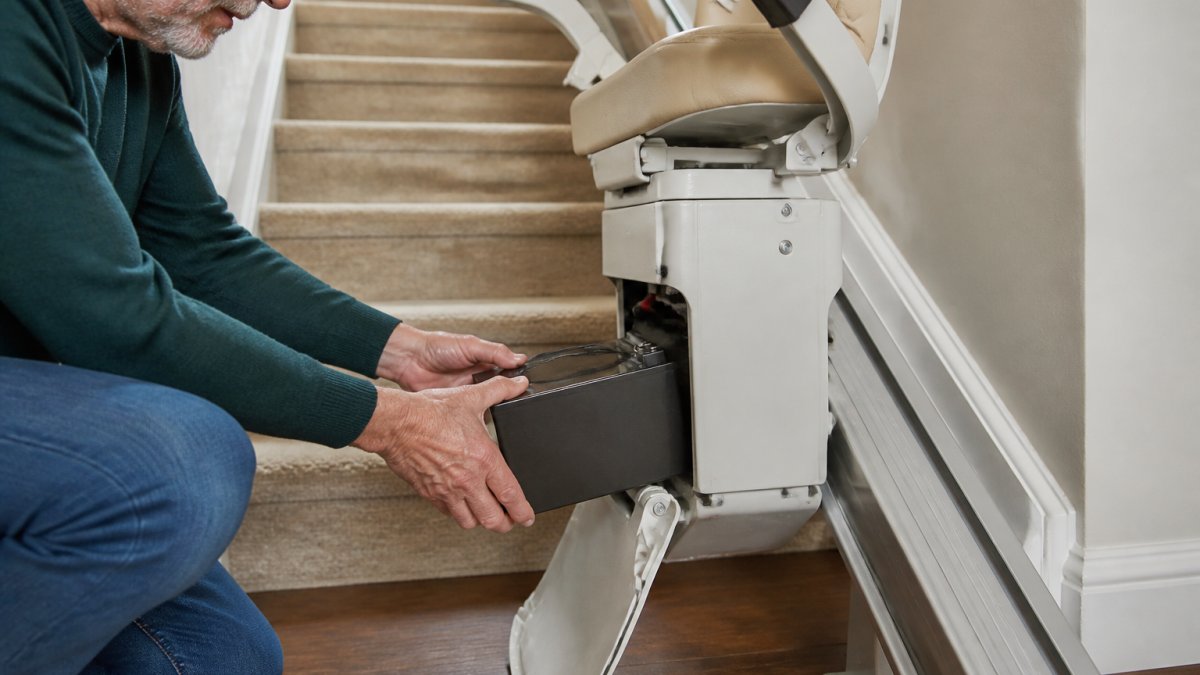
Battery and charging care is where narrow-stair lifts quietly fail. The lift sits in a confined space, the charging contacts are hard to see, and a unit that is left off its charging point for a few days can lose enough charge to stall mid-ride. The fix is a short, repeatable routine.
The parking habit that does most of the work
Leave the stairlift powered on and parked at its charging point whenever it is not in use. Most residential lifts run on a battery that charges through contacts on the rail, so the lift must sit in the correct spot to charge.
Make it a habit: after every ride, send the lift to the top or bottom charging point and confirm it is fully seated.
Charging contact care
During your weekly clean, wipe the charging contacts gently with a dry microfiber cloth. Dust, pet hair, and kitchen grime build up on the contacts and stop the battery from charging. Do not use a damp cloth on the contacts, and do not spray cleaner onto them, moisture and residue both interfere with charging.
If your model has an indicator light, learn what it means:
- Steady charge light: the battery is receiving power. This is the normal state when parked.
- Flashing or no light: the lift is not seated on the contacts, the contacts are dirty, or the battery is not holding charge.
- Beeping or a warning indicator: stop using the lift and check the manual before the next ride.
Warning signs the battery or charging system needs attention
Watch for these patterns, and treat any one of them as a reason to stop and investigate:
- The lift runs slower than usual, especially on the climb.
- It stalls or hesitates partway up the rail.
- The charge light does not come on when parked.
If the lift will be unused for a while
A lift that sits idle for weeks, a vacation, a hospital stay, a season when the stairs are not used, can lose charge even when parked. Before an extended absence, confirm the lift is fully seated on its charging point and the wall circuit is live. On return, run the lift empty from bottom to top once and watch the charge indicator before anyone rides it.
Model-specific boundaries
Battery type, charging voltage, and contact design vary by manufacturer. Follow the manual for your model. Do not open the battery cover, swap in a third-party battery, or adjust the charging contacts yourself, those are technician jobs, and a mismatched battery can damage the charging system or void the warranty.
Wondering whether a backup battery is worth it for your setup? Our article on whether a battery backup is necessary for stairlifts explains what it covers and when it helps.
Stairlift Servicing Frequency and When to Call a Technician
Plan on professional servicing at least once a year, and follow your manufacturer's guidance for your specific model. A narrow-stair lift that gets daily use may need a check sooner.
Call a technician right away if you notice:
- The lift stops or stalls between floors
- The belt, cable, or rail shows wear
- The lift makes new loud noises
- A control stops responding
Do not try to fix electrical parts or adjust the rail yourself. Before you commit to a service plan, our guide on how to compare stairlift service contracts walks through what to look for.
Here is the servicing schedule and the warning signs that mean you should call a technician.
| Item | Value | Note |
|---|---|---|
| Professional servicing | At least once a year | Follow manufacturer guidance for your model |
| Daily-use narrow-stair lift | May need a check sooner | A technician can tighten fittings and adjust clearance |
| Lift stops or stalls between floors | Call a technician right away | Do not fix electrical parts yourself |
| Belt, cable, or rail shows wear | Call a technician right away | Rail and electrical work need training |
| New loud noises | Call a technician right away | , |
| A control stops responding | Call a technician right away | , |
| Seat or footrest will not lock | Call a technician right away | , |
Stairlift Troubleshooting: Warning Signs and Escalation Steps
Some issues you can solve. Others you should hand off. The trick is knowing which is which.
Try these first:
- Lift will not move: confirm it is switched on and seated at the charging point.
- Sluggish ride: check the charging contacts and the battery light.
- Squeaky rail: wipe the rail clean and dry.
- Stuck seat: clear any obstruction and check the fold lock.
Stop and call a technician if the lift:
- Grinds or jerks
- Smokes or smells hot
- Will not hold a charge
- Stalls with someone on it
Watch out: never force a stuck lift or climb around it on a narrow stair. That is how falls happen. For a broader homeowner checklist, read our stairlift maintenance tips guide.
Booking a Professional Service Visit for Your Narrow Staircase
A narrow staircase leaves little margin for error, so a trained eye is worth it.
At CT Stairlifts, we focus on stairlift installations and service that help you regain access to every floor of your home. We keep the work professional and the advice plain.
Here is what a visit typically covers:
- A full track and carriage inspection
- Battery and charging contact testing
- Safety belt and control checks
- Clearance and obstruction review
If your stairs are narrow, our guide on whether stairlifts fit narrow stairs explains how fit affects design and care.
Frequently Asked Questions
How do you maintain a stairlift on a narrow staircase?
Start with weekly dusting of the rail, seat, armrests, and footrest using a soft cloth or microfiber cloth. Wipe the rail with a damp cloth and dry it fully so the drive unit grips clean metal. Keep the stairway clear of shoes, baskets, and pet items, and check that the charging contacts are free of dust. Once a month, run a basic visual inspection for wear and tear, and leave any lubrication or internal adjustments to a qualified technician.
How often should a stairlift be serviced?
Most manufacturers recommend professional servicing once or twice a year, and that interval matters more on a narrow staircase where the lift works harder. Your stairlift servicing frequency should also follow the manufacturer guidance in your manual and increase if you notice slower travel, unusual noise, or repeated stops. A technician can confirm the right service interval for your model and check the battery and charging system at the same visit.
Can you lubricate a stairlift rail yourself?
Do not lubricate the rail unless your manufacturer's manual explicitly tells you to. Many stairlift rails are designed to run dry, and adding grease or oil can attract dust, cause the drive unit to slip, and interfere with safety sensors. On a narrow staircase, extra grease also ends up on the seat and handrail. If the lift sounds rough or moves unevenly, report it to a technician rather than reaching for a lubricant.
What should you check if a stairlift stops working?
Stairlift troubleshooting starts with the simple checks: confirm the power supply is on, the lift is parked at a charging point, the seat is folded down, the safety belt is fastened, and nothing is blocking the stairway. Press the call button or use the second control to see if the fault is a stuck button. If the lift still will not move, keep it out of service, keep children and pets off the stairs, and call a technician.
Narrow staircases ask more of a stairlift, and they ask more of you. A weekly wipe-down, a clear stairway, and one yearly service visit keep the lift running smooth for years. If your lift is due for a check, or you are weighing a new install on a tight staircase, get started with CT Stairlifts and keep every floor of your home within reach.