 how-to
How to Qualify for Home Modification Grants
Quick Summary
To qualify for home modification grants, you typically need a documented disability, medical condition, or age-related mobility need, household income within your area's limits, and ownership or written landlord permission for the home. Most programs also require the home to be your primary residence and medical proof that the modification is necessary.
- Get written medical documentation showing your condition limits mobility and that the change addresses it.
- Check your household income against the current HUD Area Median Income limits for your county.
- Owners need proof of ownership; renters need written landlord consent before any work begins.
- Submit a complete application early in the funding cycle, since incomplete packets cause the most delays.
- Never pay a fee to guarantee a grant; legitimate programs do not charge application fees.
Table of Contents
- What Home Modification Grants Cover and How They Differ From Loans and Medicaid
- Step 1: Check Your Eligibility by Age, Disability and Medical Need
- Step 2: Confirm Household Income Against Area Median Income Limits
- Step 3: Verify Homeownership, Occupancy and Renter Options
- Step 4: Gather Documents and Submit Your Home Modification Grant Application
- Stairlift Financial Assistance: Where Stairlift Costs Can Be Covered
- Home Modification Assistance for Seniors: Planning Your Next Step
- Frequently Asked Questions
What Home Modification Grants Cover and How They Differ From Loans and Medicaid
Last Updated: November 1, 2026
Home modification grants help older adults and people with disabilities pay for changes that make a house safer to live in.
Here is the short answer. A grant is money you usually do not have to pay back.
- Grants: Usually no repayment. Often limited to specific types of work and capped at a set amount.
- Loans: Must be repaid. Terms, rates, and eligibility vary by lender and program.
- Medicaid: Health coverage that may include some in-home support. It does not function as a general repair fund.
Many people use a mix of these options. The right mix depends on your age, health, income, and whether you own or rent your home.
Step 1: Check Your Eligibility by Age, Disability and Medical Need
Start by asking a simple question: do you or a household member have a disability, a medical condition, or an age-related need that affects safe use of the stairs? Most grant programs tie eligibility to one of these reasons.
Programs commonly look at:
- Age: Some programs focus on older adults; check each program's official eligibility rules for any age threshold.
- Disability: Many programs require a documented permanent or long-term disability.
- Medical need: A doctor or therapist may need to confirm that a modification is medically necessary.
A common mistake is assuming a diagnosis alone is enough. Most programs want written proof that the condition limits mobility and that the requested change addresses it.
Step 2: Confirm Household Income Against Area Median Income Limits
Income is the single most common reason applications stall. Many federal and state home modification programs tie eligibility to Area Median Income (AMI), which the U.S. Department of Housing and Urban Development (HUD) publishes for each county and metropolitan area. Knowing where your household falls on the AMI scale lets you predict which programs are realistic before you spend hours on paperwork.
How AMI tiers work
HUD expresses income limits as a percentage of the local median. The tiers you will encounter most often:
A program that says "serves very low income households" is drawing a hard line at 50% of AMI for your county and household size. A program that says "low to moderate income" may reach up to 80% or 120%. The exact dollar figure changes every year and varies by county, so always pull the current HUD income limit table for your area rather than relying on a number you heard last year.
What counts as income
This is where most applicants misjudge their position. Programs differ, but common patterns include:
- Counted: wages, salaries, self-employment net income, Social Security benefits, Supplemental Security Income (SSI), pensions, annuity payments, rental income, and regular contributions from household members.
- Sometimes counted: lump sums, inheritances, and asset drawdowns, depending on the program's rules.
- Often excluded or treated separately: certain veteran benefits, some disability payments, and food assistance, though this varies widely.
Because the definitions are not uniform, do not assume a program will exclude a source just because another program did. Ask the administering agency for its written income definition before you apply.
Who counts as a household member
HUD-style rules generally count everyone who lives in the home, not just the person named on the deed. A multigenerational household with adult children or relatives can push total household income above a limit even when the applicant's own income is low. Confirm the program's household definition, some count all occupants, others count only those on the application.
A quick self-screen across programs
Use this sequence to narrow your options before applying:
- Pull your county's current HUD income limits for your household size.
- Total your gross annual household income using the program's counted-source list, not your tax return alone.
- Note your AMI tier (30%, 50%, 80%, or 120%).
- Match your tier to program language, a program serving "low income" generally means up to 80% of AMI, but verify.
- Flag programs where you are near a threshold, since a small income change or a household-size change can move you across a line.
Where income rules diverge from HUD
Not every program uses HUD limits. USDA repair programs, some state housing finance agency programs, and certain Medicaid waiver services use their own income tests or none at all. Veteran programs may key eligibility to service-connected disability rather than income. Treat HUD AMI as your default benchmark, then confirm each program's actual rule.
The article breaks down the AMI tiers that programs typically use to set income eligibility.
| AMI tier | Typical program reach | What to check |
|---|---|---|
| 30% of AMI | Extremely low income | Current HUD limit for your county |
| 50% of AMI | Very low income | Hard cutoff for many programs |
| 80% of AMI | Low to moderate income | Often the 'low income' ceiling |
| 120% of AMI | Moderate income | Widest tier; apply here first |
Step 3: Verify Homeownership, Occupancy and Renter Options
Most grant programs require you to own the home or have a clear right to modify it. Many also require that the home be your primary residence, meaning you live there most of the year.
- Owners: Bring proof of ownership, such as a deed or property tax record.
- Occupants: Show that the home is your primary residence, using a driver's license or utility bill.
- Renters: Ask your landlord for written permission before any work begins. Some programs fund modifications for rental units, but they often require the landlord to agree to the work and keep it in place.
Renters have fewer options, but they are not out of luck. Ask your local housing agency or Area Agency on Aging about programs designed for rental units. Always get the landlord's approval in writing first.
Step 4: Gather Documents and Submit Your Home Modification Grant Application
Most guides stop at a document checklist. The harder question is what actually happens after you submit, and how long each stage takes. The sequence below reflects the common workflow across federal, state, and local programs, though individual agencies vary.

The typical application sequence
- Pre-application or intake screening. Many agencies run a short phone or online screen before accepting a full application. This is where staff confirm your age, disability status, income tier, and ownership. Ask for the screening result in writing.
- Formal application submission. You submit the packet of documents (see checklist below). Incomplete packets are the most common cause of delay.
- Eligibility review. Staff verify income, ownership, and medical documentation. This stage can take several weeks.
- Home assessment. A program assessor, often an occupational therapist or contractor, visits to confirm the modification is necessary and feasible. Some programs require this before approving a scope of work.
- Scope of work and contractor bids. The program may require two or three written bids from approved contractors. Some programs assign a contractor; others let you choose from a list.
- Approval and funding reservation. Once approved, funds are reserved, but reservation is not the same as disbursement.
- Project start and inspection. Work begins, and the program may inspect before final payment.
Realistic timelines
Timelines vary widely by program and funding cycle. A common pattern:
- Intake screening: days to a few weeks.
- Eligibility review: several weeks.
- Assessment and bids: two to six weeks, depending on contractor availability.
Programs with limited annual funding often operate on a first-come, first-served or waitlist basis. Submitting early in a funding cycle matters more than submitting a perfect packet late.
Documents most programs request
- Proof of identity
- Proof of income for everyone in the household
- Proof of ownership or a signed landlord agreement
Use this checklist before you submit:
- Income records from the past 12 months
- Doctor or therapist letter describing the mobility limit
- Deed, tax bill, or lease and landlord consent
Waitlists, denials, and appeals
Limited funding means waitlists are common. If you are placed on one, ask three questions: where you sit on the list, how the list is ordered, and whether new funding opens on a known cycle. If you are denied, request the reason in writing. Common denial reasons include income above the limit, incomplete medical documentation, or a scope of work the program does not cover.
How to verify a program is real and current
Before you send documents, confirm the program through an official channel: a government website ending in .gov, a Area Agency on Aging, a state housing finance agency, or a Department of Veterans Affairs office if you are a veteran. For a step-by-step walkthrough of applying for stairlift grants, start there. Ask for the program's current funding status and application cycle, since published guidance can lag behind actual availability.
Stairlift Financial Assistance: Where Stairlift Costs Can Be Covered
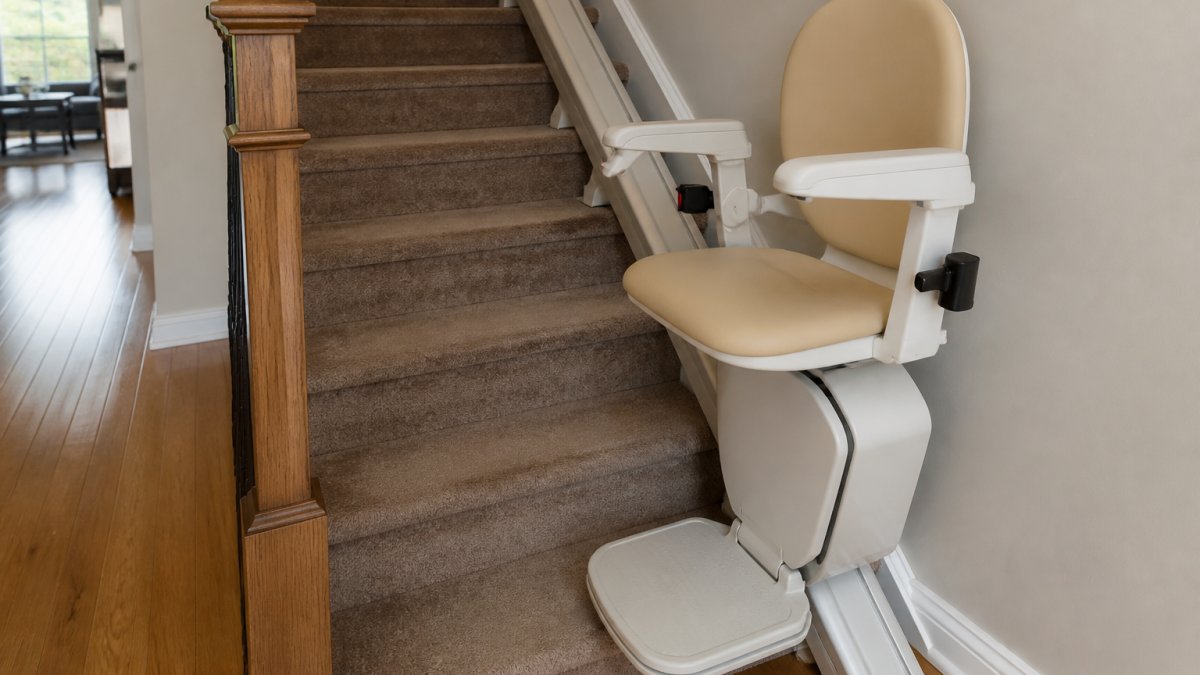
A stairlift is often the fastest way to restore access to every floor of a home. Before you apply, review the real costs of installing stairlifts in Connecticut homes to budget accurately.
For current funding details and amounts, check with your local Area Agency on Aging, your state housing finance agency, or the Department of Veterans Affairs if you are a veteran.
Watch out: do not assume a Medicaid waiver covers a stairlift. Coverage depends on your state's program rules and your medical eligibility.
Home Modification Assistance for Seniors: Planning Your Next Step
Aging in place is a goal for many older adults. Modifications such as stairlifts, grab bars, and wider doorways can make that possible.
Compare the options with a simple question: will this change let me stay in my home safely for the next several years?
To explore your options, contact CT Stairlifts for current information about stairlift installations for your home.
Frequently Asked Questions
Who qualifies for home modification grants?
Eligibility depends on the specific program, but most consider a combination of factors: age (senior-focused programs set their own age thresholds), a permanent disability or medical need for the modification, household income relative to the area median income, and whether you own and occupy the home as your primary residence. Veterans with service-connected disabilities may qualify for separate VA housing grants. Start by reviewing the eligibility rules of each program in your area and confirm them on the official agency website before applying.
How do I apply for a home modification grant?
Most applications begin with an intake form submitted to a state housing agency, area agency on aging, or local nonprofit. You will typically need proof of income, proof of disability or medical need, proof of ownership or occupancy, and one or more contractor quotes that describe the proposed work, such as installing a stairlift. After submission, the program may verify your information, inspect the home, and schedule the work. Ask for an expected timeline in writing, since processing can take several months.
Can I get a grant to install a stairlift?
Some grant programs may cover accessibility work, and stairlift installation is sometimes among the eligible projects when medical need is documented. Funding is limited and often prioritizes low-income households, so stairlift costs are not guaranteed to be covered. Ask your local area agency on aging or state housing office whether stairlift installation is an eligible project, and request the specific funding limit before you commit to a contractor.
What can I do if I don't qualify for a home modification grant?
If you are denied, ask the agency for the reason in writing and check whether you can appeal or reapply when your circumstances change. Other options include low-interest home repair loans, Medicaid waiver programs that may cover home modifications for eligible people, and nonprofit assistance. Consult a qualified professional and compare the total cost, eligibility rules and repayment terms of each option.