 comparison
Best Stairlift Options for Multi-Story Homes in 2026
Table of Contents
- Comparing the Best Stairlift Options for Multi-Story Homes
- Straight Stairlifts: The Simple, Cost-Effective Choice
- Curved Stairlifts for Bends, Turns, and Landings
- Choosing a Stairlift for Split-Level Homes
- Stairlift Installation Requirements You Need to Plan For
- Stairlift vs Home Elevator: Which Fits a Multi-Story Home?
- Stairlift Cost for Multiple Floors: What Drives the Price
- Frequently Asked Questions
Last Updated: October 20, 2026
Comparing the Best Stairlift Options for Multi-Story Homes
Finding the best stairlift options for multi-story homes starts with one question: how many separate flights must you climb, and what shape is each one? At CT Stairlifts, we help homeowners answer that before anyone talks about models. A stairlift is a motorized chair that travels along a rail mounted to your staircase, carrying one person between floors without requiring them to climb. The right configuration depends on your staircase layout, not on which unit has the longest feature list.
Below, we break down straight, curved, and multi-flight setups, what installation actually involves, and how stairlifts compare with a home elevator.
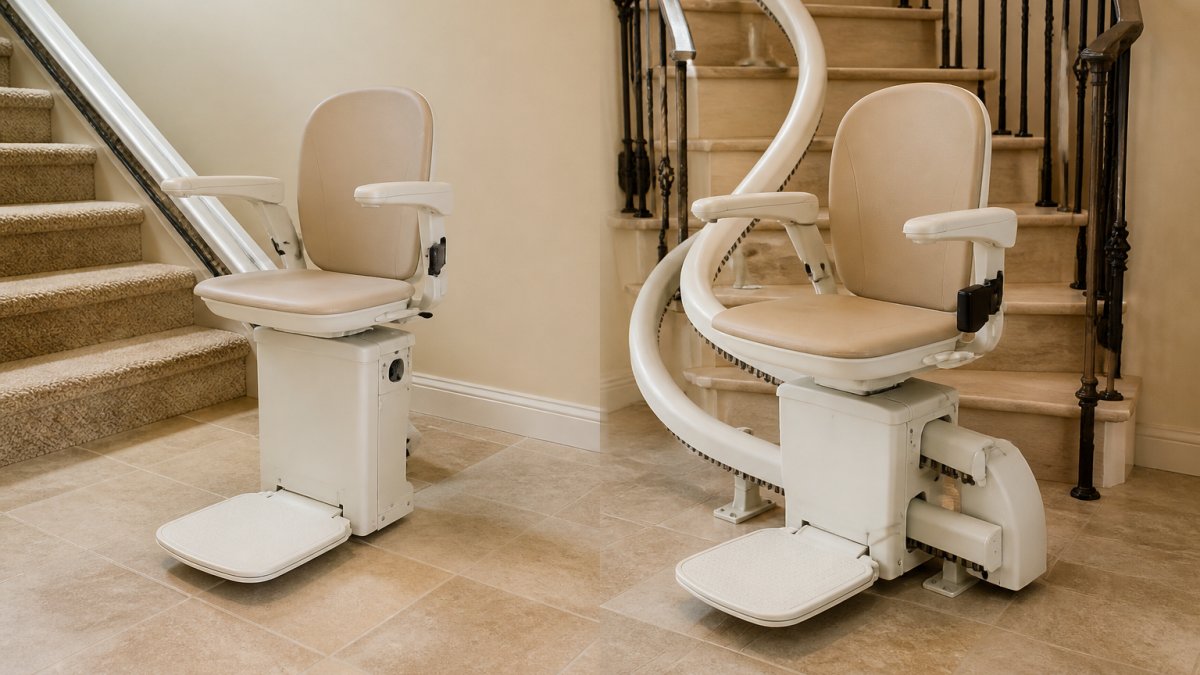
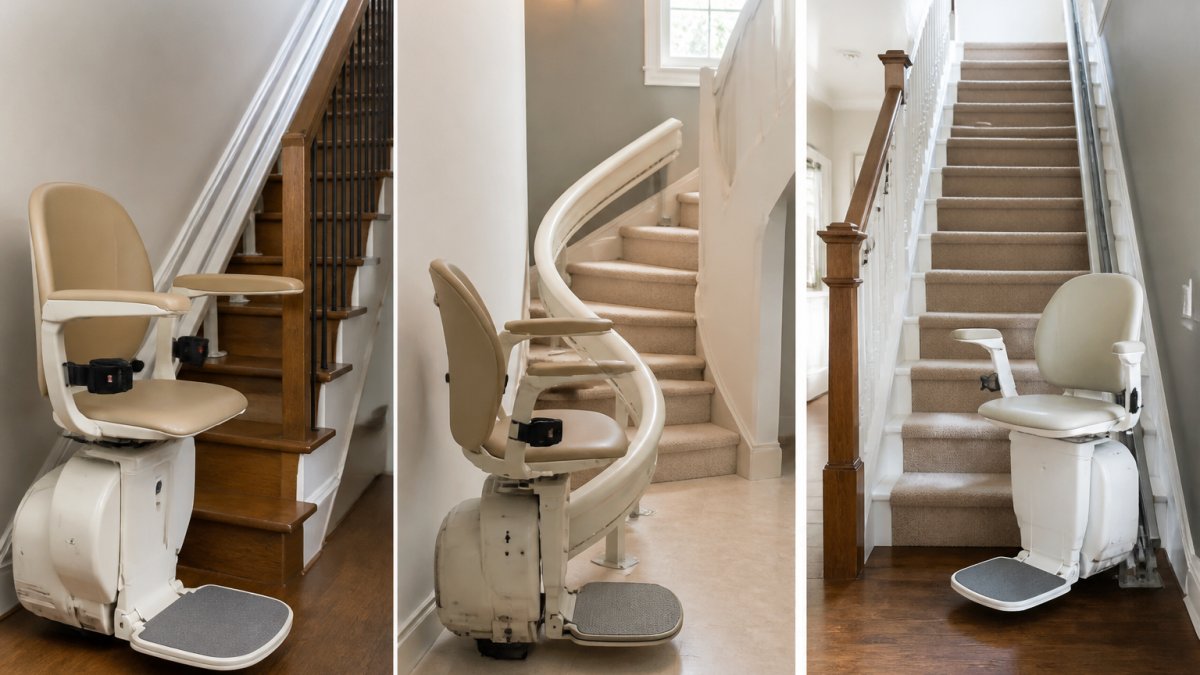
Quick Comparison: Straight, Curved, and Multi-Flight Models
| Configuration | Best For | Rail Type | Relative Cost | Installation Complexity |
|---|---|---|---|---|
| Straight | Single uninterrupted flight | Straight rail | Lowest | Simple, often one visit |
| Curved | Bends, turns, landings | Custom curved rail | Highest | Measured and built to order |
| Multi-flight | Split-level and stacked flights | Two or more rails | Highest overall | Multiple units, phased install |
Straight Stairlifts: The Simple, Cost-Effective Choice
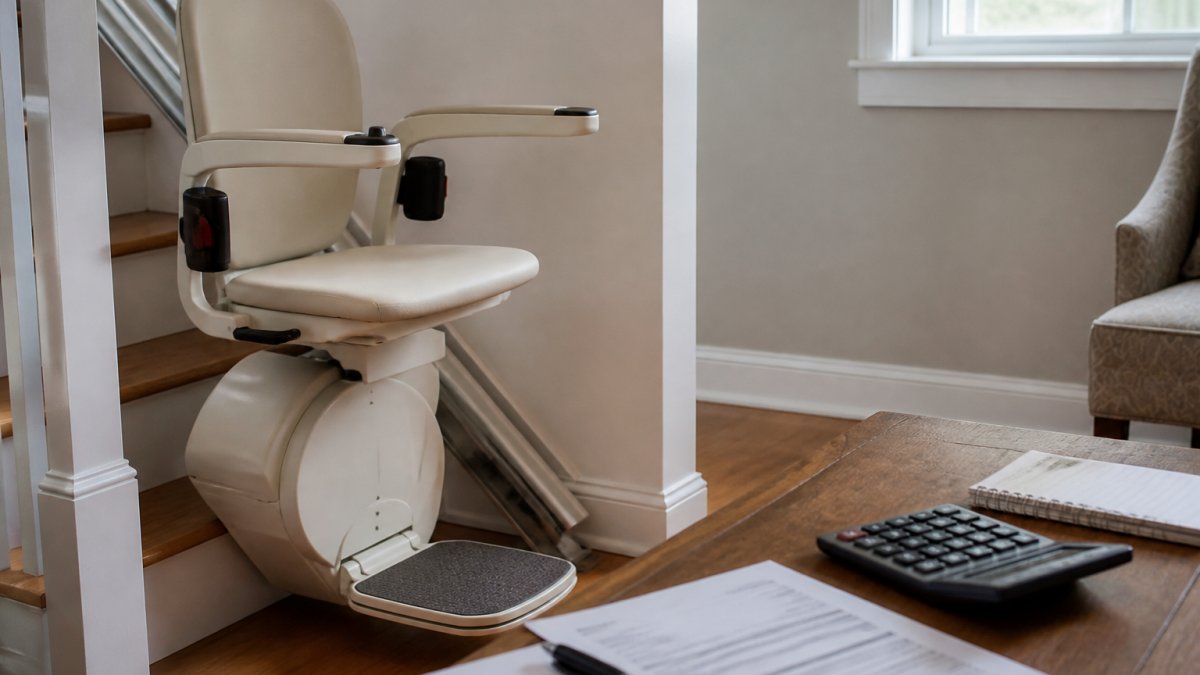
A straight stairlift is the most affordable and fastest-to-install option, and it works only when your staircase is one continuous run with no turns, bends, or intermediate landings. The rail is cut to your staircase length and mounted directly to the stair treads rather than the wall, so the stairwell itself stays largely untouched.
For a multi-story home, a straight unit fits one flight. If your home has two straight flights separated by a landing, you need two units or a different configuration entirely. That distinction is where most buyers get surprised.
Seat, footrest, and armrest options matter more than most buyers expect. A folding seat and footrest keep the staircase usable for everyone else in the house, and swing-up armrests make transferring on and off easier for anyone with limited grip strength.
Curved Stairlifts for Bends, Turns, and Landings
Curved stairlifts solve the layouts straight models cannot: staircases with bends, turns, winders, or a landing partway up. Each curved rail is custom-built to the geometry of your staircase, which is why the process starts with a home assessment and precise stair measurements rather than a catalog order.
The trade-off is time and cost. A custom rail has to be manufactured after measurement, so expect a longer lead time than a straight install. In exchange, you get a rail that follows your staircase exactly, with the chair staying level through the turns.
Safety features on curved models typically include obstruction sensors that stop the chair if something blocks the path, a seat belt, and a swivel seat that locks at the top landing. For staircases with multiple flights and landings, a curved rail can sometimes be designed to continue across a landing rather than stopping there, which is worth asking about during the home assessment.
Choosing a Stairlift for Split-Level Homes
Split-level homes are the trickiest category because the flights are short but the level changes are frequent. A stairlift for split-level homes usually means one of three configurations, and the right one depends on how the flights connect, not on how many floors the house has.
Configuration 1: One continuous custom rail. When the flights are joined by a landing or a short run of steps, a single curved rail can sometimes be built to carry the chair across the landing and up the next flight. This is the most convenient outcome because the rider never leaves the seat between levels. It is also the least common, because the rail needs enough room to sweep through the landing without blocking the stairwell, and the manufacturer must be able to fabricate the geometry.
Configuration 2: Separate lifts per flight. When flights are stacked, separated by a full room, or too tight for a continuous rail, the practical answer is one lift per flight. The rider travels up the first flight, dismounts at the landing, walks or transfers across the landing, and boards the second lift. This works well when the landings are generous and the rider can walk a few steps or use a walker between units. It works poorly when the rider cannot transfer independently, because each dismount is a transfer point.
Configuration 3: Hybrid. A straight unit on the long main flight plus a compact curved or straight unit on a short secondary flight is a common split-level pattern. It keeps cost down on the simple flight while still solving the awkward one.
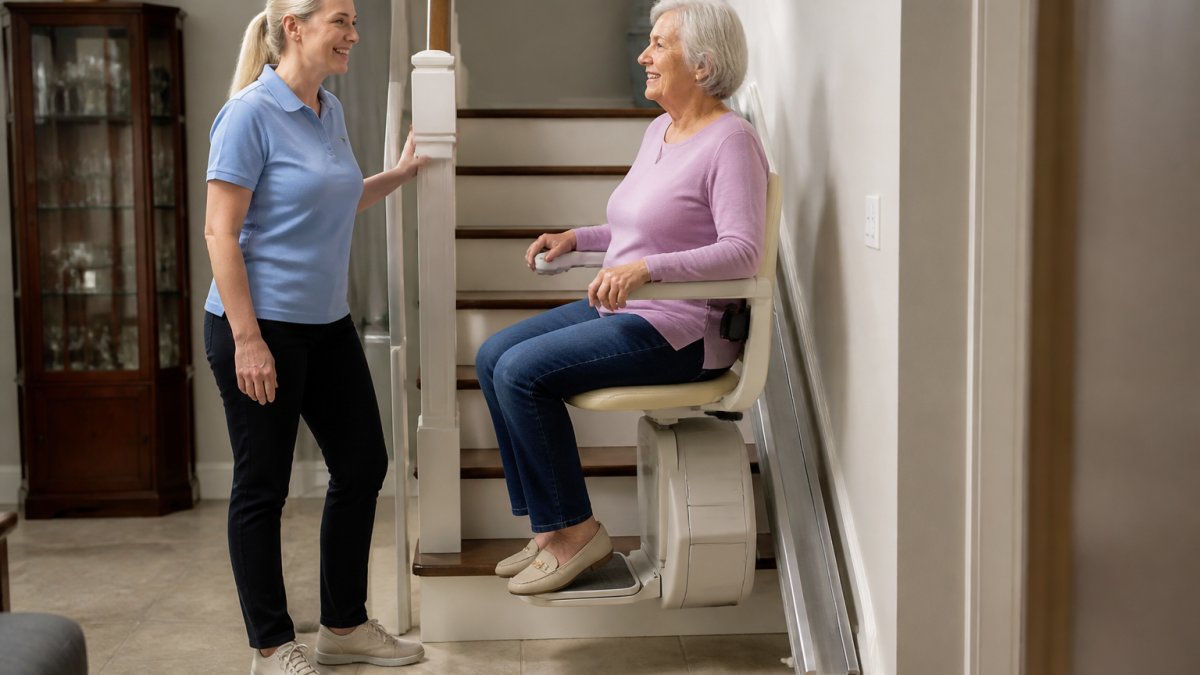
Short flights change the calculus. You get less travel per unit, so per-floor cost rises, and the value of a single continuous rail goes up. Narrow stairwells are common in split-level layouts, so confirm stair width and clearance during the assessment, a chair that fits a standard flight may not fit a short, tight one with a nearby wall or railing.
Stairlift Installation Requirements You Need to Plan For
Stairlift installation requirements come down to four things: stair width, staircase condition, a power source near the bottom or top of the run, and clear access for the installers. Most straight installations are completed in a single visit; curved rails take longer because the rail is fabricated to order.
- Stair width: the chair and rail need clearance while the staircase stays passable for others
- Staircase condition: treads must be sound enough to anchor the rail
- Power: a standard outlet near the staircase, with battery backup for outages
- Access: a clear path for bringing rail sections and the chair into the home
Battery backup is standard on most modern units and keeps the chair moving to the nearest landing during a power outage. Ask specifically how the unit behaves mid-travel when power drops.
Stairlift vs Home Elevator: Which Fits a Multi-Story Home?
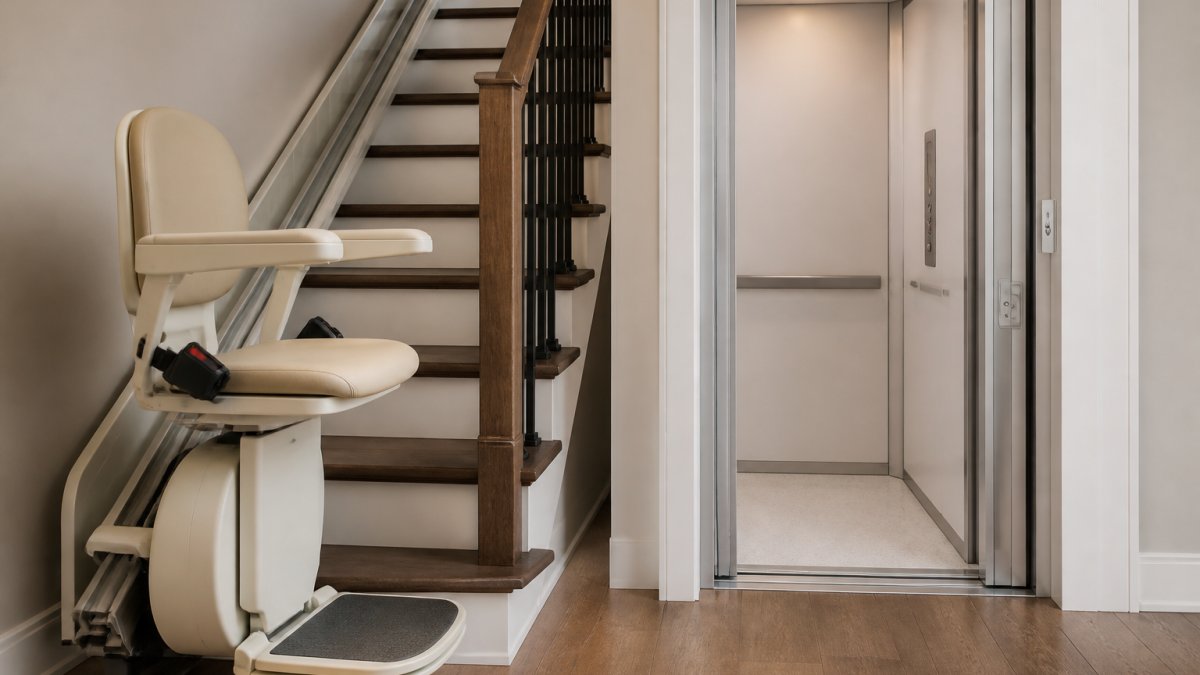
A stairlift vs home elevator decision usually comes down to space, structural work, and how many people need to travel. A stairlift follows your existing staircase and needs no shaft, no structural modification, and no major construction. A home elevator requires a dedicated shaft or closet space, significant building work, and a much larger budget.
For most multi-story homes where one person needs help between floors, a stairlift is the practical answer. A home elevator makes more sense when multiple household members have mobility needs, when a wheelchair must travel between floors, or when the home is being built or renovated anyway. If you are weighing this choice, be honest about who needs to use it and for how long.
Stairlift Cost for Multiple Floors: What Drives the Price
Stairlift cost for multiple floors is driven by configuration, not by brand alone. A single straight unit is the least expensive path. Curved rails cost more because they are custom-built. Multi-story homes needing two or more units multiply the equipment and installation cost. What most quotes leave out is the ongoing cost of owning more than one lift, so it helps to think in terms of total cost of ownership rather than sticker price.
Purchase and installation. A straight unit is the lowest-cost entry point because the rail is cut to length rather than fabricated. A curved rail carries a premium for measurement, design, and custom fabrication, and that premium rises with the number of turns and the length of the run. When a home needs two units, you pay the equipment and installation cost twice, plus any separate electrical work at each location.
Rail customization. A continuous custom rail that spans a landing is priced as one complex rail, which can be less than two separate rails, or more, depending on the geometry. This is the line item most worth comparing directly between quotes.
Maintenance and batteries. Each unit has its own battery backup and its own service schedule. Two lifts mean two batteries to replace on their own cycle and two service visits per year in most maintenance plans. Ask whether a multi-unit discount applies to a service contract; many dealers offer one.
Warranties. Warranties are typically per unit, so a two-lift installation carries two warranty periods that may start on different dates if the installs are phased. Confirm whether the warranty covers the rail, the chair, and the battery separately, because coverage terms differ.
Financing and rental. Financing and rental options exist for short-term needs such as surgery recovery, so ask about them directly. The honest answer is that a quote follows an assessment. Medicare's official guidance on mobility device coverage is worth reviewing if you are exploring whether any portion of a mobility device may be covered, and the FDA's guidance on medical devices at home explains how home medical equipment is regulated. For general aging-in-place planning, the CDC's information on falls prevention is a useful starting point.
Frequently Asked Questions
Can one stairlift reach multiple floors?
A single stairlift covers one continuous flight of stairs. In a multi-story home, that usually means one unit per staircase, or a custom curved rail that follows a turn or landing between flights. Some homes can use a rail that extends across a landing to connect two short runs, but this depends on the staircase layout and requires a home assessment. A professional measurement of each stairwell is the only way to confirm how many stairlift options will actually work in your house.
Do multi-story homes need a separate stairlift for each staircase?
In most cases, yes. Each staircase is a separate run, so a home with two or three flights typically needs one stairlift per flight unless a custom rail links them. This is why stairlift cost for multiple floors adds up: you are paying for more rail, more hardware, and more installation time. A home assessment will map each staircase and show whether a shared landing configuration is possible or whether separate units make more sense.
Can a stairlift be installed on a split-level staircase?
Yes. Split-level homes often have short flights with a landing in the middle, and a stairlift for split-level homes can be built to fit those shorter runs. The main considerations are stair width, the size of the landing, and whether the rail needs a curve to follow the turn. Because split-level staircases vary so much, a home assessment and stair measurements are essential before choosing a model.
Is a home elevator a better option than stairlifts for multiple floors?
It depends on the home and the user. A home elevator takes up more floor space, usually needs significant structural work, and generally costs more than a stairlift. Stairlifts are faster to install and fit into existing stairwells, which suits most aging-in-place situations. The stairlift vs home elevator decision often comes down to how many floors you need to reach, how much space you can give up, and whether the user can transfer safely onto a seat.
How much does it cost to install a stairlift in a multi-story home?
Pricing depends on the number of staircases, whether the rails are straight or custom curved, and the installation requirements of your home. Straight runs cost less than curved rails, and every additional flight adds to the total. Because there is no single figure that fits every layout, the most reliable step is to request a quote after a home assessment. That gives you a clear breakdown for your specific staircases instead of a generic estimate.
Every floor of your home should be reachable, and the configuration decision is the one that determines whether that happens smoothly or expensively. CT Stairlifts provides specialized stairlift installations tailored to your staircase layout, with a home assessment that maps every level change before a recommendation is made. If you are ready to regain access to every floor of your home, get started with CT Stairlifts and book an assessment of your staircase.