 Comparison
Portable Stair Lifts for Home Use: What to Know Before You Buy
Quick Summary
Portable stair lifts are compact, battery-powered chairs that carry a seated user up or down stairs without a rail bolted to the staircase. They suit temporary recovery, rentals, or homes where a permanent install is not practical, but most are designed for straight staircases only.
- Most portable units fold or break down for storage and transport between floors or homes.
- Measure stair width, tread depth and handrail clearance before buying, since many units only fit straight staircases.
- Ask sellers for flights-per-charge figures and the test conditions behind them.
- Confirm whether the unit can be operated alone or requires an attendant.
- Keep weight capacity margin above the user's weight rather than running the unit at its limit.
Table of Contents
- What a Portable Stair Lift Is and How Battery-Powered Models Work
- Mobile Stair Lift No Installation: Where Portable Models Fit and Where They Don't
- Side-by-Side Comparison of Portable Models for Home Use
- Portable Stair Chair for Elderly Users: Safety, Transfers and Caregiver Assistance
- Portable Stair Lift Rental Versus Buying: What Each Option Costs Over Time
- Stair Chair Lift Cost and Total Cost of Ownership
- Choosing Between a Portable Lift and an Installed Stairlift for Your Home
- Booking a Stairlift Assessment With CT Stairlifts
- Frequently Asked Questions
What a Portable Stair Lift Is and How Battery-Powered Models Work
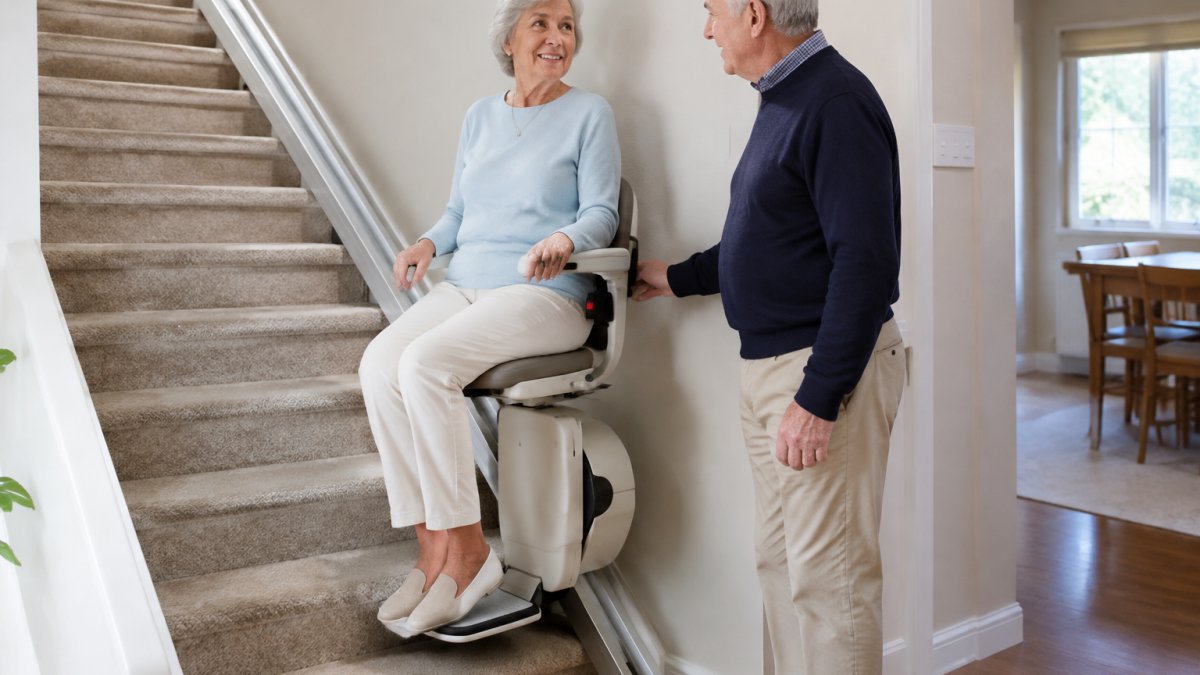
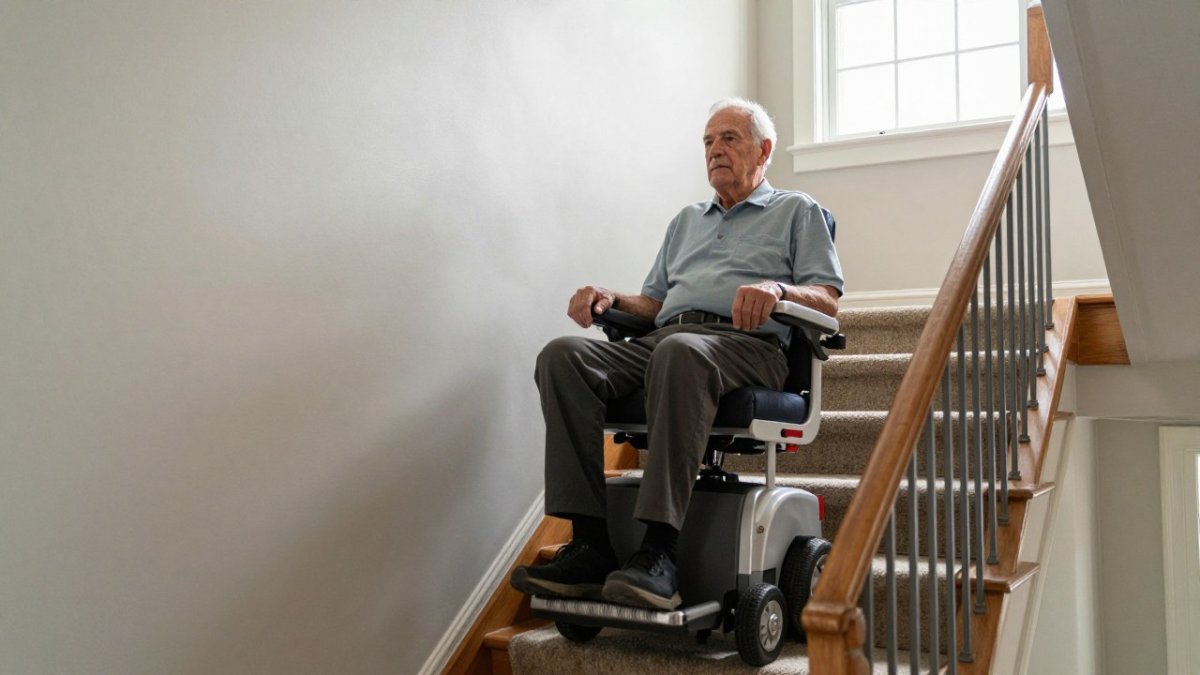
A portable stair lift is a compact, battery-powered chair that carries a seated user up or down a staircase, and portable stair lifts of this kind are designed to be moved between floors or taken to another home. Unlike a permanently installed stairlift, it does not require a rail bolted to the stairs. The user transfers into the seat at the bottom, buckles in and presses a control to climb or descend. Most models fold or break down for storage and transport.
For older adults who want to stay in their homes, the main appeal is access without construction. A portable unit can be moved between floors, stored in a closet, or taken to a relative's house.
Battery range and flights per charge
Battery capacity determines how many trips a unit can make before recharging. Battery range varies with the user's weight, stair length and how often the unit is run. Ask any seller for the test conditions behind a flight-per-charge number before relying on it.
Mobile Stair Lift No Installation: Where Portable Models Fit and Where They Don't
Portable stair lifts suit situations where a permanent install is not practical. They work well for temporary recovery after surgery, for a rental arrangement, or for a household that wants to test whether a stair chair meets its needs before committing to a fixed system.
They are less suited to daily, long-term use by someone with significant mobility loss, and they are not a fit for every home.
Staircase compatibility, straight versus curved stairs
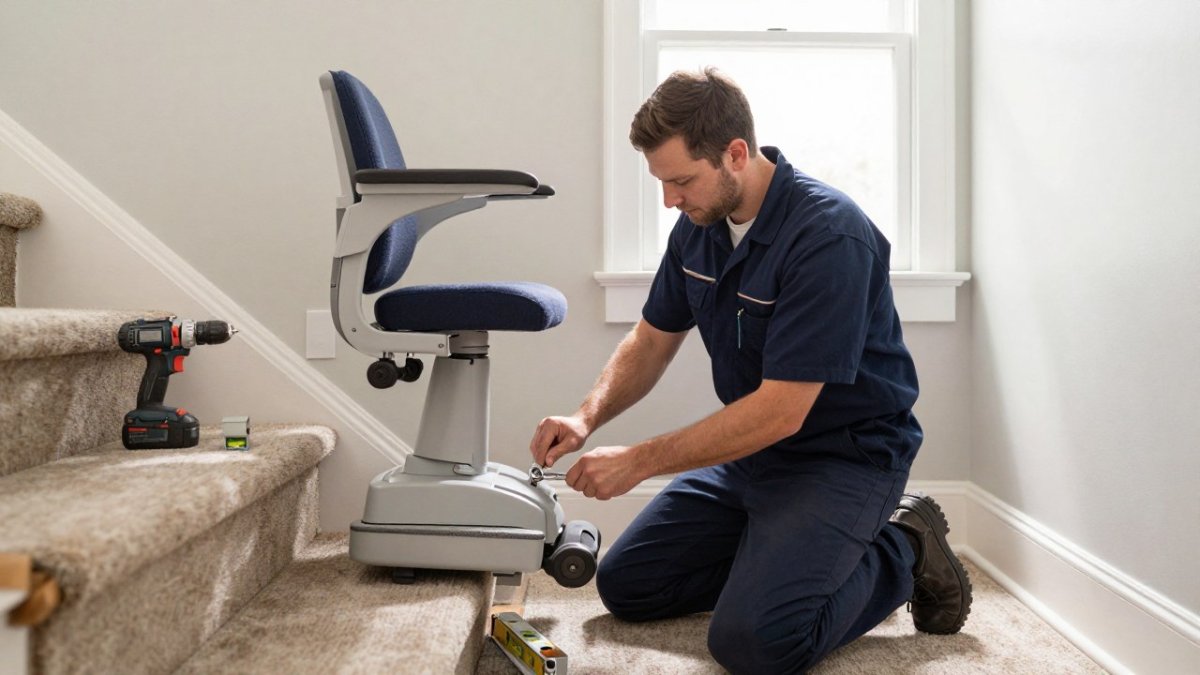
Most portable units are designed for straight staircases. Curved or winding stairs, narrow treads and very steep flights often rule them out. Before buying, measure the stair width, check the tread depth and confirm whether the unit's track or seat clears the handrail on the landing. A stairlift contractor or occupational therapist can assess a specific staircase in person, which is the most reliable way to confirm fit.
Side-by-Side Comparison of Portable Models for Home Use
Where a seller has not published a figure, ask for it in writing before you commit.
| Model | Price (USD) | Weight Capacity | Battery-Powered | Stair Type | Best For |
|---|---|---|---|---|---|
| Genesis GO | Contact for pricing | 250 lb | Yes | Straight | Everyday portable home use |
| Genesis Mobile Stairlift (Ocelco) | $2,999.99 | Not listed | Not listed | Straight | Buyers comparing a priced option |
| Atlas Portable Wheelchair Stairlift | $3,157.88 | Not listed | Not listed | Straight | Wheelchair users who cannot transfer to a seat |
| Mobile StairLift Battery Powered & Portable | Contact for pricing | Up to 400 lb | Yes | Straight | Higher weight capacity needs |
What the table does not tell you, and how to fill the gaps
A comparison table is only as good as the specifications behind it. The specifications that decide whether a unit works in your home include overall dimensions when folded, minimum stair width, battery range in flights per charge, and the unit's own weight. Ask every seller for those numbers plus the test conditions behind any flights-per-charge claim, since range depends on user weight, stair length, and how often the unit runs.
Watch out: a "portable" unit that weighs more than about 70 lb is portable in name only for many caregivers. Confirm the unit's weight and whether it breaks into carryable pieces before you plan to move it between floors or transport it in a vehicle.
Weight capacity, seat design and ease of operation
Weight capacity is one of the first specifications to check. Anyone whose weight is near the limit should choose a model with margin above their weight, not at it; a unit run at its limit wears its motor and battery faster and may climb more slowly.
Seat design affects comfort during longer trips. Look for a seat belt, armrests, a footrest and a seat that swivels for transfers. Ease of operation matters most when a caregiver is helping, so confirm the controls are simple to use on both the way up and the way down, and that the unit has a clear stop control within reach of both the rider and the attendant.
Stair compatibility at a glance
Portable models are commonly designed for straight staircases. Before comparing prices for portable stair lifts, measure your stair width at the narrowest point, the tread depth, and the clearance between the handrail and the wall on the landing. A unit that fits the flight but not the landing is a common reason a portable lift gets returned.
Portable Stair Chair for Elderly Users: Safety, Transfers and Caregiver Assistance
Safety depends on the user, the equipment and the person helping. Most accidents involving stair equipment happen during transfers, not while the unit is moving. Before first use, read the manufacturer's instructions, confirm the seat belt latches, and practice the transfer with a caregiver present. For step-by-step guidance on safe operation and transfers, see How to Safely Use a Stairlift: Step-by-Step Guide.
Can the user operate it alone, or is an attendant required?
This is the question the product listings rarely answer clearly, and it changes who a portable lift is right for. Some units are designed for independent use: the rider transfers in, buckles the belt, and presses a constant-pressure control to climb or descend. Others are attendant-operated, meaning a caregiver walks beside or behind the unit and holds the control. Ask the seller which mode the unit supports and whether it can be switched between the two. A rider who cannot reliably hold a constant-pressure control, or who cannot recover from a stop mid-stair, needs an attendant-operated unit or an installed stairlift with a call-and-send remote.
Transfers: the highest-risk moment
Caregivers using portable stair lifts should never lift or carry the user up the stairs while the unit is in motion. Stop the chair before anyone steps on or off, and keep hands and clothing clear of the moving parts. A swivel seat, if the unit has one, lets the rider face the landing before standing, which reduces the twisting that causes most transfer falls. Practice the transfer on a flat floor first, with the unit stationary, before attempting it on the stairs.
Watch out: a rider who needs two people to transfer on flat ground will not become a one-person transfer on a staircase. Match the unit to the assistance the household can actually provide on a bad day, not a good one.
Emergency stops and mid-stair recovery
Every unit should have a stop control the rider can reach without letting go of the armrest, and the seller should be able to show you the manufacturer's recovery procedure for a unit that stops mid-flight. Typical recovery steps involve a manual lowering or release mechanism and a call for help; they do not involve moving the user manually. If the battery runs low or the unit stops mid-stair, follow the manufacturer's recovery steps and call for help rather than attempting to move the user manually. Confirm the battery charge indicator is easy to read before each trip, and charge on the schedule the manufacturer specifies rather than waiting for a low-battery warning.
Standards, inspection and questions to ask a supplier
Ask a seller which safety standard the unit is listed to and request the listing documentation. Ask for the unit's instruction manual before purchase, confirm the warranty terms in writing, and ask whether the seller provides any inspection or service interval. Ask the seller what inspection or service interval it recommends, and check the belt, seat mounting and battery connections regularly. If a seller cannot answer these questions, that is a reason to keep comparing.
Portable Stair Lift Rental Versus Buying: What Each Option Costs Over Time
Renting portable stair lifts makes sense when the need is short term, such as recovery from a hip or knee surgery. Buying makes more sense when the need is likely to last a year or longer. Rental terms, delivery fees and return conditions vary by provider, so request a written quote that lists every charge. Our CT Stairlifts team can walk you through both options for your home. For a detailed breakdown, read our Stairlift Rental Options for Seniors: A 2026 Guide and Stairlift Rental vs Buying: A 2026 Guide.
Stair Chair Lift Cost and Total Cost of Ownership
The purchase price of portable stair lifts is only part of what a stair chair costs to own. Consider battery replacement, routine maintenance, service calls and the cost of a caregiver's time. Some of the listed portable units show a specific price, while others require a quote, so compare total cost rather than sticker price alone.
For a realistic view of what installed systems involve, see our 7 Real Costs of Installing Stairlifts in Connecticut Homes guide. Pricing for CT Stairlifts depends on the staircase, the equipment and the scope of work, so contact us directly for a current quote.
Choosing Between a Portable Lift and an Installed Stairlift for Your Home
A portable lift fits short-term needs, rentals and homes where a rail cannot be installed. An installed stairlift fits long-term, daily use, especially on straight staircases with enough room for a permanent track. Installed systems are generally fixed to the staircase, while portable units offer flexibility in moving between floors or homes.
If you are unsure which fits your home, a professional assessment will answer the question for your specific staircase.
Booking a Stairlift Assessment With CT Stairlifts
The fastest way to confirm whether a portable or installed stairlift suits your home is an in-person assessment. Contact CT Stairlifts through its website to discuss an assessment of your staircase and mobility needs. CT Stairlifts works to help you regain access to every floor of your home.
Frequently Asked Questions
Will Medicare pay for a chairlift for stairs?
Coverage for stairlifts varies by program, so check directly with your plan. Some Medicare Advantage plans, Medicaid waiver programs and state or local aging services may offer partial help, and eligibility varies. Check directly with your plan, your state's Medicaid office, or your area agency on aging before assuming any coverage, and ask whether a portable model would qualify differently from an installed one.
How much does a portable stair lift cost?
Pricing depends on the model, weight capacity, battery configuration, delivery and any service terms, so there is no single figure that applies to every home. Some portable models are listed with stated prices from retailers, while others require a quote. For current pricing and a quote on CT Stairlifts options, contact CT Stairlifts directly through its website.
Can you rent a portable stair lift?
Some suppliers offer short-term rental or loan options, which can suit recovery from surgery or an injury that is expected to last only a few months. Rental terms, deposits and minimum periods differ by provider. Ask whether rental fees can be applied toward a purchase, and confirm what happens if your needs change before the rental period ends.
Are portable stair lifts safe for older adults?
Portable stair lifts can be safe when the user's weight falls within the rated capacity, the staircase is suitable, and the unit is operated according to the manufacturer's instructions. Look for seat belts, armrests, a secure footrest and a clear way to stop the unit. Because individual health and mobility differ, discuss your situation with your physician or physical therapist before using any stair equipment.