 comparison
Lifeway Mobility Alternatives for Homeowners
Table of Contents
- Why Homeowners Choose Lifeway Mobility Alternatives
- Stairlift Installation Cost and Budget Considerations
- Straight Stairlifts vs. Curved Stairlifts: What Fits Your Home
- Home Accessibility Modifications Beyond Stairlifts
- Maintenance and Long-Term Ownership of Residential Lifts
- Finding Local Stairlift Repair Companies and Support
- Safety Features and Weight Capacity Ratings
- Frequently Asked Questions
Last Updated: September 20, 2026
Why Homeowners Choose Lifeway Mobility Alternatives
When stairs become a barrier to accessing your own home, the stakes feel personal, independence, safety, and the ability to continue living the way you want to.
That's where lifeway mobility alternatives come in. These solutions encompass stairlifts, platform lifts, ramps, and other equipment designed to restore access to every floor of your home. Some homeowners need a curved stairlift for a winding staircase, others a vertical platform lift for porch access, and still others a wheelchair ramp or threshold modification.
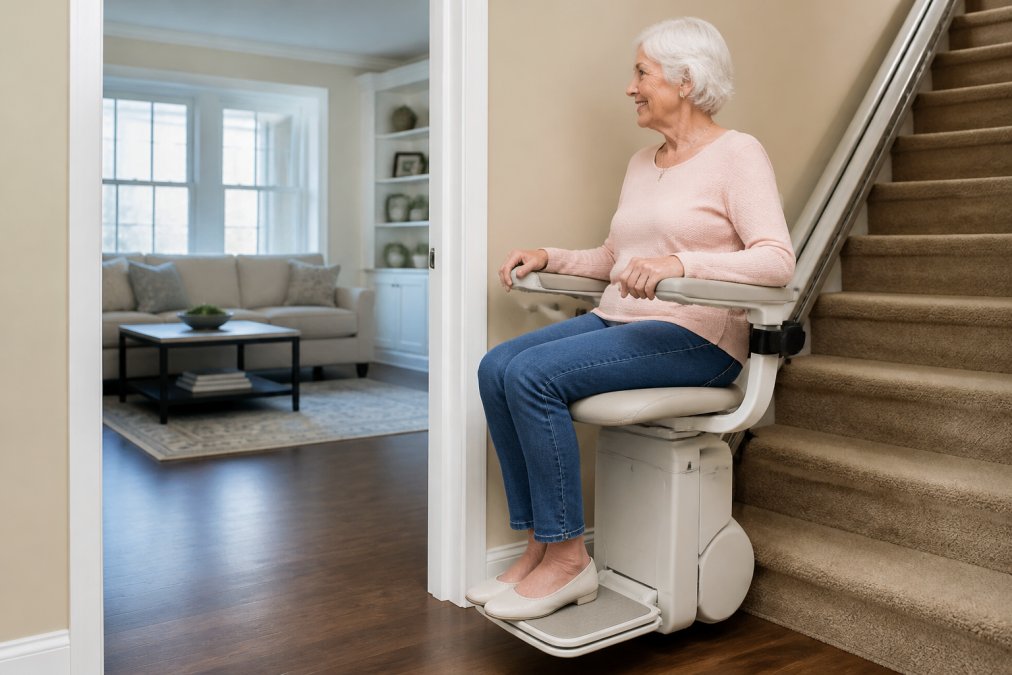
Homeowners explore lifeway mobility alternatives because they want to stay in their homes. Moving isn't always an option emotionally, financially, or practically. The right accessibility solution preserves independence and allows aging in place.
Stairlift Installation Cost and Budget Considerations
Stairlift pricing depends on staircase type, rail configuration, weight capacity, and local installation labor.
Straight stairlifts cost less than curved models because they require simpler rail fabrication. Curved stairlifts demand custom-built rails that follow your staircase's exact geometry, increasing complexity and cost. Professional installation adds to your budget.
Funding Your Mobility Solution: Medicare, Medicaid, and Beyond
Accessibility equipment may qualify for government or insurance funding, significantly reducing your out-of-pocket cost.
Medicare Coverage: Original Medicare (Part A and B) does not cover stairlifts or platform lifts. Some Medicare Advantage plans (Part C) may cover a portion if your doctor prescribes the lift as medically necessary. Obtain a written prescription stating the medical reason and submit it to your insurer before purchase.
Medicaid: Coverage varies by state. Some programs cover residential accessibility modifications when medically necessary and prescribed by a healthcare provider. Contact your state Medicaid office to determine eligibility.
Veterans Administration (VA) Benefits: Veterans with service-connected disabilities may qualify for VA home modification grants through the Aid & Attendance benefit or Specially Adapted Housing (SAH) grant. Contact your local VA regional office or visit VA.gov to apply.
Health Savings Accounts (HSA) and Flexible Spending Accounts (FSA): If prescribed by a physician, you may withdraw funds tax-free from an HSA or FSA.
Tax Deductions: The IRS allows deductions for home modifications that improve accessibility if prescribed by a healthcare provider and exceed 7.5% of AGI. Consult a tax professional to determine eligibility.
Charitable and Non-Profit Programs: Non-profit organizations and community foundations offer grants or low-interest loans for home accessibility modifications. Contact your local senior center or Area Agency on Aging for funding resources.
Rental vs. Purchase: A Financial Reality Check
For temporary needs, rental solutions exist. However, for long-term aging in place, purchasing often makes more financial sense than renting month after month.
Request quotes from multiple providers. Compare equipment price, installation, warranty, maintenance, and support. Ask about financing options; many providers offer payment plans spreading costs over 24-60 months with little or no interest.
Straight Stairlifts vs. Curved Stairlifts: What Fits Your Home
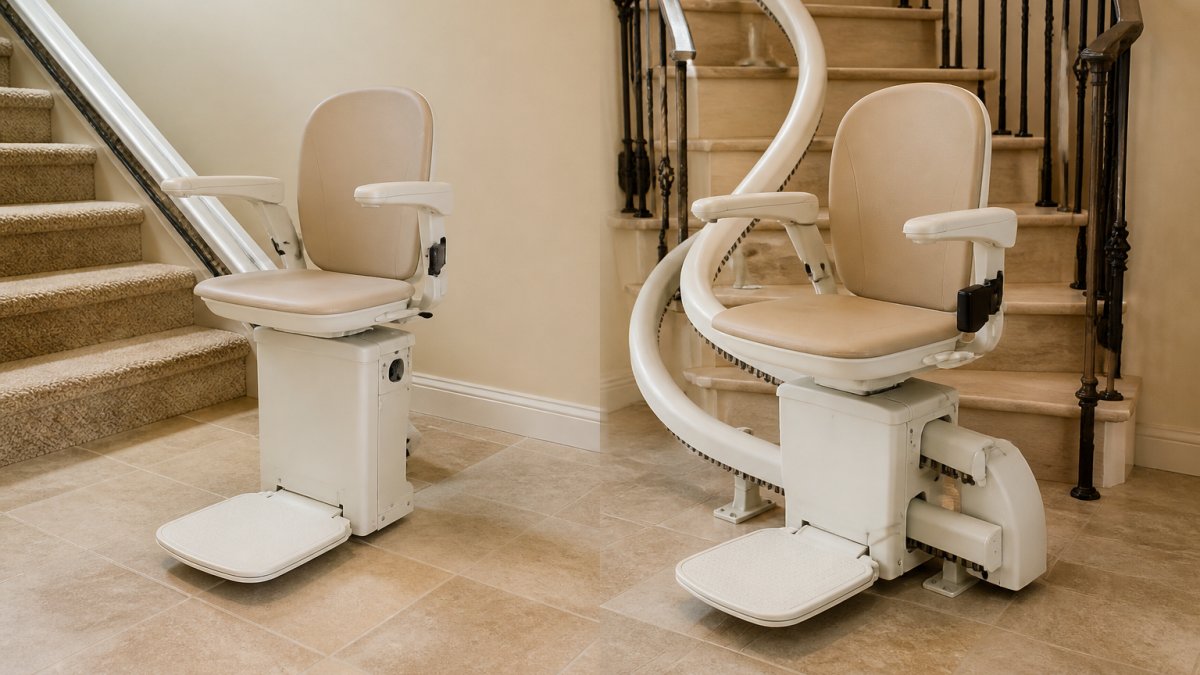
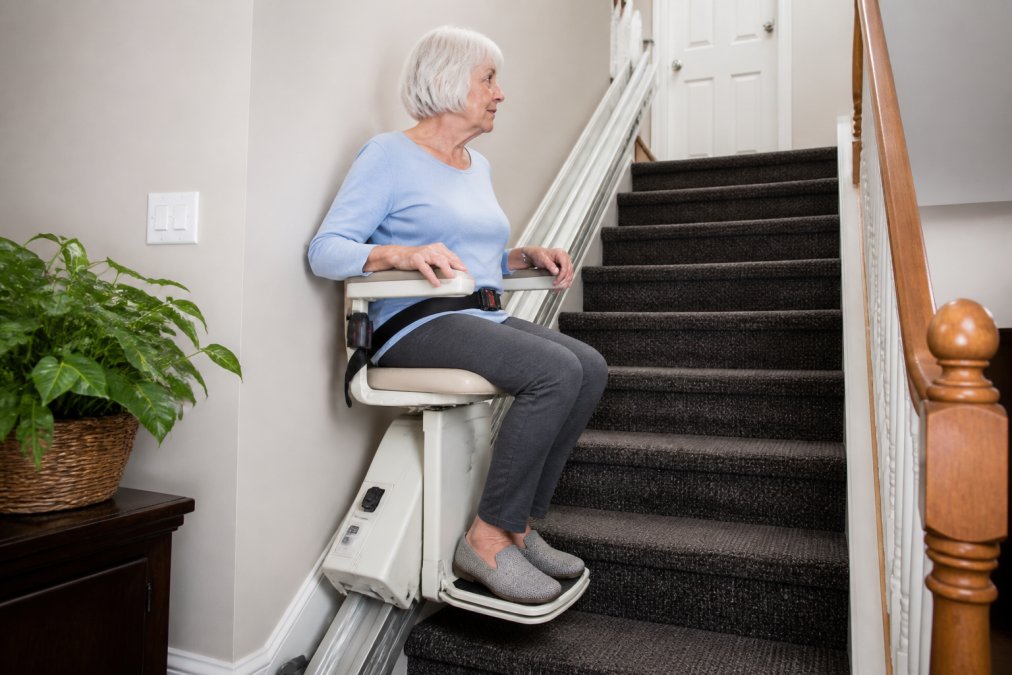
A straight stairlift works on staircases that run in one direction without turns or landings, making it simpler and more affordable.
A curved stairlift bends to follow your staircase's shape. Homes with L-shaped, spiral, or multi-turn staircases require curved rails, which cost more but are necessary for complex geometry.
A professional assessment reveals whether your stairs truly qualify as straight or need the flexibility of a curved system.
Beyond the shape, consider these factors:
- Weight capacity: Ensure the model supports your weight safely with a comfortable margin
- Seat comfort: Adjustable height and swivel features make daily use more pleasant
- Rail design: Compact rails take up less space on narrow staircases
- Power source: Battery backup ensures the lift functions during power outages
CT Stairlifts can evaluate your specific staircase and recommend whether a straight or curved stairlift best serves your home's layout and your mobility needs.
Home Accessibility Modifications Beyond Stairlifts
Stairs aren't the only barrier. Thresholds, doorways, and outdoor transitions create obstacles. A comprehensive approach addresses multiple access points.
Vertical Platform Lifts for Porches and Decks
A vertical platform lift solves porch or deck access by rising straight up to the entry level. They're ideal when stairs block your front door or back patio.
Platform lifts work outdoors and indoors, requiring minimal space compared to ramps. They're faster than navigating a long ramp, which matters on rainy or snowy days.
Safety features include handrails, gate systems, and emergency lowering mechanisms. Weight capacities typically accommodate both the user and a caregiver.
Wheelchair Ramps and Threshold Solutions
A wheelchair ramp creates a gentle slope for easier navigation. Building codes specify maximum slope ratios of 1 inch of rise per 12 inches of ramp length, meaning a 12-inch rise requires a 12-foot ramp.
Modular ramps offer flexibility. You can add sections as needed and adjust the configuration if your home layout changes. Permanent ramps built into your home's structure provide durability and a finished appearance. (Source: IRS guidelines for medical expense deductions)
Threshold ramps address smaller obstacles, the lip between rooms or at doorways. These beveled ramps eliminate tripping hazards and allow wheeled mobility devices to pass smoothly. They're affordable and easy to install compared to larger accessibility projects.
Maintenance and Long-Term Ownership of Residential Lifts
Like any mechanical device, stairlifts and platform lifts require periodic maintenance to operate safely and reliably.
Regular inspections catch wear before it becomes a problem.
Finding Local Stairlift Repair Companies and Support
When your stairlift needs service, local providers often respond faster and build relationships with customers.
Professional Service vs. DIY Maintenance: Safety and Liability
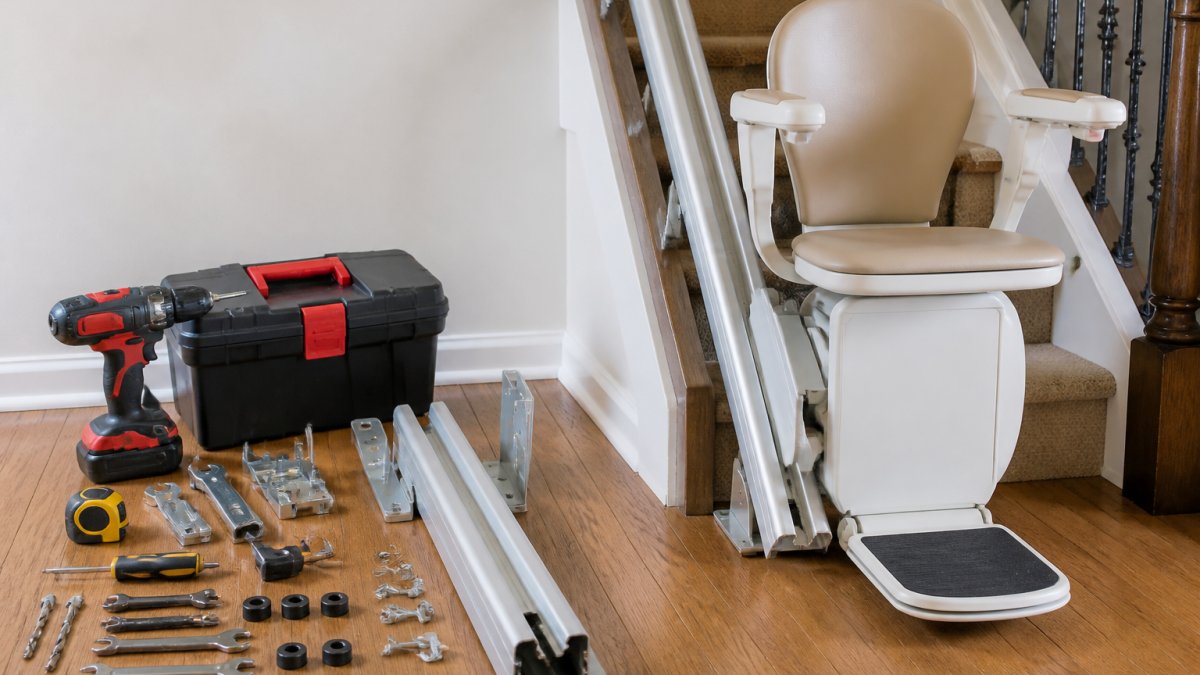
Warranty Implications: Most manufacturers explicitly void warranties if non-authorized personnel perform repairs or maintenance. If a DIY repair fails and the lift malfunctions, you lose manufacturer coverage and assume 100% liability for replacement or repair costs.
How to Find and Vet a Local Service Provider
Start by asking your original installer who handles maintenance in your area. They'll have referrals and relationships with service technicians. Ask neighbors or your local senior center for recommendations too. Word-of-mouth from people who've actually used a service tells you more than any advertisement.
When evaluating a stairlift repair company, ask:
- Are they manufacturer-certified? Request proof of certification for your specific lift brand (e.g., Acorn, Bruno, Harmar, ThyssenKrupp).
- Do they service your specific brand and model? Not all technicians work on all brands. Confirm compatibility before booking.
- What's their typical response time for emergency calls? A reliable provider should respond within 24 hours for urgent issues.
- Are they insured and licensed? Verify general liability insurance and any required state or local licensing.
- Do they offer preventive maintenance plans? Annual service contracts catch problems before they become emergencies.
- What do they charge for basic service calls? Get a written estimate before work begins.
- Will they provide a service record? Documentation of all maintenance protects your warranty and proves compliance with manufacturer recommendations.
Safety Features and Weight Capacity Ratings
Safety isn't an afterthought in modern residential lifts, it's built in from the start. Understanding these features gives you confidence in your equipment.
Frequently Asked Questions
What are the main alternatives to Lifeway Mobility for aging in place?
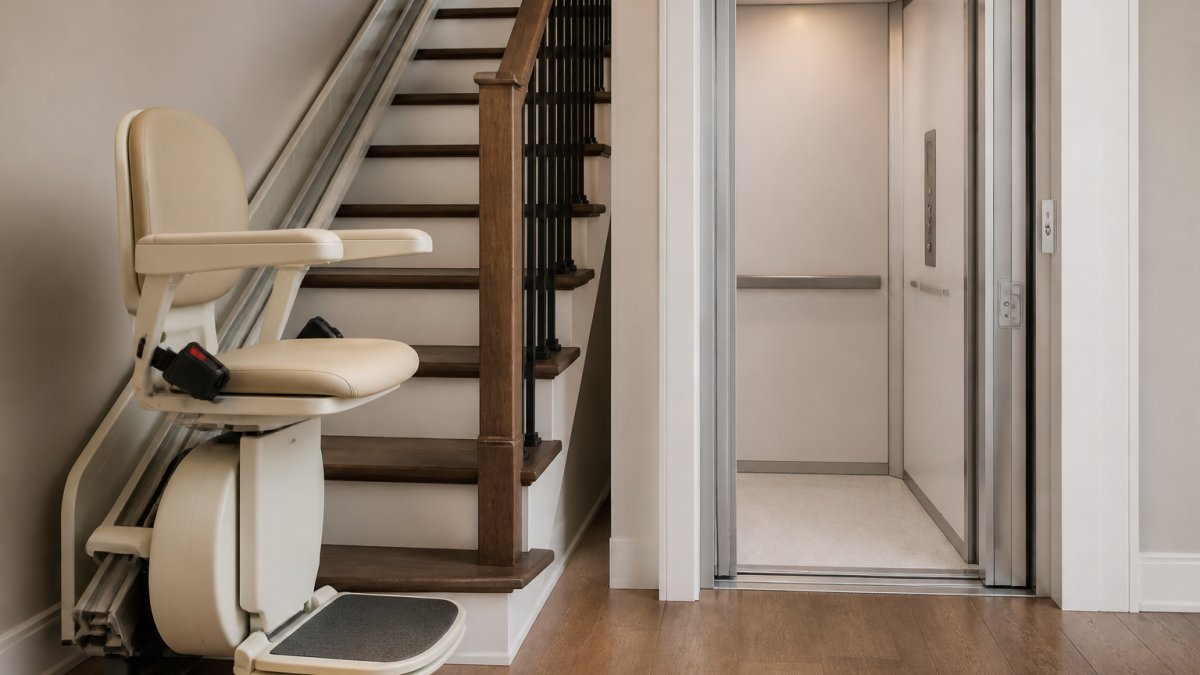
Homeowners have several lifeway mobility alternatives to maintain independence. Straight and curved stairlifts suit different staircase types. Vertical platform lifts work for porches, decks, and exterior access. Wheelchair ramps provide accessible entry and movement. Home elevators serve multi-floor homes with space and budget available. Each option addresses different mobility needs and home layouts. Your choice depends on your specific accessibility challenge, available space, and long-term aging-in-place goals.
How much does stairlift installation cost compared to other home modifications?
Stairlift installation cost varies based on staircase type, home layout, and equipment features. Straight stairlifts may cost less than curved models requiring custom rail fabrication. Professional installation adds to the total expense but ensures safety and code compliance. Other home accessibility modifications like ramps or threshold removal may have different cost structures. Contact CT Stairlifts or local providers for current pricing quotes tailored to your specific installation needs and home configuration.
Are stairlifts worth the investment instead of moving to a single-story home?
Stairlifts allow homeowners to age in place without relocating, preserving familiar surroundings, community connections, and independence. Moving involves substantial costs, emotional upheaval, and disruption. A stairlift maintains access to all floors while you remain in your established home. Long-term ownership costs include occasional maintenance and potential repairs, but these are typically lower than relocation expenses. For many, the ability to stay in a home with family memories and established support networks makes a stairlift a worthwhile investment.
What should I look for in a local stairlift repair company?
Choose local stairlift repair companies with certified technicians, quick response times, and experience with your specific lift model. Verify they carry common replacement parts and offer emergency service options. Check references from other homeowners in your area. Ensure they provide warranty coverage on repairs and can handle routine maintenance to prevent breakdowns. A reliable local provider ensures your mobility equipment stays functional and safe, supporting your independent living goals.
What safety features should residential accessibility equipment have?
Quality residential accessibility equipment includes obstruction sensors that stop the lift if something blocks its path, battery backup ensuring operation during power outages, and secure seat belts or harnesses. Look for models with emergency descent capability and sturdy armrests. Weight capacity ratings should exceed your needs with a safety margin. Retractable rails prevent tripping hazards. Anti-slip footrests and smooth, quiet operation reduce anxiety. These features together create a safer aging-in-place environment and reduce fall risks.