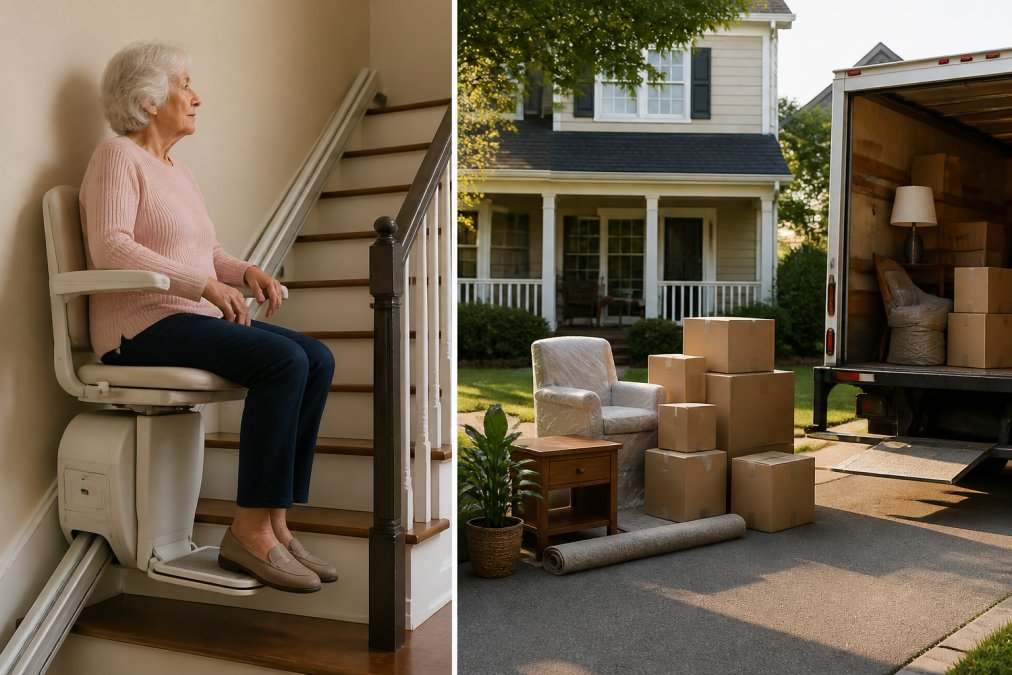
 comparison
Stairlift vs Moving to a One-Story House in 2026
Table of Contents
- Stairlift vs Moving to a One-Story House: The Core Trade-Offs
- Stairlift Installation Cost: What Drives the Price
- Hidden Costs of Moving to a Single-Level Home
- Safety and Fall Prevention: Stairlift vs Relocation
- Aging in Place Modifications That Keep You Home
- Medicare Coverage for Home Modifications: What to Expect
- Stairlift Maintenance and Resale Value
- A Decision Framework for Your Situation
- Frequently Asked Questions
Last Updated: September 12, 2026
Stairlift vs Moving to a One-Story House: The Core Trade-Offs
The decision between a stairlift vs moving to one-story house comes down to one question: do you want to spend money modifying the home you already know, or spend money and emotional energy starting over somewhere new? This guide breaks down the real numbers, the hidden costs, and the factors most families never consider until it's too late. Most people frame this as purely financial. It isn't.
A stairlift is a motorized chair mounted on a rail that carries a person up and down a staircase, typically installed on the wall or steps rather than requiring structural changes. It's one of the most common home modification solutions for aging in place, and it's usually far less disruptive than selling a home and relocating.
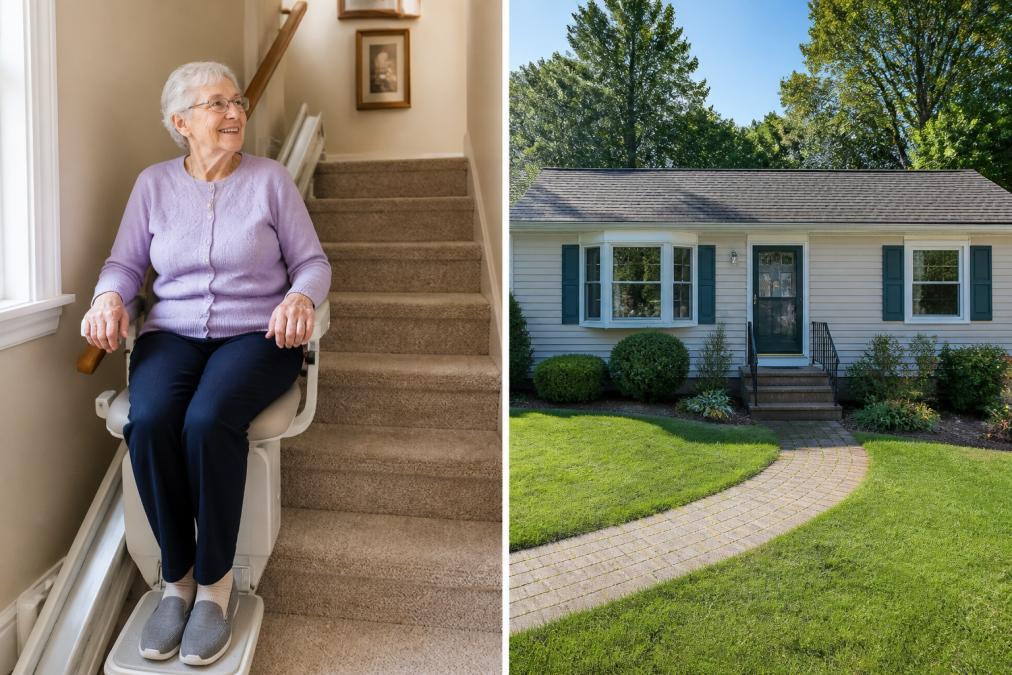
Here's the trade-off in plain terms:
| Factor | Stairlift | Moving to One-Story Home |
|---|---|---|
| Upfront cost | Lower, single installation | Higher, includes purchase, closing costs, moving |
| Timeline | Days to weeks | Months |
| Emotional disruption | Minimal | Significant |
| Resale impact | Modest, removable | None (you're selling) |
| Ongoing costs | Maintenance, battery | Property taxes, new mortgage terms |
What Each Option Actually Costs You
A standard straight stairlift typically costs less than a curved model. Moving carries closing costs, agent commissions, moving expenses, and often a higher mortgage rate on a new property. A common mistake is comparing only the sticker price of a stairlift against the sticker price of a new house. That comparison ignores the thousands in transaction costs that vanish the moment you sell.
What most guides miss is that a stairlift is removable. When you no longer need it, it can be taken out and the staircase restored. You can't un-sell a house.
Stairlift Installation Cost: What Drives the Price
Stairlift installation cost depends on four main factors: staircase configuration, rail length, model type, and any custom work needed. A straight staircase is the simplest and least expensive to fit. Curved staircases require a custom-built rail, which takes longer to manufacture and install.
Straight vs Curved Stairlifts
Straight stairlifts run along a single, uninterrupted flight of stairs. They're the most affordable option and can often be installed in a single visit. Curved stairlifts handle landings, turns, and winders, and each rail is made to match your specific staircase. That customization is what raises the price.
Weight capacity, seat style, and battery backup features also affect cost.
If you're unsure whether your staircase can accommodate a lift, a mobility assessment from a qualified installer answers that question directly.
Hidden Costs of Moving to a Single-Level Home
The hidden costs of moving are what catch most families off guard. Beyond the purchase price of a new home, you're looking at:
- Real estate agent commissions
- Closing costs on both the sale and the purchase
- Moving and packing services
- New furniture or modifications for the new layout
- Higher property taxes in a different area
- The cost of downsizing, storage, or disposing of belongings
There's also the emotional and social cost of relocation. Leaving a neighborhood, a church, a doctor, or decades of neighbors has a real effect on wellbeing, and that cost doesn't show up on any spreadsheet. For many older adults, the loss of familiar surroundings accelerates decline rather than preventing it.
Safety and Fall Prevention: Stairlift vs Relocation
Stairlifts directly address fall risk on stairs, which is where many home injuries happen. Modern units include safety sensors that stop the lift if an obstruction is detected, swivel seats for safe entry and exit, and battery backup so the lift keeps working during a power outage.
Moving to a one-story home eliminates stairs entirely, which removes that specific hazard. But it introduces new ones: unfamiliar layouts, unpacked boxes, and disorientation in the first weeks after a move. According to the CDC's older adult fall prevention resources, falls remain a leading cause of injury for older adults, and prevention strategies should account for the whole environment, not just stairs.
Occupational therapists often recommend a mobility assessment before deciding. The right answer depends on how you move, not just where you live.
Aging in Place Modifications That Keep You Home
Aging in place modifications extend well beyond stairlifts. Grab bars in bathrooms, improved lighting, non-slip flooring, and raised toilet seats all reduce fall risk. But stairs are usually the first obstacle people address because they're the most dangerous and the most limiting.
A stairlift is often the single change that makes the difference between staying in a two-story home and being confined to one floor. That confinement is what pushes many families toward moving. If the only barrier is the staircase, a lift solves the problem without uprooting anyone.
CT Stairlifts focuses specifically on this: helping homeowners regain access to every floor of their home through specialized stairlift installations. The goal is independence, not just equipment.
Medicare Coverage for Home Modifications: What to Expect
Most guides stop at the sticker price. The more useful question is who else might pay part of it. The answer depends on which bucket your expense falls into, and the buckets are not intuitive.
Original Medicare (Part A and Part B). Original Medicare generally does not cover stairlifts or most home accessibility equipment, because they're classified as home modifications rather than durable medical equipment. Durable medical equipment coverage is built around items that serve a medical purpose, can withstand repeated use, and are appropriate for use in the home, but equipment that becomes part of the home's structure, or that isn't primarily medical in nature, typically falls outside that definition. A stairlift is usually treated as a home modification, not DME.
Medicare Advantage plans. Some Medicare Advantage plans offer supplemental benefits that include certain home safety items or home modification allowances. These are plan-specific extras, not a guaranteed benefit, and the covered items, dollar caps, and prior-authorization rules vary widely. The wording in your plan documents matters: ask specifically about "home accessibility equipment," "home modification benefits," and "fall prevention items."
Medicaid home and community-based services waivers. Many states operate HCBS waivers that can fund home modifications for eligible individuals who would otherwise require institutional care. Eligibility, covered modifications, and waitlists vary by state and by waiver. This is often the most substantial source of public funding for a stairlift or a bathroom modification, and it's the one most families never ask about.
Veterans benefits. Veterans and surviving spouses may qualify for home modification grants through the Department of Veterans Affairs for certain service-connected or age-related mobility needs. These grants are separate from Medicare and Medicaid and have their own application process and inspection requirements.
Tax treatment. Medical expenses, including certain home modifications made primarily for medical care, may be deductible if they exceed the applicable threshold of adjusted gross income and you itemize. The rules distinguish between improvements that add value to the home (where only the medical portion may qualify) and improvements that don't (which may qualify more fully). Because the analysis is fact-specific, confirm your situation with a tax professional rather than relying on general guidance.
Other programs worth asking about. Area Agencies on Aging, state housing finance agencies, and some nonprofit and community development organizations operate home modification or repair programs. Local Realtor associations and hospital discharge planners often keep lists of these programs.
The Medicare.gov official site is the authoritative source for what your specific plan covers. For waiver and grant programs, the Eldercare Locator can point you to the agency that administers them in your area.
Stairlift Maintenance and Resale Value
Stairlift maintenance is minimal. Most units run on constant-charge batteries, so they stay powered during outages, and the main ongoing tasks are keeping the rail clean and scheduling periodic inspections. Annual service visits typically cover battery health, motor function, and safety sensor checks.
On resale value: a professionally installed stairlift has a modest effect on a home's sale because it can be removed. Some buyers see it as a bonus; others ask for it to be taken out. Either way, it's not a permanent alteration like a home elevator, which is far more expensive and much harder to reverse.
A home elevator, for comparison, often requires significant architectural integration. For most homeowners, a stairlift is the more practical mobility solution.
A Decision Framework for Your Situation
Use this framework to decide:
- If stairs are your only barrier: a stairlift is usually the simpler, cheaper fix.
- If you have multiple mobility issues beyond stairs: a full home assessment may point toward relocating or a home elevator.
- If your condition is temporary: ask about rental or short-term options before committing to a purchase.
- If your home has narrow or oddly shaped stairs: get a professional assessment before assuming a lift won't fit. Curved and compact rail designs handle more layouts than most people expect.
- If you're on a fixed income: compare five-year total costs, including maintenance and any financing, against the full cost of moving.
The AARP's home and community preferences research consistently shows that most older adults want to remain in their homes as they age. When that's the goal, a stairlift vs moving decision usually favors staying put, provided the staircase can be fitted safely.
The hardest part isn't the cost. It's deciding whether to invest in the home you love or start over somewhere unfamiliar. For most homeowners whose only real obstacle is the staircase, a professionally installed stairlift keeps you in the home you already know, restores access to every floor, and costs far less than uprooting your life. For most homeowners whose only real obstacle is the staircase, a professionally installed stairlift keeps you in the home you already know, restores access to every floor, and costs far less than uprooting your life. Get started with CT Stairlifts and regain access to every floor of your home.
Frequently Asked Questions
Does installing a stairlift negatively impact home resale value?
A stairlift does not typically lower resale value. Many buyers see it as a neutral or positive feature, especially in markets with a high share of older adults. If you sell, the lift can usually be removed and the track patched with minimal trace. Some buyers may ask for removal, but this is a negotiation point, not a dealbreaker. A stairlift is a reversible modification, unlike structural changes such as adding a bedroom or widening doorways.
What are the hidden costs of moving to a one-story home?
Beyond the purchase price, moving costs include real estate agent commissions, closing fees, moving company charges, and the expense of downsizing or replacing furniture that no longer fits. You may also face higher property taxes or insurance in a new area. There is also the emotional cost of leaving a familiar neighborhood, which can affect well-being.
How do I determine if my staircase is suitable for a stairlift?
Most straight staircases fit a standard stairlift with minimal modification. Curved staircases require a custom track, which costs more but is still feasible. Key factors include stair width, the presence of landings, and whether the rail can be mounted to the treads or the wall. A professional assessment is the only way to know for sure. During the visit, the installer will measure and confirm the best configuration for your home.
What are the long-term maintenance requirements for a stairlift?
Stairlifts need little maintenance beyond regular charging and occasional cleaning of the track. Most manufacturers recommend an annual service visit to check the battery, motor, and safety sensors. Keeping the track free of debris and ensuring the chair is parked correctly will extend its life.