 listicle
Stairlift Reviews and Ratings 2026: Top Models Compared
Table of Contents
- How We Evaluated Stairlift Reviews and Ratings for 2026
- Curved vs Straight Stairlift Comparison: Which Type Fits Your Home?
- Top Stairlift Models Reviewed: Features, Pros, and Cons
- Stairlift Safety Standards: ASME A18.1 and What It Means for You
- Stairlift Installation Cost 2026: What Drives the Price
- Home Modification Compatibility and Long-Term Ownership
- Which Stairlift Should You Choose?
- Conclusion
Last Updated: August 23, 2026
Finding reliable stairlift reviews and ratings can feel overwhelming when you're trying to make a decision that directly affects your safety at home. At CT Stairlifts, we provide solutions designed to help individuals regain access to every floor of their home. This guide addresses safety standards, installation costs, home compatibility, and the specific models worth your attention in 2026.
Quick Picks:
- Best Overall for Smooth Operation: Bruno Elan/Elite, quiet, American-made, strong dealer network
- Best for Bariatric Users: Harmar Pinnacle SL600HD, 600-lb capacity, ergonomic design
- Best for Narrow Stairs: Handicare 1000, narrowest rail on the market
- Best for Limited Dexterity: Stannah Siena, one-hand seatbelt, powered footrest
- Best Budget Option: Handicare 1000 (straight, indoor), lifetime motor warranty at a competitive price point
How We Evaluated Stairlift Reviews and Ratings for 2026
Our evaluation framework focuses on six criteria: safety compliance, weight capacity and ergonomics, battery backup, installation timeline and home compatibility, post-purchase support, and long-term cost of ownership.
Every model had to meet or exceed ASME A18.1, the American standard governing platform lifts and stairway chairlifts (asme.org). Weight capacity and seat ergonomics were assessed against the real range of users. Battery backup was treated as non-negotiable, a stairlift that stops mid-staircase during a power outage is a safety hazard. Installation timeline and home compatibility were evaluated separately because a curved staircase can triple both cost and lead time. Post-purchase support was weighted heavily, as unresponsive service after a smooth sales experience is a common complaint. Long-term cost of ownership was calculated to include the unit, installation, annual maintenance, service contract, and realistic replacement parts over five to seven years.
| Evaluation Criterion | Why It Matters |
|---|---|
| Safety compliance (ASME A18.1) | Legal and physical protection |
| Weight capacity | Suitability for the actual user |
| Battery backup | Safety during power outages |
| Home compatibility | Fit for straight, curved, or narrow stairs |
| Post-purchase support | Long-term reliability of ownership |
| Total cost of ownership | True financial commitment |
Curved vs Straight Stairlift Comparison: Which Type Fits Your Home?
The single biggest cost driver in any stairlift purchase is whether your staircase is straight or curved.
Straight Rail Models
A straight stairlift runs on a single-piece rail mounted along a staircase with no turns, landings, or bends. These models are the most affordable, have the shortest installation times (one to two days), and offer the widest selection of manufacturers and price points. Most installations require no structural modification, the rail attaches to the stair treads, not the wall.
Curved Rail Models
A curved stairlift uses a custom track fabricated specifically for your staircase. Every bend, landing, and angle is measured and built to order, which is why curved rail models cost significantly more and take longer to install. Lead times typically run several weeks from measurement to installation, compared to days for straight models. For homes with L-shaped or spiral staircases, a curved stairlift is often the only practical option. Falls on stairs are one of the leading causes of injury in older adults, making a workable solution a genuine safety priority regardless of cost (the CDC).
Top Stairlift Models Reviewed: Features, Pros, and Cons
The models below represent the strongest options currently available in the U.S. market.
Bruno Elan and Elite
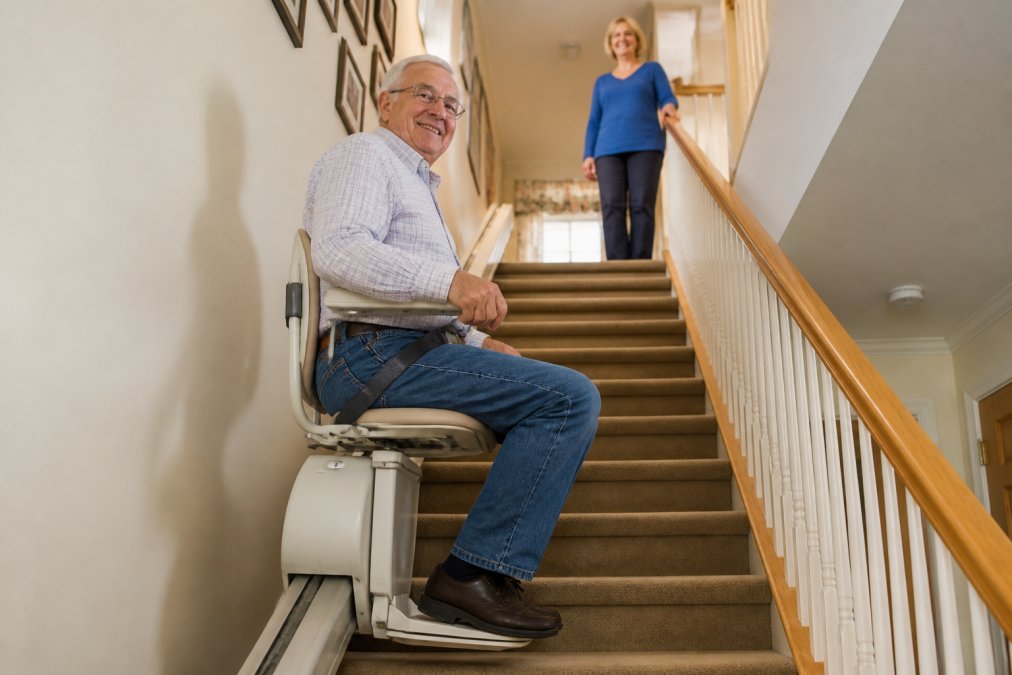
Bruno is one of the few American-made stairlift manufacturers. The Elan handles straight staircases; the Elite handles curved configurations. Both use an enclosed gear system that produces a noticeably quieter ride than most competitors. The rail profile is among the slimmest in the industry, with wireless remote controls and obstacle-detection sensors standard.
What works: Consistently strong reviews for smooth, quiet operation and extensive dealer network for faster service calls. The indoor motor warranty is among the best in the category.
What doesn't: The power swivel seat adds meaningful cost. Charge cord length has been flagged by some users as inconvenient depending on outlet placement.
Best for: Users who prioritize quiet operation and want American manufacturing with accessible dealer support.
Harmar Pinnacle SL600HD
The SL600HD is purpose-built for users needing higher weight capacity. Its 600-pound limit is one of the highest available on a straight stairlift, and the ergonomic chair design reflects genuine attention to comfort at that capacity. The patented helical worm gear drive system produces a smooth ride with reliable battery backup.
What works: The most comfortable seat of any model in this review. Industry-leading weight capacity and reliable battery backup.
What doesn't: Noisier than Bruno or Handicare during operation. Harmar does not manufacture a curved stairlift, so this option is straight-staircase only.
Best for: Bariatric users or anyone for whom seat comfort and weight capacity are primary requirements.
Handicare 1000
The Handicare 1000 carries the narrowest rail of any straight stairlift currently on the market. For homes where staircase width is marginal, this is often the only model that fits without structural modification. The paddle-style joystick control suits users with limited hand strength or dexterity. The foldable chair and footrest minimize the footprint when not in use. The lifetime motor warranty on straight indoor models is a standout commitment.
What works: Slim profile solves narrow-staircase problems that disqualify other models. Lifetime motor warranty on indoor straight models. Well-built and reliable.
What doesn't: Service quality in the U.S. depends heavily on the local installer. Some users report noise and battery life concerns.
Best for: Homeowners with narrow staircases who need maximum space preservation.
Stannah Siena
Stannah has manufactured stairlifts for decades, and the Siena reflects that experience in its ergonomic details. The seatbelt is operable with one hand, a genuine usability advantage for users with limited grip strength. The powered footrest folds automatically. The Siena is available for both straight and curved staircases, and Stannah offers rental options for users recovering from surgery who may not need a permanent installation.
What works: Exceptional ease of use for users with dexterity limitations. Comfortable, well-padded seating and rental availability for temporary needs.
What doesn't: Can be loud during operation, particularly on curved configurations. An in-home visit is required before receiving a quote.
Best for: Individuals with limited dexterity, or those needing a temporary solution with the option to rent rather than buy.
Acorn Stairlifts
Acorn is one of the most recognized names in the stairlift category. Their straight stairlift models are consistently praised for ease of use and quick installation turnaround. Battery backup is standard, and controls are straightforward for users uncomfortable with complex technology.
What works: Fast installation timeline and user-friendly controls.
What doesn't: Post-installation service quality is more variable than the sales experience.
Best for: Users seeking a well-known brand with fast turnaround on straight staircases.
Stairlift Safety Standards: ASME A18.1 and What It Means for You
ASME A18.1 is the American standard governing the design, construction, installation, and inspection of platform lifts and stairway chairlifts. Any stairlift sold and installed in the U.S. should comply with this standard.
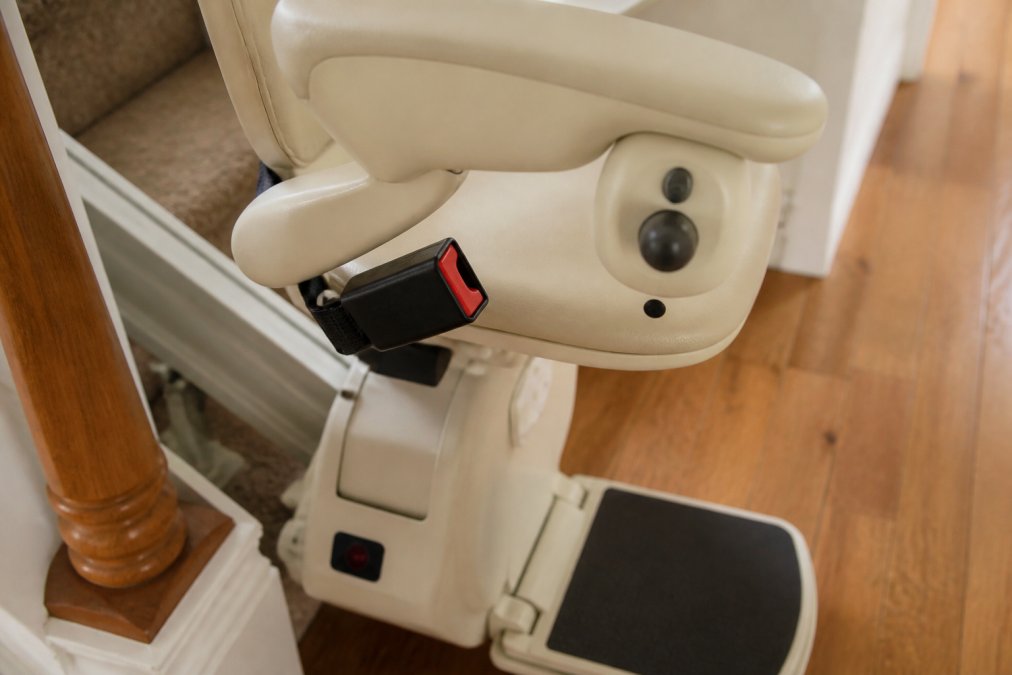
According to ASME A18.1, the standard covers load-bearing requirements, electrical safety, and obstruction detection. Compliance means the unit stops automatically if it encounters an obstacle, holds its rated load without failure, and operates safely on battery power when the grid goes down.
Key Safety Features to Confirm Before You Buy
Before committing to any model, confirm the following are present and functioning:
- Obstruction sensors: The carriage and footrest should both carry sensors that trigger an automatic stop if the path is blocked.
- Seat belt: A retractable seat belt is standard on compliant models. The Stannah Siena's one-hand operation is a useful benchmark for ease of use.
- Swivel seat with locking mechanism: The seat should swivel toward the landing at both top and bottom and lock in place before the user stands.
- Battery backup: The unit should operate for multiple trips on battery power alone.
- Emergency stop: A clearly marked, easily accessible stop button should be present on both the unit and the remote control.
- Diagnostic display: Many modern units include a display showing error codes, battery status, and service alerts.
Stairlift Installation Cost 2026: What Drives the Price
Stairlift installation cost in 2026 varies widely. The main cost drivers are staircase type (straight installations are significantly less expensive than curved), track length, weight capacity and seat options, and local labor rates.
For current pricing on a stairlift installation, contact CT Stairlifts directly for an accurate quote based on your specific staircase and requirements.
Insurance, Tax Credits, and Funding Pathways
Medicare: Standard Medicare does not cover stairlifts as durable medical equipment, though coverage can vary by specific plan. Confirm directly with your plan administrator.
Medicaid: Some state Medicaid programs cover home modification costs including stairlifts under Home and Community Based Services waivers. Eligibility and coverage vary by state. Check medicaid.gov for your state's specific program details.
Veterans Benefits: Veterans may qualify for home modification assistance through the VA's Specially Adapted Housing program or the Home Improvements and Structural Alterations grant. Details are available through va.gov.
Tax deductions: Medical expenses exceeding a threshold of adjusted gross income may be deductible. A stairlift prescribed by a physician as a medical necessity may qualify. Consult a tax professional for guidance specific to your situation.
Nonprofit and state programs: Many states operate aging-in-place grant programs administered through Area Agencies on Aging.
Home Modification Compatibility and Long-Term Ownership
Most homes can accommodate a straight stairlift without structural modification. The rail attaches to the stair treads, not the wall, which means plaster walls and older construction are not obstacles. For curved staircases, a professional in-home assessment is required before any curved rail can be fabricated.
The psychological transition to using a stairlift is real and worth acknowledging. Many users report initial resistance, followed by genuine relief once they experience the independence it restores. Maintenance schedules matter, most manufacturers recommend an annual service visit. Skipping this leads to avoidable failures and, in some cases, voided warranties. Resale value is limited for curved rail models because the track is custom-fabricated. Finally, consider the weight limit carefully. Users near the maximum rated capacity experience more wear on the motor and drive system over time.
Which Stairlift Should You Choose?
The right stairlift depends on your staircase configuration, physical requirements, budget, and how long you expect to need the unit.
For a straight staircase with standard width, the Bruno Elan offers the best combination of quiet operation, American manufacturing, and dealer support. For narrow straight staircases, the Handicare 1000 is the clear choice based on its slim rail profile and lifetime motor warranty.
For bariatric users or anyone prioritizing comfort, the Harmar Pinnacle SL600HD's 600-pound capacity and ergonomic seat design are unmatched in the straight-stairlift category.
For users with limited dexterity or who need a temporary solution, the Stannah Siena's one-hand seatbelt and rental availability make it the most practical option.
For curved staircases, the Bruno Elite and Stannah Siena are both established options with verified track records on complex configurations.
If you're still unsure which model fits your home, the most efficient path is an in-home assessment. Measurements matter more than any general recommendation.
| Model | Best For | Staircase Type | Weight Capacity | Standout Feature |
|---|---|---|---|---|
| Bruno Elan/Elite | Quiet, smooth operation | Straight/Curved | Standard to high | Enclosed gear system, slim rail |
| Harmar Pinnacle SL600HD | Bariatric users | Straight only | Up to 600 lbs | Ergonomic high-back seat |
| Handicare 1000 | Narrow staircases | Straight | Standard to high | Narrowest rail available |
| Stannah Siena | Limited dexterity, temporary use | Straight/Curved | Standard | One-hand seatbelt, rental option |
| Acorn Stairlifts | Fast installation, straight stairs | Straight/Curved | Standard | Quick turnaround |
Choosing a stairlift means committing to a home modification that will affect your daily life for years. The models reviewed here represent the strongest options in the current market, but the right choice is always specific to your staircase, your body, and your household. CT Stairlifts specializes in stairlift installation tailored to individual home configurations, helping homeowners regain access to every floor safely and confidently. Contact CT Stairlifts to arrange an in-home assessment and get a quote based on your actual staircase.
Frequently Asked Questions
Which stairlift brand is considered the most reliable in 2026?
Bruno consistently earns strong stairlift reviews for smooth, quiet operation and a wide dealer network. Handicare's 1000 series draws praise for its narrow rail and lifetime motor warranty on straight models. Reliability also depends on local installation quality and post-purchase support, so choosing a provider with a strong service contract matters as much as the brand name itself. Request verified customer references before committing.
How much does stairlift installation cost in 2026?
Stairlift installation cost in 2026 varies based on staircase type, track length, and the model chosen. Straight rail units generally cost less than curved rail systems, which require a custom track built to your staircase's exact measurements. Additional factors include seat upgrades, outdoor-rated components, and ongoing service contracts. Because pricing is quote-based across most brands, contact your local installer for an accurate figure specific to your home.
Are there tax credits or insurance options that help pay for a stairlift?
Medicare generally does not cover stairlift purchases, as they are classified as home modifications rather than durable medical equipment. Medicaid waiver programs in some states do offer funding for home accessibility equipment, eligibility rules vary, so check with your state Medicaid office directly. The IRS allows certain medical expense deductions for home modifications prescribed by a physician; consult a tax professional to confirm what applies to your situation. Some veterans' programs also provide home modification grants.
What is the ASME A18.1 safety standard for stairlifts?
ASME A18.1 is the American Society of Mechanical Engineers standard governing the safety of platform lifts and stairway chairlifts in the United States. It sets requirements for weight capacity ratings, emergency stop functions, obstruction sensors, seat belts, and battery backup systems. When reviewing stairlift models, confirm that the unit and its installation comply with the current edition of ASME A18.1, as this is the primary benchmark regulators and inspectors reference for residential stairlift safety.
Will a stairlift fit on narrow or oddly shaped stairs?
Most straight stairlifts fold to between 10 and 12 inches wide, leaving enough clearance on staircases that meet standard building code minimums. Narrow-rail models like the Handicare 1000 are designed specifically for tighter spaces. Curved or L-shaped staircases require a custom curved rail, which is measured and fabricated to your exact staircase geometry. A professional in-home assessment is the only reliable way to confirm fit, no two staircases are identical.
This article was written using GrandRanker