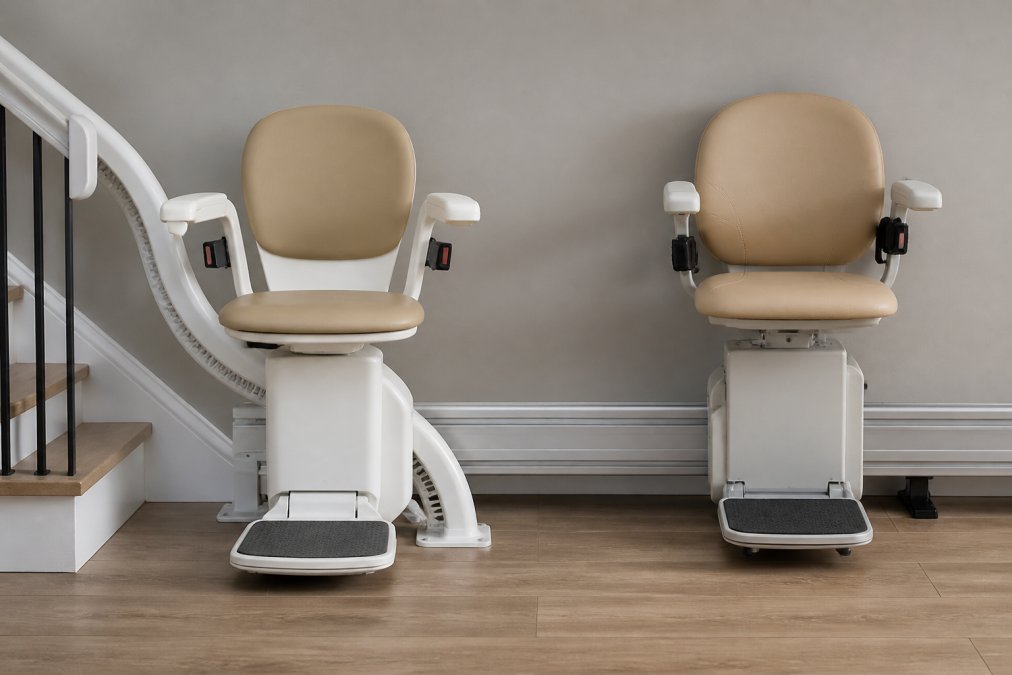
 comparison
Collins Medical Equipment vs Competitors: 2026 Guide
Table of Contents
- Collins Medical Equipment vs Competitors: Quick Comparison
- Collins Medical Equipment: Family-Owned DME Provider
- How to Choose a Stairlift Company
- Stairlift Installation Services Connecticut: What to Expect
- Renting vs. Buying Medical Equipment: A Cost-Benefit Analysis
- Insurance and Billing for Durable Medical Equipment
- Where Each Provider Wins: Use-Case Recommendations
- Frequently Asked Questions
Last Updated: September 13, 2026
Collins Medical Equipment vs Competitors: Quick Comparison
Collins Medical Equipment competes in a crowded field of durable medical equipment (DME) providers, and the differences between them matter more than most buyers expect. This guide from CT Stairlifts breaks down how Collins compares with other providers on service model, product range, and local support, so you can choose with confidence.
The short version: Collins wins on breadth of inventory and long-standing regional presence. It's a family-owned home healthcare supplier with a wide catalog of mobility aids, hospital beds, and daily living products. Where it leaves gaps, specialized installers and online suppliers fill them. Below, we'll show you exactly where each provider type wins and which one fits your situation.
| Provider Type | Best For | Product Range | Installation | Insurance Billing |
|---|---|---|---|---|
| Full-line local DME supplier | Broad equipment needs | Wide | Limited | Often available |
| Stairlift specialist | Stairlift projects | Focused | Full service | Varies |
| Online retailer | Price comparison | Wide | None | Rare |
| Clinical distributor | Facilities and resellers | Very wide | None | B2B only |
Collins Medical Equipment: Family-Owned DME Provider
Collins Medical Equipment is a family-owned durable medical equipment provider serving the region, with a history stretching back to 1931. That longevity matters in this industry. Local DME companies live on repeat business and referrals, so a supplier that has stayed open for decades has usually earned it through reliable delivery and follow-through.
The company's strengths are breadth and sourcing. Its partnership with Medline, a national medical supply distributor expands what it can stock, from bath safety items to respiratory equipment and mobility aids. For a household managing several needs at once, that one-stop convenience is real.
The trade-off is focus. A full-line supplier carries stairlifts alongside wheelchairs, wound care, and orthopedic supplies, which means stairlift work is one line among many. If your project involves a narrow staircase, a curved rail, or an outdoor run, a dedicated installer is usually the better call.
How to Choose a Stairlift Company
Most buyers compare stairlift companies on the quote total, which is the one number that tells you the least. A better approach is to score every provider against the same fixed criteria, in writing, so the comparison is apples-to-apples. Below is a framework you can run in a single afternoon.

The five criteria that actually separate providers
1. Accreditation and licensing. Ask whether the company is accredited by a recognized body such as the Joint Commission or the Accreditation Commission for Health Care (ACHC), and whether its installers hold manufacturer certifications for the specific model being quoted. Accreditation is voluntary, so a provider that has it has chosen to be surveyed against published standards. A provider that cannot name its accreditation is a data point.
2. Assessment before quote. A reputable provider measures the staircase in person, run length, number of landings, obstructions, doorway clearance, and power access, before putting a number on paper. If a provider quotes from photos or a phone description, treat the figure as provisional and expect it to move.
3. Written scope of work. The quote should name the model, the rail type (straight, curved, or outdoor), whether rail customization is included, what happens to existing fixtures, and whether removal of the old unit is covered. Vague scopes are where change orders come from.
4. Service response and parts. Ask the response window for a service call, whether a local technician handles it or a dispatcher routes it regionally, and how long the manufacturer stocks parts for the model. A lift that is down for a week because a part is backordered is a safety issue, not an inconvenience.
5. Warranty and transferability. Confirm what the warranty covers (motor, rail, battery, labor), how long it runs, and whether it transfers if you sell the home. A transferable warranty is a resale feature, not just a repair promise.
Questions to ask every provider, verbatim
- What is your accreditation, and can you send the certificate?
- Is the technician certified on this specific model?
- What is the written response window for a service call?
- Does the quote include rail customization, removal, and any home modification?
- What does the warranty cover, and does it transfer?
- Can you provide two references from customers within the last year?
Red flags
A provider that quotes without seeing the stairs, cannot name its accreditation, gives a verbal-only scope, or has no local technician is telling you how the relationship will go after the sale. None of these are automatic disqualifiers on their own, but two or more together usually predict a difficult install and a slow service call.
Stairlift Installation Services Connecticut: What to Expect
Stairlift installation services in Connecticut typically follow a fixed sequence: home assessment, custom rail fabrication, a scheduled install day, and a walkthrough. Most straight-run installs are completed in a single visit, while curved or multi-landing rails take longer because the rail is built to the staircase.
Here's the typical flow:
- Assessment - A technician measures the staircase and notes obstructions, doorways, and power access.
- Quote and specification - You receive a written scope covering the model, rail type, and included work.
- Rail fabrication - Straight rails are usually stocked; curved rails are made to fit your stairs.
- Installation day - The rail is mounted, the carriage fitted, and the unit tested under load.
- Walkthrough and training - You practice operating the lift, including the battery backup and safety sensors.
Timelines vary by staircase complexity and rail availability, so ask for a specific window in writing rather than a general estimate. For guidance on home safety standards and accessibility, the Americans with Disabilities Act guidance on accessible design is a useful reference point for how accessibility is generally approached.
Renting vs. Buying Medical Equipment: A Cost-Benefit Analysis
None of the major provider profiles on this topic give you a way to actually run the numbers. This section does. The goal is to turn "should I rent or buy?" into a simple comparison you can complete with a calculator and a phone call.
The break-even method
The decision comes down to one comparison: total rental cost over the expected period of need versus the purchase price minus resale value, plus maintenance. Whichever is lower wins.
Rental path: monthly rental rate × expected months of need. Add any delivery, pickup, or setup fees the agreement charges.
Purchase path: purchase price − expected resale value + maintenance and repair costs over the ownership period.
The crossover point, where cumulative rental cost equals net purchase cost, is your break-even month. If your expected need is shorter than that, rent. If it is longer, buy. Most practitioners find the break-even for common mobility equipment lands somewhere in the range of several months to a year, but the exact figure depends on the specific item and your local rental rates, so run it with real quotes rather than assuming.
Worked example (illustrative numbers)
Suppose a provider quotes a monthly rental of $X and a purchase price of $Y for the same item, with an estimated resale value of roughly half the purchase price after a year. The break-even month is where X × months equals Y − resale. Plug in your own quotes, the point is the method, not the figures. Call two local suppliers and one online retailer for the same model and you will usually find the rental rate and purchase price vary enough to change the answer.
The four variables that move the answer
- Duration of need. Short-term recovery favors rental; an indefinite or progressive need favors purchase. Ask your physician for a realistic timeline before you decide.
- Insurance coverage. Some plans cover rental periods but not outright purchase, and some cover purchase but cap rental months. Verify which path your plan reimburses before you commit to either.
- Resale value. Equipment that holds value, power wheelchairs, hospital beds, some lift chairs, can be resold after a short-term need ends, which lowers the effective purchase cost. Items with low resale value favor rental for short needs.
- Maintenance responsibility. Rental agreements often include service and replacement; ownership usually does not. Add an estimated annual maintenance figure to the purchase side of the equation.
When renting clearly wins
- Recovery from a surgery or injury with a defined end date.
- A trial period before committing to a specific model.
- A need that may resolve within the break-even window.
- Situations where the equipment is bulky and you do not want to store or resell it.
When buying clearly wins
- A progressive condition where the need will not reverse.
- A need expected to last well past the break-even month.
- Equipment with strong resale value that you can recover part of the cost on.
- Cases where your insurance reimburses purchase but not rental.
A common mistake is buying immediately after a hospital discharge, before the recovery timeline is clear. Waiting a few weeks for a clearer prognosis can save a significant amount. If you are unsure, ask your healthcare provider how long the mobility limitation is expected to last, then price both options against that timeframe using the break-even method above.
Insurance and Billing for Durable Medical Equipment
Most insurance coverage for durable medical equipment depends on medical necessity, documentation, and whether the supplier is in network. Coverage is rarely automatic. A provider typically submits a prescription, a certificate of medical necessity, and clinical notes before a claim is approved.
That paperwork is where claims stall. The most frequent reasons for denial are missing physician documentation, equipment that does not meet the plan's definition of durable medical equipment, and out-of-network suppliers. Before you commit, ask the supplier three questions:
- Do you bill my insurance directly, or do I pay upfront and seek reimbursement?
- Is this specific model covered, or is there a covered alternative?
- What documentation do you need from my doctor, and who gathers it?
Medicare publishes detailed guidance on what qualifies as durable medical equipment and how coverage is determined, which is worth reading before you assume a purchase will be reimbursed. The Medicare guidelines on durable medical equipment coverage explains the categories and documentation requirements in plain terms.
Where Each Provider Wins: Use-Case Recommendations
Match the provider to the job, not the other way around. Each type of supplier has a scenario where it clearly wins, and picking the wrong one is the most common source of frustration in this market.
Full-line local DME suppliers win when you need several unrelated items: a hospital bed, a walker, bath safety rails, and wound care supplies in one order. They also win on delivery and setup for bulky items.
Stairlift specialists win on anything involving stairs. A specialist measures the staircase, handles curved or narrow runs, and provides ongoing service. For homeowners who want to regain access to every floor of their home, this is the category that matters most.
Online retailers win on price transparency and refurbished options, but they don't install, and returns on large equipment are painful.
Clinical distributors win for facilities and resellers, not individual households.
If your goal is safe access to every floor of your home, the decision narrows quickly. CT Stairlifts focuses specifically on stairlift installation, which means the assessment, the rail fit, and the service call are all handled by the same team rather than routed through a general equipment catalog. That focus is the difference between a lift that fits your staircase and one that nearly does.
Frequently Asked Questions
What factors should I consider when choosing a home medical equipment provider?
Look for local service, insurance billing support, and installation expertise. Collins Medical Equipment has served Connecticut since 1931 and offers delivery and setup for durable medical equipment. Check whether the provider handles insurance verification and offers maintenance. For stairlifts, confirm they have trained technicians for your home's layout. CT Stairlifts specializes in installations and can assess your staircase. Always ask for references and verify credentials with state agencies.
Are there local alternatives to Collins Medical Equipment for stairlift installation?
Yes. CT Stairlifts focuses on stairlift installation services in Connecticut, offering assessments and professional installation. Other regional providers may also serve your area. When comparing, ask about warranty, service response times, and whether they handle complex staircases. CT Stairlifts provides solutions to regain access to every floor, with a focus on safety and convenience. Request a home evaluation to see if a stairlift fits your stairs.
How does CT Stairlifts differ from general medical supply stores?
CT Stairlifts specializes in stairlift installation and accessibility, while general medical supply stores like Collins Medical Equipment offer a broad range of durable medical equipment, including hospital beds and wheelchairs. CT Stairlifts provides tailored assessments and installation for your home's staircase. If you need a stairlift, a specialist can ensure proper fit and safety. For other DME, a general provider may be more suitable. Some people use both types of providers.
What services should I expect from a reputable mobility equipment company?
A reputable company offers in-home assessments, professional installation, user training, and ongoing maintenance. They should provide clear pricing, warranty details, and insurance guidance. For stairlifts, expect a technician to evaluate your staircase and discuss options like straight or curved rails. CT Stairlifts provides installation services in Connecticut and focuses on helping you regain access to every floor. Always ask about emergency service and battery backup for power outages.
The real challenge isn't finding a supplier; it's finding one whose strengths match your specific need. A broad DME provider covers many bases, but a stairlift project rewards specialization. CT Stairlifts handles home assessments, custom rail fitting, and ongoing service so you can regain access to every floor of your home without guesswork. Get started with CT Stairlifts and book an assessment for your staircase.