 listicle
Benefits of Home Stairlift Installation
Table of Contents
- Benefits of Home Stairlift Installation
- Straight Stairlifts for Standard Staircases
- Curved Stairlifts for Complex Stair Configurations
- Key Stairlift Safety Features That Protect You
- Understanding Stairlift Installation Cost and What Affects Pricing
- Aging in Place Home Modifications: Beyond the Stairlift
- How Stairlift Installation Restores Independence and Prevents Falls
- Why Stairlift Installation Outweighs Moving or Assisted Living
- Comparing Your Options at a Glance
- Getting Started With CT Stairlifts
- Frequently Asked Questions
Last Updated: September 27, 2026
Benefits of Home Stairlift Installation
Falls are the leading cause of unintentional injury deaths among older adults, according to the CDC (the CDC). A stairlift installation eliminates this risk, enabling safe navigation without relying on others. This guide explores how stairlift installation restores independence and makes aging in place feasible.
Quick Overview
- Best for safety-conscious homeowners: Stairlift installation eliminates the most dangerous obstacle in multi-story homes
- Independence restored: No more avoiding upper floors or depending on family members to retrieve items
- Aging in place becomes real: Stay in your home instead of relocating to assisted living or a single-story property
- Long-term investment: One-time installation cost beats recurring assisted living expenses over time
Straight Stairlifts for Standard Staircases
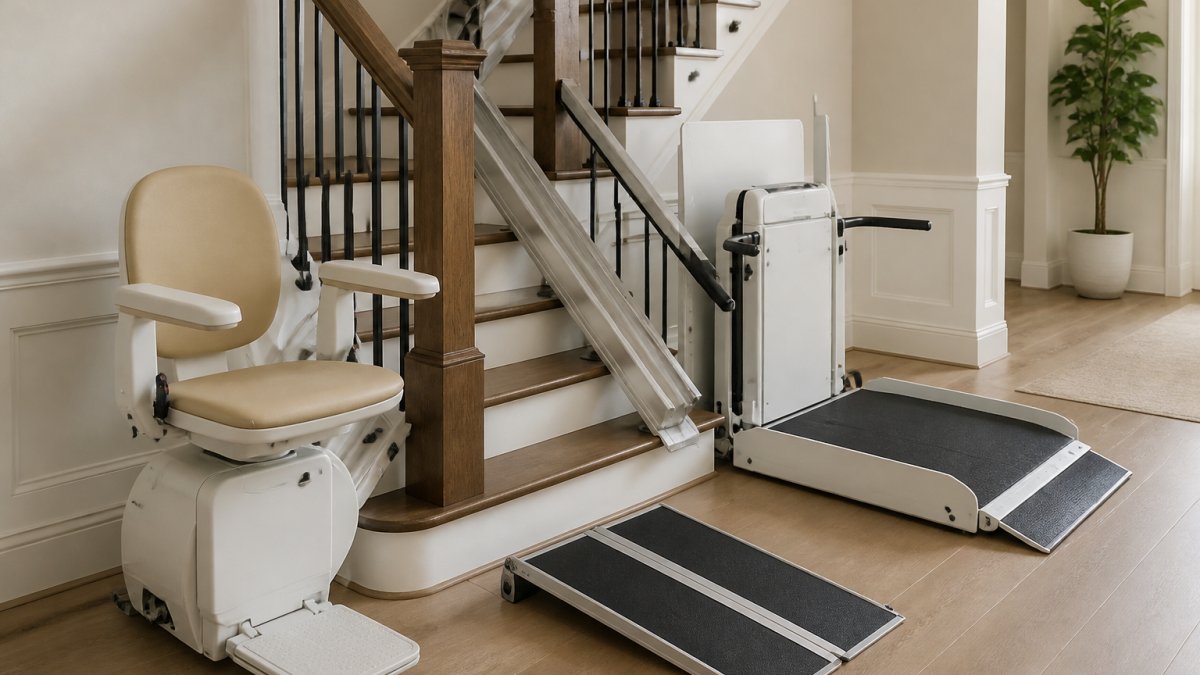
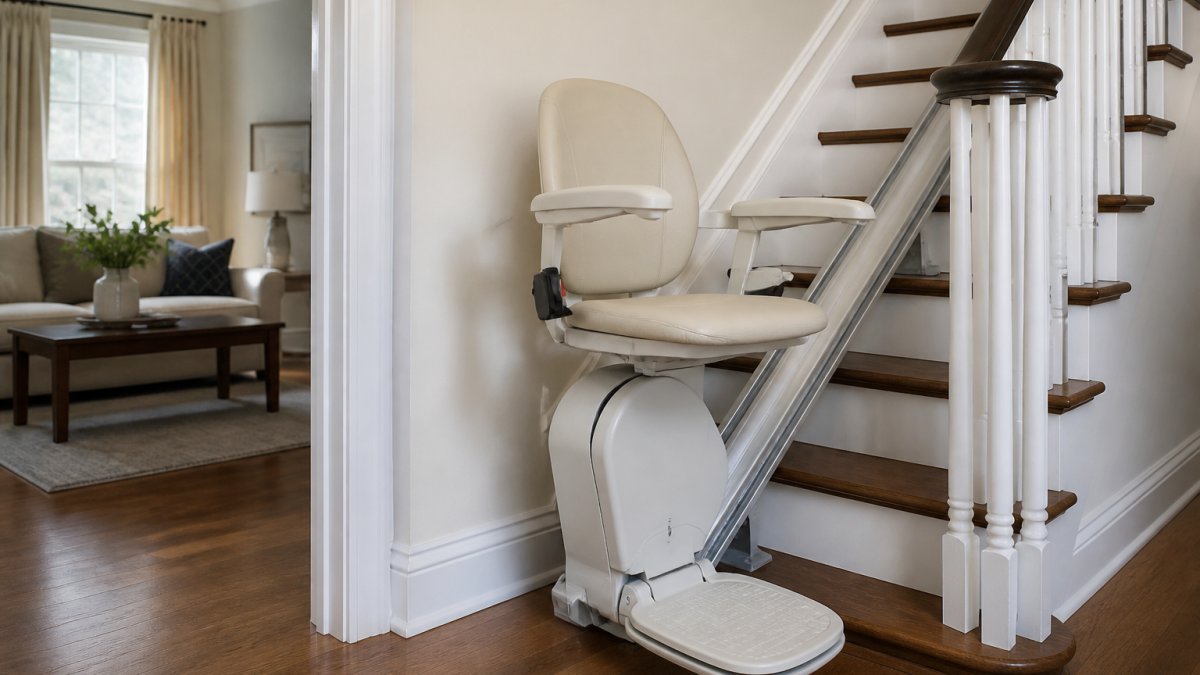
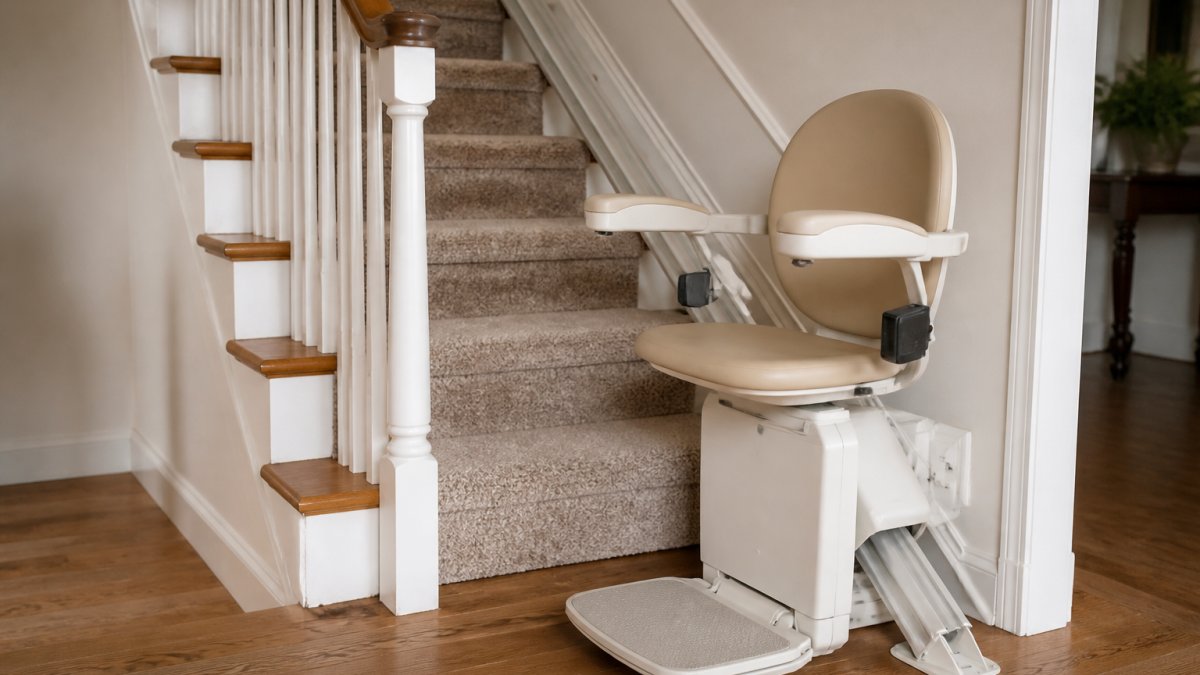
A straight stairlift is designed for staircases without curves, turns, or landings. These units are simpler to install, more affordable, and highly reliable for typical home layouts.
| Feature | Harmar Pinnacle SL300 | Bruno Elan SRE-3050 | Handicare 1100 |
|---|---|---|---|
| Weight Capacity | 300 lbs | 300 lbs | 300 lbs |
| Rail Profile | Standard | Standard | Ultra-slim |
| Battery Backup | Yes | Yes | Yes |
| Swivel Seat | No | Yes | Optional |
| Best For | Narrow stairs | Standard stairs | Very narrow stairs |
Curved Stairlifts for Complex Stair Configurations
Curved stairlift installation suits homes with turns, landings, or direction changes. Custom rail manufacturing matches your staircase geometry for smooth, safe navigation.
While custom manufacturing increases cost, alternatives like moving or assisted living typically cost far more over time.
Key Stairlift Safety Features That Protect You
Modern stairlift installation includes multiple safety layers. Understanding these features helps you evaluate models and use your lift confidently.
Obstruction sensors detect obstacles and stop the lift immediately, preventing crushing or trapping. Weight-sensitive seat switches ensure operation only when occupied.
Battery backup allows the lift to complete a full cycle during power outages. Most models charge continuously during normal operation.
Emergency stop buttons on the armrest and remote controls halt the lift instantly, providing reassurance and control.
Swivel seats allow you to exit facing the landing, reducing fall risk during the critical moment of standing up.
Padded armrests and full-length handrails support balance and stability, essential for users with arthritis, weakness, or balance problems.
Understanding Stairlift Installation Cost and What Affects Pricing
Stairlift installation cost varies based on staircase type, model, and location. Contact CT Stairlifts for a personalized quote based on an on-site assessment.
Straight staircases cost less than curved ones because the rail requires no custom manufacturing.
Staircase width, angle, and condition affect cost. Unusual angles or structural complications may require custom engineering.
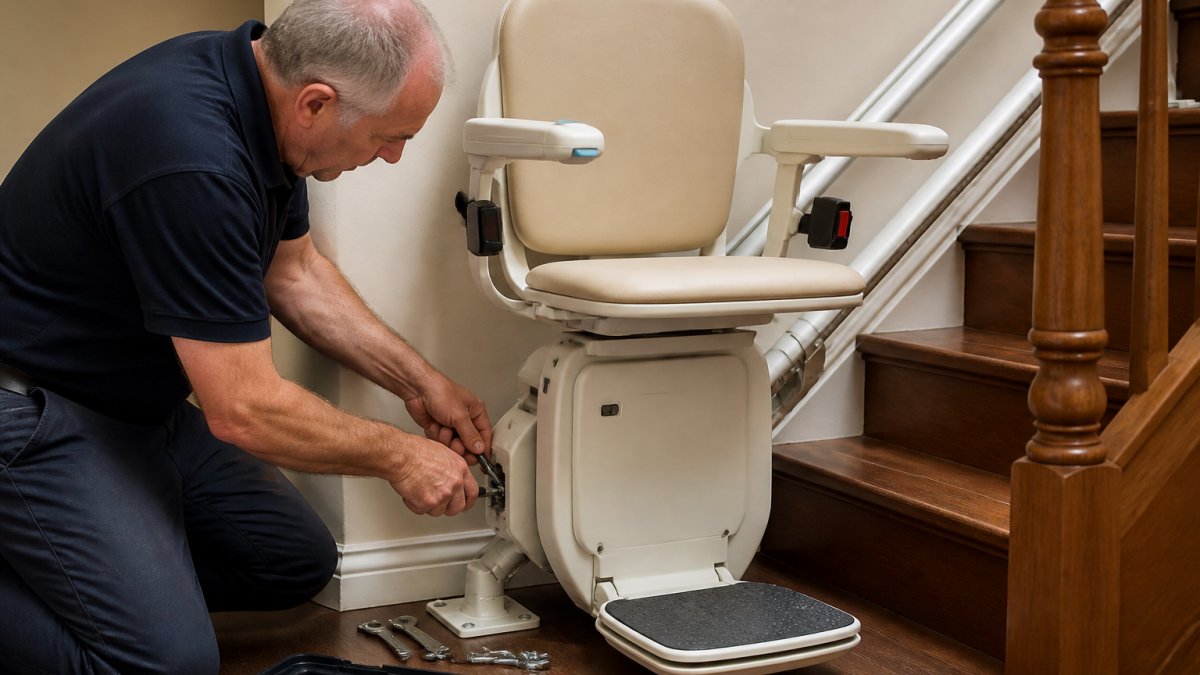
Straight stairlift installation typically completes in one day; curved installations take 2-3 days, affecting labor costs.
Assisted living can be a significant ongoing expense (Caregiver Resources for Finding Long-Term Care). A one-time stairlift installation can be a more cost-effective solution compared to the recurring costs of assisted living over time.
CT Stairlifts can discuss options that suit both short-term recovery needs and long-term use.
Aging in Place Home Modifications: Beyond the Stairlift
A stairlift installation is one piece of a comprehensive aging in place strategy. The goal is to modify your home so you can safely navigate it independently, regardless of changing mobility or strength.
Grab bars in bathrooms prevent falls during the most dangerous moments, getting in and out of the tub or shower, and using the toilet.
Improved lighting transforms safety. Motion-sensor lights in hallways, on stairs, and in bathrooms eliminate the hazard of navigating dark spaces. Bright, even lighting in stairwells makes each step visible, reducing trip risk. Many homeowners add night lights along hallways to guide safe movement during nighttime bathroom trips.
Flooring modifications reduce slip and fall risk. Remove throw rugs or secure them firmly to prevent tripping. In bathrooms and kitchens, textured flooring or non-slip mats provide grip. Hardwood transitions to tile should be beveled or ramped slightly to prevent catching a foot.
Rearranging furniture creates clear pathways. Removing obstacles from hallways, entryways, and around stairs makes movement safer and easier. This simple change costs nothing but dramatically improves navigation.
Bedroom modifications ensure you can access essential items without climbing or reaching dangerously. Place frequently used items at waist height. Install a bedside commode or raised toilet seat to reduce the distance and strain of bathroom visits during the night.
Kitchen accessibility matters for independence. Lowering frequently used cabinets, installing pull-out drawers, and organizing items within easy reach lets you prepare meals safely. An accessible kitchen supports both physical safety and psychological well-being.
How Stairlift Installation Restores Independence and Prevents Falls
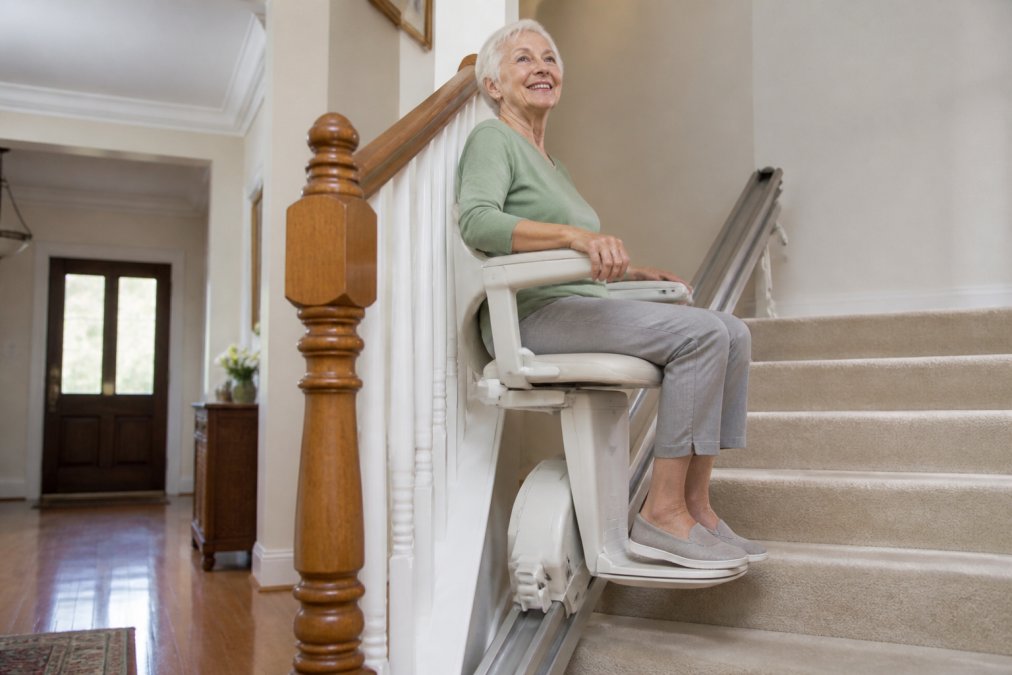
The psychological impact of regaining access to your entire home cannot be overstated. Before stairlift installation, many users confine themselves to one floor, avoiding upper bedrooms, bathrooms, or storage areas. This self-imposed restriction leads to depression, isolation, and a sense of losing control over your own space.
A stairlift installation changes this immediately. You reclaim your bedroom, your home office, your guest room. You retrieve items from storage without asking for help. You use the upstairs bathroom without planning your day around it. This restoration of independence affects mental health as profoundly as physical safety.
Fall prevention is the primary safety benefit. The CDC reports that one in four Americans aged 65 and older experiences a fall each year (the CDC). Falls cause serious injuries, hip fractures, head trauma, spinal damage, that often trigger a cascade of complications. A stairlift eliminates the highest-risk environment in most homes: the stairs themselves.
For users recovering from surgery or injury, a stairlift bridges the gap between hospitalization and full recovery. After hip surgery, knee replacement, or spinal procedures, climbing stairs is dangerous and painful. A stairlift lets you navigate your home safely during the critical recovery window, reducing reliance on family caregivers and speeding your return to normal activity.
Caregiver assistance needs drop dramatically with stairlift installation. Adult children no longer need to visit daily to help their parents access different floors. Spouses don't risk injury by supporting their partner on stairs. This independence reduces caregiver burden and preserves the dignity of the user.
Why Stairlift Installation Outweighs Moving or Assisted Living
When mobility declines, families face three main options: install accessibility modifications like a stairlift, move to a single-story home, or enter assisted living. The financial and emotional calculus heavily favors staying in place.
Moving costs can be substantial and disruptive. You lose the home you've lived in for decades, the neighborhood you know, and the social connections you've built.
One often-overlooked factor: resale value. A home with accessibility modifications, including a stairlift installation, actually appeals to a broader buyer pool. Families with aging parents, individuals with disabilities, and users recovering from injury all recognize the value. Rather than diminishing your home's appeal, a quality stairlift demonstrates that the property accommodates multiple life stages.
Comparing Your Options at a Glance
| Stairlift Installation | Moving to Single-Story | Assisted Living |
|---|---|---|
| One-time cost | $20,000+ in moving expenses | $4,000-6,000 monthly |
| Stays in your home | Relocate, lose community | Leave home entirely |
| Independence maintained | Some independence lost | Significant autonomy reduction |
| 5-year cost | Minimal after installation | $240,000-360,000 |
| Social connections | Preserved | Often diminished |
| Control over daily life | Full control | Facility schedules govern |
Getting Started With CT Stairlifts
CT Stairlifts provides specialized stairlift installations designed to help you regain access to every floor of your home. The process begins with a professional site assessment where our team measures your staircase, identifies any complications, and discusses your specific needs and preferences.
Frequently Asked Questions
What is the average cost of stairlift installation?
Stairlift installation cost varies based on your staircase type, home layout, and specific features you choose. Straight stairlifts typically cost less than curved models, which require custom rail manufacturing. Additional factors include installation complexity, weight capacity needs, and optional features like swivel seats or battery backup. Contact CT Stairlifts for a personalized quote based on your home's requirements.
What are the main safety features I should look for in a stairlift?
Essential stairlift safety features include obstruction sensors that stop the chair if something blocks the rail, seat belts to keep you secure, emergency stop buttons for immediate halting, and battery backup systems that allow operation during power outages. Swivel seats make entry and exit safer by letting you face the stairs. Safety sensors on the footrest and carriage detect obstacles automatically. These combined features significantly reduce fall risk and provide peace of mind during daily use.
Can a stairlift be installed on any type of staircase?
Straight stairlifts work on standard straight staircases without landings or turns. Curved stairlifts are designed for complex stair configurations with multiple turns, landings, or unusual angles. If your staircase is extremely narrow, ultra-slim models are available. A professional home assessment determines whether your staircase can accommodate a stairlift and which type suits your layout best. Most residential staircases can be equipped with an appropriate stairlift solution.
How does aging in place with a stairlift compare to moving or assisted living?
Stairlift installation lets you remain in your home while maintaining independence and dignity. You avoid the emotional stress and expense of relocating, preserve your familiar environment and community connections, and typically spend less than assisted living or facility care. A stairlift addresses mobility barriers without requiring you to abandon your home. Combined with other aging in place modifications, it enables you to live safely and independently for longer.