 blog
blog
Renting vs Buying Stairlifts: Which Makes Sense?
Table of Contents
- Renting vs Buying Stairlifts: The Core Decision
- Stairlift Installation Cost: What to Expect
- Stairlift Rental Duration: How Long Do You Actually Need One?
- Medicare Stairlift Coverage and Other Funding Options
- Maintenance, Warranties, and Service Responsibilities
- Renting vs Buying Stairlifts: A Break-Even Analysis
- How to Choose the Right Path for Your Home
- Conclusion
Last Updated: August 24, 2026
Renting vs Buying Stairlifts: The Core Decision
Choosing between renting vs buying stairlifts is one of the most consequential decisions a homeowner will face when mobility becomes a daily challenge. The right answer almost always comes down to two factors: how long you need the equipment and what your staircase looks like. The core question is not which option is cheaper in isolation, but which costs less for your specific situation over your actual usage period.
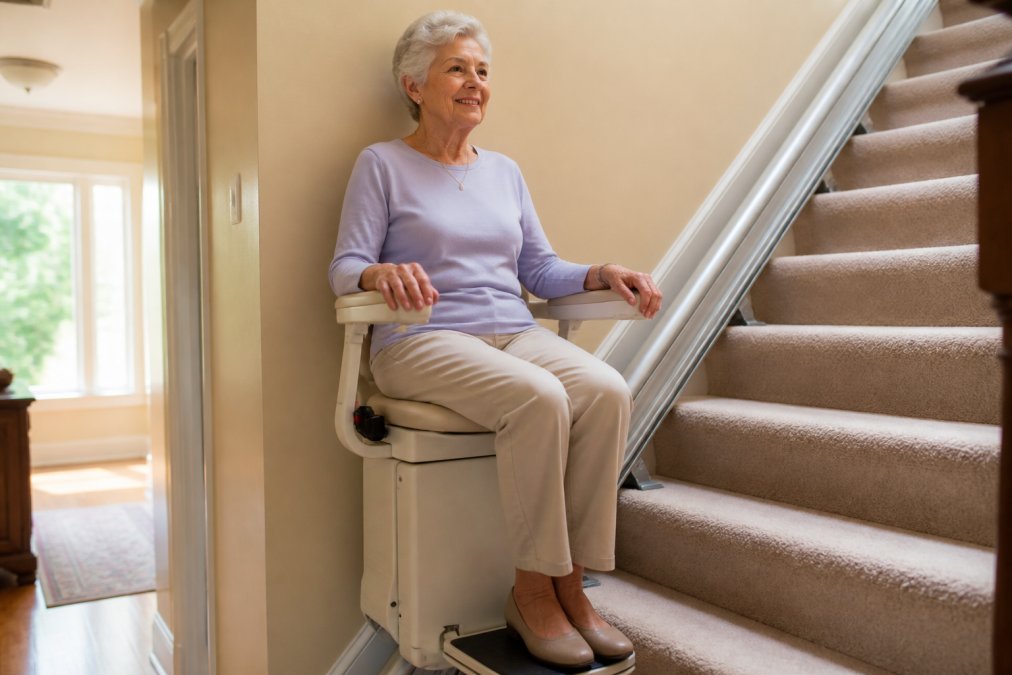
Short-Term Recovery vs. Long-Term Independence
Short-term recovery describes situations where mobility is expected to return within weeks or months: post-surgical rehabilitation, temporary injury, or recovery from procedures like hip or knee replacement. A rental agreement makes practical sense here. You pay for the equipment while you need it and return it when you recover.
Long-term independence describes a different reality. For older adults managing progressive conditions or age-related decline, a stairlift is a permanent modification supporting aging in place for years. Purchasing makes more financial sense and eliminates ongoing monthly obligations.
The mistake most people make is assuming they fall cleanly into one category. Someone who rents during recovery, then realizes mobility hasn't fully returned, often ends up renting for two years before purchasing, the most expensive path.
Straight Rail vs. Curved Rail Configurations
Staircase configuration is the second major factor in this decision.
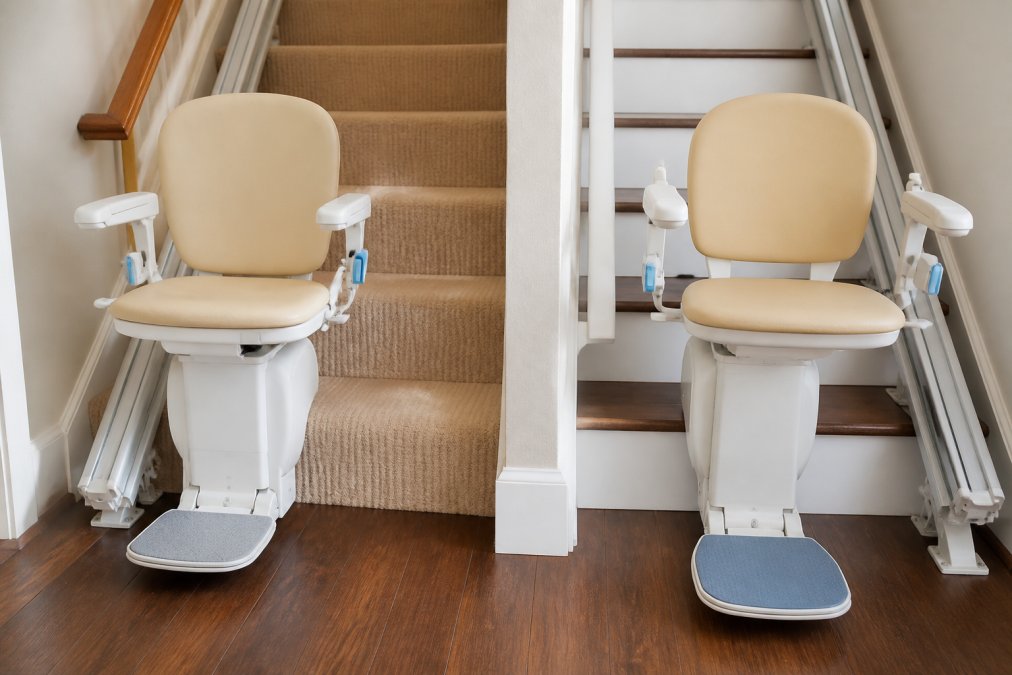
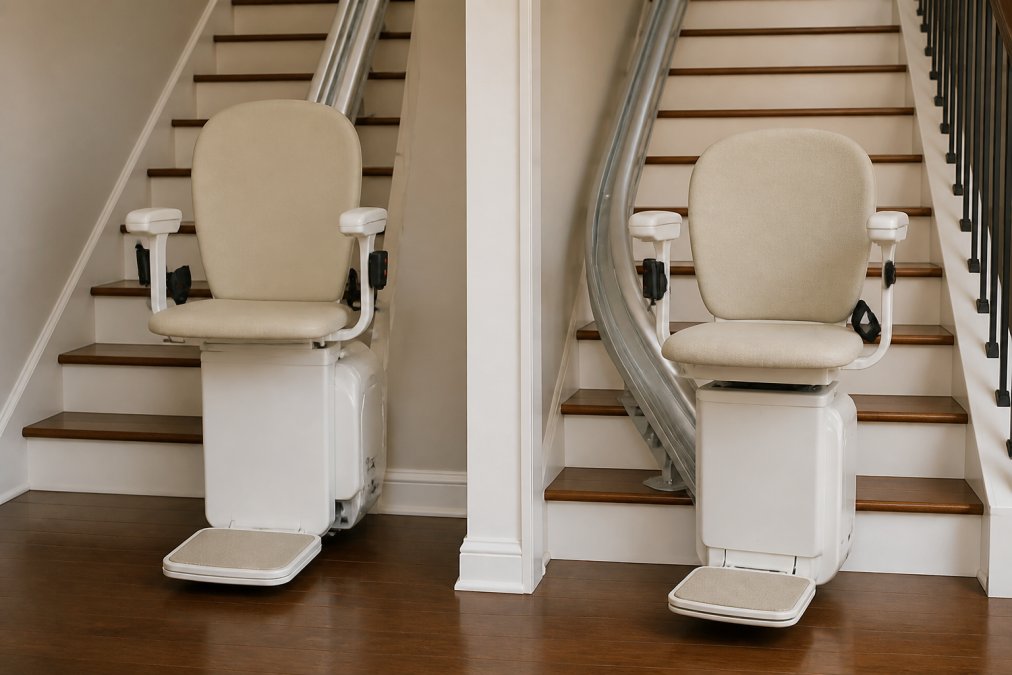
Straight rail stairlifts fit staircases that run in a single, uninterrupted line. These units are manufactured to standard dimensions, making them less expensive, faster to install, and widely available for rental.
Curved rail stairlifts are custom-fabricated to match the exact geometry of a staircase with bends, landings, or unusual angles. Because each unit is built to specification, upfront costs are significantly higher. More importantly, curved rail stairlifts are rarely available through standard rental programs, making purchase the practical choice.
Stairlift Installation Cost: What to Expect
Stairlift installation cost varies based on staircase type, home layout, and the specific model selected. The most accurate approach is to request an in-home assessment from a qualified provider. Total cost of ownership includes more than the purchase price or monthly rental fee.
Upfront Purchase Costs vs. Monthly Rental Fees
Purchasing a stairlift means a single upfront investment covering the unit, professional installation, and typically a manufacturer warranty. After that initial payment, ongoing costs are limited to service calls outside the warranty period.
Renting means a lower barrier to entry with a monthly fee that usually covers the unit, installation, removal, and maintenance. The trade-off is that rental payments never build equity. After months or years of rental payments, you own nothing.
The break-even point is the month at which total rental costs equal the purchase price. After that point, every additional month of renting costs money that a purchase would not.
Hidden Costs: Removal, Depreciation, and Reconditioned Units
Removal labor is a real cost in both scenarios. When you own a stairlift and no longer need it, you either pay for removal or attempt to sell the unit.
Depreciation affects resale value. A stairlift loses value over time. Straight rail units on standard staircases hold value better than curved rail units, which are custom-built and difficult to resell. Some providers offer a buy-back guarantee, providing a partial refund if you return the unit within a defined period.
Reconditioned units represent a middle path. A refurbished stairlift is a previously owned unit that has been serviced, tested, and certified for resale. These typically cost less than new equipment while meeting safety standards. Key questions: what warranty coverage applies, what service history is available, and whether the unit has been tested to current stairlift safety standards.
Stairlift Rental Duration: How Long Do You Actually Need One?
Stairlift rental duration is the single most important variable in the rent-vs-buy calculation. Most rental agreements specify a minimum rental period, often ranging from one to three months.
For post-surgical recovery, a physician or physical therapist can often give a realistic timeline. Many orthopedic recoveries requiring stairlift support last between six weeks and six months.
For progressive conditions, the need is unlikely to decrease. Renting indefinitely is rarely the right financial decision.
A practical framework:
- Under 3 months: Renting is almost always right. Upfront purchase cost plus eventual removal rarely makes sense.
- 3 to 12 months: This is the gray zone. Run the break-even analysis before committing.
- Over 12 months: Purchasing is typically more cost-effective.
Medicare Stairlift Coverage and Other Funding Options
Medicare stairlift coverage: standard Medicare does not cover stairlifts. According to Medicare's official durable medical equipment guidelines, stairlifts are not classified as durable medical equipment (DME) eligible for reimbursement under Medicare Parts A or B.
Legitimate funding avenues include:
Medicaid Waiver Programs vary by state. Some states offer Home and Community-Based Services (HCBS) waivers that may cover home modification equipment for qualifying individuals. Check with your state's Medicaid office for current program details.
Veterans Benefits: Veterans with a service-connected disability may qualify for home modification grants through the VA. The VA's Specially Adapted Housing grant program and Home Improvements and Structural Alterations (HISA) grant are designed for home accessibility modifications.
Area Agencies on Aging: Local agencies often administer programs helping older adults fund home modifications. The Eldercare Locator, a public service of the U.S. Administration on Aging, can connect you with local resources.
Tax Deductions: Stairlift installation costs may qualify as a medical expense deduction on federal income taxes if required for medical reasons and meeting IRS threshold requirements. Consult a tax professional for guidance specific to your situation.
Maintenance, Warranties, and Service Responsibilities
Maintenance coverage is one of the clearest advantages of renting over buying.
Under a typical rental agreement, the provider retains responsibility for maintenance and repairs. If the unit malfunctions, a service technician comes to you at no additional charge.
When you purchase, the warranty coverage defines your protection period. Most new stairlifts carry a manufacturer warranty covering parts and sometimes labor for a defined term. After that expires, you're responsible for service costs.
Key questions before purchasing:
- What does the warranty cover, and for how long?
- Is labor included in the warranty, or only parts?
- What is the typical response time for service calls?
- Is an extended service contract available, and what does it cost?
- What happens if a part is discontinued or unavailable?
Equipment reliability matters. A unit stuck mid-staircase is not just inconvenient; for someone with limited mobility, it's a safety issue. Understanding the service response commitment before committing to a provider is essential.
Renting vs Buying Stairlifts: A Break-Even Analysis
A break-even analysis answers one question precisely: at what month does the total cost of renting equal the total cost of buying? After that point, every additional month of renting is money a purchase would not have cost.
| Factor | Renting | Buying |
|---|---|---|
| Upfront cost | Low (installation included in rental) | Higher (purchase price + installation) |
| Monthly ongoing cost | Monthly rental fee | None after purchase |
| Maintenance responsibility | Provider's responsibility | Owner's responsibility after warranty |
| Removal cost | Included in rental agreement | Owner's cost or resale value |
| Residual value | None | Partial (buy-back or resale) |
| Best for | Short-term or uncertain duration | Long-term or permanent need |
| Curved rail availability | Limited or unavailable | Standard purchase option |
The break-even month is calculated by dividing the total purchase cost (unit + installation + eventual removal) by the monthly rental fee. If your rental fee is $X per month and total purchase cost is $Y, the break-even point is $Y ÷ $X months. If you need the stairlift beyond that number of months, purchasing was the better financial decision.
When Renting Wins Financially
Renting wins when the usage period is short and certain. Post-surgical recovery with a clear medical timeline is the clearest case. If a physician has told you that you'll regain full mobility within three to four months, renting avoids a purchase you won't need long-term.
Renting also wins when your living situation is uncertain. If you're planning to sell your home, move to a single-story property, or transition to assisted living within the next year, purchasing adds a removal cost and potential resale complication.
When Buying Wins Financially
Purchasing wins decisively when the need is long-term. For anyone aging in place with a progressive condition, the break-even point typically arrives well before the end of actual usage. Every month beyond break-even, ownership is the cheaper position.
Buying also wins when rental availability is limited. Curved rail configurations are rarely available through rental programs. For these staircases, purchasing is often the only practical option.
How to Choose the Right Path for Your Home
The right path starts with an honest assessment of three things: your staircase, your timeline, and your budget for upfront costs.
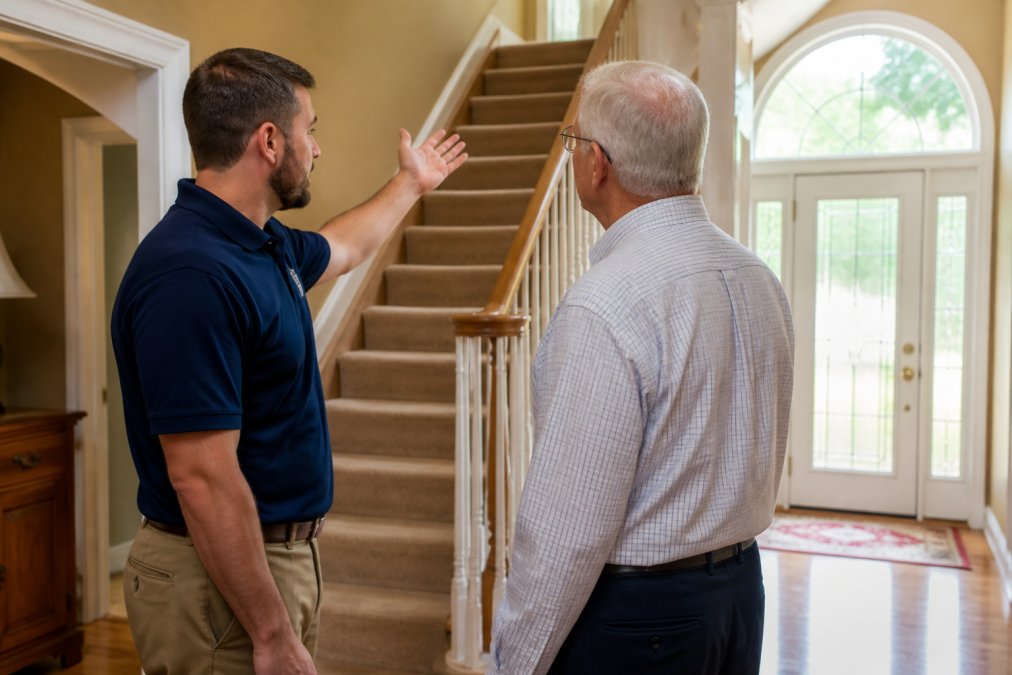
A home assessment from a qualified provider is the only way to get accurate information about which configurations fit your staircase, what installation involves, and what ongoing service looks like in practice.
Use this checklist before making a final decision:
- Confirm whether your staircase is straight or curved
- Get a written quote for both purchase and rental options where available
- Calculate the break-even month using the formula above
- Ask about warranty coverage duration and what it includes
- Confirm whether removal is included in the rental agreement
- Ask about reconditioned unit availability if upfront cost is a concern
- Check whether a buy-back guarantee applies to the purchase option
- Verify the provider's service response time for repairs
- Confirm the unit's weight capacity meets your needs
- Ask about safety sensor testing and the last service date for any reconditioned unit
The question of whether to rent or buy a stairlift is ultimately a financial and practical one. Homeowners who make the best decisions run the numbers honestly and match the decision to their actual situation. A common mistake is delaying the decision while mobility continues to decline. Getting a home assessment costs nothing and gives you the concrete information needed to decide with confidence.
Frequently Asked Questions
Does Medicare cover stairlift costs for seniors?
Medicare does not cover stairlifts. The program classifies them as home modifications rather than durable medical equipment, so neither Part A nor Part B will pay for the unit or installation. Some Medicare Advantage plans include home modification benefits, but coverage varies by plan. Medicaid waiver programs and state-level assistance programs may offer partial funding depending on eligibility. Contact your State Health Insurance Assistance Program (SHIP) counselor or your local Area Agency on Aging for guidance specific to your situation.
How does renting a stairlift compare to purchasing one long-term?
Renting a stairlift costs less upfront and typically includes maintenance coverage, making it a practical choice for short-term recovery after surgery or injury. Purchasing makes more financial sense when the need is permanent, since monthly rental fees accumulate and will eventually exceed the purchase price. A simple break-even analysis, dividing the purchase price by the monthly rental fee, tells you the crossover point. For most households, that crossover arrives somewhere between 18 and 36 months, though exact figures depend on the unit and rental agreement terms.
Will installing a stairlift affect my home's resale value?
A stairlift's impact on resale value is modest and largely neutral. Most buyers simply ask for the unit to be removed before closing, and professional removal is straightforward for straight-rail models. Curved rail systems are custom-built to your staircase configuration, so they have little resale value as standalone units. If you purchased the stairlift, factor removal labor into your total cost of ownership. Some providers offer buy-back or removal guarantees, worth confirming before you sign any agreement.
What are the main maintenance responsibilities when renting a stairlift?
Under most rental agreements, the provider handles repairs, servicing, and parts replacement at no extra charge. Your responsibilities are typically limited to keeping the rail clear of obstructions, wiping down the seat and rail periodically, and reporting faults promptly. Safety sensors and the battery backup system should be tested regularly, most units have a simple self-test procedure. Always review the rental agreement terms carefully, since minimum rental period clauses and damage liability policies vary between providers.
Choosing between renting vs buying stairlifts is rarely straightforward, but the framework is clear: short-term need favors renting, long-term need favors purchasing, and curved staircases often make the choice for you. CT Stairlifts provides specialized stairlift installation designed to help homeowners regain access to every floor of their home. Contact the CT Stairlifts team for an in-home assessment and get a clear, accurate picture of your options before committing to either path.
This article was written using GrandRanker