 how-to
Benefits of Physical Therapy for Fall Recovery
Table of Contents
- What Physical Therapy for Fall Recovery Involves
- How Physical Therapy Helps You Recover After a Fall
- How Long Does Physical Therapy Take After a Fall?
- Preventing Falls at Home for Seniors
- Medicare Coverage for Physical Therapy
- The Emotional Side of Fall Recovery
- Frequently Asked Questions
Last Updated: September 22, 2026
What Physical Therapy for Fall Recovery Involves
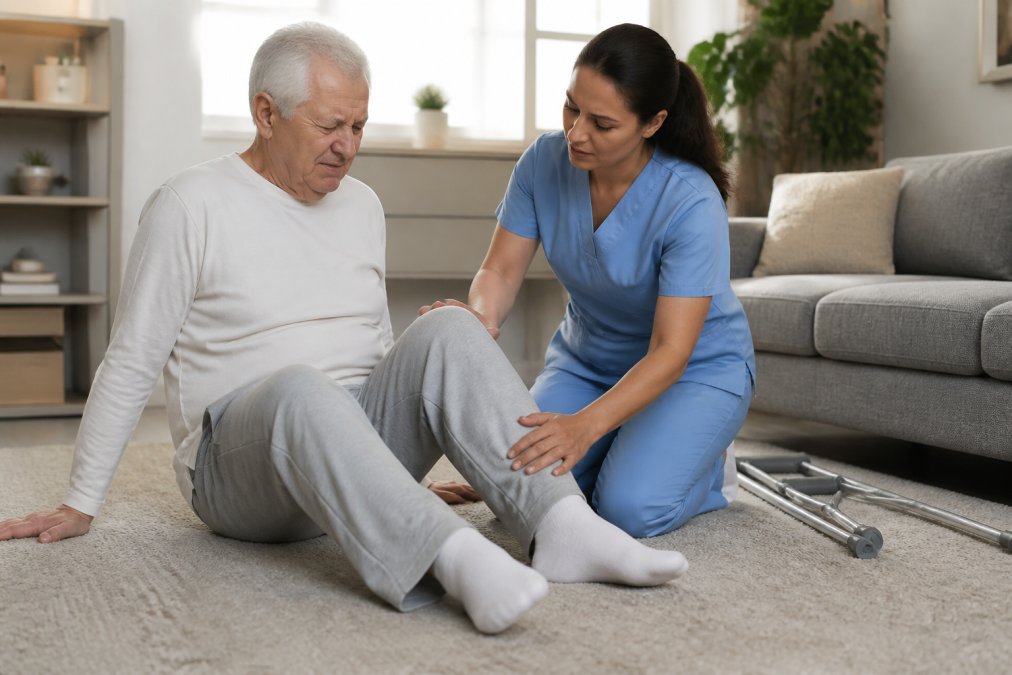
Physical therapy for fall recovery is a structured program that rebuilds strength, balance, and confidence after a fall.
From there, sessions focus on:
- Balance and coordination drills
- Strength training for legs and core
- Stretching to ease stiff joints
- Practice with daily tasks like standing and turning
How Physical Therapy Helps You Recover After a Fall
The main benefits of physical therapy for fall recovery come down to one thing: retraining your body to move safely again. PT targets the exact skills a fall damages, steady footing, leg strength, reaction time, and the confidence to trust your own legs.
Improving Balance and Coordination
Balance is not one skill. It is a stack of systems working together: your inner ear, your vision, the pressure sensors in your feet, and the muscles that make micro-corrections dozens of times a minute. A fall usually means one or more of those systems got weaker or slower.
Balance exercises are then matched to the deficit:
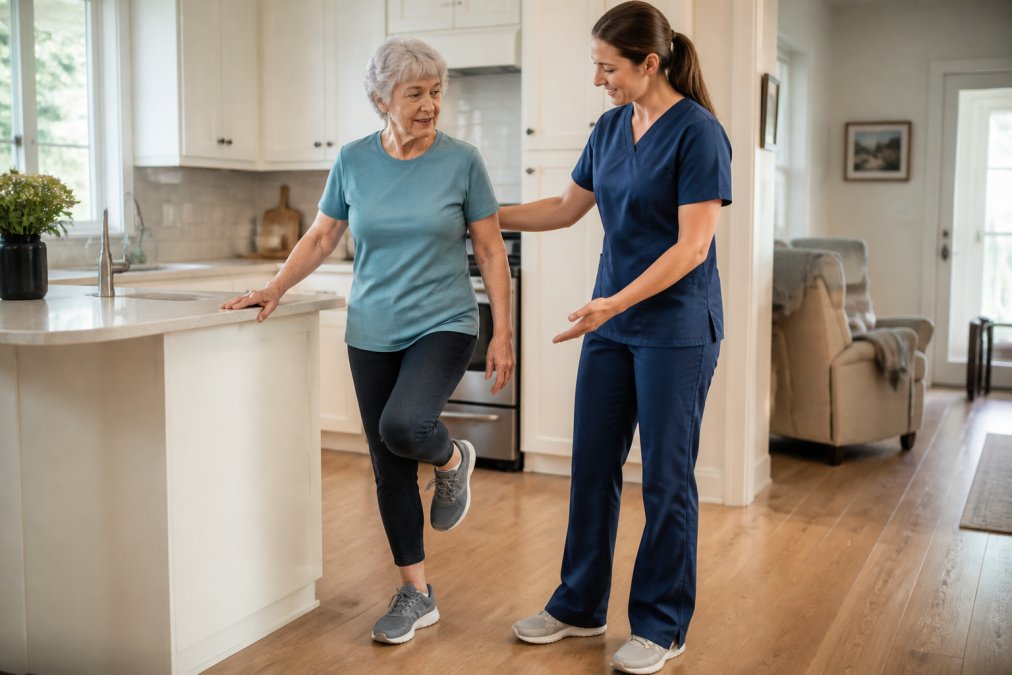
- Static balance: standing on one foot while holding a counter, then progressing to no hands
- Dynamic balance: shifting weight side to side, reaching for objects on a shelf
- Gait training: walking heel to toe, turning the head while walking, stepping over small objects
- Reactive balance: practicing quick steps forward, sideways, and backward to catch a loss of balance
Building Muscle Strength and Endurance
Weak legs are a leading reason people fall. The muscles that matter most for fall recovery are the hip abductors (which keep your pelvis level when you stand on one leg), the quadriceps (which control how you sit down and stand up), the glutes, and the core.
Therapists often use:
- Sit-to-stand practice from a chair, progressing from arms-assisted to no hands
- Gentle squats with a counter or chair for support
- Step-ups onto a low, stable platform
- Resistance bands for hip and knee work
- Heel raises to strengthen the calves and ankles
Reducing Pain and Joint Stiffness
Pain and stiff joints limit how much you can move, which slows recovery. PT uses gentle motion to loosen tight areas and to keep the joint surfaces lubricated.
Therapists may add:
- Slow stretching for the hips, ankles, and shoulders
- Manual therapy, where the therapist moves the joint or soft tissue by hand
- Heat before exercise to relax tight tissue, cold after to calm sore areas
- Modalities such as ultrasound or electrical stimulation in some clinics
Retraining the Fear Response (Kinesiophobia)
One benefit of PT that rarely gets named: it retrains the brain, not just the body. After a fall, many people develop kinesiophobia, a fear of falling that makes them move stiffly, grip railings too hard, and avoid the very activities that would rebuild their strength. This fear is one of the strongest predictors of a second fall.
What Progress Actually Looks Like
Improvement is rarely a straight line. A common pattern is fast early gains in range of motion and confidence, a plateau around weeks four to six, then a second wave of gains as strength catches up. Therapists re-test with the same measures (TUG, chair stand, Berg) every few weeks so you can see the trend even when a single bad day feels discouraging.
How Long Does Physical Therapy Take After a Fall?
Most people need several weeks to a few months of physical therapy after a fall. The exact timeline depends on your injury, your starting strength, and how often you go.
Here is a rough guide:
| Recovery Stage | Typical Focus | Timeframe |
|---|---|---|
| Early | Pain control, gentle motion | First 1-2 weeks |
| Middle | Strength and balance | Weeks 2-8 |
| Later | Functional tasks, confidence | Weeks 8-12+ |
Preventing Falls at Home for Seniors
Preventing falls at home for seniors starts with removing hazards and adding support where balance is weakest. Recovery gains fade if your home still works against you, a therapist can rebuild your strength, but they cannot rebuild your hallway.
A Room-by-Room Safety Check
Walk through your home the way you actually move through it, not the way you wish you did. The highest-risk rooms are almost always the bathroom, the kitchen, and the stairs.
Bathroom
- Add grab bars inside and outside the tub or shower, and beside the toilet
- Use a non-slip mat inside the tub and a bath chair if standing is unsteady
- Raise the toilet seat with a riser if sitting down and standing up is hard
Kitchen
- Move everyday items, plates, mugs, medications, to waist-height cabinets
- Wipe up spills immediately; a wet tile floor is a fall waiting to happen
- Keep a sturdy stool or chair nearby for tasks that require standing
Bedroom and hallways
- Add a nightlight or motion-sensor light between the bed and the bathroom
- Keep a lamp within arm's reach of the bed
- Clear loose rugs, cords, and pet toys from walkways
Stairs
- Install handrails on both sides if possible
- Add contrast strips or lighting at the top and bottom steps
- Keep the staircase clear of clutter and never carry items that block your view of the steps
The Caregiver's Role
Most fall-prevention guides are written for the person who fell. But recovery usually depends on someone else too, a spouse, an adult child, a neighbor. Caregivers can help or accidentally hinder recovery.
What helps:
- Encourage movement, don't forbid it. Telling someone to "just sit down and rest" accelerates the weakness that caused the fall.
- Be present without hovering. Standing close enough to steady someone, but not gripping their arm, lets them rebuild their own balance.
- Watch for the fear pattern. If your loved one is avoiding stairs, refusing to leave the house, or rushing to sit at the first wobble, that is kinesiophobia, mention it to the therapist.
- Attend a PT session. Therapists can teach caregivers how to spot-facilitate a sit-to-stand or how to walk beside someone safely.
Beginner Home Exercises You Can Start Today
These are low-impact movements commonly taught in early fall recovery. Check with a physical therapist or physician before starting, especially after a fracture or surgery.
- Sit-to-stand from a firm chair. Arms crossed or hands on thighs. Stand up, sit down, repeat 8-10 times. Rest, then do a second set.
- Heel raises at the kitchen counter. Hold the counter, rise onto the balls of your feet, lower slowly. 10-15 reps.
- Standing march. Hold the counter, lift one knee to hip height, lower, alternate. 10 per side.
- Side leg lift. Hold the counter, lift one leg out to the side, lower slowly. 10 per side. This targets the hip abductors that keep you steady on one leg.
- Heel-to-toe walk. Along a wall or counter, walk with the heel of one foot touching the toe of the other. 10 steps forward, 10 back.
- Single-leg stand. Hold the counter, lift one foot slightly off the floor, hold 10 seconds. Build toward 30 seconds.
When Stairs Become the Problem
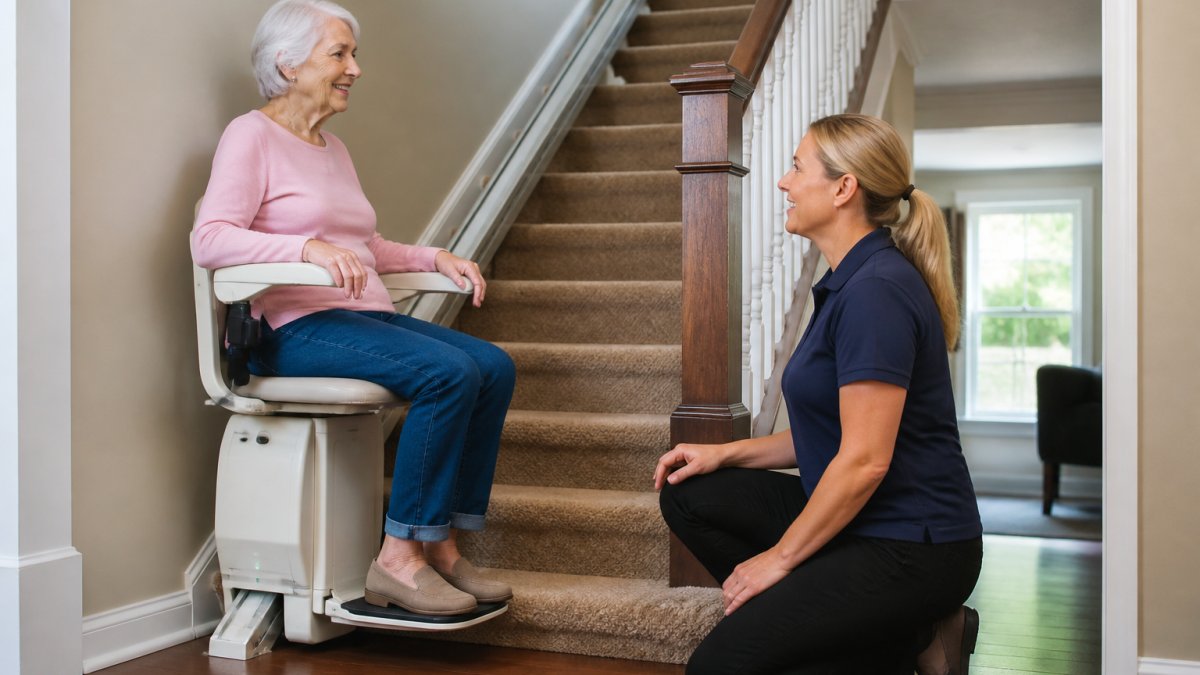
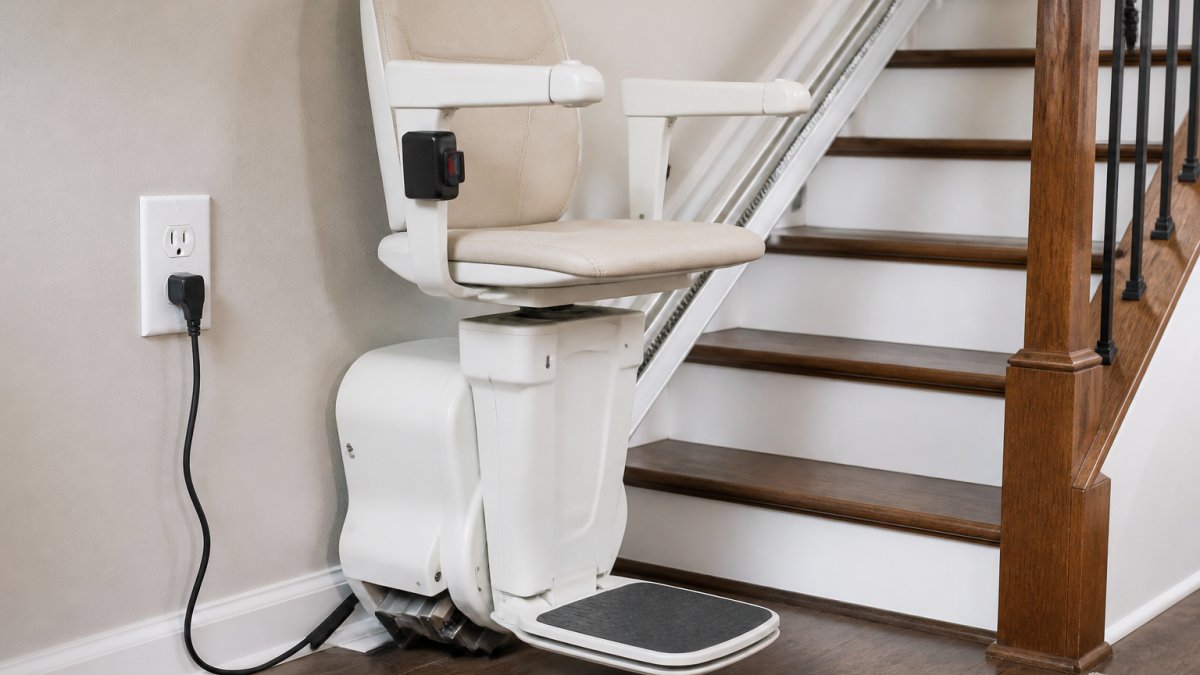
Stairs deserve special attention. They are one of the most common places people fall, and they are also the hardest place to recover confidence after a fall. If climbing stairs feels unsafe, or if a therapist has advised limiting stair use, a stairlift can restore access to every floor of your home without the risk of a bad step. It is not a substitute for PT; it is what lets you keep doing PT and daily life while your strength rebuilds.
Medicare Coverage for Physical Therapy
Medicare usually covers physical therapy when a doctor or other provider says it is medically needed. Coverage applies to therapy that helps you recover function after a fall.
A few practical notes:
- Get a referral or order if your plan requires one
- Ask your therapist's office to confirm coverage before you start
- Keep track of visits so you do not hit a surprise limit
The Emotional Side of Fall Recovery
Fear of falling again can hold recovery back. This fear has a name: kinesiophobia. It pushes people to move less, which weakens them and raises the odds of another fall.
The emotional side is real and worth naming.
Signs to watch for:
- Avoiding stairs or leaving the house
- Feeling anxious when standing or walking
- Rushing to sit down at the first wobble
- Losing interest in activities you used to enjoy
Frequently Asked Questions
How to recover from a fall quickly?
Recovering quickly from a fall starts with a medical evaluation to rule out fractures or head injuries. After that, a physical therapist can design a program that includes balance training, muscle strengthening, and mobility exercises. Following your therapist's plan consistently and practicing exercises at home between sessions can help speed up functional recovery. Most people see gradual improvements in strength and balance over several weeks, but the timeline depends on your overall health and the severity of the fall.
When would you need physical therapy after a fall?
Physical therapy is recommended after a fall if you have difficulty walking, standing up from a chair, or maintaining balance. It is also advised if you experience pain, joint stiffness, or a loss of confidence that makes you avoid activities. Even if you were not seriously injured, a fall can signal underlying issues like muscle weakness or poor coordination. A physical therapist can assess your gait, strength, and balance to create a plan that reduces your risk of falling again.
How does physical therapy help improve balance after a fall?
Physical therapy improves balance through targeted exercises that challenge your postural stability and coordination. Therapists use activities like standing on one leg, walking heel-to-toe, and using balance boards to retrain your body's proprioception. They may also perform a fall risk assessment and gait analysis to identify specific weaknesses. Over time, these exercises help your muscles and joints respond more quickly to changes in position, reducing the chance of another fall.
How can physical therapy reduce the fear of falling again?
Physical therapy addresses the fear of falling, known as kinesiophobia, by gradually building your confidence through safe, controlled movements. As you practice balance and strengthening exercises, you become more aware of your abilities and less anxious about falling. Therapists also teach you how to get up safely if you do fall, which can lessen the fear. This confidence building is a key part of fall recovery and helps you stay active and independent.
Falls can take away your sense of safety at home, but recovery and the right setup can bring it back. CT Stairlifts helps you regain access to every floor of your home with stairlift installations designed around your needs. If stairs have become a daily worry, reach out to CT Stairlifts to talk through your options and keep your independence.